Your Ayurvedic Hair Oiling Routine: A Step-by-Step Scalp Abhyanga at Home
A simple, classical scalp-oiling routine built for Indian hair: warm the Taila, section, massage, and time it to the season. Champi, done properly.
Be honest: when did you last sit down and give yourself a proper champi?
Not the rushed Sunday smear of oil down the lengths before a hard-water wash that leaves your hair limp by Tuesday. A real one. Warm oil, parted hair, fingertips on your scalp. The kind your mother or grandmother used to do slowly and unhurriedly, while you sat on the floor and just breathed.
Most of us grew up with that ritual and then quietly lost it somewhere between college, a career, and the sheer exhaustion of adulting in an Indian city. What stayed was a vague guilt about not oiling enough, and a shelf of half-used bottles.
Here is the thing: your scalp needs ten quiet minutes and the right oil, used the way generations before us worked out centuries ago. That is the ayurvedic hair oiling routine: simple, grounded, and suited to an Indian scalp that lives with hard water, monsoon humidity and dry northern winters. (One thing to skip: the microwave.)
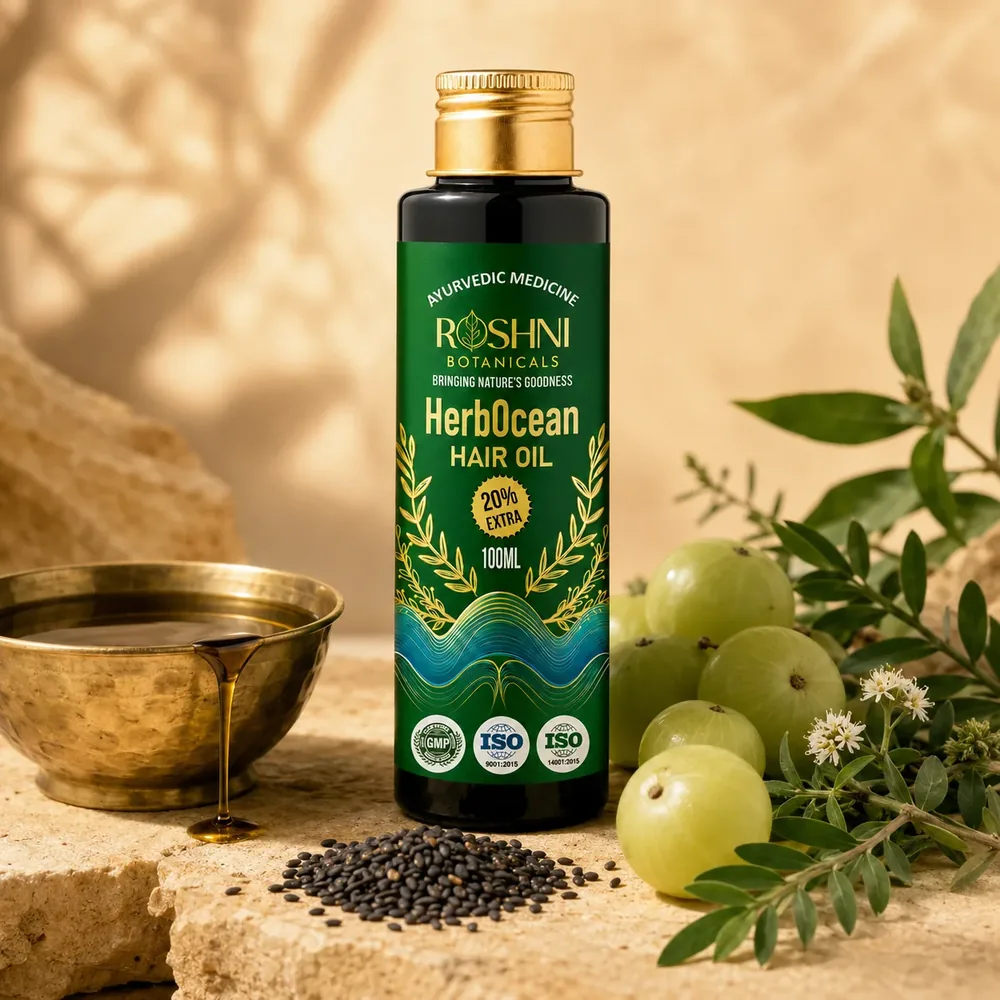
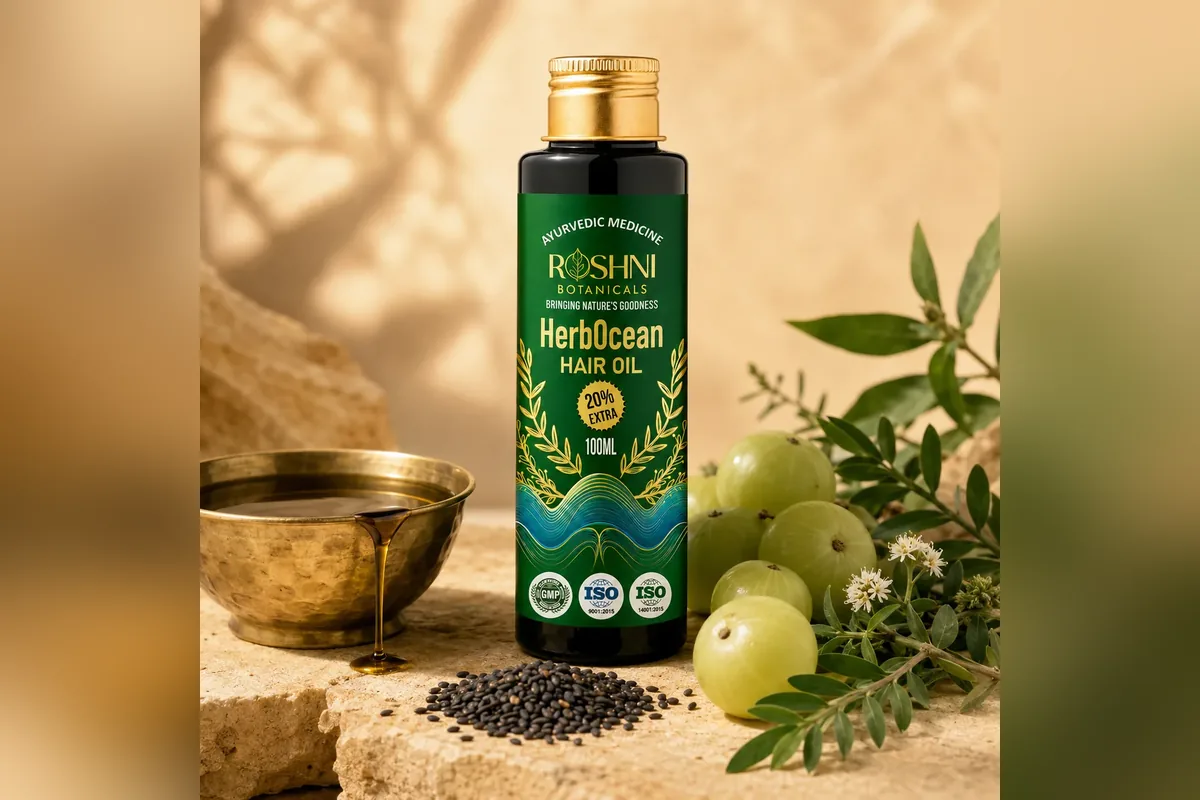
Here is how to do champi properly, with a classical HerbOcean Hair Oil or any honest Taila (medicated oil) you trust.
Key takeaways
- An ayurvedic hair oiling routine, classically called Shiro abhyanga (head-and-scalp massage with oil), means warming a medicated Taila, parting your hair into sections, massaging it into the scalp with your fingertips for a few minutes, letting it rest, then washing it out gently.
- In Ayurveda, regular head oiling (Murdha taila) is a named part of Dinacharya (the daily self-care routine), traditionally valued for the health of Kesha (hair) and for keeping the scalp settled and comfortable.
- Always warm the oil indirectly, by standing the bottle in hot water for a few minutes. Never use a microwave or a direct flame; both scorch the oil and undo the whole point of a good Taila.
- In the monsoon, leave the oil on for one to two hours before washing rather than overnight. A damp scalp held under oil all night is not Ayurvedic wisdom; it is just asking for trouble.
- HerbOcean Hair Oil is a classical Taila of sixteen botanicals: twelve herbs at equal weight (Bhringraj, Jatamansi, Brahmi and Amla among them) in a sesame base with three finishing oils. It is formulated by Vaidya Shri Ram Prakash Ji under AYUSH Licence DL-474 A&U and traditionally used in the care of hair fall and dullness.
Head Oiling Is Not a Wellness Trend. It Is Murdha Taila.
Let us be clear about something: head oiling in Ayurveda has a classical name and a classical place. It is Murdha taila, one of the named daily practices of Dinacharya, described in classical texts such as the Ashtanga Hridaya, and it is a focused form of abhyanga (oil massage) applied to the most important part of the body.
Classical Ayurveda treats the head as the seat of vital marma (vital points), and a medicated Taila as the natural vehicle for nourishing Kesha and calming the scalp. That is why a proper champi does not just feel like hair care; it feels genuinely restful. You are not greasing strands. You are working over marma points with a classical formulation made for exactly that purpose.
Excess hair fall, or Khalitya (the classical term for hair loss), is read in Sushruta Samhita, Nidana Sthana 13 as aggravated Vata and Pitta (two of the three doshas) at the hair roots, with Rakta (blood) and Kapha filling the pores. The classical response is not dramatic intervention; it is steady, patient nourishment. If you want the fuller picture, here is the ayurvedic approach to hair fall.
A good hair Taila is chosen for that slower, deeper role. HerbOcean Hair Oil is built on the 40-year Ayurvedic formulation legacy of Vaidya Shri Ram Prakash Ji, and is licensed under AYUSH as an Ayurvedic medicine traditionally used in the care of hair fall and dullness. It works as a weekly ritual, and the benefit comes from keeping it up.
What an Indian Scalp Is Up Against
Four realities of Indian life shape how, when and how much you should oil.
- Hard water. If you live in Delhi, Gurugram, Bengaluru, Hyderabad or most of urban India, the water from your tap is mineral-heavy. Over weeks it leaves residue on the scalp and gradually roughens the hair shaft. Regular oiling forms a light barrier that counters that everyday dryness and build-up. This alone is reason enough to keep oiling.
- Monsoon humidity. Through the rains, scalp, sweat and trapped moisture create ideal conditions for fungal and microbial activity. Leaving oil on overnight in peak monsoon can make things worse, not better. A one-to-two-hour application before a wash suits the season far more kindly.
- North-Indian winter dryness. Hot, dry winds in winter strip moisture fast and push Vata into overdrive, leaving hair brittle and ends frizzy. This is your season for warm oiling, longer rests, and genuinely leaning into the ritual.
- Diet. Not a climate issue, but worth naming honestly: low iron and low protein commonly track with thinning, particularly in vegetarian households. Oiling supports the scalp from the outside; what you eat matters too. A champi does not replace nutrition, and if shedding is ongoing it is worth reading what is really behind your hair fall.
So What Actually Is an Ayurvedic Hair Oiling Routine?
Stripped to its bones, it is four unhurried beats: warm the oil, section the hair and massage it into the scalp, let it rest, then wash out gently. The classical name is Shiro abhyanga. The entire difference between a lazy smear and a genuine champi lives in beats two and three: reaching the scalp itself, and staying there long enough for the oil to do anything.
Done two or three times a week, this sits inside both Dinacharya and Ritucharya (the seasonal routine). You oil differently in the sticky monsoon than on a crisp January morning. The sections below take each step in turn. There is an honest note threaded through all of it: oiling supports scalp health, the feel of your hair and the quiet pleasure of the ritual; the benefit is as consistent as the routine.
The Herbs That Go Into a Classical Taila, and Why They Were Chosen
Keshya is the classical Sanskrit category for herbs chosen specifically for Kesha, the hair and scalp. A thoughtful Taila is built from Keshya herbs according to their classical karma (therapeutic action). HerbOcean Hair Oil carries twelve herbs at equal weight; here are four of the best known:
- Bhringraj (Eclipta alba): the classical Keshya rasayana (a rejuvenative hair tonic), literally the king of hair in the classical synonyms, and consistently first among hair-supporting herbs. If you have heard of one Ayurvedic herb for hair it is probably this one, and there is good reason Ayurveda calls Bhringraj the king of hair.
- Jatamansi (Nardostachys jatamansi): prized for its grounding, settling quality. Traditionally calming for the scalp and the mind during champi, which is why a good oiling session feels different from simply applying a product.
- Brahmi (Bacopa monnieri): a classically calming herb associated with a settled scalp and steady nourishment. The kind of ingredient you add for the long game, not for immediate drama.
- Amla (Emblica officinalis): every Indian grandmother kept it in her kitchen for a reason. Pitta-pacifying, rasayana, the time-honoured hair tonic of the subcontinent. Amla in your Taila is a centuries-old baseline.
Alongside these four sit Shikakai and Neem, the familiar Indian cleansing-and-clarifying pairing, with Neem especially valued for keeping a monsoon scalp clean and comfortable. Then Tulsi, Nagarmotha, Chharila, Sugandhbala, Gudal and Gulab, all carried in a sesame-oil (Til tail) base, the classical Murdha taila vehicle: warming, grounding, Vata-pacifying.
The oil is finished with Lavender, Curry Leaf and Rosemary so that it smells good enough to reach for every week. This matters more than people admit; the best oil is the one you actually use. An authentic Taila is a considered Ayurvedic preparation, and that is how we describe it.
How to Oil Correctly: Champi as a Practice, Not a Chore
Step 1: Warm Your Taila the Right Way
Take a small quantity of oil (you need less than you think, roughly a palmful for medium-length hair) and warm it gently and indirectly. Stand the bottle or a small katori in a bowl of hot water for three to five minutes. That is it.
Do not microwave it, and do not hold it over a flame. Both destroy the delicate, lipid-soluble constituents of a classical Taila and turn a carefully formulated oil into warm, slightly scorched cooking fat. You are paying for the herbs; let them survive the warming. Test the temperature on the inside of your wrist: it should feel pleasantly warm, never hot. Decant what you need into a small bowl before you start, so you are not dipping oily fingers into the bottle every few minutes. Drape an old towel or dupatta over your shoulders. You know how this goes.
Step 2: The Scalp Abhyanga Itself
Section dry hair into four to six parts with a comb. This is the step that makes the difference: without sectioning, the oil sits on the top layer of your hair and never actually reaches the scalp.
Dip your fingertips, not your palms and not a cotton ball, and apply the warm oil along each parting. Then massage in slow, deliberate circular motions for five to ten minutes, moving from the crown outward. Do not drag or pull at the roots; the motion is circular and gentle, never scratching. Once the scalp is done, draw whatever oil remains through the mid-lengths and ends, which tend to dryness and benefit from what is left. Finish with a minute of gentle pressure at the temples and the nape of the neck. If you have been staring at a screen all day, and you probably have, this last part will thank you.
Step 3: Rest, Then Wash Out
Let the oil rest for at least one to two hours. Covering your head with a warm towel for the first ten minutes helps it absorb and feels genuinely lovely. If the weather is dry and your scalp is comfortable with it, overnight oiling is perfectly fine, in the traditional morning-wash way.
But if it is peak monsoon, the oppressively humid kind, stick with the one-to-two-hour window. A scalp held damp with sweat under oil all night is not Ayurvedic wisdom; it is just uncomfortable, and in the monsoon it can tip toward a flaky or congested scalp. Wash out with a mild, sulphate-gentle cleanser and lukewarm water, not hot. Massage with your fingertips, not your nails. One or two passes are usually enough; the goal is a clean scalp, not stripped, squeaky hair. Settle into a rhythm of two or three times a week, and adjust it with the season as part of your Ritucharya. That is the whole practice.
When to Stop Oiling and See a Professional Instead
Champi is supportive self-care. It is not a diagnostic tool, and it is not a substitute for medical assessment. See a dermatologist or trichologist if:
- You notice sudden, heavy or diffuse shedding, more than the usual 50 to 100 hairs a day, or hair coming away in clumps.
- You have round, coin-shaped patches of hair loss. These need a proper diagnosis.
- Your scalp is persistently itchy, flaking, painful or inflamed, particularly through the monsoon. A medicated shampoo or antifungal is not the same as a Keshya Taila.
- Hair changes arrive alongside other symptoms, such as unusual fatigue, weight changes or cycle irregularities, that may point to something worth investigating internally.
Patch-test any new oil on the inside of your wrist before the first application. Keep it external. Let a consistent oiling ritual sit alongside medical care, not in place of it.
Bring the Ritual Back
What hair needs is the right oil, used consistently, with a little care and attention. A weekly champi, warm Taila, a proper scalp massage, an unhurried rest and a gentle wash, is one of the oldest and most practical things you can do for an Indian scalp, whether it is peak monsoon or a dry January morning. It takes ten minutes, and it is a ritual worth keeping.
Make it a standing date in your week, the way it used to be at home before we got too busy to sit still for ten minutes. If you would like a classical Taila built for exactly this practice, explore HerbOcean Hair Oil. And if the seasons are what brought you here, our guide to caring for your hair through the Indian year is worth a read next.
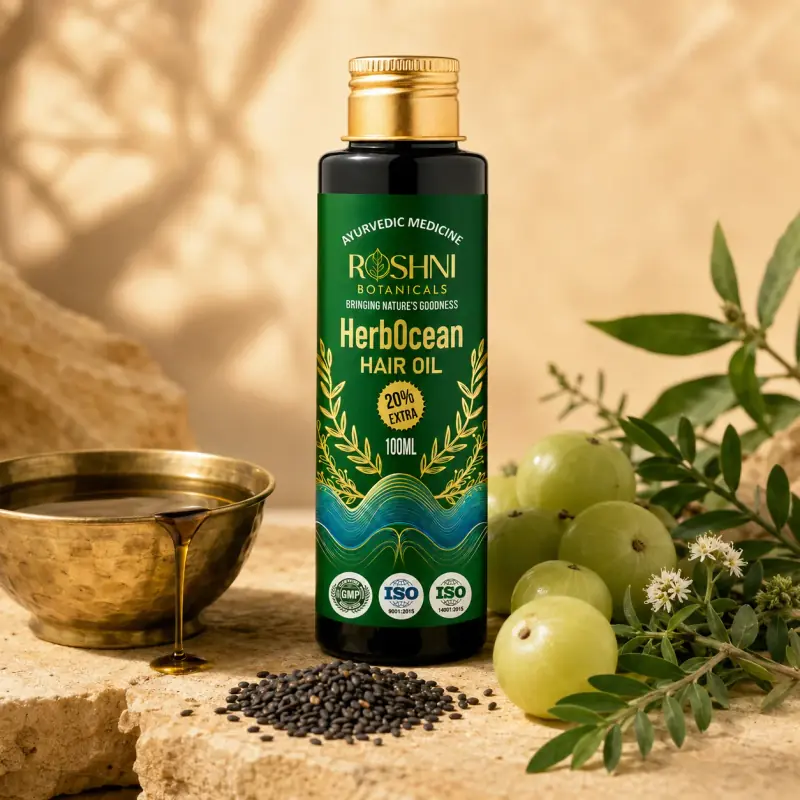
HerbOcean Hair Oil
A classical Taila for hair fall, dullness and a flaky scalp, with sixteen botanicals like Brahmi, Jatamansi, Amla and Neem in a slow sesame base.
Part of our guide: The definitive guide to Ayurvedic hair oils for hair fall.