
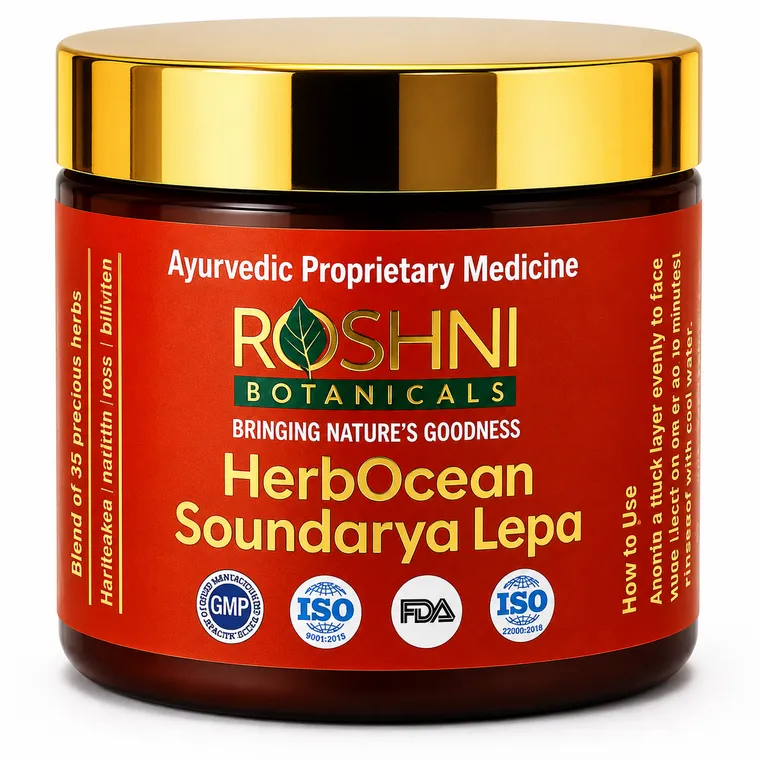
Soundarya Lepa
₹499 ₹599 / 125 g
A classical Lepa of Mulethi, Masoor, aloe and white sandalwood — a grounding weekly mask that helps maintain a calm, cared-for surface.
- MRP₹599 incl. of all taxes
- Net quantity125 g
- AvailabilityIn stock
- Dispatch1–3 business days from Delhi
- ShippingFree across India
- Cash on DeliveryAvailable
- ReturnsDamaged or incorrect items — see policy
- ManufacturerRoshni Botanicals, Delhi
- Formulated byVaidya Shri Ram Prakash Ji
- AYUSH licenceDL-474 A&U
What Soundarya Lepa helps with
A weekly reset
A classical Lepa worn 10–15 minutes to let the botanicals settle into the skin.
Calms and clarifies
Mulethi, Masoor and white sandalwood — traditionally cooling and grounding.
The ubtan tradition
The paste format India has used for generations, made properly.
Quick answers
What is Soundarya Lepa?
It is a classical Ayurvedic medicine — a Lepa (medicated paste applied externally) of Mulethi, Masoor, aloe and Svetchandan (white sandalwood), made under AYUSH Licence DL-474 A&U. A grounding weekly mask in the classical Lepa/ubtan tradition.
Who is it best for?
All skin types wanting a weekly Ayurvedic reset; dull, tired skin especially.
Who should avoid it?
Anyone allergic to a listed botanical; very sensitive or broken skin should patch-test and keep contact brief.
How do you use it?
Mix with a little water or rose water into a smooth paste, apply an even layer on clean skin, leave 10–15 minutes, then rinse with cool water. Once or twice a week.
How long before results?
A Lepa is a gentle weekly ritual, not an instant fix; its support for the look of skin builds with regular use over time.
What makes it classical Ayurvedic?
The Lepa is one of Ayurveda’s oldest skincare formats — a herb paste worn briefly so botanicals settle into the Twak (skin). It is made in-house in Delhi as a licensed Ayurvedic medicine under AYUSH Licence DL-474 A&U.
What do the key herbs do?
Mulethi (licorice) is a classical brightening herb; Masoor (red lentil) is a traditional ubtan grain; Svetchandan (white sandalwood) is cooling and classical for the complexion.
Any cautions?
For external use; patch-test first and avoid the eye area.
Key botanicals
Full ingredients — every botanical, declared
Base medium: Bentonite clay & purified water base
| Ingredient (Sanskrit / Hindi) | Botanical / INCI | Role in formula |
|---|---|---|
| Mulethi | Glycyrrhiza glabra | Brightening herb |
| Masoor | Lens culinaris | Ubtan grain |
| Aloe | Aloe vera | Soothing gel |
| Svetchandan | Santalum album | Cooling herb |
| Kuth | Saussurea lappa | Classical herb |
| Bentonite Clay | IP | Mineral clay base |
| Xanthan Gum | IP | Natural thickener |
| Glycerine | IP | Humectant |
| Citric Acid | IP | pH adjuster |
| Gluconolactone | IP | Mild PHA (preservative) |
| Sodium Benzoate | IP | Preservative |
| DM Water | IP | Solvent base |
| Lavender Oil | Lavendula officinalis | Natural aroma |
| Rose Oil | Rosa centifolia | Natural aroma |
| Mogra Oil | Jasminum sambac | Natural aroma |
Full declaration per the Roshni Botanicals master formulation sheet. For external use only. Patch-test on the inner forearm 24 hours before first use and discontinue if irritation occurs; avoid the eye area.
Frequently asked
How often should I use it?
Can I leave it on longer?
Is it suitable for all skin types?
An AYUSH-licensed Ayurvedic medicine (Licence DL-474 A&U), for external use. Patch-test before first use; consult a qualified practitioner for severe, sudden, or persistent conditions.