Dandruff in the Monsoon: Why Your Scalp Itches More in the Rains, and What Helps
Monsoon dandruff is not a hygiene failure: the yeast behind it feeds on oil and thrives in damp heat. Why the season tips your scalp over, and the honest oiling-and-hygiene routine that settles it.
The first good rain brings relief from the heat, and a week later the itching starts. If your scalp flakes more every July, you are not imagining it, and it is not a hygiene failure: the yeast behind most dandruff loves exactly what the monsoon offers, which is humidity, sweat and hair tied up damp under a dupatta or a helmet. This guide explains why the season tips your scalp over, resolves the confusing advice about whether to oil or not, and lays out a routine that actually settles things down.
Key takeaways
- Most dandruff (Darunaka, the classical Ayurvedic term for a flaking, itching scalp) is driven by Malassezia, a yeast that lives on every scalp and multiplies when monsoon humidity pushes up scalp oil.
- Malassezia feeds on oil, which is the honest catch for oiling: a heavy oil left on a damp, dandruff-prone scalp for days can feed the very yeast you are fighting.
- The fix is timing, not abstinence: keep oiling to a one-to-two-hour pre-wash ritual this season, then wash it out fully, rather than leaving oil in for days.
- The rest of the plan is scalp hygiene: two to three gentle washes a week, drying the scalp fully before tying hair, and washing combs and pillow covers weekly; in hard-water cities, a final filtered rinse helps.
- Powdery flakes that ease with regular washing are ordinary dandruff; red, greasy, persistent patches, or flaking that spreads to the eyebrows or behind the ears, point to seborrheic dermatitis and need a dermatologist.
Why Your Scalp Itches More in the Rains
Meet the resident behind the flakes. Malassezia is a yeast that lives on virtually every human scalp in small, harmless numbers all year round. It is oil-loving by nature: it feeds on the sebum your scalp produces. When monsoon humidity climbs, your scalp produces more of that oil, and a warm, damp, poorly-ventilated scalp is exactly the environment the yeast multiplies fastest in. More yeast means more of the irritation and flaking you notice as dandruff. It is worth separating two things people often merge. A genuinely dry scalp flakes finely, feels tight after washing, and usually eases with gentler, less frequent washing and cooler water. Dandruff is the oil-and-yeast story, and it tends to arrive on a scalp that turns greasy at the roots by evening. The monsoon can produce both at once, which is why "my scalp is dry" and "my scalp is oily" can be true in the same week; if the roots go slick between washes, treat the flaking as dandruff rather than dryness.
The season adds its own accelerants on top. Hair tied up while still damp, under a bun, a dupatta or a two-wheeler helmet, traps moisture and heat against the scalp for hours, which is the single biggest everyday trigger; the sweat of a humid commute does the same. Two quieter factors help it along: the monsoon’s grey skies cut the sunlight that would otherwise keep scalp yeast in check, and a soaking in acidic city rainwater nudges the scalp’s own balance the wrong way. Put together, humidity, sweat, damp cover, dim light and dirty rain make July a near-perfect season for a scalp to flake.
Classical Ayurveda knew this flaking, itching scalp and named it Darunaka, reading it as a disturbance of Kapha and Vata (two of the three doshas, the body’s governing energies) at the scalp, and its response was pointedly practical: keep the scalp clean, clear and not smothered. It leaned on herbs the tradition classed as scalp-hygiene botanicals, neem and tulsi chief among them, precisely for keeping the scalp’s surface comfortable in wet, heavy weather. Every habit in this post is a modern reading of that old instinct, and every one of them turns on the same idea: give a monsoon scalp less to ferment in, not more.
The Oiling Question, Answered Honestly
Here is where most advice, including from brands that sell oil, goes soft, so let us be plain. You will read that you should oil your hair in the monsoon, and that you should not; both, stated flatly, are wrong, and the reason is the yeast. Because Malassezia feeds on oil, a heavy oil left sitting on a damp, dandruff-prone scalp for days does not soothe it; it feeds it. This is the mechanism the confusing advice never spells out, and once you see it, the confusion dissolves.
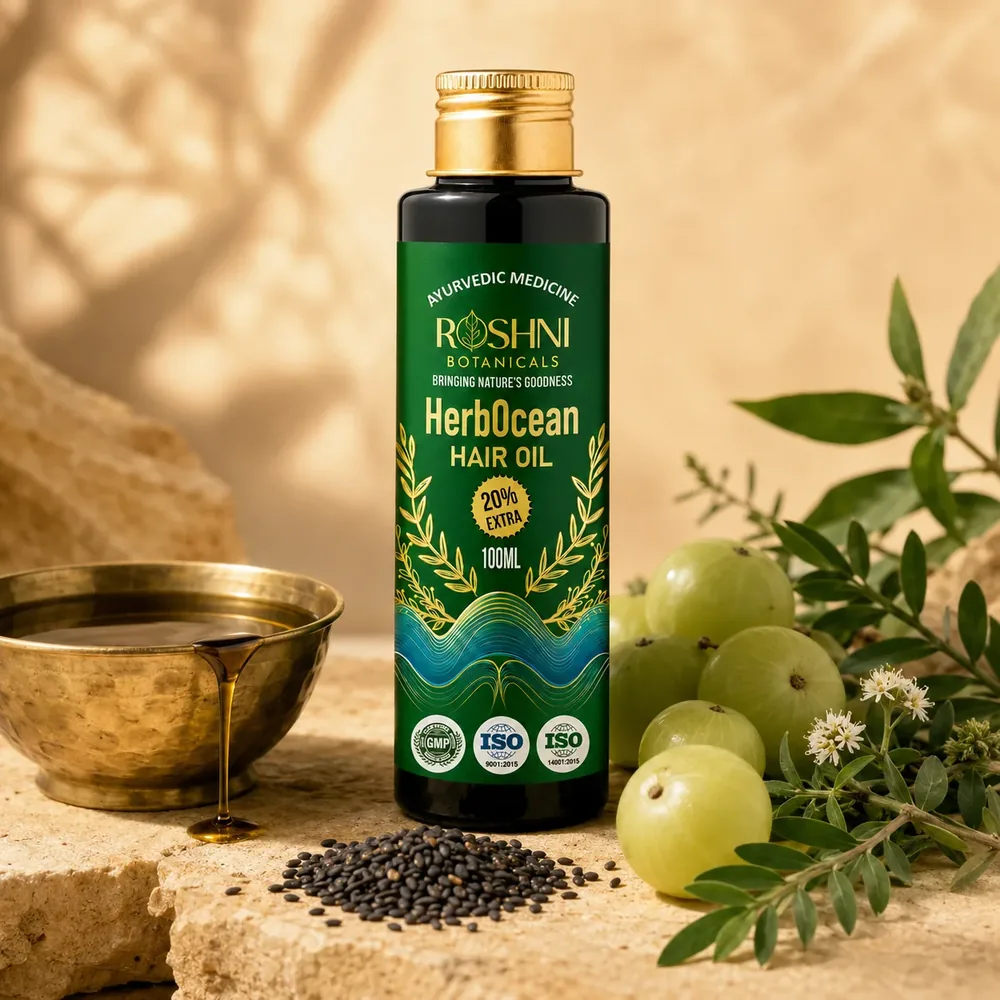
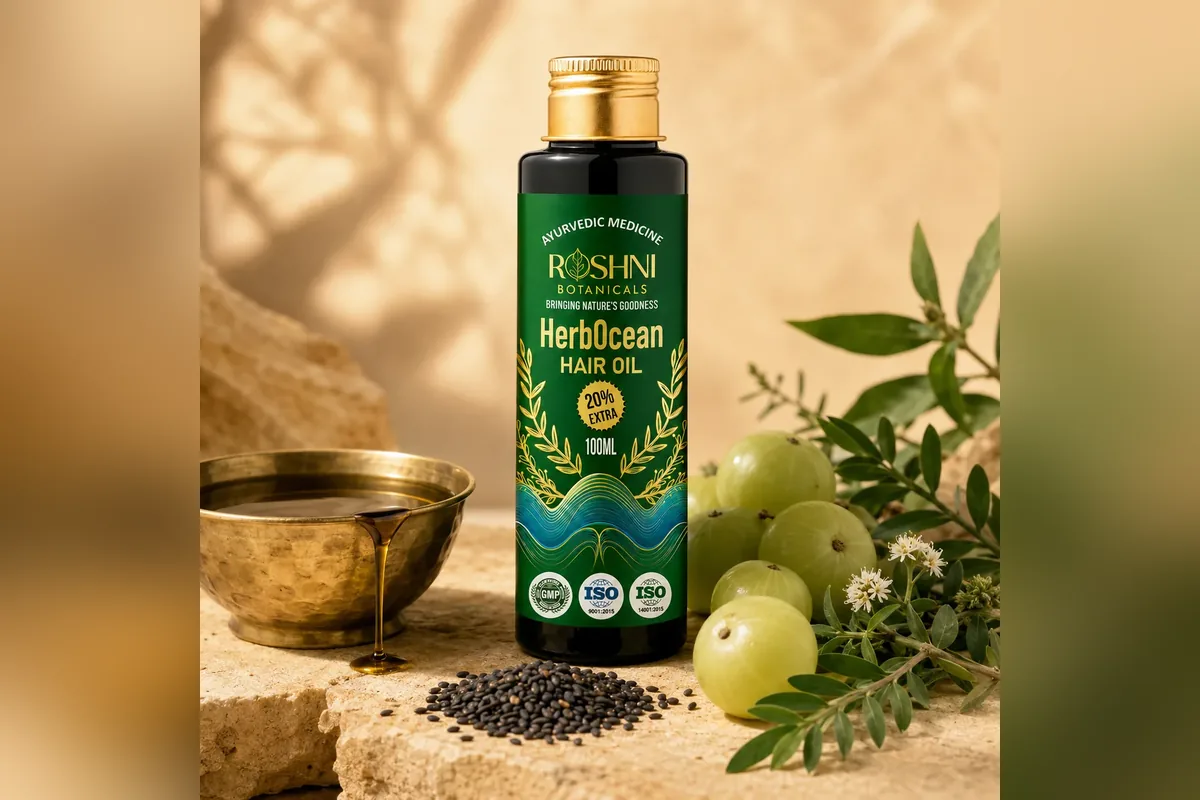
The resolution is timing, not abstinence. Oiling still has a place this season, but as a short, deliberate ritual: warm a little oil, give the scalp a gentle one-to-two-hour pre-wash champi, and then wash it out fully. What you avoid is the winter habit of leaving oil in overnight, or for two or three days between washes, on a scalp that is already warm and damp; that is the version that backfires in July. Used the short pre-wash way, a classical medicated hair oil (Taila) supports the scalp without becoming the yeast’s dinner, and our fuller guide to the Ayurvedic hair-oiling routine sets out the method for calmer months. This is also where the HerbOcean Hair Oil earns a careful mention: it is a sesame-based blend whose neem and tulsi belong to the classical scalp-hygiene tradition, alongside Bhringraj, Amla, Brahmi and seven other herbs, and it is at its most sensible this season as that short pre-wash step rather than a leave-in. It is an AYUSH-licensed Ayurvedic medicine (Licence No. DL-474 A&U) for external use, formulated by Vaidya Shri Ram Prakash Ji, the master vaidya (a classical Ayurvedic physician and formulator) whose 40-year formulation legacy the HerbOcean line is built on, and made in-house at Roshni Botanicals’ GMP-certified unit in Bawana, Delhi. Patch-test on the inner forearm first, and if dandruff is heavy or stubborn, pair scalp care with a medicated anti-dandruff wash and a doctor’s advice, because an oil is supportive scalp care, not a fix for a yeast overgrowth on its own.
One more honest note on quantity, since this is where good intentions go wrong. Enough oil to lightly coat the scalp and lengths is plenty for a pre-wash champi; the palmful that drips onto the collar is not doing extra good, it is simply more for the yeast and more for the wash to strip. And if your scalp is actively flaking and angry right now, it is reasonable to pause oiling altogether for a week or two, settle the scalp with gentle washing first, and return to the short pre-wash ritual once the itch has calmed. Oiling is a supporting habit for a comfortable scalp, not a rescue for an inflamed one.
The Monsoon Scalp Routine That Actually Helps
The rest is a handful of small, repeatable habits, and together they do more than any single product. A word first on what you wash with: a gentle, mild shampoo two or three times a week clears the sweat and oil an ordinary monsoon scalp accumulates, and for genuinely flaky weeks a medicated anti-dandruff shampoo, used as its label directs and rotated with your mild one rather than daily, is the sensible workhorse. Chase the buildup with washing frequency and rinse quality, not with heat or harshness; hot water and aggressive scrubbing strip the scalp and leave it itchier than they found it.
Two small details make a medicated wash work far better than most people manage. Give it contact time: lather it into the scalp and leave it there for the two or three minutes the label asks for, rather than rinsing it straight off, because the active has to sit where the yeast actually lives. And keep your nails out of it. Scratching an itchy scalp breaks the skin, and broken skin itches more and settles slower in humid weeks; press or tap the spot instead, and let the wash do the work.
- Wash gently two to three times a week to clear sweat, oil and buildup; use lukewarm, never hot water, since heat strips the scalp and worsens the itch.
- Dry the scalp fully before you tie your hair, every time; a damp bun or braid is a warm, sealed pocket the yeast loves. This one habit changes the most scalps.
- Wash combs weekly and change pillow covers twice a week through the monsoon, so freshly cleaned hair does not meet last week’s oil and flakes each night.
- In hard-water cities, where mineral residue stiffens hair and adds to buildup, finish with a mug of filtered or boiled-and-cooled water as the final rinse.
- For commuters: never pull a helmet or dupatta over a wet scalp; carry a spare dry helmet liner in the monsoon and let hair air-dry or towel-blot before covering it.
- After a proper soaking, rinse the scalp with clean water when you get the chance rather than letting city rainwater dry in your hair, and dry it fully before tying it back.
None of these asks much, and none costs much; the value is in doing them steadily through the eight to ten weeks the season lasts, rather than reaching for a stronger shampoo the week the itching peaks.
Simple Flakes or Something More: When to See a Dermatologist
Most monsoon flaking is ordinary dandruff, and the routine above settles it. Some patterns are not ordinary, and knowing the line keeps you from either ignoring something real or panicking over something harmless. Ordinary dandruff is dry, powdery, whitish flaking that spreads fairly evenly and eases when you wash well. Reach for a dermatologist if instead you see red, inflamed or greasy yellowish patches; if the flaking spreads beyond the scalp to the eyebrows, the sides of the nose or behind the ears; if it itches enough to disturb sleep; or if it simply will not settle after three to four weeks of good scalp hygiene. Those signs point toward seborrheic dermatitis, which needs medical care rather than home care alone, and round, scaly patches with hair loss inside them can mean a true fungal infection that also needs a doctor. There is no shame and no failure in any of this; a monsoon scalp that tips from ordinary flaking into something inflamed is common, and a short course of the right medicated care settles most of it. Naming the problem correctly is simply what makes every next step, classical habit or clinical prescription, actually work.
A Calmer Scalp Through the Rains
The monsoon scalp does not need force; it needs air, hygiene and better timing. Dry the scalp before you tie it, wash gently two or three times a week, keep combs and pillow covers clean, and keep oiling to a short pre-wash ritual rather than a days-long soak. If a weekly champi is part of your routine, time it that way this season with a classical medicated oil like HerbOcean Hair Oil, whose neem and tulsi carry the old scalp-hygiene tradition, and washed out within a couple of hours. For the fuller picture of monsoon hair, including the shedding that so often arrives alongside the flaking, our monsoon hair fall guide is the companion read, and our definitive guide to Ayurvedic hair oils maps the wider practice. Let the season pass over a scalp that is clean, clear and comfortable rather than warm, damp and smothered.
References: Sushruta Samhita, Nidana Sthana 13 (Kshudra Roga), which lists Darunaka among the minor conditions and reads the flaking, itching scalp through aggravated Kapha and Vata. Borda LJ, Wikramanayake TC. Seborrheic Dermatitis and Dandruff: A Comprehensive Review. Journal of Clinical and Investigative Dermatology. 2015;3(2):10 (a review; dandruff and seborrheic dermatitis are described as a continuum of one condition, with the yeast Malassezia and scalp sebum central to the mechanism).
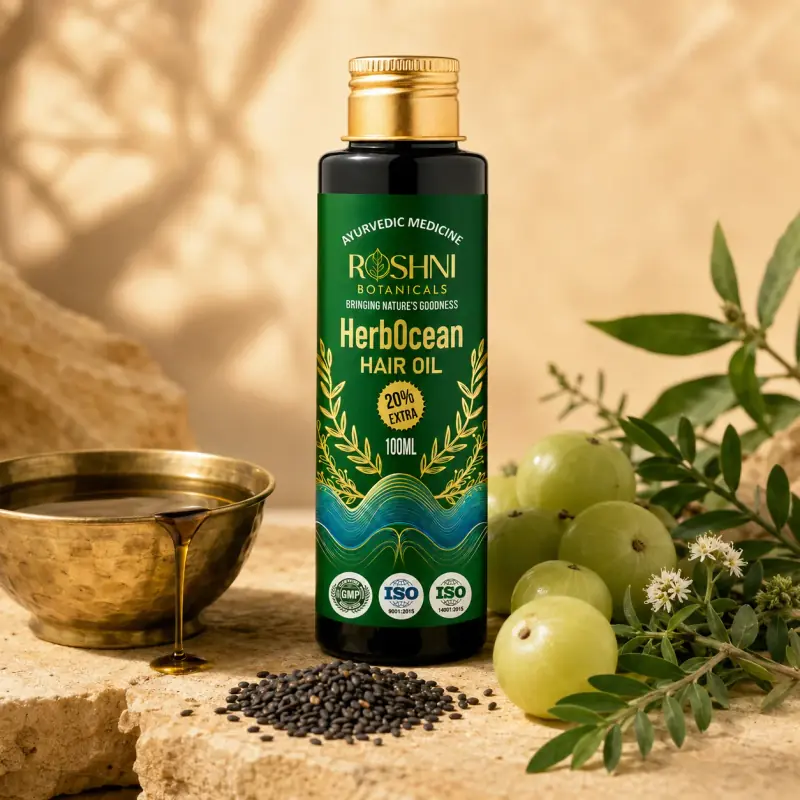
HerbOcean Hair Oil
A classical Taila for hair fall, dullness and a flaky scalp, with sixteen botanicals like Brahmi, Jatamansi, Amla and Neem in a slow sesame base.
Part of our guide: The definitive guide to Ayurvedic hair oils for hair fall.