Scalp Acne: Why Painful Pimples Turn Up Under Your Hair, and What Honest Care Looks Like
Most scalp pimples are decided in hours you are not thinking about your hair: the damp bun, the helmet over wet hair, the conditioner rushed at the nape. Plus the itchy look-alike that is not acne.
A tender bump at the crown that stings when the comb catches it. Another at the nape, right where the helmet strap sits. You feel these before you ever see them.
Scalp pimples have a logic of their own in humid weather, and most of that logic plays out in hours you are not thinking about your hair at all. The damp bun tied before a commute. Oil left in overnight through a sticky night. Conditioner rinsed in a hurry at the back of the head.
This guide separates spots inside the hair-bearing scalp from pimples at the hairline, sets an oiling rule for a scalp that is actively breaking out, and names the signs that belong with a dermatologist rather than a shelf.
Key takeaways
- Scalp acne means pimples inside the hair-bearing scalp: the crown, along the parting, the back of the head. You will usually find them by touch long before you see them.
- Small, itchy bumps of much the same size spread across a wide area are usually folliculitis rather than acne. It can be bacterial or it can be a yeast, the two look alike, and that pattern needs a dermatologist rather than a change of shampoo.
- Acne usually has blackheads or whiteheads somewhere among the spots. Folliculitis does not.
- While spots are sore and new ones keep arriving, oil an hour or two before a wash rather than overnight, and rinse until no film is left at the crown or nape.
- HerbOcean Anti-Acne Roll-On is for skin you can see and reach: the hairline, the temples and the nape edges. It is not for the hair-bearing scalp.
Scalp Acne, Hairline Pimples, and the Look-Alike That Is Neither
Scalp acne is the plain name for pimples that sit inside the hair-bearing scalp: on the crown, along the parting, at the back of the head. Most people find them by touch first. A comb catches, or hair gets pulled up into a ponytail, and there it is. Scalp skin sits under dense hair and is far harder to see and reach than the cheek, which is part of why a spot there can feel sorer and go unnoticed for longer.
Pimples at the hairline and across the forehead sit on facial skin, which is skin you can see and reach, so visible spot care is workable there. There is a separate story behind why forehead pimples keep coming back, and most of it starts on the scalp. But the hairline is a boundary, not a clean line: folliculitis crosses it too, and the advice splits the moment hair is in the way.
Acne is mixed in appearance, unevenly spread, and there are usually blackheads or whiteheads somewhere among the spots. Folliculitis looks uniform: small, similar-sized bumps sitting at hair openings, often itchy, often across a wide stretch of scalp, with no blackheads or whiteheads among them. It is the same look-alike that turns up on the back. Folliculitis can be driven by bacteria or by a yeast. The two look the same to the naked eye and the treatment is not the same, which is why this belongs with a dermatologist rather than the shampoo aisle. A scalp breakout that is really folliculitis is a follicle problem wearing a pimple’s clothes, and acne care is the wrong tool for it.
Washing, rinsing and drying are where care for an ordinary scalp breakout starts, and for many people that is enough. But a scalp spot that scars, spreads or takes hair with it is not a hygiene problem and will not be washed away. Read the warning signs below before you settle into a routine.
Why a Damp Scalp Breaks Out
Humid weather is the worst of both worlds for a scalp. Moisture hangs in the air, the heat has not broken, and hair spends long stretches damp without ever drying properly.
A helmet goes on over hair still wet from the morning bath and stays there through forty minutes of traffic. Sweat has nowhere to go, and the strap presses the same line at the nape every single day. A dupatta drawn over the head does something similar, with less pressure and more trapped heat. Later, hair gets twisted into a bun while it is still damp and stays that way until bedtime. Heat, sweating and long hours under a helmet, a dupatta or a damp bun are well recognised aggravators of follicle inflammation, and friction at the nape adds to it.
Two adjustments cost nothing at all. Rinse for longer than feels necessary, tilting your head forward so water runs down through the nape instead of past it. Then dry the scalp properly before hair goes up, whether under a helmet or under a dupatta.
The Nape, the Conditioner, and the Rinse You Rush
Conditioner is designed to cling, and the nape is where most people rinse least and fastest, so a faint film survives right where the strap sits. Styling creams and serums build up along the parting in the same quiet way. If your supply water is mineral-heavy, that residue is harder to shift again; our scalp routine for flaking and itching carries the final-rinse fix.
Rinse order matters more than most routines allow for. Conditioner belongs on the lengths and the ends, not massaged into the scalp, and it should be rinsed out thoroughly before anything else goes near the roots. On wash day, run your fingers along the nape under the water until the slip is gone, not until you are bored.
Then the cloth that touches the scalp. Keep a cotton helmet liner, wash it often, and carry a spare in your bag. Change pillow covers more often while the weather is humid. Use a fresh towel on your hair rather than the one that has been hanging in the bathroom all week.
Wash your hair ties and scrunchies too, since they carry oil and product from every previous use. Dry hair fully before tying it up, and loosen the bun the moment you are home.
Oiling a Scalp That Is Breaking Out, and When to Pause
Oiling is not the villain here. Champi has a real place in the week, and in an ordinary week it belongs in your routine. What changes is the timing, and only that.
While a breakout is active, when spots are sore and fresh ones keep arriving, keep it to an hour or two before the wash rather than the night before. Wash it out completely afterwards, twice if that is what it takes, until no film remains at the crown or nape. The load-bearing part is the rule, not the clock: before the wash, never overnight, rinsed out fully. Overnight oiling in a humid week means eight or nine hours of oil, sweat and trapped heat sitting over follicles that are already struggling. The full champi routine covers the ordinary-week method.
Some weeks the honest call is to pause entirely for a wash cycle or two. Nothing is lost by doing that. The full ritual comes back once your scalp is comfortable again. One exception. If the bumps are the small, itchy, uniform kind described earlier, leave the scalp alone until a dermatologist has looked.
Where the Roll-On Fits, and Where It Does Not
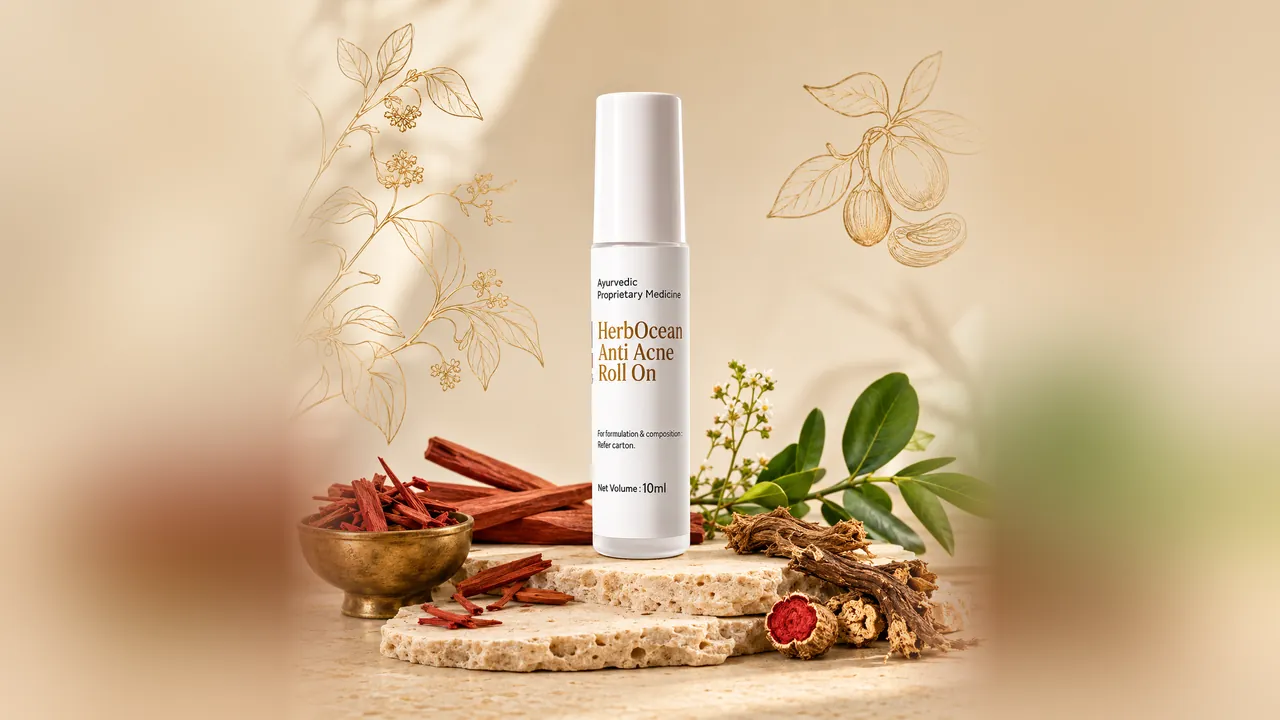
HerbOcean Anti-Acne Roll-On is skin spot care. It suits the hairline, the temples and the nape edges, where a pimple sits on skin you can see and reach. A rollerball is built for bare skin, and hair gets in its way, which is why the hair-bearing scalp is not a surface we put it on. Use it on clean, dry skin, on the spot and the skin just around it, morning and night. For the wider routine, see where spot care fits in an everyday routine.
The Roll-On is an Ayurvedic medicine classically indicated for acne and pimples (Yuvanpidika) and traditionally used in the care of post-acne marks and pigmentation (post-inflammatory hyperpigmentation, or PIH). It carries six classical botanicals in equal measure, the same dose for every one: Manjistha, Lodhra, nutmeg (Jaiphal), red sandalwood (Raktchandan), Indian Berberry (Daruhaldi) and costus root (Kuth). There is no neem in it and no tea tree. Each of the six is carried at the same dose, so none of them leads the formula. Manjistha and red sandalwood carry a long history in Indian household care. This preparation is not offered for changing skin tone, and nothing on this page claims that for it.
It is an AYUSH-licensed Ayurvedic medicine (Licence No. DL-474 A&U), built on the 40-year formulation legacy of Vaidya Shri Ram Prakash Ji and made in-house at our GMP-certified unit in Bawana, Delhi. For external use only. Patch-test on the inner forearm before first use, and keep it away from broken or weeping skin.
One caution outranks the surface rule. If the bumps along your hairline are small, itchy and much the same size rather than mixed, that belongs with a dermatologist before it belongs with any spot product, ours included.
The Marks Left Behind at the Hairline
Marks are the part most people underestimate. On melanin-rich Indian skin, inflammation readily leaves a darker patch where the spot used to be, and along the hairline those marks show every time hair gets pulled back. Squeezing a spot at the scalp edge keeps the inflammation going, so leave it alone, however satisfying picking feels.
For the marks themselves at the hairline and temples, HerbOcean Soundarya Cream is traditionally used in the care of post-acne marks and pigmentation. Marks keep their own schedule, and no timeline is worth quoting.
When Scalp Pimples Need a Dermatologist
Book a dermatologist if any of these fits:
- the bumps are small, itchy and much the same size across a wide area, since folliculitis can look like acne and does not answer to acne care;
- a spot oozes, crusts or keeps returning in the same place;
- hair is thinning or a bare patch is forming around individual spots;
- firm bumps at the nape are hardening into raised, smooth scars, or hair is not growing back there;
- large lumps at the crown or the back of the head discharge fluid;
- there is a scaly patch with hairs broken off short, particularly on a child’s scalp or in more than one person at home;
- a single lump is enlarging quickly or the pain is worsening: do not wait;
- there is fever with tender, swollen glands behind the ears or along the neck.
A dermatologist can usually tell from examination, and may confirm it from a skin-surface sample or a swab rather than assume it from the look of it.
Start With the Wash, Not the Shelf
For spots inside the hair-bearing scalp, rinse discipline, clean liners and shorter pre-wash oiling do the most work. Use the Roll-On for pimples and marks at the hairline, temples and nape edges, not inside the hair. And see a dermatologist for the signs above. If flaking and itching travel alongside your spots, the scalp routine linked earlier covers the wider picture, and our complete guide to ayurvedic treatment for acne sets all of it in classical context.
References: DermNet, Malassezia folliculitis (comedones are not seen, distinguishing it from acne vulgaris; risk factors include hot humid climate, sweating and occlusion; non-Indian clinical reference). DermNet, Scalp folliculitis (often most troublesome at the frontal hairline; causes include bacteria, especially Cutibacterium acnes, yeasts and mites; non-Indian). Folliculitis. StatPearls, NCBI Bookshelf NBK547754 (superficial bacterial folliculitis is the most common form; diagnosis is clinical, with skin-surface sampling as an adjunct; non-Indian). Acne Keloidalis Nuchae. StatPearls, NCBI Bookshelf NBK459135 (persistent folliculitis at the nape forming firm scars; friction from collars and helmets, heat and humidity among the triggers; predominantly non-Indian populations). Jakhar D, Bhatia V, Gupta RK, Kaur I. Actas Dermosifiliograficas. 2022;113(1):T78-T81 (n=45, New Delhi; monomorphic papulo-pustular lesions mimicking acne vulgaris, on the face and upper trunk rather than the scalp).
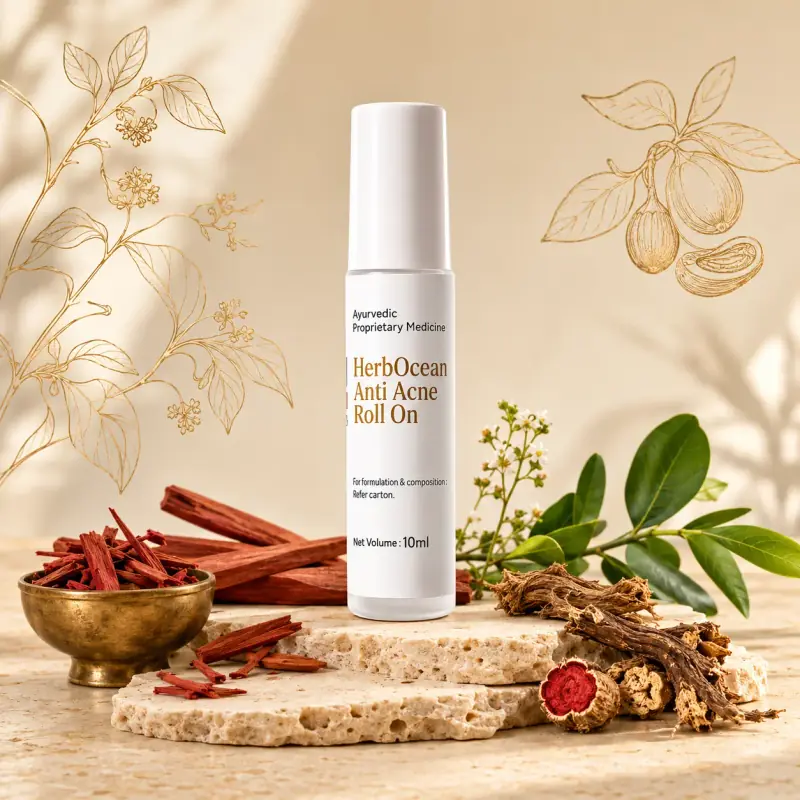
Anti-Acne Roll-On
Ayurvedic spot care for active pimples and post-acne marks (PIH) — a herbal roll-on classically indicated for acne (Yuvanpidika). Made in-house in Delhi.
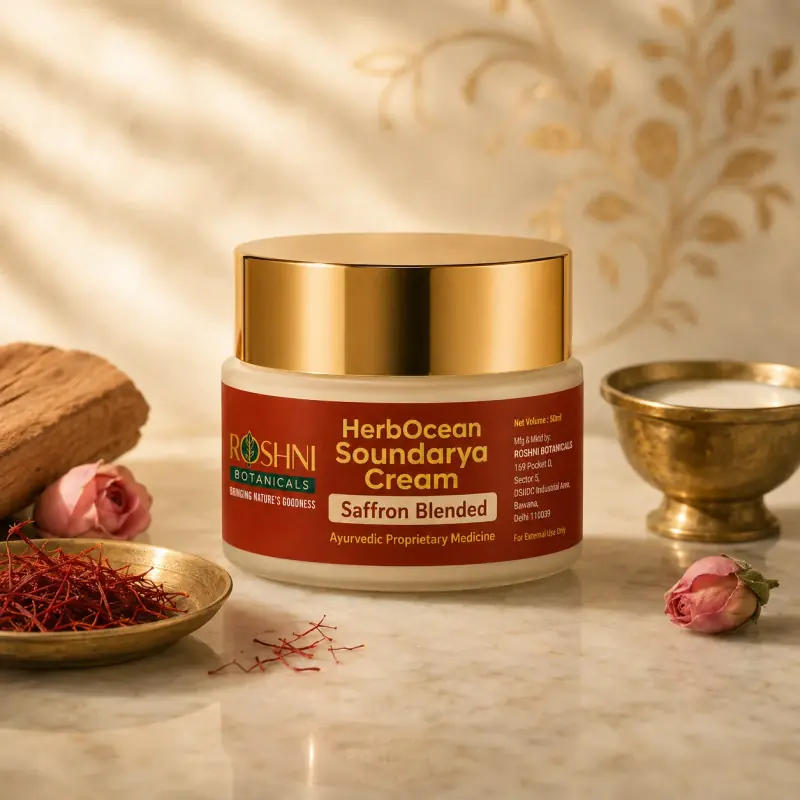
Soundarya Cream
A rich saffron brightening and repair cream with bargad (Vatt) bark on a goat-milk and coconut base, with shea and kokum butters, traditionally used in the care of skin where post-acne marks (PIH) linger.
Part of our guide: Ayurvedic treatment for acne: the complete guide.