One Concern, One Product: Ayurvedic Skin and Hair Routine
Pimples, pigmentation, dry skin or hair fall: pick the one you want to look after, add a single medicine for it, and let it settle in before adding more.
Start by naming one thing about your skin or hair that you want to look after: pimples and the marks they leave, pigmentation and dark spots, dry or mature skin, or hair fall. Then add one Ayurvedic medicine for that concern, and only one. The base of your morning stays the same, whatever you pick.
Choose the concern you deal with on an ordinary day. Each concern points to one product, or to an oil and a cream to choose between, and to a longer read if you want one, so you can leave the other concerns alone for now. Once that one product has found its place in your day, you can decide whether anything else should join it.
Key takeaways
- Name one concern first, whether that is pimples and their marks, pigmentation, dry or mature skin, or hair fall, and let that single choice decide what you add.
- The morning base stays the same whatever you choose: a gentle wash in lukewarm water, a moisturiser, and then a sunscreen on any day you go outside.
- Use your one added medicine the way its product page says: the two facial oils go on at night, while the creams and the spot care each give their own timing.
- Our advice is to use one product on its own for about four weeks before you add a second, so that if your skin reacts, you know which product it is reacting to.
- Deep, painful acne, a spot or mole that is new or changing, or hair coming out in clumps or patches needs a dermatologist before it needs another product.
Start With One Concern, Not a Shelf
Why only one? Because skin tells you very little when three new things arrive together. If your face turns red or itchy a few days later, you cannot know which product it was objecting to, and you end up stopping all three. The American Academy of Dermatology also cautions that piling on products can irritate the skin, so a short list is kinder as well as clearer.
There are four routes to choose from: pimples and post-acne marks, pigmentation or melasma, dry or mature skin, and hair fall. If two of them trouble you, start with the one that weighs on you more, and come back for the second once the first has settled in. The hair route can join any one of the skin routes, as long as you start one product at a time.
Ayurveda has a name for the shape of an ordinary day, Dinacharya (daily routine), and both the Ashtanga Hridaya and the Charaka Samhita set it out. If what you need is the sequence, what goes on first and what follows, morning and night, read the morning and night order for Indian skin. The question in front of you is a different one: which product belongs to the concern you just named.
The Morning Base for Every Route
Whatever you named, the morning starts the same way: a gentle wash, a moisturiser, then sunscreen.
For that last step, the American Academy of Dermatology advises a broad-spectrum sunscreen with an SPF of 30 or more, worn every day you go outside, overcast ones too. HerbOcean does not manufacture a sunscreen, and nothing in the range replaces one, so your sun protection stays a separate step. If your skin runs oily, gel or cream sunscreen for oily, acne-prone skin helps you choose a texture and keep it topped up.
If Your Concern Is Pimples and Post-Acne Marks
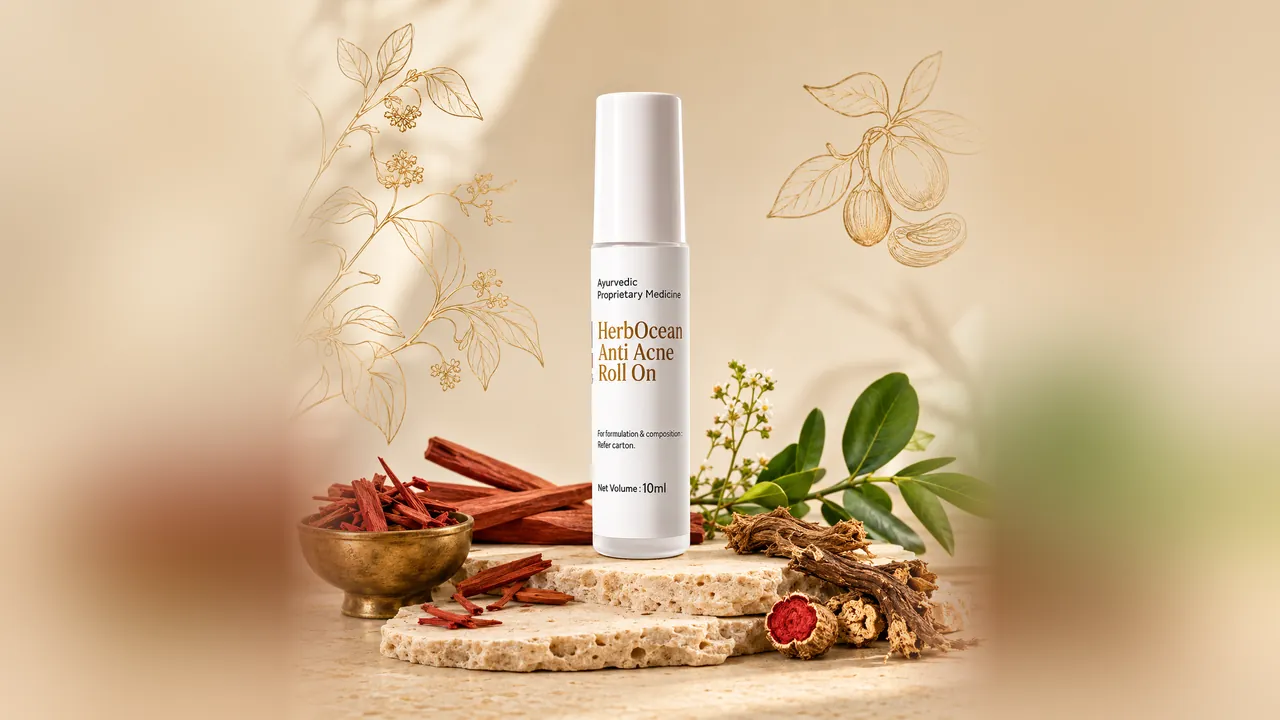
For active pimples, the one addition is spot care. HerbOcean Anti-Acne Roll-On is an AYUSH-licensed Ayurvedic medicine, Licence No. DL-474 A&U, for external use, classically indicated for acne and pimples (Yuvanpidika, the classical Ayurvedic term for acne, literally youthful eruption) and traditionally used in the care of post-acne marks and pigmentation (PIH). Cleanse, pat dry, then roll a thin layer directly over the pimple, morning and night, then follow with your moisturiser. Spot use only, not across the whole face.
Leave the scrub out of it. The American Academy of Dermatology is clear that the black dots in blackheads are not dirt, and that scrubbing at them only makes acne worse. Its advice is to wash your face no more than twice a day, and again after you sweat.
If pimples have left marks behind, and once the pimples themselves have settled, Soundarya Cream is traditionally used in the care of post-acne marks. It is rich, so very oily or acne-prone skin may not want it during an active phase. You will find the same cream again on the dry-skin route. If you are not sure whether what you see is a mark or a scar, short answers on Ayurvedic skincare for Indian skin tells the two apart in a few lines. For acne from start to finish, the longer read is Ayurvedic treatment for acne, the full guide.
If Your Concern Is Pigmentation, Dark Spots or Melasma
For melasma and dark spots, the choice is between a Taila (medicated oil) and a cream, and you need only one of them to begin. HerbOcean Radiance Tailam is an AYUSH-licensed Ayurvedic medicine for external use, classically indicated for melasma (Vyanga) and traditionally used to support even tone where dark spots and post-inflammatory hyperpigmentation (PIH) show on melanin-rich Indian skin. At night, press a few drops over clean skin, concentrating on areas of uneven tone.
If you would rather use a cream, HerbOcean Radiance Cream is an Ayurvedic medicine for external use, classically indicated for facial pigmentation (Vyanga, the patches Hindi homes call jhaiyaan) and traditionally used in the care of dark spots and uneven tone. Smooth over clean skin morning and night. Between the two, go by the texture you would rather live with.
Daylight is part of this route as well. The American Academy of Dermatology names sunlight as a trigger for melasma and wants the skin protected every day. It adds that visible light can worsen melasma, especially on darker skin, and suggests a tinted sunscreen against it. On melanin-rich Indian skin, then, the morning sunscreen stays in place whichever medicine you choose. For melasma in full, read Ayurvedic treatment for melasma on Indian skin.
If Your Concern Is Dryness or Mature Skin
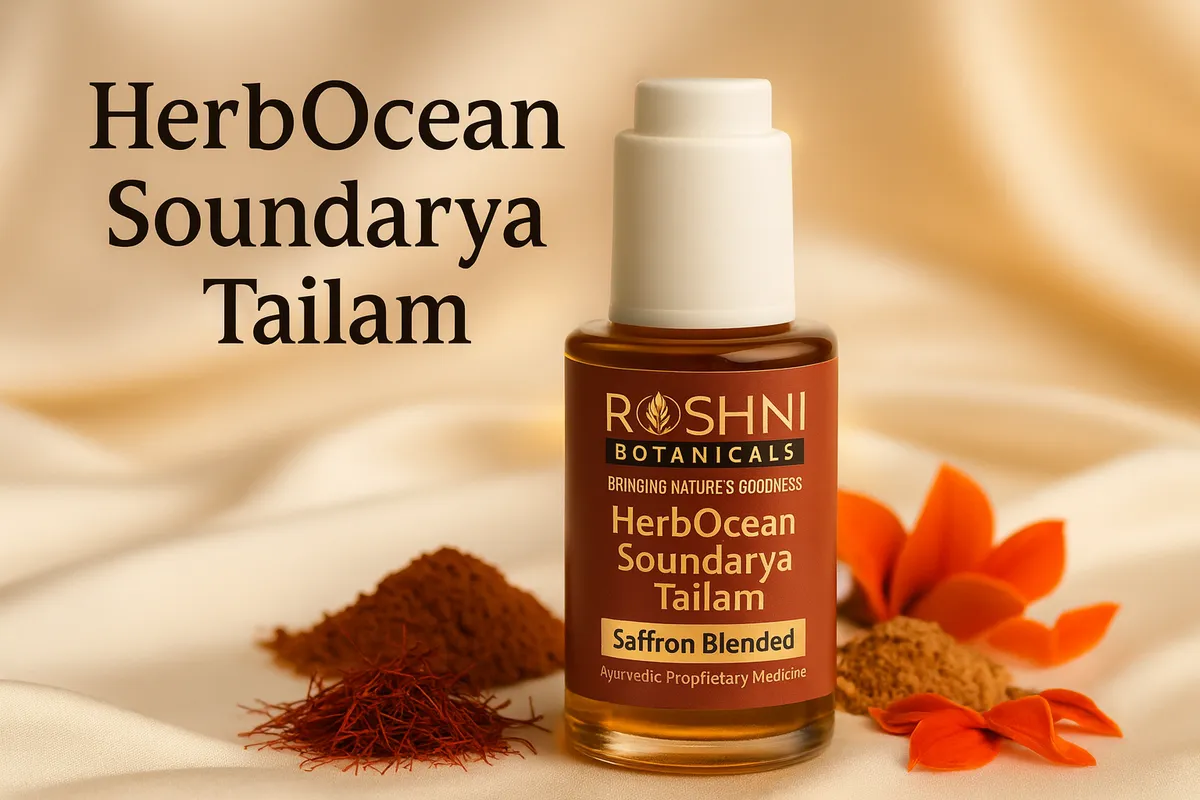
For skin that feels dry, or skin that is growing older, the oil to add at night is HerbOcean Soundarya Tailam, an AYUSH-licensed Ayurvedic medicine for external use, traditionally used to support healthy, comfortable, even-looking skin, and one that dry and mature skin tends to accept well. It is made by the goat-milk Kshira-paka method (the classical milk-and-oil method), in which the herbs are simmered with goat milk in a sesame base until the water has evaporated and only the medicated oil remains. At night, on clean, slightly damp skin, press a few drops between the palms and pat over the face and neck. Very oily or actively breaking-out skin may prefer a lighter option.
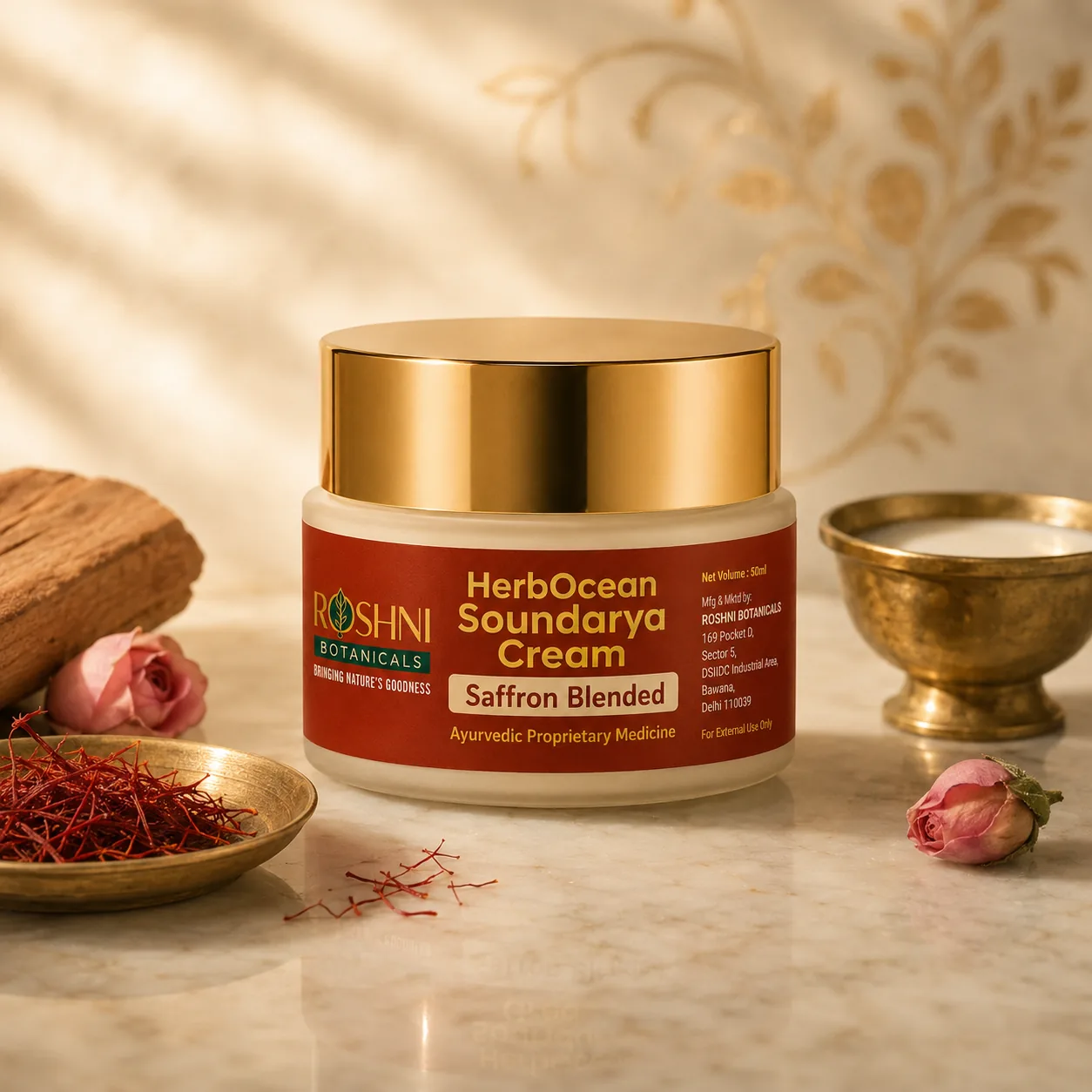
The cream on this route is HerbOcean Soundarya Cream, which is an AYUSH-licensed Ayurvedic medicine for external use, traditionally used to support soft, nourished skin, and it helps maintain comfort in dry, depleted skin. Warm a small amount and press into clean skin, morning or night. Very oily or acne-prone skin may find it rich. For the longer story, read why Ayurveda reaches for goat milk on dry skin.
Hard water is worth knowing about when skin runs dry. In South West Delhi, groundwater samples have tested hard, and when researchers in Sheffield washed forearm skin on 80 adults, more of the cleanser stayed behind where the water was hard. Whatever runs from your tap, a small amount of cleanser is enough.
If Your Concern Is Hair Fall
For hair fall, the one addition is a medicine for the scalp. HerbOcean Hair Oil is an AYUSH-licensed Ayurvedic medicine for external use, classically indicated for hair fall and dullness. It nourishes the scalp, helps keep it clean and flake-free, and is traditionally used to support the scalp against dryness and seasonal hair fall. It is a classical Taila of sixteen botanicals in a sesame (Til tail) base. Warm a little oil between your palms, part the hair and massage it into the scalp with your fingertips for a few minutes, leave it on for at least an hour or overnight, then cleanse.
The massage is the champi you may know from home, a head massage with oil, and what you are working into the scalp is a medicine. Leave a clear gap at the hairline as you work: the American Academy of Dermatology notes that the oils in hair products can cause small breakouts along the hairline and forehead. If you are also starting a face product, begin one before the other, so that if a breakout turns up along the hairline, you know which of the two to look at.
If you want to make sense of what your comb and scalp are showing you, reading hair fall by dosha takes you through it, along with the signs that should go to a dermatologist first. The oil itself is the same whichever reading you arrive at.
New to This? One Product at a Time
If you are starting from nothing, start smaller than you might like: one product, for one concern. Our advice is to let that one product run alone for about four weeks before a second joins it. Keep everything else in the routine unchanged over that time, the cleanser and sunscreen included, so that if your skin reacts, you know where to look first. Before it first touches your face, give it the longer forearm test set out in a patch-test-first routine for sensitive skin.
A few pairings are best avoided while a new product is settling in. A new exfoliant counts as a new product too, so it waits its turn rather than starting alongside anything else new. And keep to one facial oil at night, not two.
Some things call for a dermatologist rather than another product. On the skin, that means acne that is deep and painful, acne that leaves scars, or acne that starts for the first time in adulthood, and any spot or mole that is new, unlike the others, changing in size, shape or colour, itching or bleeding. On the scalp, it means hair coming out in clumps in your comb, or a bald patch that appears within a day or two. And whatever the product, stop it if it stings or burns.
Go Back to the One Thing You Named
Return to the concern you picked at the start and take the one product that belongs to it. Patch-test it, use it the way its product page says, and keep it on its own for about four weeks before you add anything else.
Across the four routes there are six medicines: one for pimples, two for melasma and dark spots, two for dry or mature skin, and one for hair fall. All six are made in-house at our GMP-certified unit in Bawana, Delhi, under AYUSH Licence No. DL-474 A&U, and built on the 40-year Ayurvedic formulation legacy of Vaidya Shri Ram Prakash Ji.
Patch-test on the inner forearm 24 hours before first use and discontinue if irritation occurs; avoid the eye area. For external use only. Avoid the three oils if you are allergic to sesame, both creams if you are allergic to coconut, Soundarya Tailam and Soundarya Cream if you are allergic to goat milk, and any of them if you are allergic to a listed botanical. Keep the spot care off the lips and off broken skin, and do not use the hair oil on an active scalp infection or on broken, inflamed skin without medical advice. If pregnant or breastfeeding, check with your doctor.
References: Sushruta Samhita, Nidana Sthana 13 (Bhishagratna, 1911), for Yuvanpidika and Vyanga. Ashtanga Hridaya, Sutrasthana 2 (Dinacharya Adhyaya), setting out the daily routine. Charaka Samhita, Sutrasthana 5 (Matrashiteeya Adhyaya), on the daily regimen. American Academy of Dermatology, United States: Face washing 101 (lukewarm water; twice a day and after sweating); Sunscreen FAQs, a media fact sheet (SPF 30 or more, broad spectrum, daily outdoors, cloudy days too); Melasma: Self-care (sunlight as a trigger; visible light and darker skin; tinted sunscreen); Should I apply my skin care products in a certain order? (too many products may irritate); What to look for: ABCDEs of melanoma (new or changing spots); How to treat different types of acne (blackhead dots are not dirt; resist scrubbing); Treating acne? Is it time to see a dermatologist? (a checklist that includes deep, painful acne and scars); Are your hair care products causing breakouts? (oily hair products and hairline breakouts); Hair loss: Signs and symptoms (clumps of hair in the comb; a bald patch appearing within a day or two); the three acne and breakout pages name a pharmaceutical sponsor. Danby SG and others. The Effect of Water Hardness on Surfactant Deposition after Washing and Subsequent Skin Irritation in Atopic Dermatitis Patients and Healthy Control Subjects. Journal of Investigative Dermatology, 2018 (forearm sites, 80 adults, Sheffield, United Kingdom; backed by a water softener maker). Acharya S and others. Assessment of groundwater quality by water quality indices for irrigation and drinking in South West Delhi, India. Data in Brief, 2018 (50 groundwater samples). Educational, not medical advice.
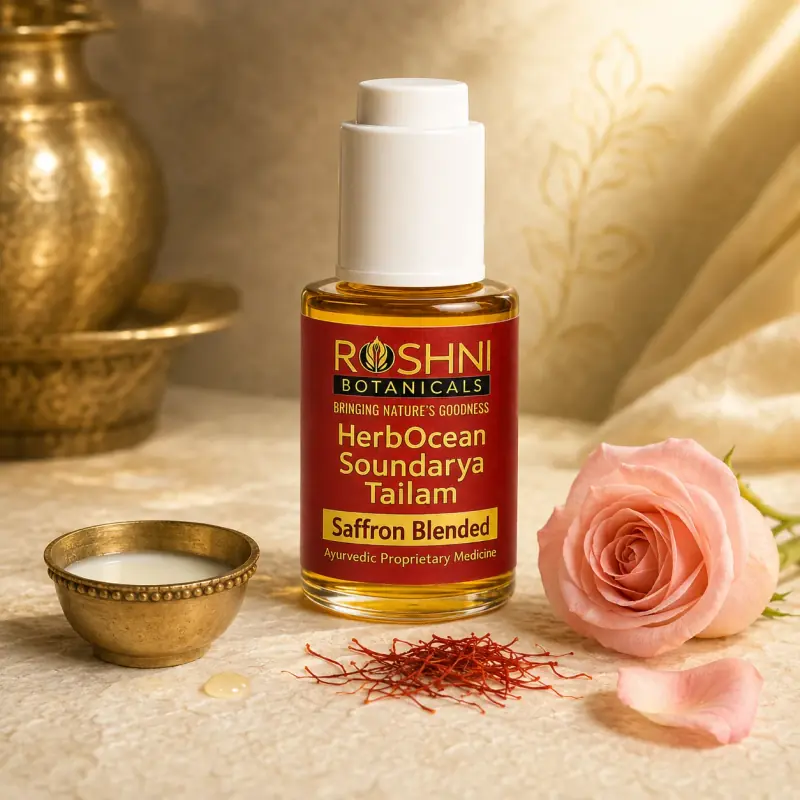
Soundarya Tailam
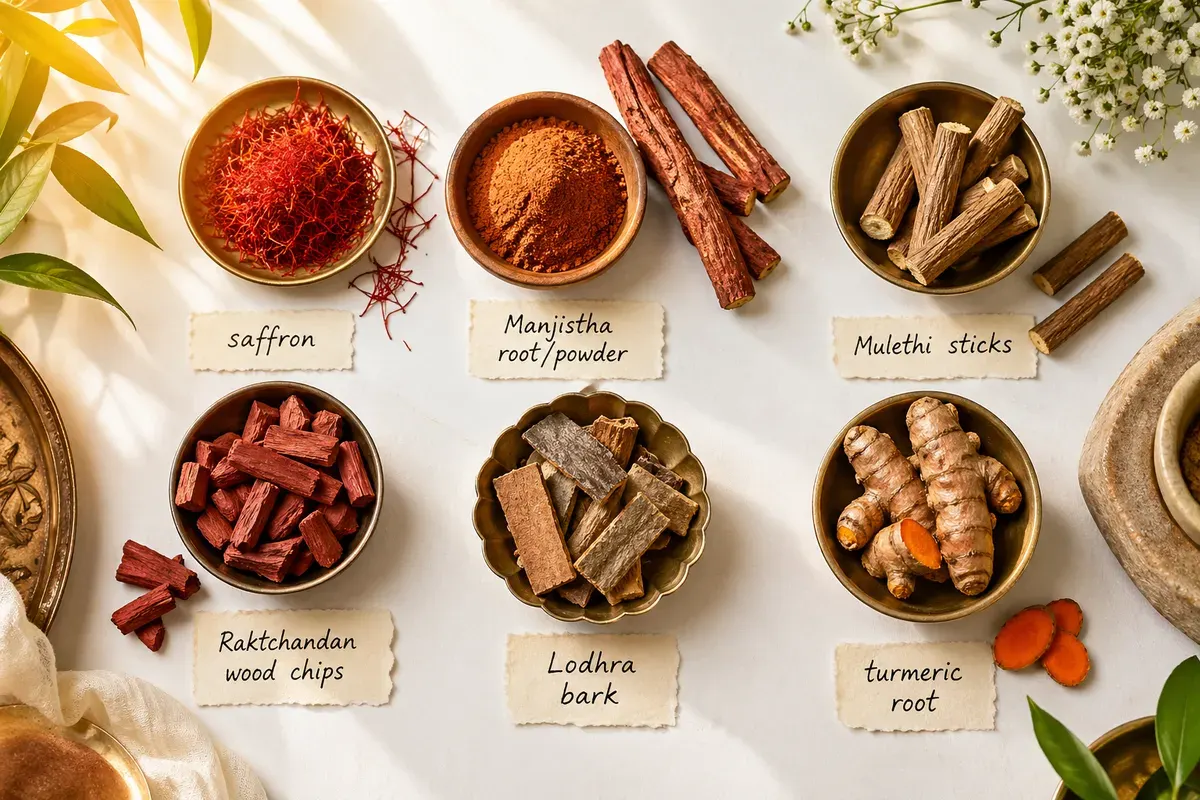
A saffron-infused facial Taila prepared in the goat-milk Kshira-paka tradition, with Manjistha, Mulethi and Kesar. For soft, bright, even skin.
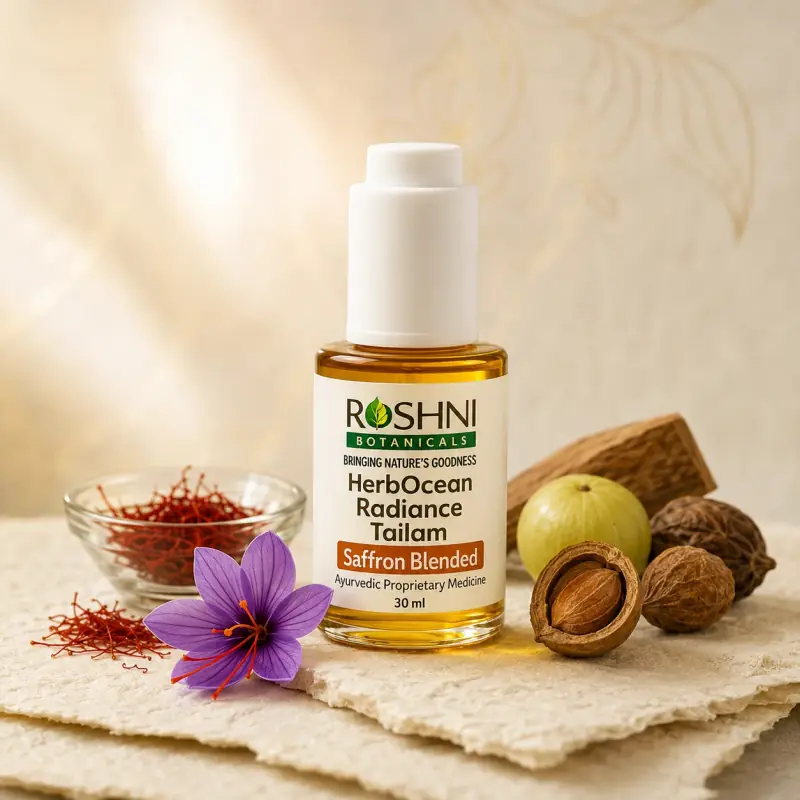
Radiance Tailam
A saffron brightening facial Taila with Manjistha and red sandalwood, traditionally used to support even tone where melasma, dark spots and PIH show.
Part of our guide: Ayurvedic treatment for melasma on Indian skin.