Ayurvedic Skincare Routine: The Morning and Night Order for Indian Skin
What goes on in the morning, what goes on at night, where sunscreen sits, and how a facial oil and a cream share one routine without crowding the skin.
A skincare routine can go wrong without a single bad product in it, because order counts too. The American Academy of Dermatology says as much: the sequence in which you put products on affects how well they work.
An Ayurvedic skincare routine comes down to a short order kept every day. In the morning: cleanse, a cream, then sunscreen. At night: cleanse, then a facial oil, a cream, or the oil with the cream over it. What is left is knowing how much to use and when to leave something out.
Key takeaways
- Morning order: cleanse, a cream on skin that is still a little damp, then a broad-spectrum sunscreen on any day you will be outdoors, cloudy days included.
- Night order: cleanse, then one leave-on step. With a light, herb-infused oil and a cream, our direction is to press the oil into slightly damp skin and put the cream over it.
- The classical daily routine is built on repetition, and a morning and night routine for the face borrows that idea while using classical medicines.
- Add new products singly, and patch-test each before it reaches your face. The American Academy of Dermatology warns that too many products at once may irritate the skin.
- When the air turns dry, keep the same order and change the weight: a cream in place of a lotion, lukewarm water and no scrubbing.
What the Classical Daily Routine Asks For
The classical name for a day lived in a fixed order is Dinacharya (daily routine). The Ashtanga Hridaya sets it out as a sequence that begins early in the morning and is repeated daily. It moves from cleaning the teeth and caring for the eyes to oiling the body, then exercise, a rub with herbal powder (udvartana) and the bath. The oiling is meant to be regular, and good skin is named among the reasons for it.
In that order the oiling comes early in the day, ahead of exercise and the bath. A morning and night routine for the face is a habit built on the same idea of a fixed order. It uses classical medicines, and what it takes from the tradition is repetition.
The reason for the split is practical. By day, whatever you put on has to sit under sunscreen and last through heat, dust and the brush of a dupatta. At night nothing has to go over it, and the heat, dust and dupatta are done for the day, so the richer step fits there.
The Morning Routine: Cleanse, Cream, Sunscreen
Wash in lukewarm water with a gentle cleanser and your fingertips, then pat the face with a soft towel and leave it a little damp. The American Academy of Dermatology advises against scrubbing, because scrubbing irritates the skin, and suggests washing twice a day and after heavy sweating. If your doctor has given you a medicine or treatment for your skin, the Academy puts it straight after cleansing, ahead of any cream or sunscreen.
The water has a say as well. Tests on groundwater from South West Delhi have found it hard, and when a British team washed the forearms of 80 adults, hard water left more of a common cleansing agent, sodium lauryl sulfate, on the skin than softened water did. Whatever your water, use only enough cleanser to lift dirt and oil, short of a thick lather, which is the Academy advice for dry skin.
The cream goes on next, before the skin has dried completely. The American Academy of Dermatology gives the same advice for dry skin, and notes that a cream can hold more moisture in the skin than a lotion.
Sunscreen goes on after the cream, and before make-up if you wear it. Choose one that is broad-spectrum and SPF 30 or higher, and wear it on any day you will be outdoors, cloudy days included, since the Academy points out that ultraviolet rays can get through cloud. It asks for at least a teaspoon for the face, put on dry skin about 15 minutes before you go out, so let the cream settle first. Top it up about every two hours while you are outside, and again after sweating. Brown skin has one more reason for it: the Academy notes that sunlight triggers melasma and that visible light can darken skin, particularly darker skin, and for visible light it points to a tinted sunscreen. For textures and topping up, see choosing a sunscreen for oily, acne-prone skin.
The Night Routine: Cleanse, Then Oil, Cream or Both
At night, start by washing the day away: sunscreen, make-up, dust. Wash the same gentle way as in the morning, until the skin feels clean without feeling tight.
Then comes the leave-on step, and on an ordinary night one is enough: an oil, such as a Taila (medicated oil), or a cream. Your skin and the weather decide between them. If the skin feels dry but you want something light, reach for the oil. If it pulls tight after a wash and wants a richer layer, reach for the cream.
Keep the amounts small either way: a little cream, or only a few drops of oil, pressed in with the palms rather than rubbed.
On a dry night you may want both, and the order matters. Our Tailams are light, herb-infused oils, so they go into slightly damp skin first and the cream seals them. That order is our own direction, written for our own oils. A heavier, plain oil can behave differently, so follow the label of the oil you are using.
How do you know whether one layer is enough? Go by how your face feels when you wake. If it is comfortable, the single layer did its job. If it is tight, the next dry night can take the cream over the oil.
Where the HerbOcean Medicines Sit in This Order
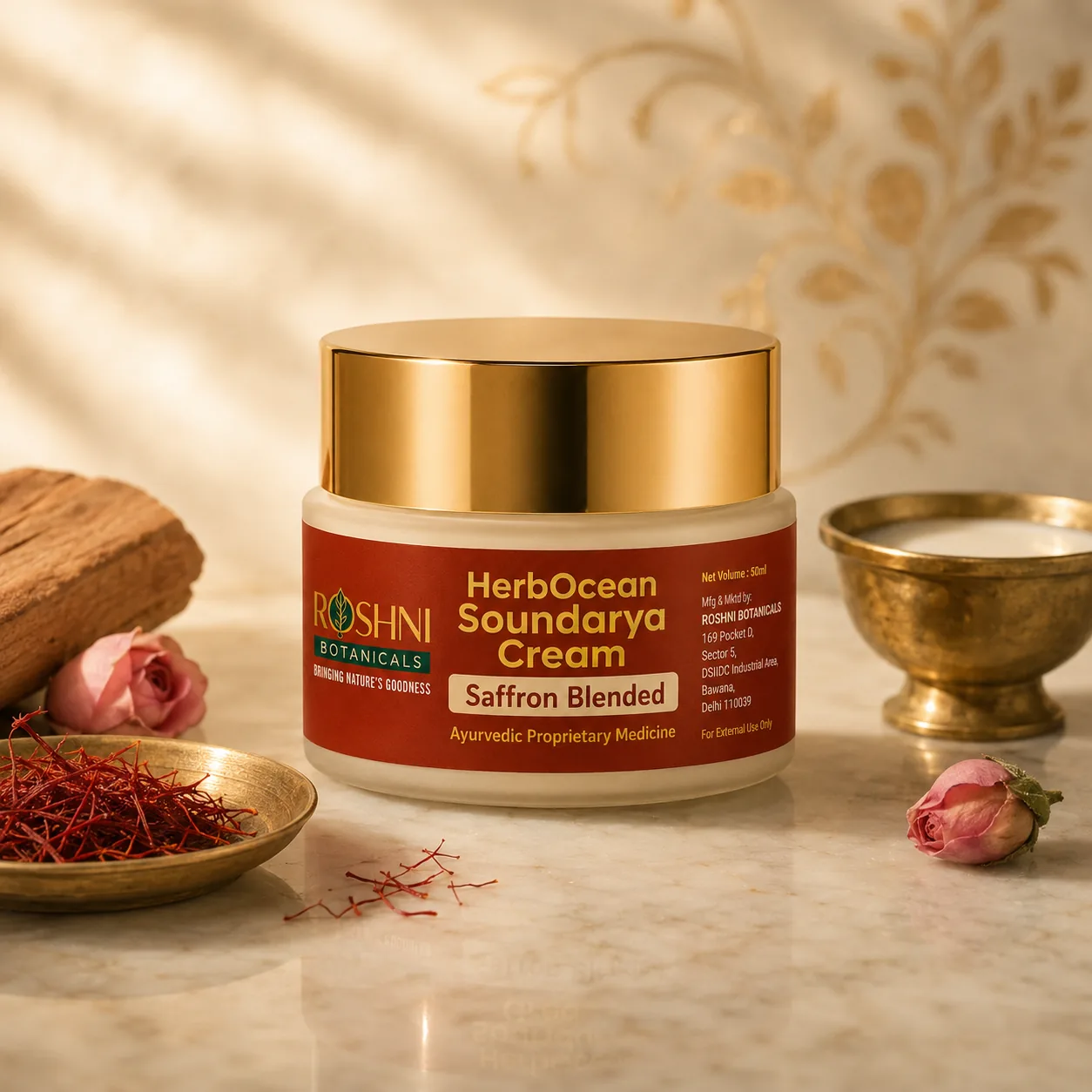
HerbOcean Soundarya Cream is an AYUSH-licensed Ayurvedic medicine for external use, traditionally used to support soft, nourished skin, and it helps maintain comfort in dry, depleted skin. It is a rich saffron repair cream with bargad (Vatt) bark on a goat-milk and coconut base, with shea and kokum butters, and vitamin E to round it off. Warm a small amount and press into clean skin, morning or night. Very oily or acne-prone skin may find it rich. HerbOcean does not manufacture a sunscreen, and nothing in the range replaces one, so by day always follow the cream with a broad-spectrum sunscreen.
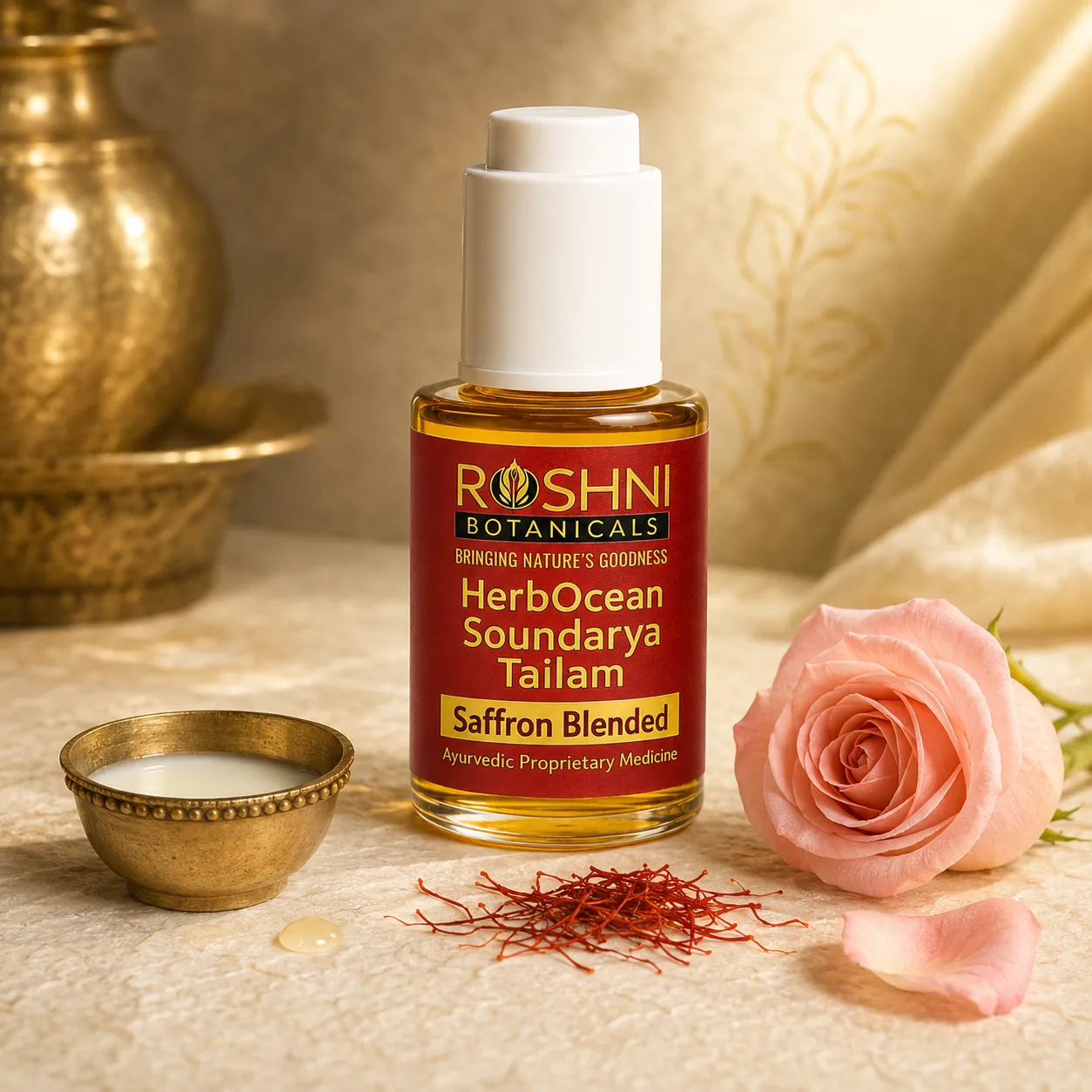
The night oil is HerbOcean Soundarya Tailam, an AYUSH-licensed Ayurvedic medicine for external use, traditionally used to support healthy, comfortable, even-looking skin, and one that dry and mature skin tends to accept well. It is made by the goat-milk Kshira-paka method (the classical milk-and-oil method), in which the herbs are simmered with goat milk in a sesame base until the water has evaporated and only the medicated oil remains. At night, on clean, slightly damp skin, press a few drops between the palms and pat over the face and neck. Very oily or actively breaking-out skin may prefer a lighter option.
If melasma is what you are looking after, the cream to reach for is HerbOcean Radiance Cream, which is an Ayurvedic medicine for external use, classically indicated for facial pigmentation (Vyanga, the patches Hindi homes call jhaiyaan) and traditionally used in the care of dark spots and uneven tone. It takes the cream step in the same order. Smooth over clean skin morning and night. Our guide to choosing between our two creams compares the pair, and the handbook on Ayurvedic treatment for melasma on Indian skin covers the condition itself.
All three are made in-house at our GMP-certified unit in Bawana, Delhi, under AYUSH Licence No. DL-474 A&U, and built on the 40-year Ayurvedic formulation legacy of Vaidya Shri Ram Prakash Ji. Patch-test on the inner forearm 24 hours before first use and discontinue if irritation occurs; avoid the eye area. For external use only. Avoid the oil if you are allergic to sesame, either cream if you are allergic to coconut, Soundarya Cream and Soundarya Tailam if you are allergic to goat milk, and all three if you are allergic to a listed botanical. If pregnant or breastfeeding, check with your doctor.
Adding Something New Without Upsetting the Rest
Bring new products in one at a time. The American Academy of Dermatology recommends testing each one before it joins your routine, on the bend of the elbow or the underside of the arm, for seven to ten days with two applications a day. Our own product pages set the test a full day ahead of first use. Treat that as the floor, and let the patch run for ten days to two weeks. The steps are set out in our guide for sensitive skin.
Too many products at once is a problem of its own: the Academy warns that it may irritate the skin. On brown skin irritation has a price, because a product that burns or stings may darken dark spots. So if something stings or burns, stop using it.
If your face feels heavy or irritated and you cannot tell why, go back to the short order: cleanse, one leave-on step, and sunscreen by day. Then bring the rest back singly.
When the Air Turns Dry
The order stays the same through the year. What changes is the weight. When the air holds little moisture, skin can dry out with it. For that, the American Academy of Dermatology recommends a cream or an ointment in place of a lotion, baths and showers kept short and warm, and a humidifier in the bedroom if you have one.
Leave scrubs out in dry weather too. The Academy notes that exfoliating can be drying, and that on darker skin harsh exfoliation can leave dark spots behind. It also advises against strong exfoliation for anyone who gets dark spots after acne breakouts, the marks known as post-inflammatory hyperpigmentation (PIH). A dry night is the one that can take both layers, oil first and cream over it. If the dryness stays after these changes, the Academy says something other than dry air may be behind it, and a dermatologist can find out what.
In humid weather the adjustment runs the other way: at night, the oil or the cream alone will do.
When a Routine Is Not the Answer
See a dermatologist for any mole or patch that changes shape, shade or size, for pigmentation that appears suddenly or sits on one side of the face only, and for skin that breaks or bleeds and does not settle. See one as well for deep, painful blemishes that can leave scars, and for a rash that spreads quickly or blisters. Acne that appears for the first time in adult life is worth showing too, since it can point to something else going on.
Each of these needs a doctor to look at it, however well the routine is kept, so book that appointment before you try another product.
The Order, Written Down
Morning: cleanse, cream, sunscreen. Night: cleanse, then the oil, the cream, or the oil with the cream over it. Keep to it until you know it by heart, and when you change something, change one thing only. Our other skin medicines are listed in the Ayurvedic skincare range.
References: Ashtanga Hridaya, Sutrasthana 2 (Dinacharya Adhyaya), on the daily routine and regular oiling of the body, read in the English translation and notes of R. Vidyanath (Chaukhamba Surbharati Prakashan, Varanasi, 2013). American Academy of Dermatology. Should I apply my skin care products in a certain order? Patient guidance, United States (the order of application affects how well products work; cleanse, then any medicine or treatment, then moisturiser or sunscreen as one step, then make-up; using too many products may irritate the skin). American Academy of Dermatology. Face washing 101. Patient guidance, United States (lukewarm water, fingertips, no scrubbing, twice a day and after sweating). American Academy of Dermatology. Sunscreen FAQs. Media fact sheet, United States (broad-spectrum, SPF 30 or higher, worn outdoors on cloudy days too; applied to dry skin about 15 minutes before going outdoors; at least a teaspoon for the face; about every two hours outdoors and after sweating; visible light can increase skin darkening, particularly on darker skin, and a tinted sunscreen helps against it). American Academy of Dermatology. Patient guidance on relieving dry skin, United States (moisturiser on damp skin; only enough cleanser to clean, short of a thick lather; creams and ointments in place of lotions; short, warm baths and showers; a humidifier). American Academy of Dermatology. Dry skin: Overview. Patient guidance, United States (low humidity can dry the skin; a cream or ointment can hold more moisture in the skin than a lotion; dryness that persists may have another cause). American Academy of Dermatology. How to test skin care products. Patient guidance, United States (a test spot on the bend of the elbow or the underside of the arm, twice daily for seven to ten days). American Academy of Dermatology. Melasma: Self-care. Patient guidance, United States (a product that burns or stings may darken dark spots; sunlight triggers melasma, and visible light can worsen it). American Academy of Dermatology. How to safely exfoliate at home. Patient guidance, United States (exfoliating can be drying; aggressive exfoliation can lead to dark spots on darker skin tones, and strong exfoliation is to be avoided where dark spots follow acne breakouts). Danby SG, Brown K, Wigley AM, Chittock J, Pyae PK, Flohr C, Cork MJ. The Effect of Water Hardness on Surfactant Deposition after Washing and Subsequent Skin Irritation in Atopic Dermatitis Patients and Healthy Control Subjects. Journal of Investigative Dermatology. 2018;138(1):68-77 (80 adults in Sheffield, United Kingdom; forearm test sites washed with sodium lauryl sulfate; funded by a maker of water softeners; non-Indian). Acharya S, Sharma SK, Khandegar V. Assessment of groundwater quality by water quality indices for irrigation and drinking in South West Delhi, India. Data in Brief. 2018;18:2019-2028 (50 groundwater samples from South West Delhi). Educational, not medical advice.
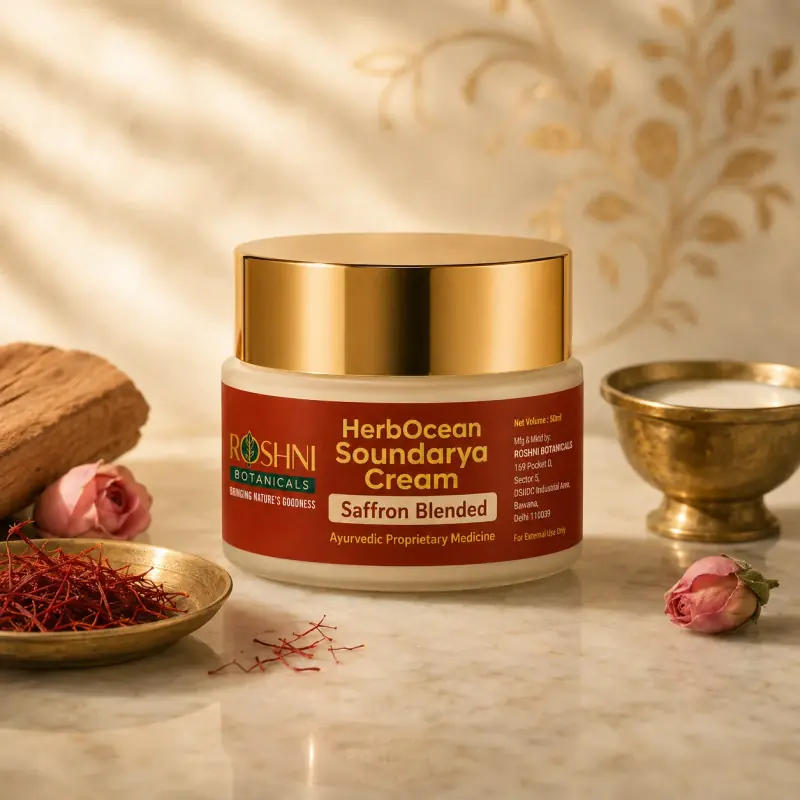
Soundarya Cream
A rich saffron brightening and repair cream with bargad (Vatt) bark on a goat-milk and coconut base, with shea and kokum butters, traditionally used in the care of skin where post-acne marks (PIH) linger.
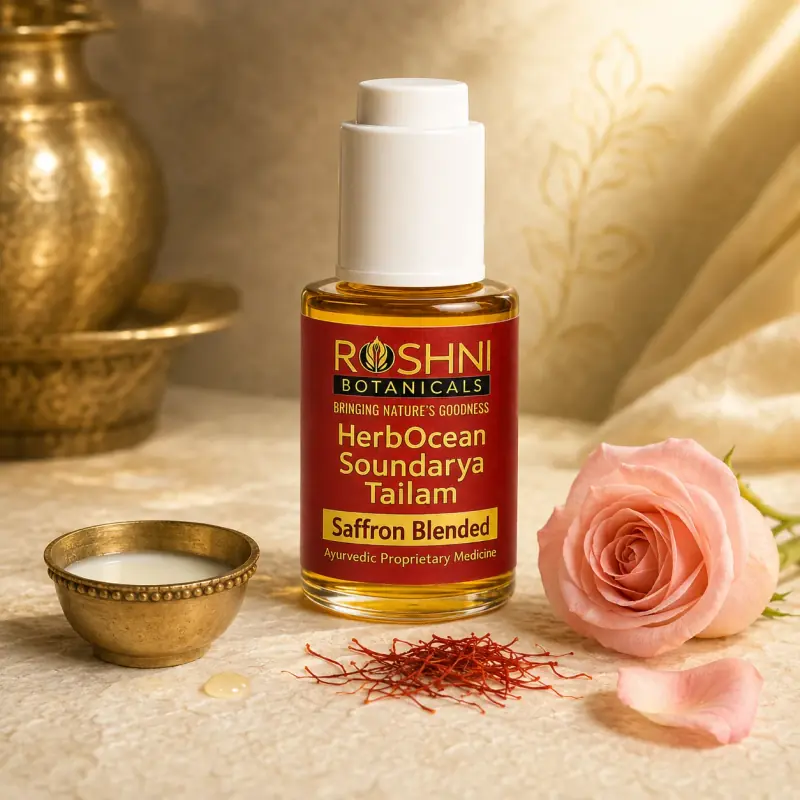
Soundarya Tailam
A saffron-infused facial Taila prepared in the goat-milk Kshira-paka tradition, with Manjistha, Mulethi and Kesar. For soft, bright, even skin.