Face Oil or Face Cream? An Ayurvedic Guide to Choosing and Layering
Face oil or face cream? Neither wins outright. The honest Indian answer is a schedule: a light cream by day, a facial oil at night, and both only through the dry months.
Stand in front of your shelf on a July evening in Delhi and the question is real: the cream feels heavy in this humidity, yet skipping it leaves your skin dull by morning. Search for an answer and the internet argues with itself; half the guides say cream first, half say oil first, and none of them has heard of a monsoon. Face oil versus face cream is not a rivalry, and it is not a riddle either. Each does a different job, Ayurveda settled the division of labour long before either came in a pump bottle, and your weather, more than any influencer, decides the rest.
Key takeaways
- A face cream is an emulsion of water, humectants and butters that hydrates and seals; a face oil carries lipid-soluble nourishment but adds no water. They do different jobs, which is why neither replaces the other.
- In India the choice mostly dissolves into a schedule: a light cream by day, a facial oil (Taila, the classical medicated-oil format) at night, and both layered only through the dry months.
- The internet's layering war has a quiet resolution: a light herb-infused oil goes into damp skin first with cream sealed over it, while heavy plain oils sit better over cream. Know which kind you are holding.
- Classical Ayurveda reads the skin's glow through Bhrajaka Pitta (the Pitta sub-dosha governing skin lustre, colour and absorption); its complexion-supporting (Varnya) herbs travelled in oils and creams alike.
- HerbOcean Soundarya Cream, a saffron and coconut-rich daily brightening moisturiser, and Soundarya Tailam, its night-oil partner, split the day between them in exactly this pattern.
What a Face Cream Does, and What a Face Oil Does
Start with the chemistry, because the whole debate untangles once you see it. A cream is an emulsion: water held together with oil by an emulsifier, usually carrying humectants such as glycerine that draw water into the skin, and butters and emollients that soften the surface and slow that water’s escape. A cream, in other words, both delivers water and locks it in. An oil contains no water at all. What it offers is lipids: it settles into the skin’s own oil layer, reinforces the barrier, and carries whatever fat-soluble goodness was dissolved or processed into it. Hydration and nourishment are different gifts, and each format specialises in one.
Here is the distinction the Western debate never makes, and the reason an Ayurvedic answer is genuinely useful rather than decorative. In the classical pharmacy, an oil was rarely just an oil; it was a delivery medium. A medicated facial oil (Taila) is sesame or coconut that has spent hours simmering with herbs, so that what touches your face at night is the herb, riding the lipid. Classical thinking read the skin’s colour and glow through Bhrajaka Pitta and treated the skin as an organ that receives what is placed on it, which is why the tradition put its complexion-supporting (Varnya) herbs, saffron, Manjistha, liquorice among them, into oils and rich pastes rather than watery washes that rinse away. A plain squalane and a saffron Kshira-paka (the classical goat-milk-and-oil method) oil are both called face oil on the internet. They are not the same object.
The Indian Deciders: Season, Water and Your Own Skin
Nothing in the top search results acknowledges that this question has a geography, yet in India the geography does most of the deciding. Our year swings between a monsoon that keeps sweat on the face for hours and a North Indian winter dry enough to chap lips indoors. In humid months, skin wants one light, breathable layer; in dry months it wants everything you can reasonably give it. A routine that ignores this swing will feel wrong for half the year no matter which product it backs.
Water is the second decider. The hard borewell and tanker supply in most Tier 1 and 2 cities leaves mineral residue with every wash, and hard-water skin often feels tight and flaky even while it looks oily. If your face feels stretched within minutes of washing, the answer is usually a richer cream and a gentler cleanse, not another scrub, and in winter it is often both cream and oil together. Melanin-rich skin adds the third quiet consideration: the goal that matters here is even, calm tone, and consistent moisturisation is one of its most underrated supporters, because a barrier kept comfortable is a barrier that is not provoked into pigment.
- Dry, tight-feeling skin (the pattern Ayurveda calls Vata-leaning; Vata, Pitta and Kapha are the three doshas, the biological energies in Ayurveda): benefits from both formats through most of the year; cream daily, oil at night.
- Oily, congestion-prone skin (Kapha-leaning): one light cream layer by day; a few drops of a light oil at night, two or three times a week, and skip oil over active breakouts.
- Sensitive, heat-prone skin (Pitta-leaning): patch-test everything first, add one new product at a time, and prefer the evening for anything new.
So Which Is Better? Neither. Here Is the Schedule Instead
Asked plainly, answered plainly: neither format is better, because they are not competing for the same slot. For most Indian skin, the working answer is a schedule. A light cream in the morning, because the day needs hydration that sits well under sunscreen and survives a commute. A facial oil at night, because the night is when skin rests and renews and when a herb-carrying oil has hours to sit undisturbed. Both together only in the dry months, when the air itself is taking water from your skin faster than one layer can hold it. In peak monsoon humidity, one light layer is genuinely enough for most faces, and the discipline to stop there is worth more than a third product. That honesty, rare in a category that profits from more steps, is also the most Ayurvedic sentence in this post: the classical routine prescribed what the season required, nothing extra.
The morning half of the schedule has its own small order worth writing down. Cleanse, apply the cream, give it two or three minutes to settle, then sunscreen over it; the pause is what stops the two from rolling into little flecks under your fingers. Oil does not belong in this morning stack for most Indian weather, which is precisely why the night exists for it. If you leave the house before the cream has settled, use less cream, not less sunscreen.
Layering Both Without the Confusion
Now the question the internet cannot agree on: when you do use both, which goes first? Half the guides insist cream first, arguing oil can penetrate cream while cream cannot penetrate oil; the other half insist oil first, sealed by cream. Both camps are right, about different oils. A heavy, plain occlusive oil belongs on top, as a final seal. A light, fast-absorbing herb-infused oil, the classical Taila kind, works the other way: pressed into slightly damp skin first, where it absorbs in a minute or two, with a thin layer of cream over it to seal the work in. That is also the order the classical facial-massage tradition assumed, oil to skin, directly. The rule that survives every edge case is simpler than either camp: thinnest and fastest-absorbing first, heaviest last, and let a minute of absorption sit between layers.
The dry-month method, step by step: cleanse gently, leave the skin a little damp, press in two to three drops of oil with flat palms, give it a minute, then seal with a thin layer of cream, a pea-sized amount for the whole face. Quantities matter more than product count; most layering disappointment is really overdose. And when the monsoon returns, retire the double act gracefully: cream alone by day, oil alone at night, and nothing at all layered over sweat.
- Signs you have over-layered: products pilling into flecks under sunscreen or fingertips.
- Shine returning by 11 am even in dry weather, a greasiness that is applied rather than produced.
- New congestion along the hairline and jaw, where excess product settles and sits.
The Worked Example: Soundarya Cream by Day, Soundarya Tailam by Night
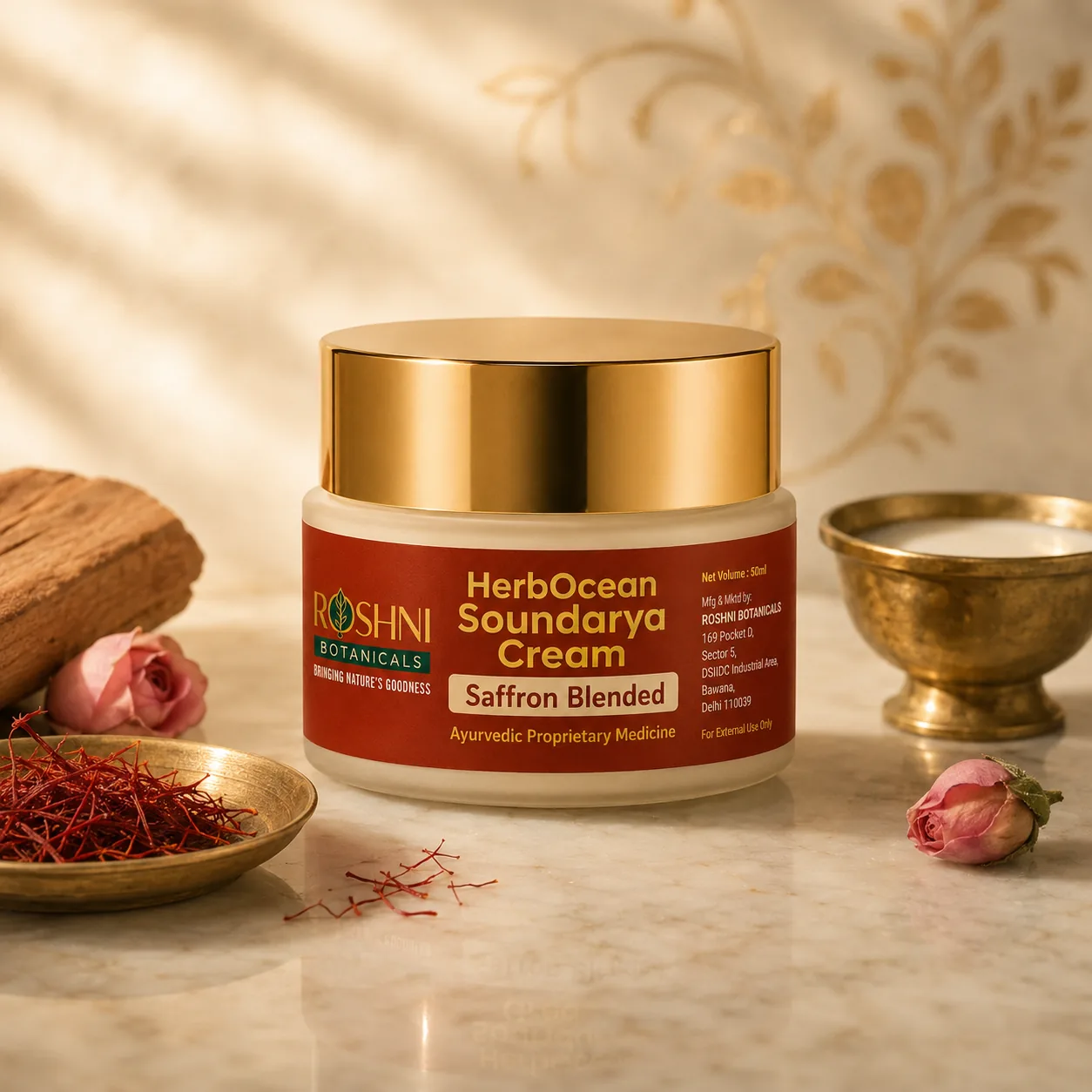
This division of labour is exactly how the two Soundarya preparations were built to work. HerbOcean Soundarya Cream is the daytime half: a saffron and coconut-rich repair cream with bargad (Vatt) bark on a goat-milk base, with shea and kokum butters and vitamin E, carrying the classical complexion herbs, saffron (Kesar), Manjistha, liquorice (Mulethi) and red sandalwood among them, in the format a working morning can actually wear. It is an AYUSH-licensed Ayurvedic medicine for external use that supports skin-tone evenness and daily hydration, and it sits comfortably under sunscreen, which remains the non-negotiable morning step whatever else changes.
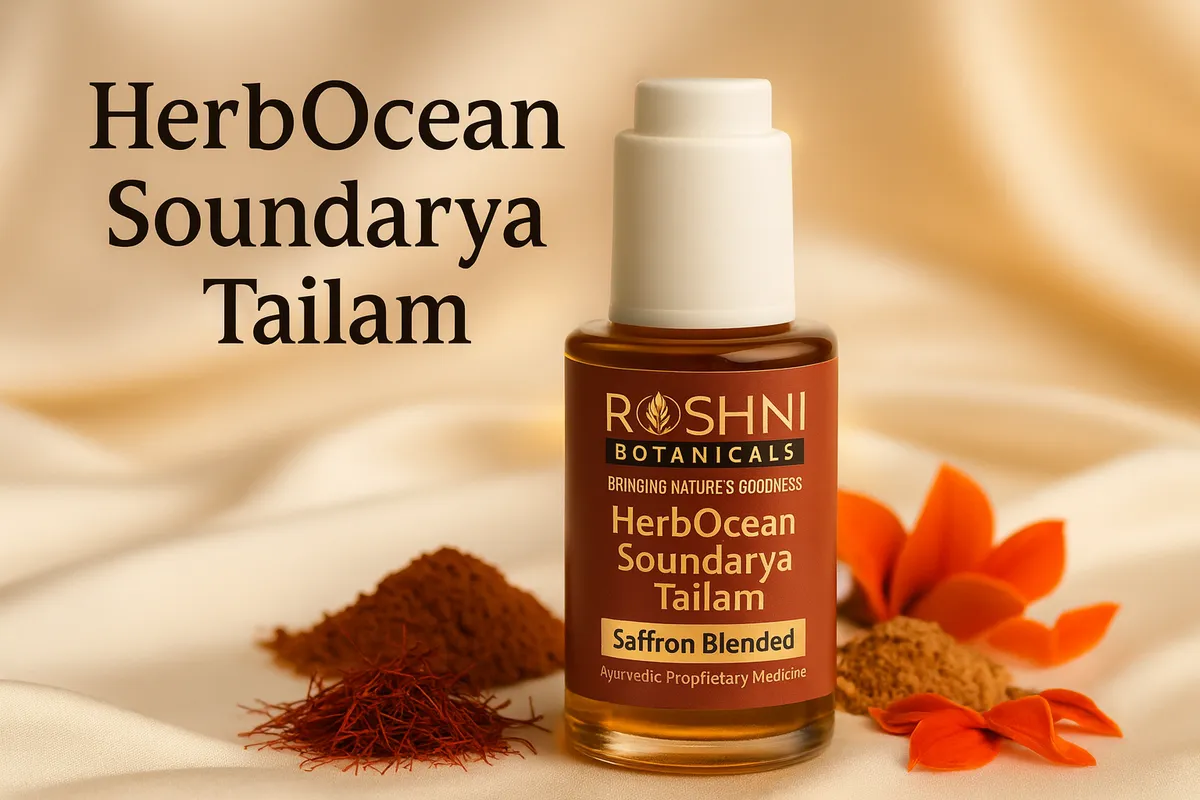
HerbOcean Soundarya Tailam is the night half: the same Varnya tradition delivered as a saffron-infused oil made in the goat-milk Kshira-paka tradition, in a sesame base light enough for a two-to-three-drop night ritual. Both preparations are formulated by Vaidya Shri Ram Prakash Ji, the master vaidya (a classical Ayurvedic physician and formulator) whose 40-year formulation legacy the HerbOcean line is built on, and made in-house at Roshni Botanicals’ GMP-certified (Schedule-T) unit in Bawana, Delhi under AYUSH Licence No. DL-474 A&U. Patch-test each on the inner forearm before first use, and introduce one at a time so your skin can vote on each separately. Our guide to the day versus night Ayurvedic routine covers the timing logic in more depth, and readers whose larger concern is pigmentation itself will find the fuller plan in our guide to the Ayurvedic treatment for melasma on Indian skin.
When One Layer Is Not the Problem: See a Dermatologist
A few situations are beyond scheduling. Persistent flaking or tightness that regular moisturising does not settle can signal a barrier or skin condition that needs diagnosis. Sudden changes in pigmentation, new raised, itchy or scaly patches, or a face that stings under every product deserve a dermatologist’s eyes before another purchase. And if your real battle is active breakouts rather than dryness or dullness, start with our monsoon acne care guide and keep oil off the pimples themselves; breakout-prone skin has its own rulebook, and this post’s schedule assumes calm skin. Products organise a routine; they do not replace a diagnosis.
Two Jars, One Schedule, No Rivalry
The next time the shelf poses its July question, the answer is a timetable, not a winner. Cream in the morning for water and wearability, oil at night for herbs and depth, both together only when the dry months ask for it, and one honest light layer when the humidity says stop. If the daytime half of that schedule is the piece your routine is missing, HerbOcean Soundarya Cream, the saffron-led daily brightening moisturiser, was made for exactly that slot, with Soundarya Tailam waiting for the nights. Let the two formats stop competing on your shelf; they were colleagues all along.
References: Charaka Samhita, Sutrasthana, Chapter 5 (Matrashiteeya Adhyaya), on abhyanga and daily oil application within the classical daily routine (dinacharya). Purnamawati S, Indrastuti N, Danarti R, Saefudin T. The Role of Moisturizers in Addressing Various Kinds of Dermatitis: A Review. Clinical Medicine & Research. 2017;15(3–4):75–87. Sethi A, Kaur T, Malhotra SK, Gambhir ML. Moisturizers: The Slippery Road. Indian Journal of Dermatology. 2016;61(3):279–287.
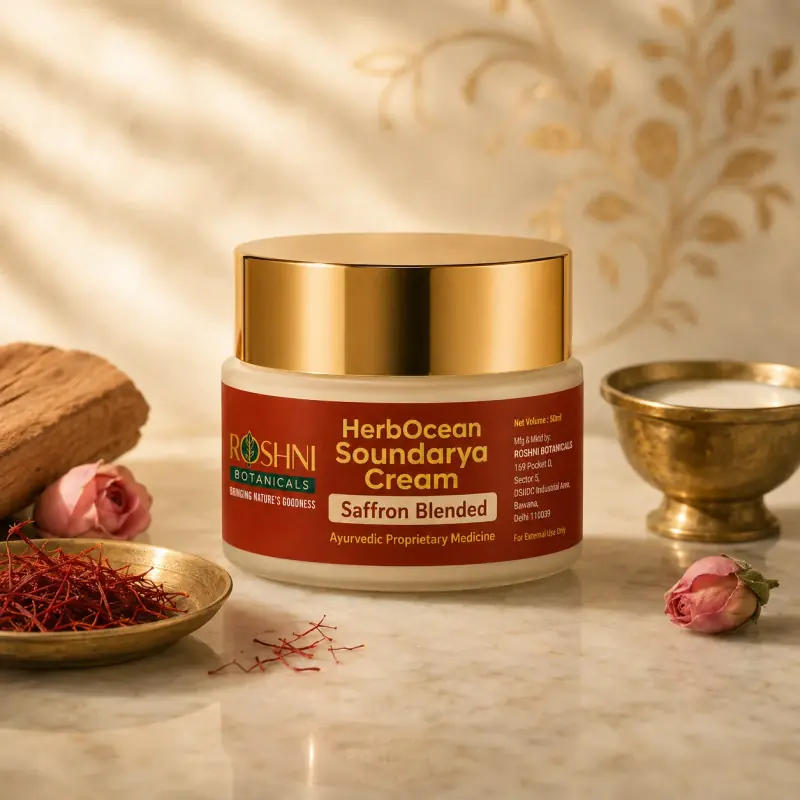
Soundarya Cream
A rich saffron brightening and repair cream with bargad (Vatt) bark on a goat-milk and coconut base, with shea and kokum butters, traditionally used in the care of skin where post-acne marks (PIH) linger.
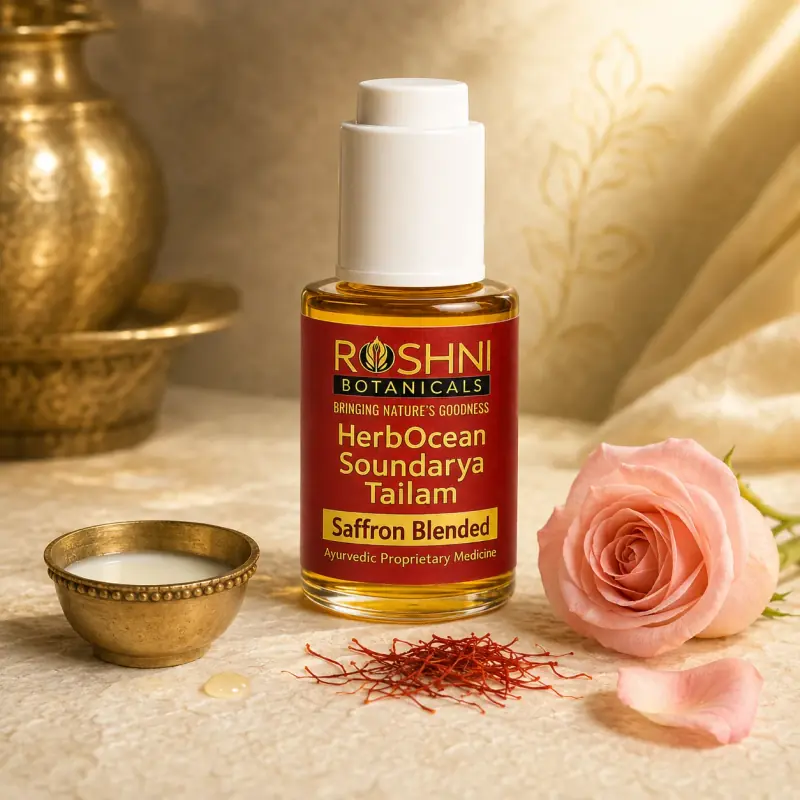
Soundarya Tailam
A saffron-infused facial Taila prepared in the goat-milk Kshira-paka tradition, with Manjistha, Mulethi and Kesar. For soft, bright, even skin.