Radiant Transformations with HerbOcean Soundarya Tailam
A closer look at the saffron facial Taila prepared in the goat-milk Kshira-paka tradition — what’s inside it, and how to weave it into an evening ritual.
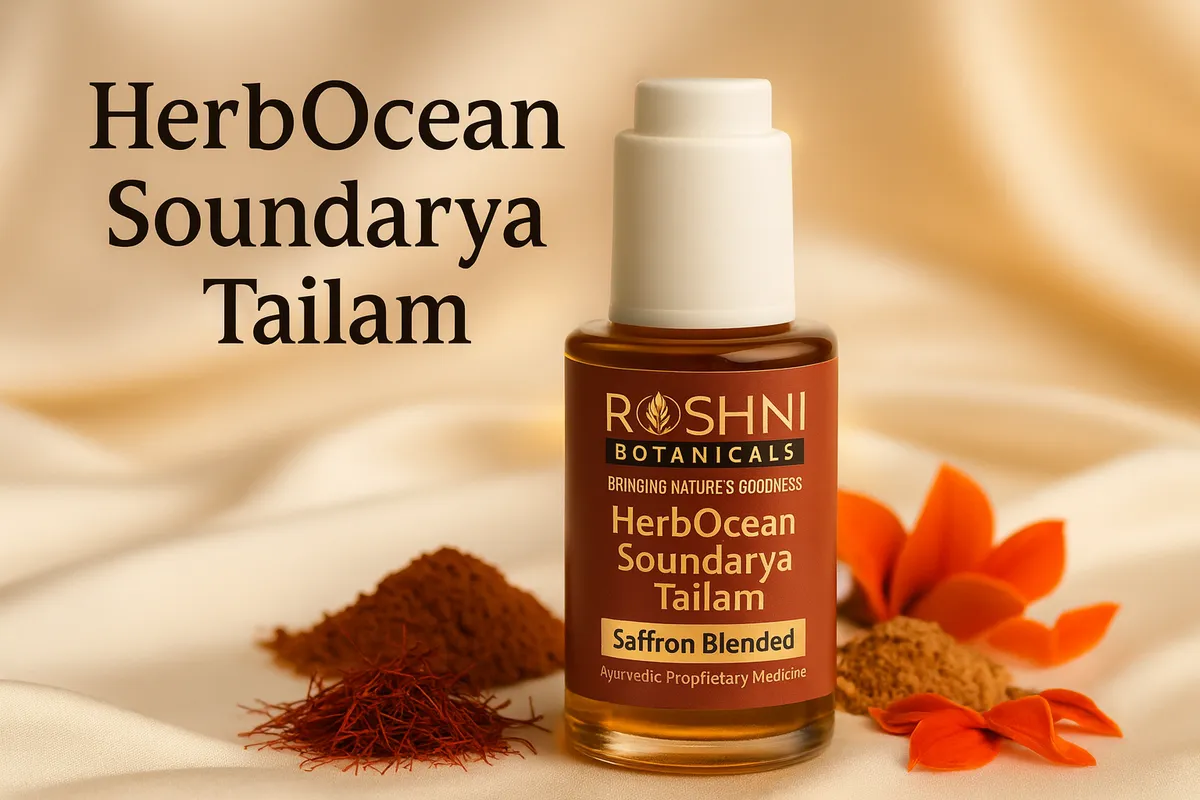
Most of us in India met facial oil long before we met serums. A grandmother warming oil between her palms on a winter evening, the smell of sesame in the house, the slow press of it into the skin before bed. Ayurveda has always treated skincare this way, as part of a larger balance rather than a quick correction. A facial Taila (medicated oil) sits comfortably in that worldview: a slow preparation, used a few drops at a time, meant to nourish over weeks rather than overnight. Soundarya Tailam is our version of that old idea, and it helps to understand what it actually is before you use it.
What Kshira-paka actually means
Soundarya Tailam is prepared in the goat-milk Kshira-paka tradition. In plain terms, the botanicals are simmered with goat milk (Ajadugdh) in a sesame base over a long, patient cook, until the water in the milk has evaporated and only the medicated oil remains. It is one of the gentler classical methods, and it exists for a reason: milk softens the way the herbs come across, so the finished oil tends to suit dry and mature Twak (skin) that harsher preparations can leave tight. It is not a fast process, and the oil is not meant to be used in a hurry either.
What is actually inside
The formula is fully named, which is the first thing any honest oil should be. The classical botanicals carried in the goat-milk and sesame base are:
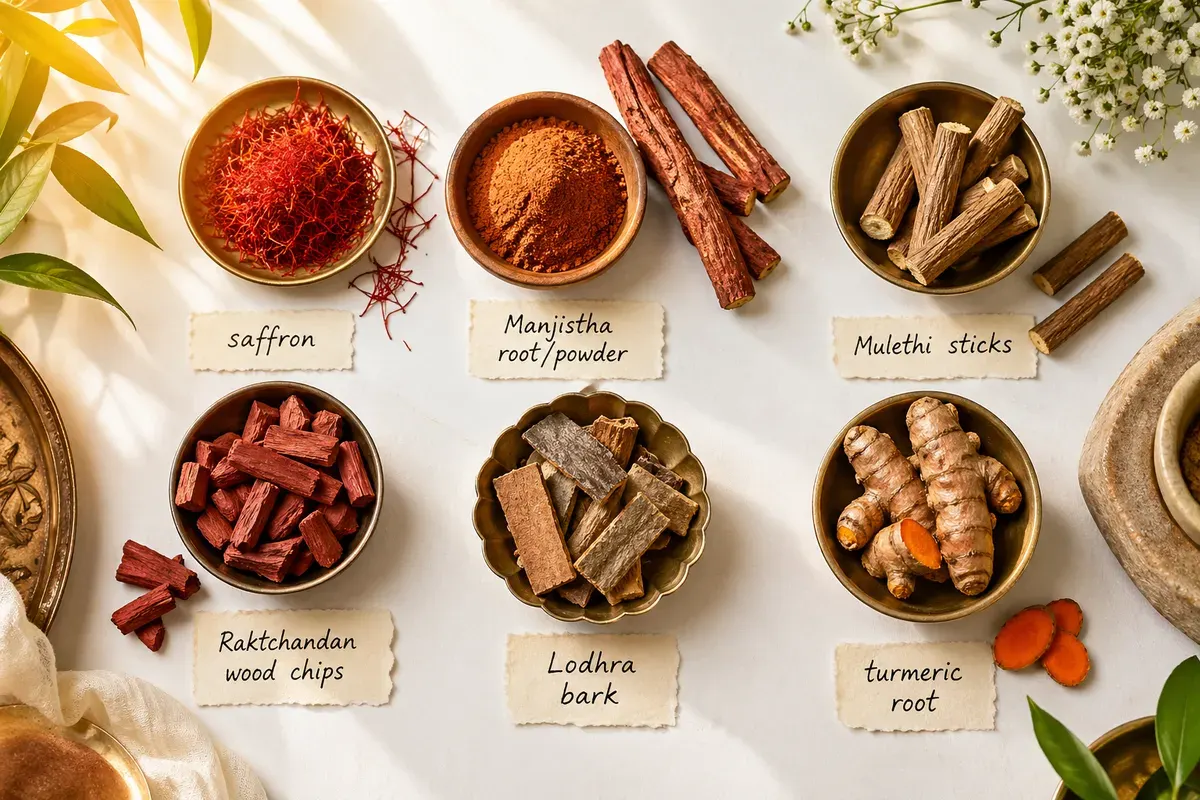
- Kesar (Saffron), long valued in Indian beauty practice for a luminous, even-looking complexion.
- Manjistha (Manjith), the classical herb for Rakta shodhana (blood purification) and traditionally linked with even tone.
- Raktchandan (Red Sandalwood), cooling and calming, a fixture of classical complexion oils.
- Mulethi (Licorice), traditionally used to support a settled, even-looking complexion.
- Palash (Flame of the Forest) and Priyangu (Beautyberry), astringent classical botanicals associated with clarity of tone.
- Nagkesar, Daruhaldi (Indian Berberry), Vatt (bargad bark) and Laksha (lac), the supporting classical herbs of the preparation.
- Til tail (Sesame oil), an antioxidant-rich carrier that gives the oil its deep, comforting feel.
You will notice what is not in it: no mineral oil, no synthetic colour, nothing it cannot name. That matters more than any single hero ingredient.
Why saffron, honestly
Saffron earns the top billing because it has earned it across centuries of Indian skincare, not because it photographs well. It is traditionally valued for brightness and an even-looking complexion, and a little of it goes a long way, which is why the formula uses it in grams, not handfuls. We would rather be plain about this than oversell it: saffron is a beautiful, well-loved botanical, and it is one part of a balanced oil rather than a magic drop on its own.
Why an oil makes sense for Indian skin and seasons
The Indian year is hard on skin in ways a single product rarely fixes. North Indian winters run hot and dry, indoor air-conditioning quietly pulls moisture out of the skin for months, and hard water in much of the country leaves a tight, stripped feeling after every wash that disrupts the skin barrier. A facial Taila is well suited to exactly this kind of stress: it gives the barrier something to hold on to overnight, when the skin does most of its own repair. In the sticky monsoon months you will naturally want less of it, and on dry winter nights a touch more. The oil is meant to flex with the season, the way classical Ritucharya (seasonal routine) always assumed you would.
A careful word on tone and pigmentation
Melanin-rich Indian skin marks easily and holds those marks longer, which is why post-inflammatory hyperpigmentation (PIH) after a spot or a scratch is such a common worry here. A nourishing facial oil supports and helps maintain healthy, comfortable, even-looking skin, and the classical herbs in this one have long been associated with tone. That is the honest frame. It is not a depigmenting treatment and it will not erase a mark, and any oil sold to you with that promise is overselling. For dark spots and melasma specifically, our handbook on melasma for Indian skin is the better place to start.
How to use it at night
The method is simple and worth doing properly. At night, on clean and slightly damp skin, warm three to four drops between the palms and press them over the face and neck. Press, do not drag. Damp skin helps the oil spread and settle rather than just sitting on top. A little genuinely goes a long way, and more is not better. If you use it during the day, always follow with sun protection, which matters doubly for anyone prone to pigmentation.
Make it a small ritual, not a step
The press itself is part of the point. A minute of slow, light pressing over the face is a gentle Abhyanga (classical oil massage) for the skin, and it is also the most reliable way to actually wind down before sleep. This is the part most modern routines drop, and it is the part Ayurveda would tell you to keep. Thirty unhurried seconds beats a fast slap of product every time.
Layering with the cream
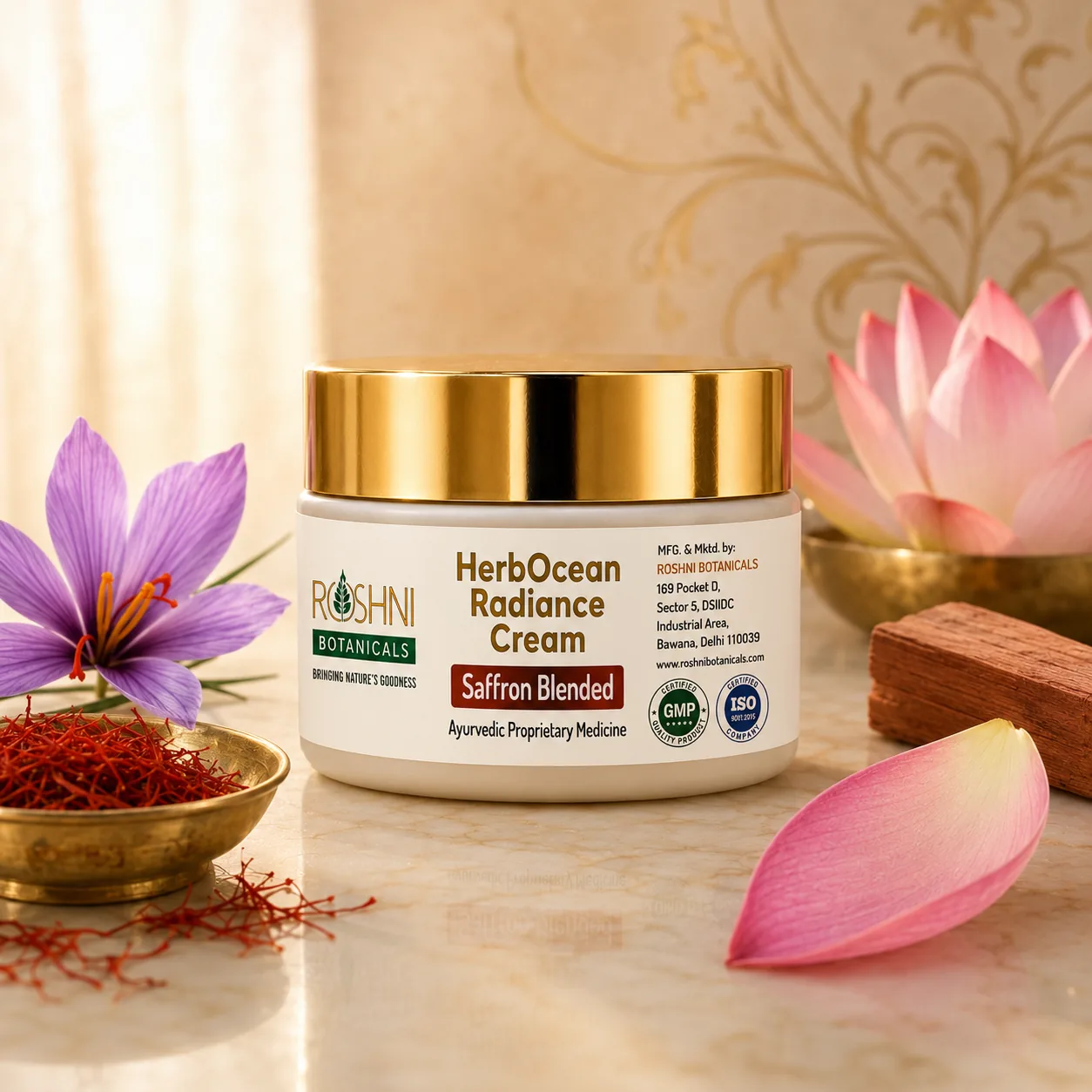
On nights when skin wants more, especially in deep winter, the oil pairs naturally with the richer Soundarya Cream: oil first into damp skin, cream over the top to seal it. You can explore the oil itself on the Soundarya Tailam page, and the wider Ayurvedic skincare range if you are building a full evening routine.
Who it suits, and who should go gently
Dry, dull or mature skin tends to get the most from a facial oil like this. If your skin is very oily or actively breaking out, an occlusive oil may not be your first move, and targeted spot care is the more sensible starting point. Whatever your skin type, patch-test on the inner arm for a couple of nights before it goes on your face, and stop if anything stings or flares. Sensible caution is not fussiness, it is just how you find out whether a product is for you.
What to realistically expect
Here is the honest version, because false promises help no one. This is a classical Ayurvedic preparation for external use, traditionally used to support healthy, comfortable, even-looking skin. It is not an overnight switch. What most people notice first is simply comfort: skin that feels less tight and looks a little less dull after a week or two of consistent night-time use. Anything to do with tone is a slow, gradual, weeks-into-months kind of change, working with your skin's own renewal rather than forcing it. The people who are happy with a facial oil are almost always the ones who used a few honest drops most nights and gave it time.
When to see a dermatologist
A facial oil is daily care, not medical treatment. See a dermatologist if you have sudden or spreading pigmentation, a mole or patch that is changing, persistent painful breakouts, or any rash or reaction that does not settle. Melasma in particular is genuinely stubborn and is best managed with professional guidance alongside a gentle routine, not by an oil alone.
The short version
Soundarya Tailam is a saffron-led facial Taila made the slow goat-milk way, built for dry and mature skin and for the dry, hard-water, air-conditioned reality of Indian seasons. Use three or four drops on damp skin at night, press rather than drag, layer the cream over it when skin wants more, and judge it over weeks, not days. For tone and pigment concerns, pair it with professional advice and realistic expectations.
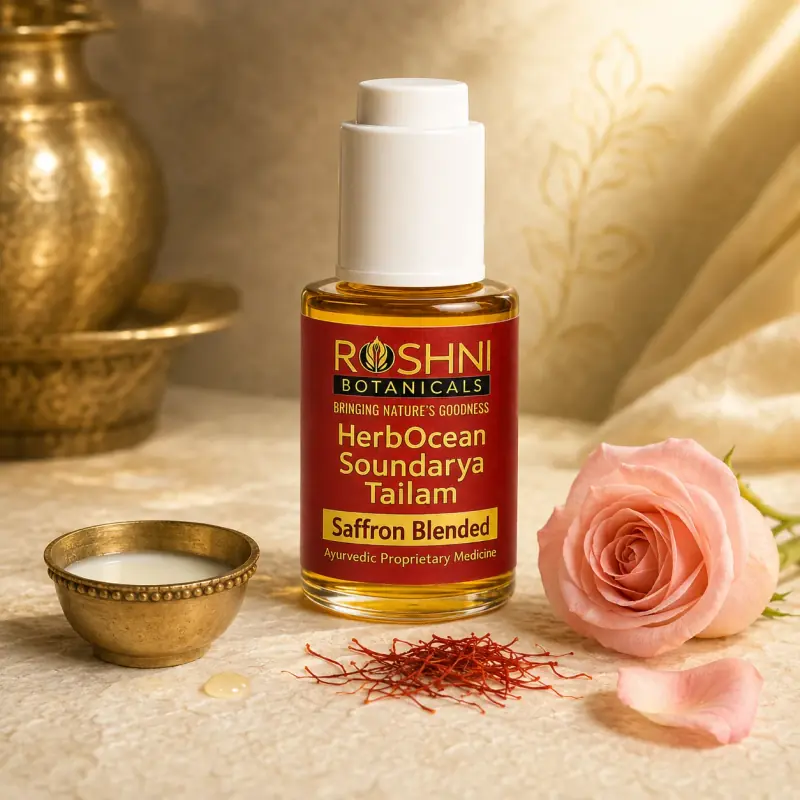
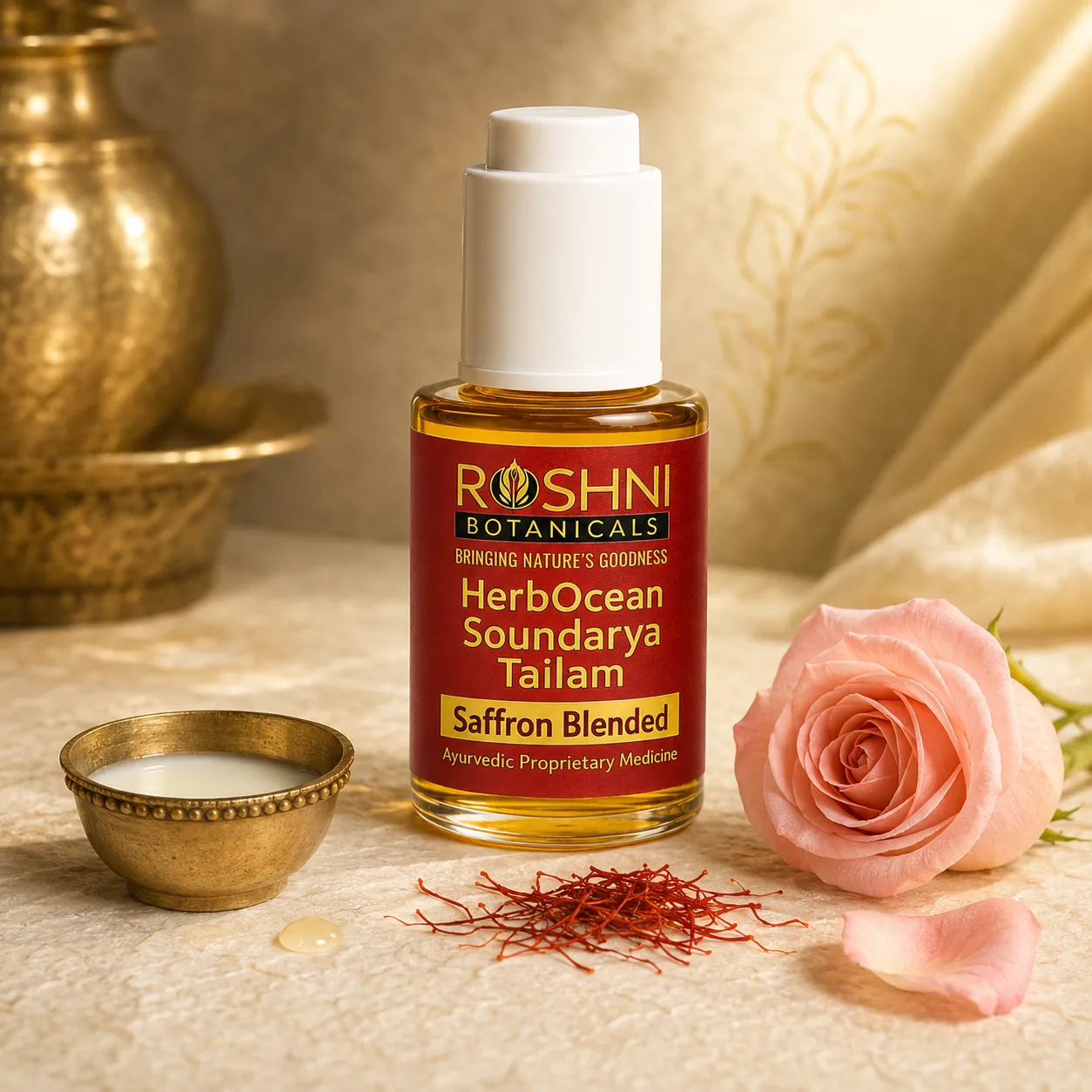
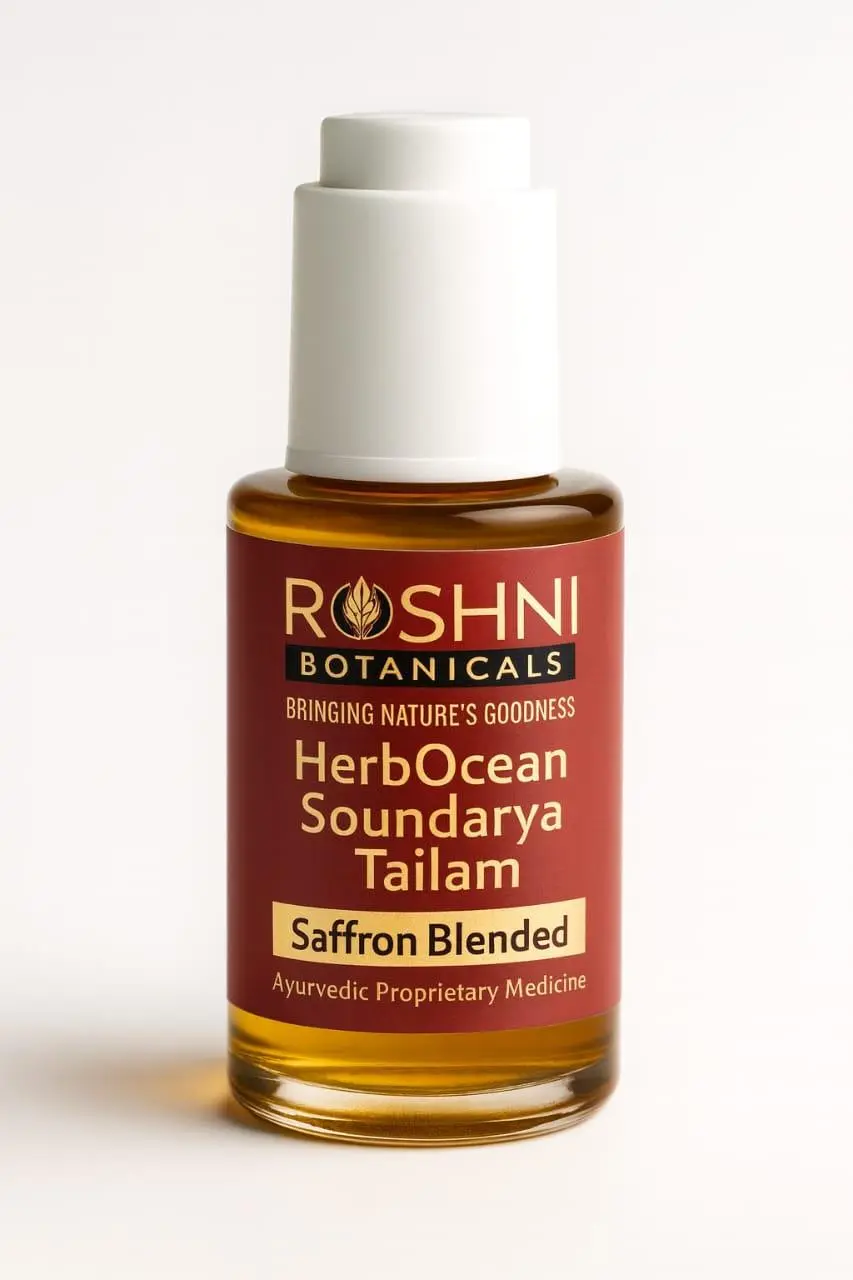
Soundarya Tailam
A saffron-infused facial Taila prepared in the goat-milk Kshira-paka tradition, with Manjistha, Mulethi and Kesar. For soft, bright, even skin.
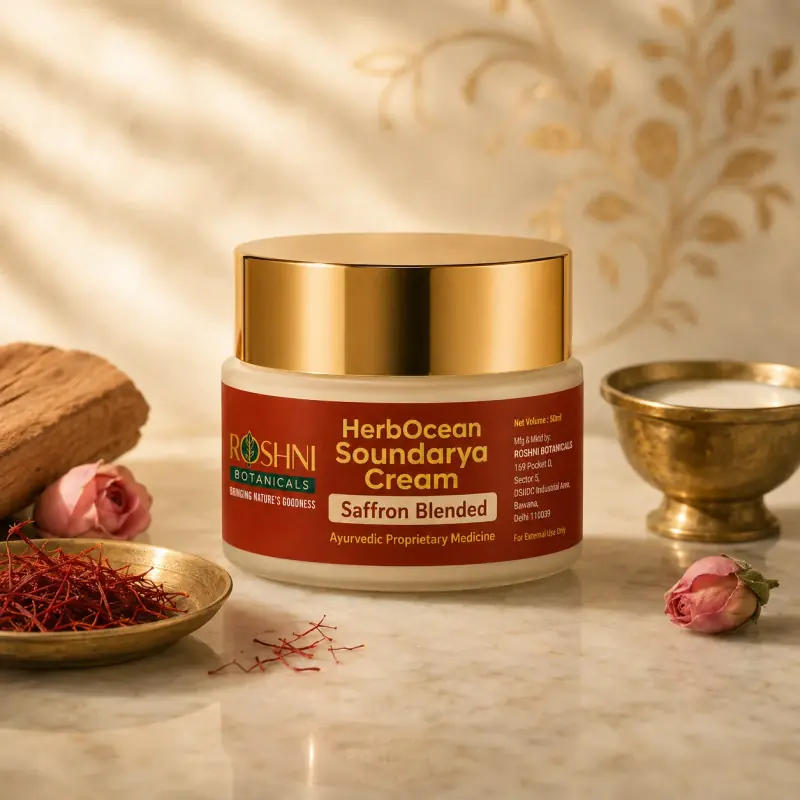
Soundarya Cream
A rich saffron brightening and repair cream with bargad (Vatt) bark on a goat-milk and coconut base, with shea and kokum butters, traditionally used in the care of skin where post-acne marks (PIH) linger.