Kumkumadi Tailam Benefits for Skin: The Saffron Glow Oil Tradition
What a classical kumkumadi-tradition saffron Taila is traditionally used for: lustre, radiance and an even tone, over steady weeks of night-time use.
Every year, especially in the weeks before wedding season or after a long, sun-heavy summer, saffron oil promises pile up: dramatic results in four weeks, sun protection in a dropper, glowing skin practically overnight. The classical kumkumadi tradition never promised any of that. What it offered was something quieter: lustre, an even complexion, and care for skin that is tired, sun-stressed, and asking to be handled gently. Here is what a saffron glow oil actually does, and where the tradition comes from.
Key takeaways
- Kumkumadi tailam is a classical saffron-infused facial Taila (medicated oil) traditionally used in Ayurveda to support Prabha (natural radiance) and an even-looking complexion, applied externally as a night ritual rather than taken internally.
- In classical thinking, skin colour and lustre are governed by Bhrajaka Pitta (the Pitta sub-dosha seated in the skin). Saffron, or Kesar, is the complexion herb the kumkumadi tradition is named after and built around.
- Saffron is not sunscreen. Some popular guides claim kumkumadi oil “is SPF 30”, but a facial oil is not sun protection. On melanin-rich Indian skin, daily broad-spectrum SPF is what actually protects an even tone.
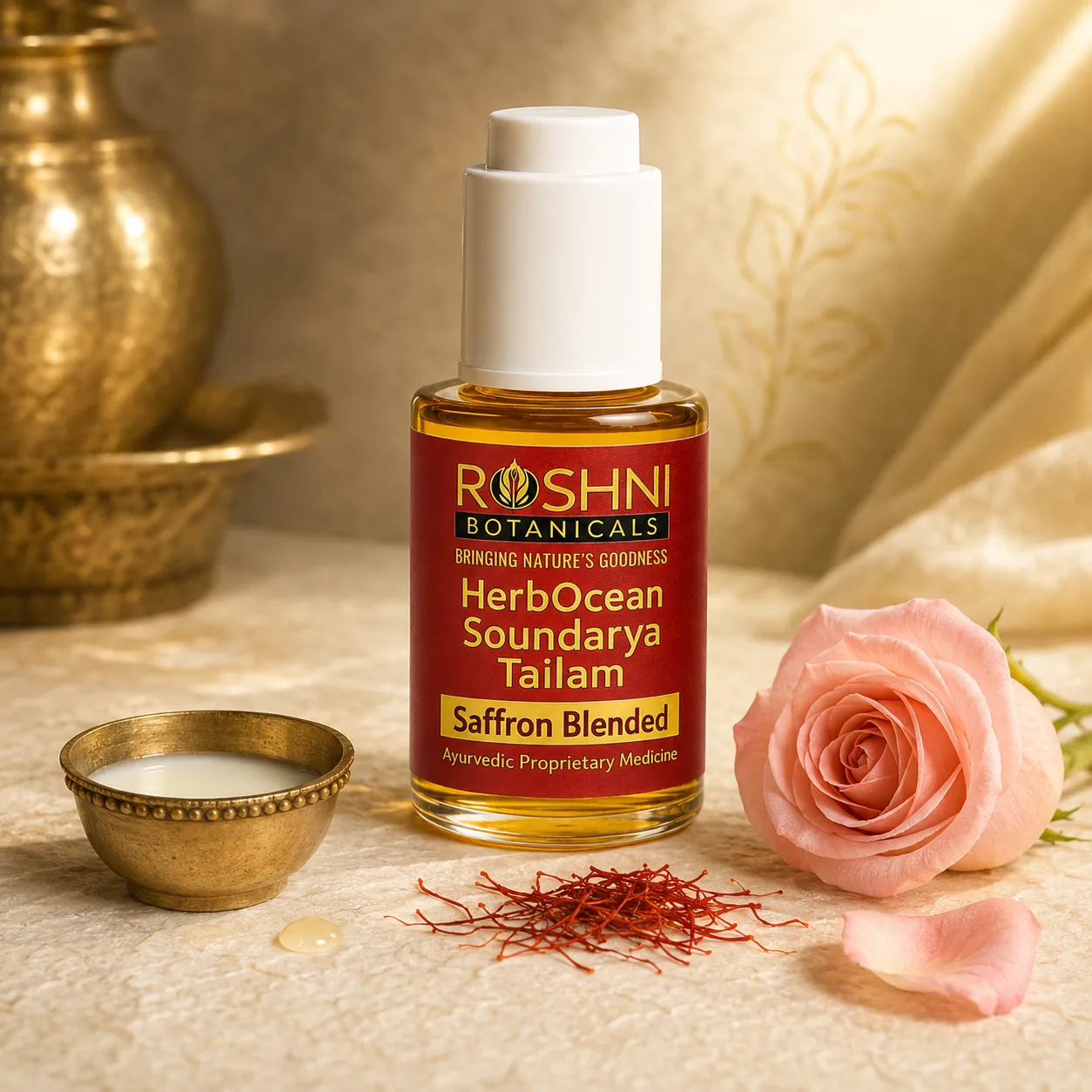
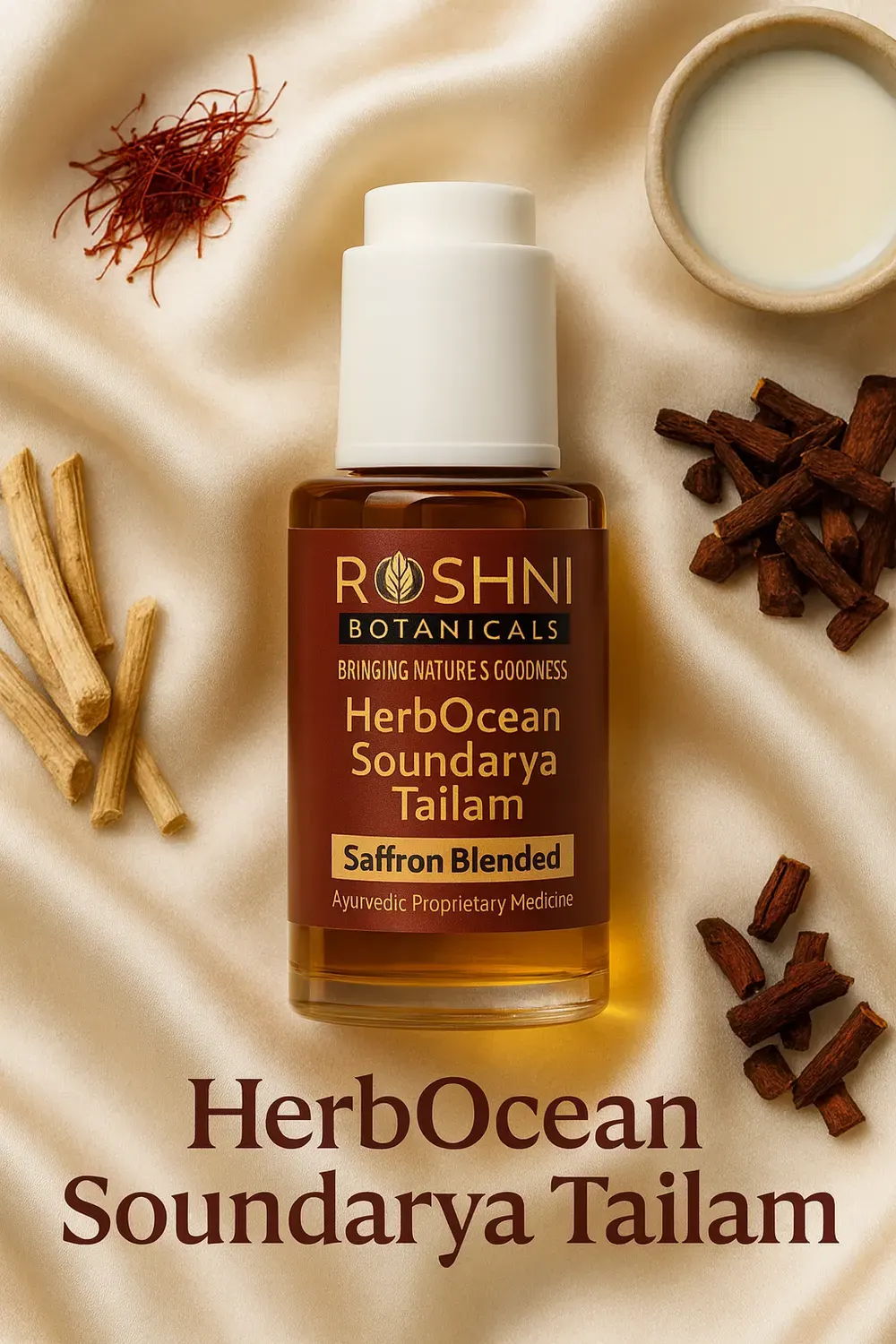
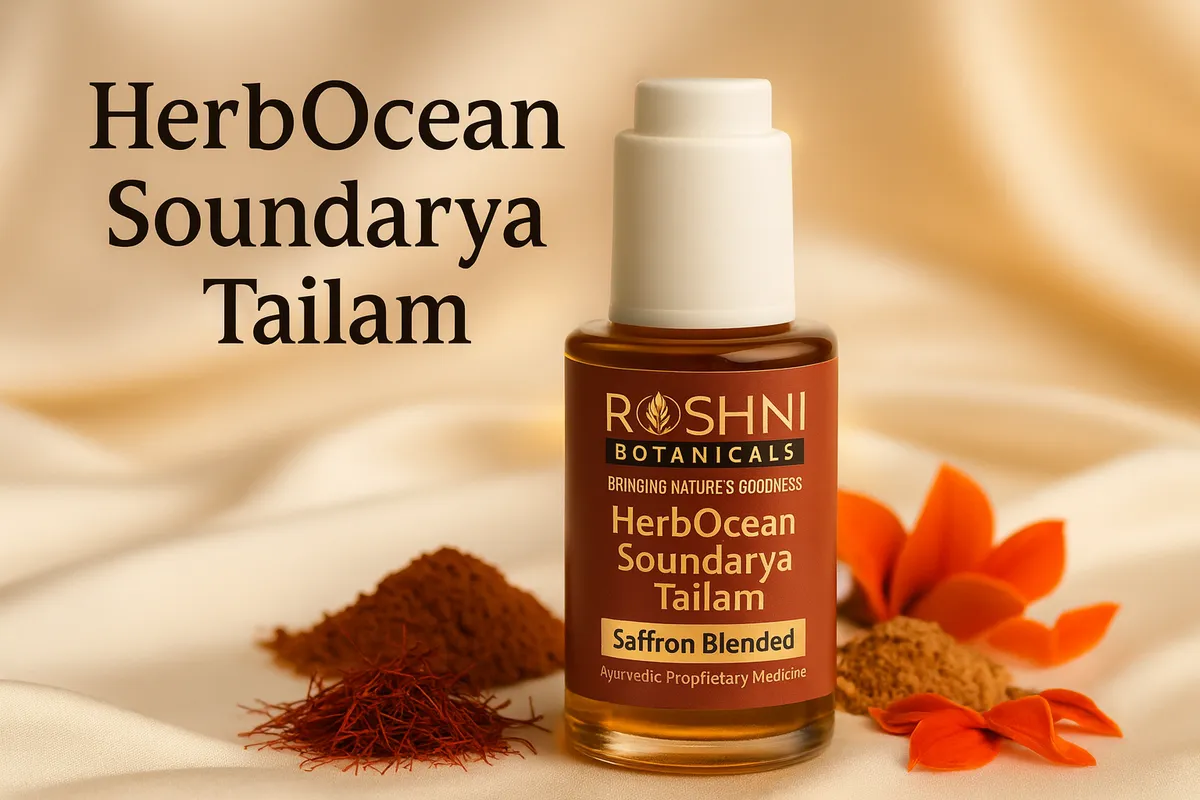
- HerbOcean Soundarya Tailam sits in this saffron lineage as a goat-milk (Ajadugdh) Kshira-paka Taila, formulated by Vaidya Shri Ram Prakash Ji under AYUSH Licence DL-474 A&U: a supportive night ritual.
The classical lens: Prabha, Bhrajaka Pitta and the Varnya herbs
Ayurveda talks about Prabha (natural radiance, an inner-outer lustre) and Kanti (a refined, even complexion), and it locates the seat of skin colour and glow in Bhrajaka Pitta, the Pitta sub-dosha that governs skin lustre, colour, and how deeply the skin absorbs what you apply. When Bhrajaka Pitta is settled and the Rakta (blood) is clear, skin looks luminous and even. When it is aggravated by heat, sun, stress, or poor digestion, tone turns dull or patchy, and facial pigmentation, classically called Vyanga (the Sanskrit name for melasma and facial marks), begins to surface.
This is where the Varnya gana comes in, the classical category of complexion-supporting herbs listed in the Charaka Samhita, including Manjistha, Yashtimadhu (licorice) and Chandana. Kumkuma (saffron) leads the kumkumadi tradition, which values it for supporting Prabha and an even Chhaya (your natural complexion tone), not for changing it. That distinction matters. The goal of this tradition is your skin at its most rested and radiant, not a different skin.
Why Indian skin needs an India-aware approach
A saffron oil designed for one climate and one skin type doesn’t always translate to Indian skin. Three things change the picture:
- PIH and melanin-rich skin. Skin in the Fitzpatrick IV–VI range marks easily. The brown shadow that stays after a spot, a scratch, or an aggressive DIY peel is post-inflammatory hyperpigmentation (PIH), and on melanin-rich skin it lingers much longer than most guides acknowledge. The same marks follow breakouts, which is why our guide to ayurvedic treatment for acne gives post-acne PIH so much attention.
- Melasma is common, and often hormonal. Vyanga, what we commonly call melasma, is one of the more frequent pigmentary concerns for South Asian women, and it often arrives or deepens during pregnancy or with hormonal shifts. That makes it something to support gently and review with a dermatologist, not something to try to erase with an oil. For the fuller picture, see the ayurvedic approach to melasma and pigmentation.
- Year-round sun, plus pollution and hard water. India gets strong UV almost year-round, and city pollution and hard water add quiet pressure to the skin barrier on top of that. A night oil supports the skin’s overnight repair, but it’s daily SPF that actually protects the tone you’re working to maintain.
So what are the benefits of kumkumadi tailam for skin?
A kumkumadi-tradition saffron Taila is traditionally used to support Prabha (skin radiance), a more even-looking complexion, and the comfort of dry, tired, or sun-stressed skin, applied externally at night. In the classical register, it’s associated with the care of Vyanga and dullness. It works gradually, over weeks of consistent use. It is not a cure, and no honest formulator would call it one.
Before moving on, one thing worth setting straight. The classical action of saffron is Varnya, complexion-supporting and even-toning: lustre and evenness, watched over weeks rather than days. And despite a widely repeated claim, kumkumadi oil is not sunscreen. If you are working on an even tone, daily broad-spectrum sunscreen is the one habit that actually protects it, with your saffron Taila doing its quieter work through the night.
Inside the tradition: saffron, Kshira-paka and the HerbOcean Soundarya Tailam
The kumkumadi lineage comes down to two things: saffron, and the slow, patient way the oil is prepared. HerbOcean Soundarya Tailam, a brightening facial Taila in the kumkumadi tradition, is built on both, formulated by Vaidya Shri Ram Prakash Ji, whose 40-year Ayurvedic legacy the HerbOcean line carries, as an AYUSH-licensed medicine for external use.
The Kshira-paka method
Kshira-paka is a patient milk-and-oil method: the herbs are simmered with milk in the oil until the water has evaporated and only the medicated oil remains, not rushed, not extracted under pressure. Soundarya Tailam follows this with Ajadugdh (goat milk), the largest single ingredient in the formula, in a Til tail (sesame oil) base. Sesame is the classical Taila vehicle, valued for how it carries botanicals into the Twak (skin) and for how well it suits the dryness of a North Indian winter.
The Varnya-led blend
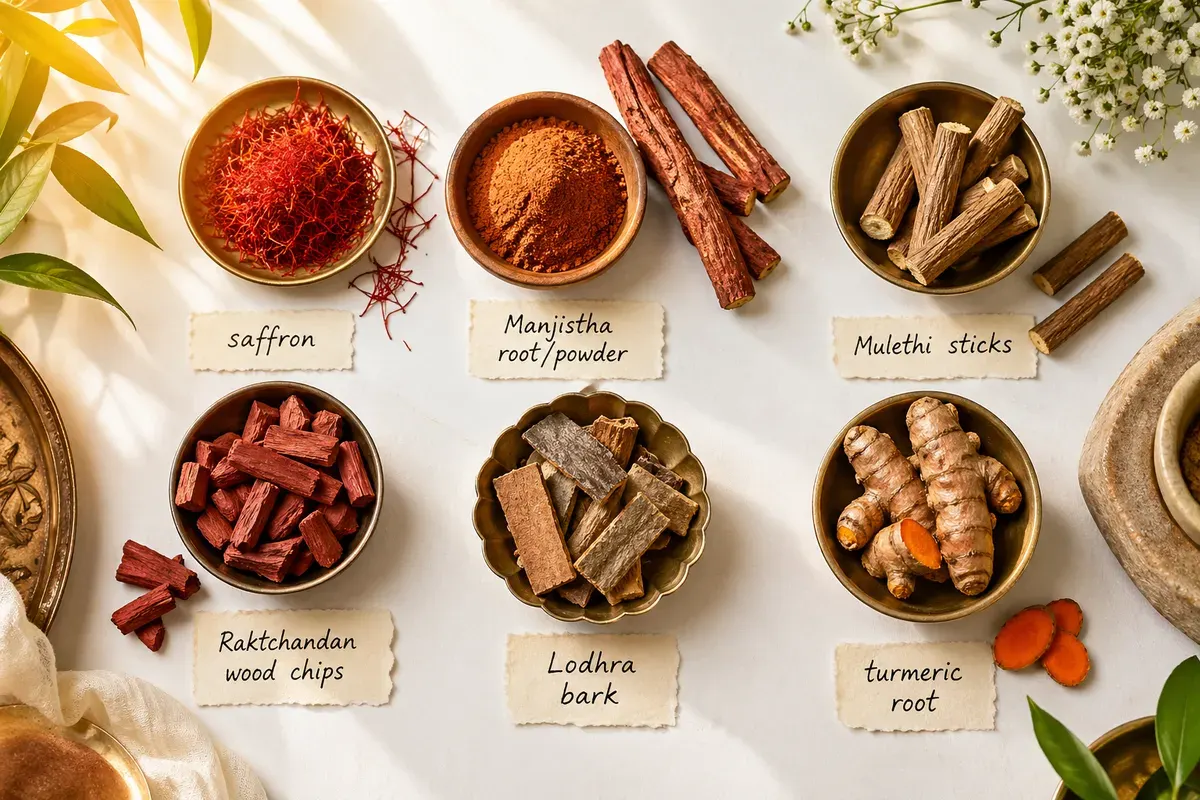
Saffron (Kesar / Kumkuma) leads the formula, as the classical complexion herb. Around it sit other Varnya and skin-supporting botanicals: Manjith (Manjistha), traditionally used for even tone and clear Rakta; Mulethi (Yashtimadhu, or licorice), soothing and complexion-supporting; Raktchandan (red sandalwood), prized for a cooling (sheeta) quality that suits aggravated Bhrajaka Pitta. The blend is rounded out with Palash, Vatt, Priyangu, Laksha, Daruhaldi and Nagkesar, and finished with a little Lavender, Rose and Mogra oil, for the kind of scent that unmistakably says classical Taila. We don’t call it “100% natural.” An honest Taila is a considered preparation, and we’d rather describe it accurately than reach for a slogan.
How to use a saffron Taila in an Indian climate
A facial oil earns a little ritual around it. Think of it as Mukha Abhyanga, the classical facial massage, done gently, in your own time. If you’d like the longer version, here’s a slow facial abhyanga for radiance and dark spots.
- At night: cleanse, then leave your skin just damp. Warm two to three drops between your palms and press (don’t drag) into the face and neck with slow, upward strokes. Let it settle as you sleep, when your skin isn’t fighting sun, heat, or pollution.
- By day: protect what you’re caring for. A broad-spectrum sunscreen every morning is non-negotiable if an even tone matters to you. The Taila is a night ritual, not a daytime SPF substitute.
- With the seasons: during humid monsoon months, a lighter hand (a drop or two) keeps things comfortable. In the dry cold of a North Indian winter, a full few drops suit thirstier skin.
- And use some sense: patch-test on the inner forearm first, keep it strictly external, and avoid the immediate eye area.
When to see a dermatologist
Supportive care has limits, and pigmentation, more than most skin concerns, deserves a professional eye. See a dermatologist if:
- Pigmentation appears suddenly, spreads quickly, or changes in colour or shape.
- Melasma comes during pregnancy or alongside hormonal symptoms. It’s better assessed than self-treated.
- Marks haven’t shifted after three months of consistent, gentle care and daily SPF.
- Your skin reacts to a product, or you’re layering with prescription actives and want to do it safely.
A saffron Taila sits comfortably alongside medical care. It isn’t a replacement for it.
A kinder idea of glow
The kumkumadi tradition has lasted this long because it offers something most skincare promises don’t: gentleness, patience, and genuine care for skin that’s tired and sun-stressed, not a different skin. A few drops of saffron Taila at night, real sunscreen every morning, and enough patience to let the season do its work — that’s the ritual, and it’s a lovely one. If you’d like to bring it into your evenings, explore HerbOcean Soundarya Tailam, or read our guide to building a night ritual with an Ayurvedic face oil. Glow, the classical way, is luster and evenness. It was never about a different skin.
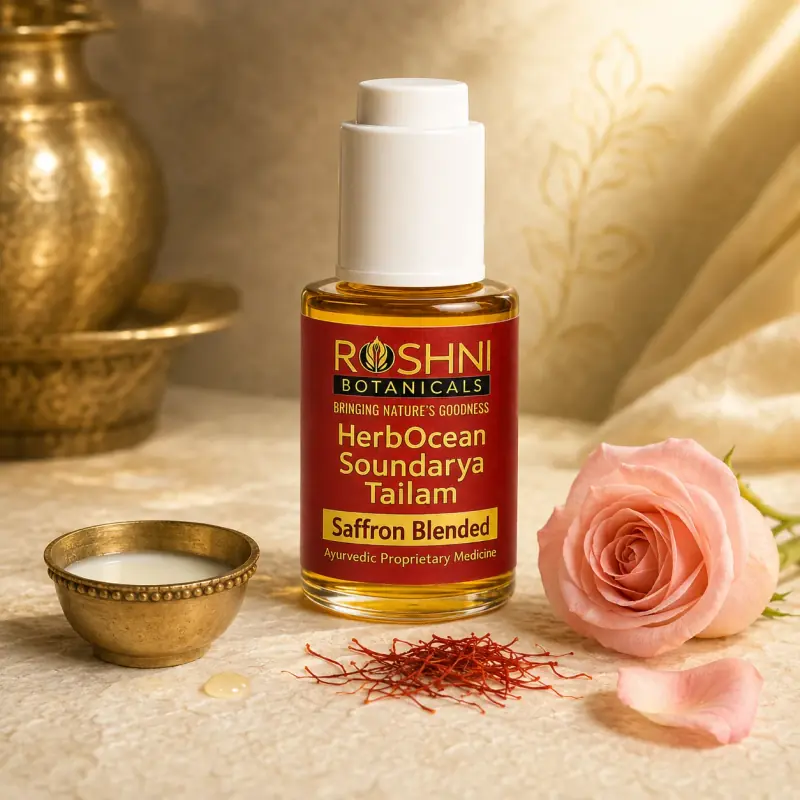
Soundarya Tailam
A saffron-infused facial Taila prepared in the goat-milk Kshira-paka tradition, with Manjistha, Mulethi and Kesar. For soft, bright, even skin.
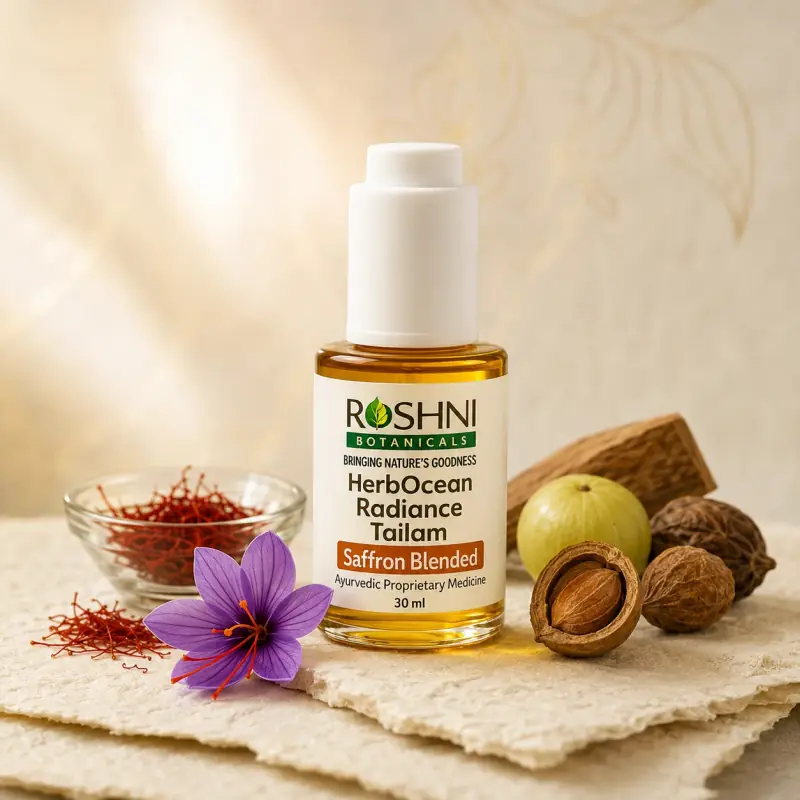
Radiance Tailam
A saffron brightening facial Taila with Manjistha and red sandalwood, traditionally used to support even tone where melasma, dark spots and PIH show.
Part of our guide: Ayurvedic treatment for melasma on Indian skin.