Mukha Abhyanga: The Ayurvedic Face Massage with Soundarya Tailam
A few minutes of facial oil massage does more than any tool. The classical technique of Mukha Abhyanga, step by step.
Long before facial rollers and gua sha tools arrived with their modern packaging, Ayurveda had Mukha Abhyanga, the facial oil massage. It is one of those practices that sounds too simple to matter and turns out to be quietly powerful: a few minutes of mindful massage with a herbal oil, working on the skin, the circulation and the nervous system all at once.
What Mukha Abhyanga is
Mukha means face and Abhyanga is the classical oil massage. Done on the face with rhythmic, upward strokes, it improves blood and lymph circulation, relaxes the small muscles that hold tension, and supports a brighter, more rested complexion. In the Ayurvedic view it also works the marma points, subtle pressure points, to calm the mind, which is why it feels as good as it looks.
The oil that suits it
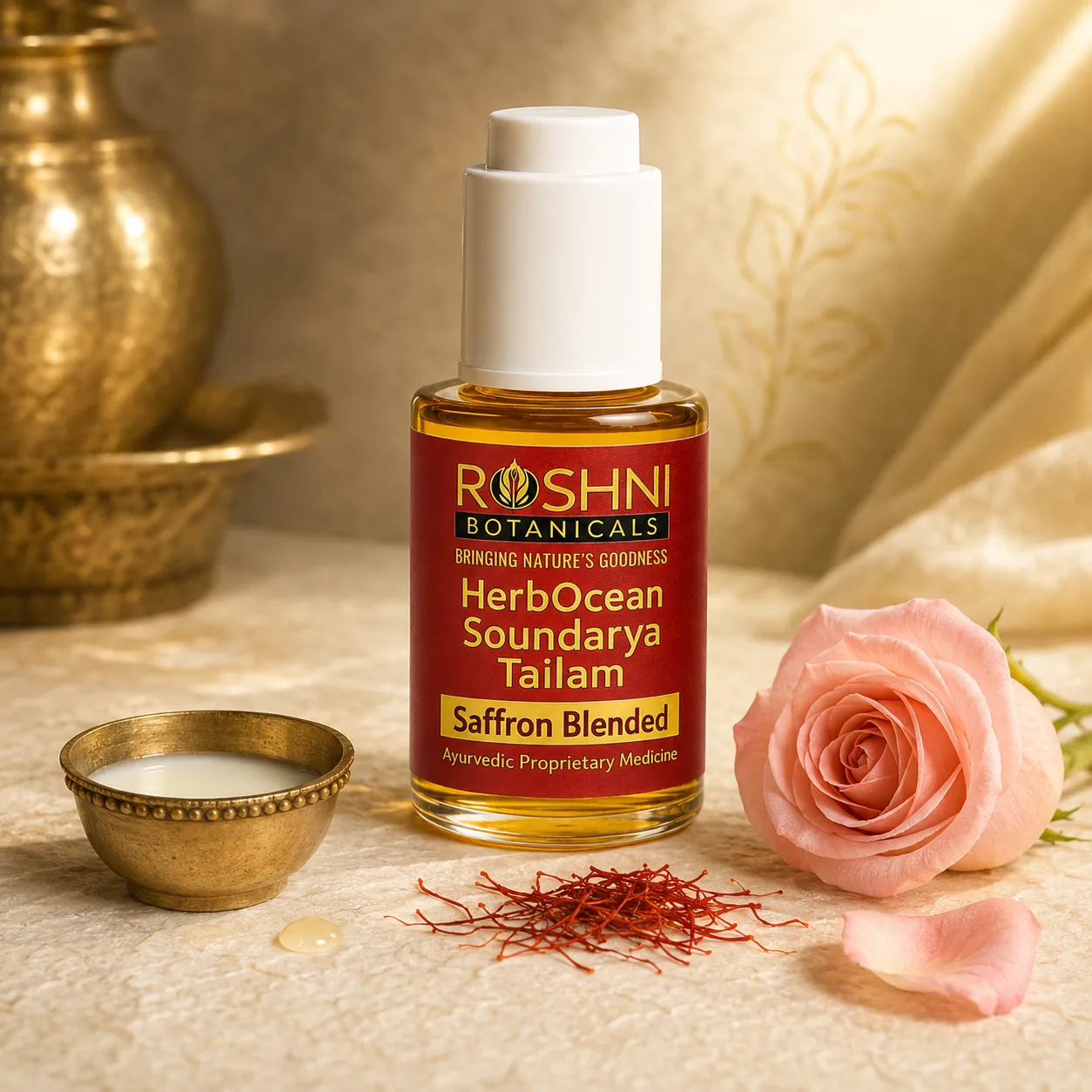
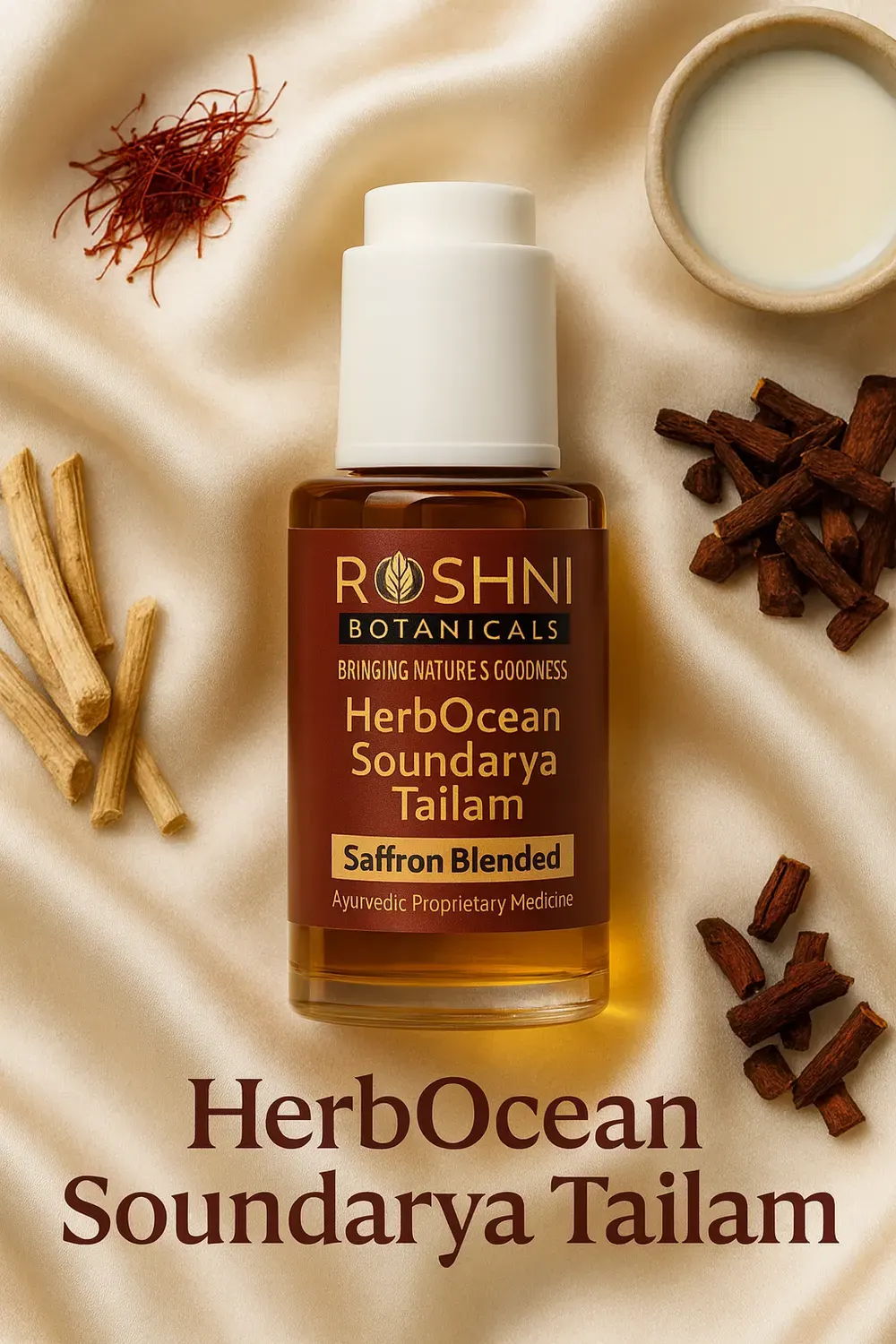
The massage is only as good as the oil. HerbOcean Soundarya Tailam is built for exactly this, a goat-milk repair oil carrying saffron, Manjistha, Mulethi (licorice) and red sandalwood in a sesame base, which glides well and feeds the skin while you work. The sesame base gives the slip a good face massage needs.
How to do it
Cleanse, then warm a few drops of oil between the palms. Apply with upward strokes from the jaw to the temples, small circles on the cheeks and forehead, and gentle pressure at the points along the brow and jaw, for five to ten minutes. Then leave the oil on for fifteen to twenty minutes, or overnight if your skin is not acne-prone, and rinse or cleanse. Three or four times a week is a good rhythm.
Who it suits, and a caution
It is especially good for dry and ageing skin, and lovely as a wind-down ritual. Avoid massaging over active acne or broken skin, where the friction does more harm than good, and patch-test the oil first. The real benefit compounds with consistency, a few minutes most days, rather than one long session. For the night routine it fits into, see a night routine for anti-ageing.
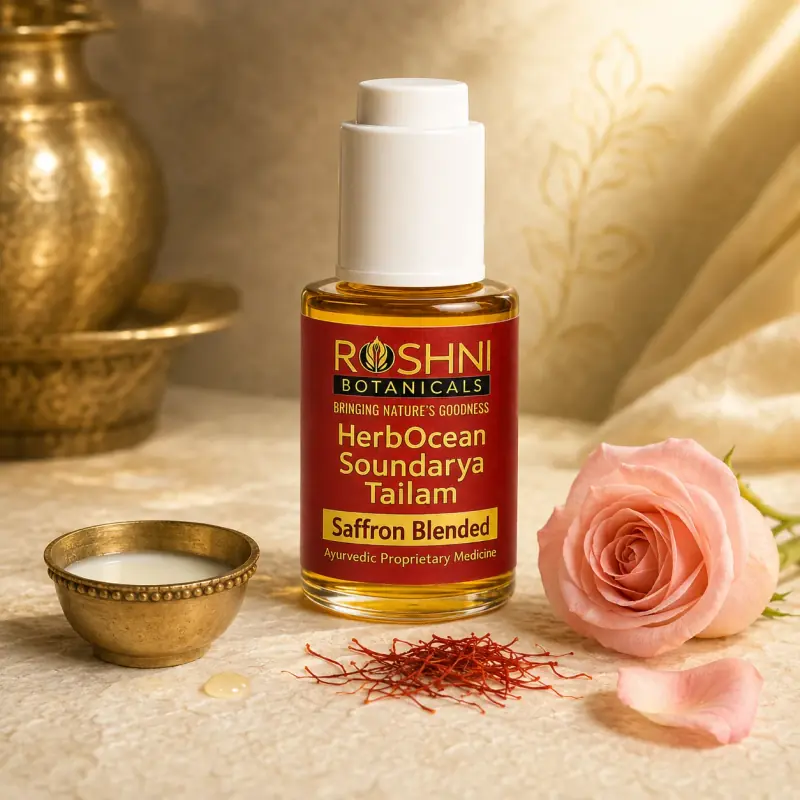
Soundarya Tailam
A saffron-infused facial Taila prepared in the goat-milk Kshira-paka tradition, with Manjistha, Mulethi and Kesar. For soft, bright, even skin.
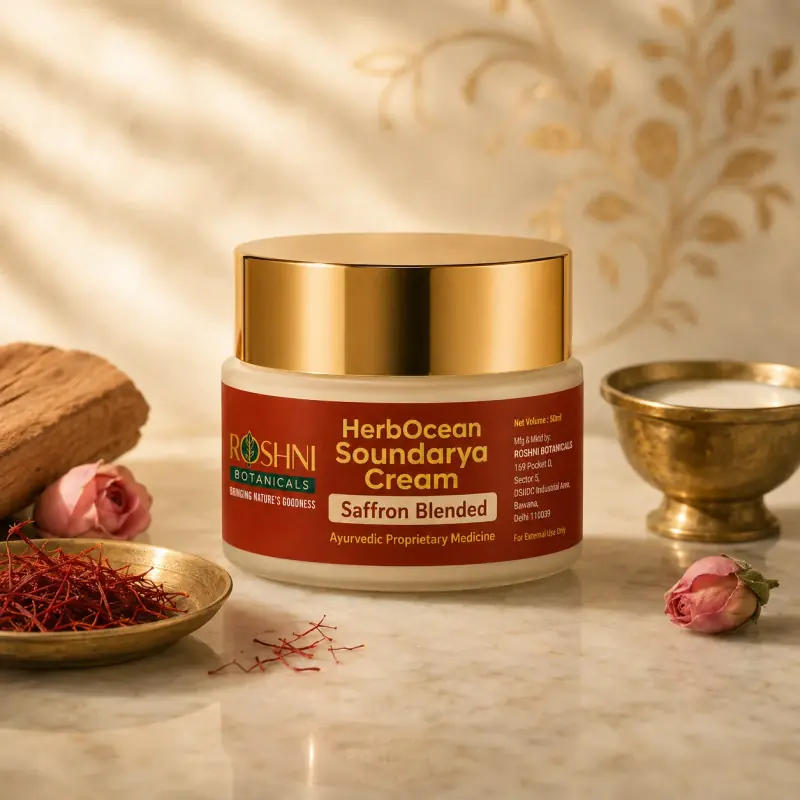
Soundarya Cream
A rich saffron brightening and repair cream with bargad (Vatt) bark on a goat-milk and coconut base, with shea and kokum butters, traditionally used in the care of skin where post-acne marks (PIH) linger.