Nagkesar Benefits for Skin: The Temple-Tree Flower Inside Soundarya Tailam
You may already know nagkesar from the puja thali: the white-and-gold ironwood flower classical vaidyas carried into complexion care. What Ayurveda says it does for the skin, and how it lives inside Soundarya Tailam.
If you have ever stood near a temple in flower, you may already know nagkesar without knowing its name: the small ironwood bloom with bright white petals and a golden heart, offered at the deity's feet across India. Classical vaidyas knew it too, and they carried it from the puja thali into complexion care. This is the story of that temple-tree flower, what Ayurveda has long said it does for the skin, and why it sits quietly inside a saffron facial oil like HerbOcean Soundarya Tailam.
Key takeaways
- Nagkesar is the dried flower of the Ceylon ironwood tree (Mesua ferrea), a tall evergreen planted near temples across India; its fragrant white-and-gold blooms have been part of classical Ayurvedic formulation for centuries.
- In classical complexion (Varnya) care, nagkesar is valued for its astringent, settling character, which is why vaidyas placed the flower in facial oils and pastes meant for an even, radiant tone rather than as a stand-alone remedy.
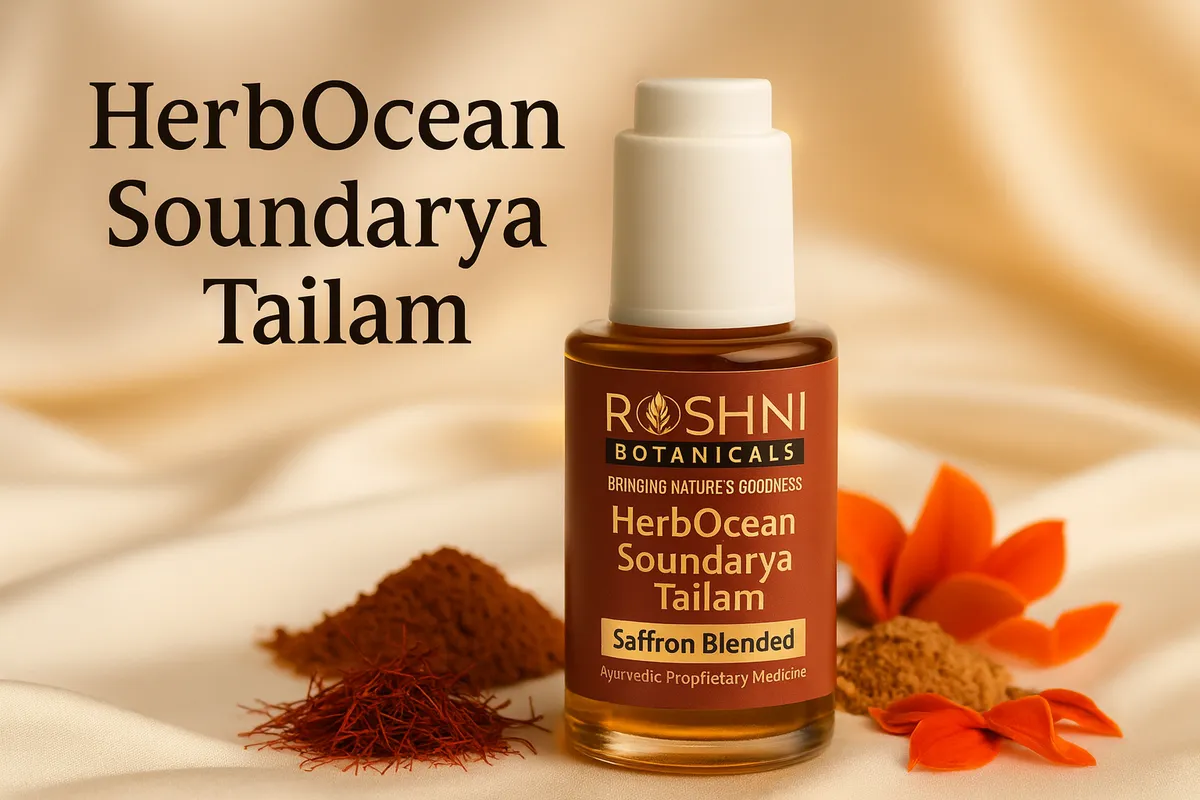
- Nagkesar and red sandalwood (Raktchandan) are both classical complexion botanicals, and both sit together inside HerbOcean Soundarya Tailam, a saffron-infused facial oil (Taila, a medicated oil).
- In Soundarya Tailam, nagkesar is carried into a sesame-oil base by the goat-milk Kshira-paka method, alongside saffron, Manjistha and Mulethi (liquorice).
- These preparations are for external use only; patch-test first, and see a dermatologist for sudden-onset or rapidly spreading pigmentation rather than relying on any single home ingredient.
Meet Nagkesar: The Temple Flower You Already Know
Nagkesar comes from Mesua ferrea, the tree the English call Ceylon ironwood or cobra's saffron, a tall evergreen prized for timber so hard and dense it sinks in water. The part Ayurveda reaches for is the flower: solitary white petals cupping a dense crown of golden-yellow stamens, fragrant enough that the dried bud carries its scent for months. If the description feels familiar, that is because the tree is a temple regular, planted in courtyards and its blooms gathered for worship from Bengal and Assam down through the Western Ghats and the South. Most Indian readers have met nagkesar before, in a puja thali or a garland, long before meeting it on an ingredient list.
The names are worth setting down once. It is nagkesar in Hindi, Nagakesara in the classical texts, and Mesua ferrea to a botanist. What the vaidyas valued was not fragrance alone but character: nagkesar is classically described as astringent (kashaya) and light, the kind of quality that settles and tones rather than stimulates, and it is read in the texts as pacifying to Pitta and Kapha (two of the three doshas, the biological energies of Ayurveda). In plain terms, it belongs to the family of gentle, tightening, complexion-friendly botanicals, which is exactly the group a formulator draws on when the goal is calm, even-toned skin. The finer taste and potency terms sit in the classical materia medica for those who want them; the practical point is that nagkesar was chosen for skin work, not borrowed into it.
There is something fitting in that double life. A flower offered for its beauty and its scent at the start of the day, and then, in a vaidya's hands, folded into an oil meant to keep the skin calm and even, is a very Indian idea of care: the sacred and the practical are not kept in separate rooms. The households that grew up gathering these blooms did not think of nagkesar as a skincare active at all. It was simply part of the shared vocabulary of the courtyard, alongside haldi in the kitchen and neem at the gate, and its move onto an ingredient list is less a discovery than a formal name for something already familiar.
| Nagkesar at a glance | |
|---|---|
| Common name | Nagkesar (Hindi); Nagakesara (classical Sanskrit) |
| Botanical source | Mesua ferrea, the Ceylon ironwood or cobra's saffron |
| Part used | The dried flower, with its golden stamens |
| Classical character | Astringent and light in the classical reading; regarded as pacifying to Pitta and Kapha |
| Traditional skin use | Complexion (Varnya) care, for even tone and radiance |
| Inside HerbOcean | Soundarya Tailam, Soundarya Cream and the Saffron Lip Balm |
| Format note | For external use in these preparations; patch-test first |
What Classical Ayurveda Says About Nagkesar for Skin
Classical Ayurveda organised skin-supporting herbs into named groups, and the one that matters here is the complexion-supporting (Varnya) tradition, the botanicals a vaidya turns to for an even, luminous tone. Nagkesar sits at the fragrant, astringent end of that tradition. Its role is understood through the skin's own liveliness, governed in classical terms by Bhrajaka Pitta (the Pitta sub-dosha of skin colour, lustre and absorption). An astringent, Pitta-settling flower is a natural fit for skin that runs warm and marks easily, which is why nagkesar reads, in the classical register, as gentle support for tone rather than a corrective for a named disease.
What the tradition does make clear is company: nagkesar and red sandalwood (Raktchandan) are both classical complexion botanicals, the kind ground into fine pastes and folded into oils for skin lustre and the quiet care of dark marks. It is a small detail with a large implication, because both nagkesar and red sandalwood sit together in Soundarya Tailam, so the oil is not an arbitrary blend but a modern expression of a pairing the tradition already favoured. Read this the way the classical-indication register asks: nagkesar is traditionally used in complexion care and classically valued for supporting even tone, never advertised as an overnight fix for dark marks.
This gentleness matters more on Indian skin than the global ingredient pages let on. Melanin-rich skin is quick to answer irritation with extra pigment, the flat brown shadows dermatologists call post-inflammatory hyperpigmentation (PIH); a 2010 review of PIH in skin of colour, by Davis and Callender in the Journal of Clinical and Aesthetic Dermatology, describes inflammation of almost any kind as the usual trigger and notes that the marks are both more common and more persistent in darker skin. Our guide to the Ayurvedic treatment of melasma on Indian skin goes deeper on how pigmentation behaves here. Complexion care that calms rather than strips is genuinely better suited to melanin-rich skin, and a gentle, astringent botanical like nagkesar earns its long place in Indian formulation precisely because it supports the skin quietly. None of that replaces daytime sun protection, which any pigmentation-aware routine still needs: a broad-spectrum sunscreen every morning does more to keep tone even than any single night-time ingredient can.
How Nagkesar Sits Inside Soundarya Tailam
The way a herb is prepared decides how much of its character survives into the finished oil, and Soundarya Tailam is made in one of the more labour-intensive classical methods: the goat-milk Kshira-paka method. Instead of steeping herbs in oil alone, the botanicals, nagkesar among them, are simmered with goat milk (Ajadugdh) in a sesame-oil base until the water has evaporated and only the medicated oil remains. It is slow, old-fashioned formulation, the kind that uses goat milk as a carrier for delicate flower and root actives rather than a marketing note; our companion piece on goat milk in skincare walks through why the tradition persists.
The method is not nostalgia for its own sake. Simmering delicate flower and root material in a milk-and-water decoction before it ever meets the oil is a gentler way of drawing character out of a botanical than heat alone, and it is well suited to something as fine as a dried flower, which harsh processing would simply scorch. The result is a light, non-greasy oil rather than a heavy one, which is part of why a facial oil made this way suits Indian skin and Indian weather better than a thick balm would. It is the same instinct the whole post keeps returning to: potent things, handled gently, so that what reaches the skin is already calm.
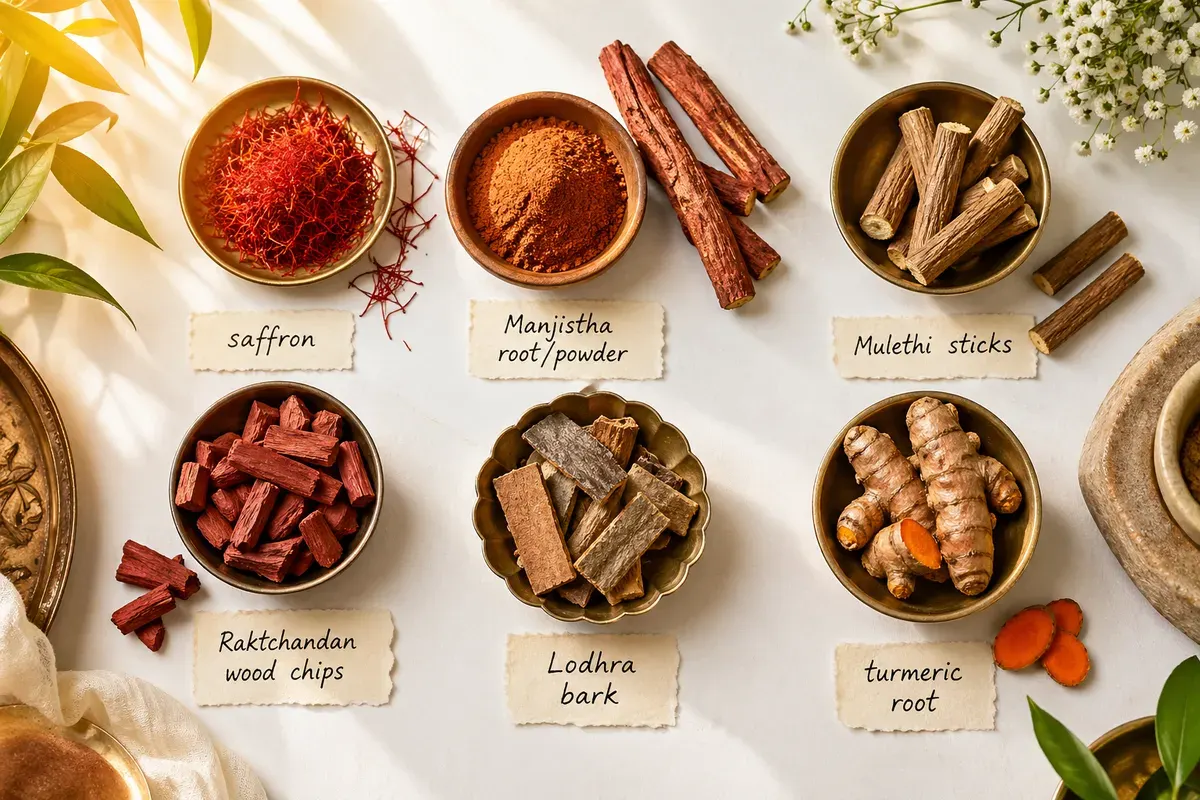
Nagkesar keeps good company in that base. Soundarya Tailam pairs it with saffron (Kesar) for radiance, Manjistha for even tone, Mulethi (liquorice) for its soothing character, and the red sandalwood already mentioned, all carried in sesame oil (Til tail) with a whisper of rose and mogra; our guide to Soundarya Tailam sets out how the herbs work as a whole rather than as a list. The formula is the work of Vaidya Shri Ram Prakash Ji, the master vaidya (a traditionally trained Ayurvedic physician) whose 40-year Ayurvedic formulation legacy the HerbOcean line is built on. Nagkesar is not exclusive to this oil, either: the same flower appears in HerbOcean Soundarya Cream and in the Saffron Lip Balm, all three AYUSH-licensed Ayurvedic medicines (Licence No. DL-474 A&U) for external use, made in-house at Roshni Botanicals' GMP-certified unit in Bawana, Delhi.
Using a Nagkesar Facial Oil Well in Monsoon Season
A facial oil is only as good as the way it is used, and the method is simple. At night, after cleansing, press three to four drops of Soundarya Tailam into slightly damp skin with the flats of your fingers, a brief facial oil massage (Mukha Abhyanga) rather than a hard rub, and let the skin take it in before bed. The oil is for external use only, so patch-test it on your inner forearm for twenty-four hours before the first full application, especially if your skin is reactive. In the morning, cleanse and, on any day you will see sunlight, finish with sunscreen; an even tone is protected in daylight far more than it is made overnight.
Late July asks for a lighter hand. In monsoon humidity the skin is already damp and a little occluded, so a facial oil sits far better at night, on a properly cleansed base, than under a sweaty afternoon. Two or three drops are plenty in the rains; the fuller application belongs to dry North Indian winter, when the air itself is pulling moisture out of the skin and the oil has more work to do. Read your skin rather than the calendar: if it feels heavy or congested, cleanse more thoroughly and use less, not more.
And keep a clear line between skincare and medical care. A gentle complexion oil is not a diagnosis. See a dermatologist first if pigmentation appears suddenly, if a patch spreads quickly across the cheeks or changes shape or colour, or if a mark has an irregular border or will not settle after a few months of consistent, sun-protected care. Nagkesar has a long and honest place in Indian complexion tradition, but that place is beside good habits and professional advice, not instead of them.
A Flower Worth Knowing by Name
The next time you see those white-and-gold blooms at a temple, you will know the second life they lead: the same nagkesar the priest offers is the flower a vaidya folded into complexion oils centuries ago, and the one that steadies the tone in a bottle of Soundarya Tailam today. It asks nothing dramatic of your skin and promises nothing overnight; it simply supports an even, calm radiance the way it always has, in a slow goat-milk oil made the classical way. That is the quiet case for knowing this temple-tree flower by name, and for letting it work at the pace it was always meant to.
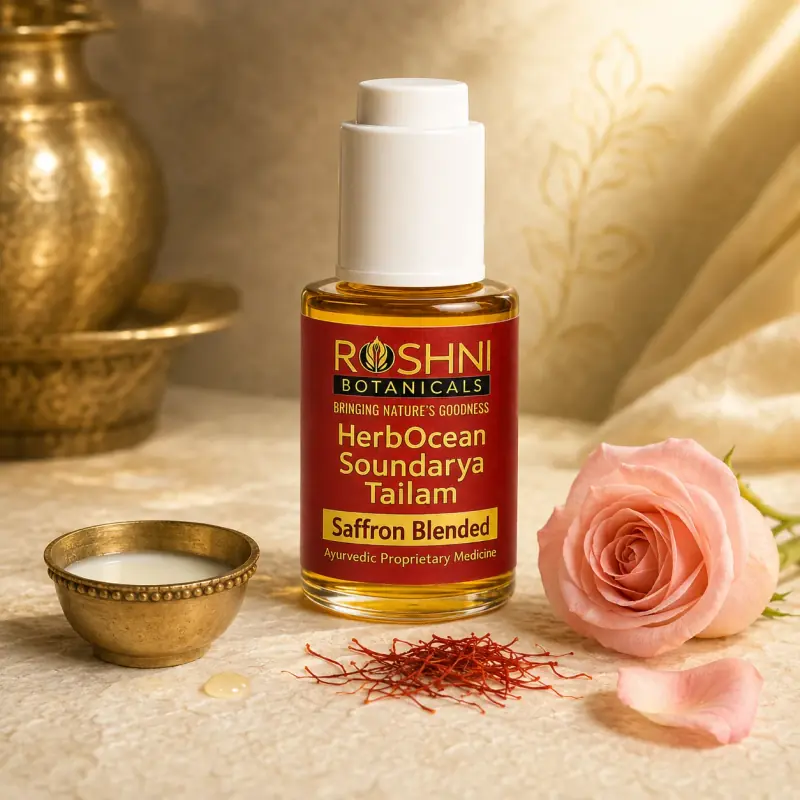
Soundarya Tailam
A saffron-infused facial Taila prepared in the goat-milk Kshira-paka tradition, with Manjistha, Mulethi and Kesar. For soft, bright, even skin.
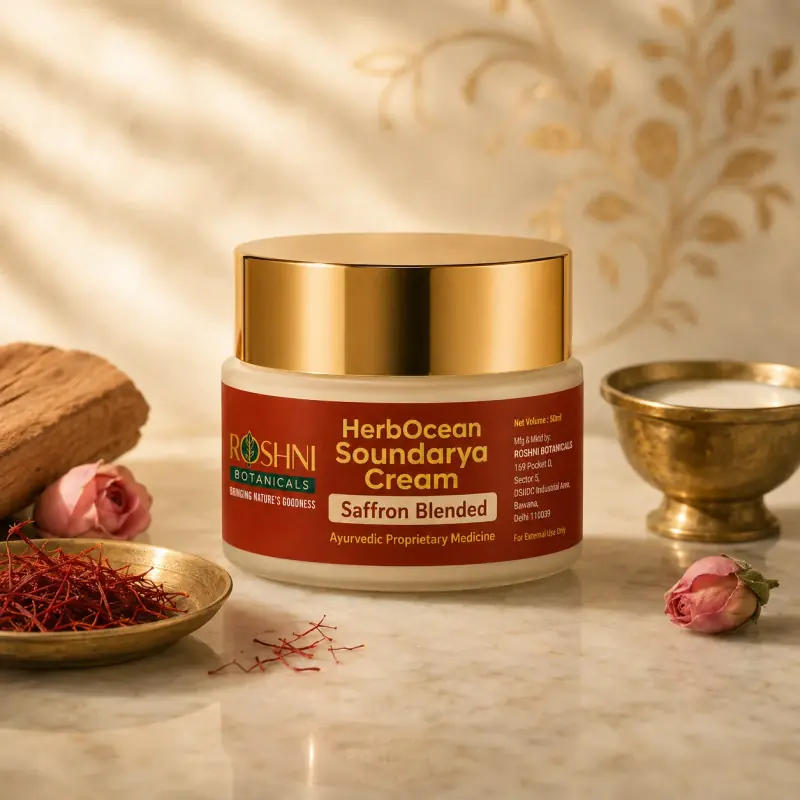
Soundarya Cream
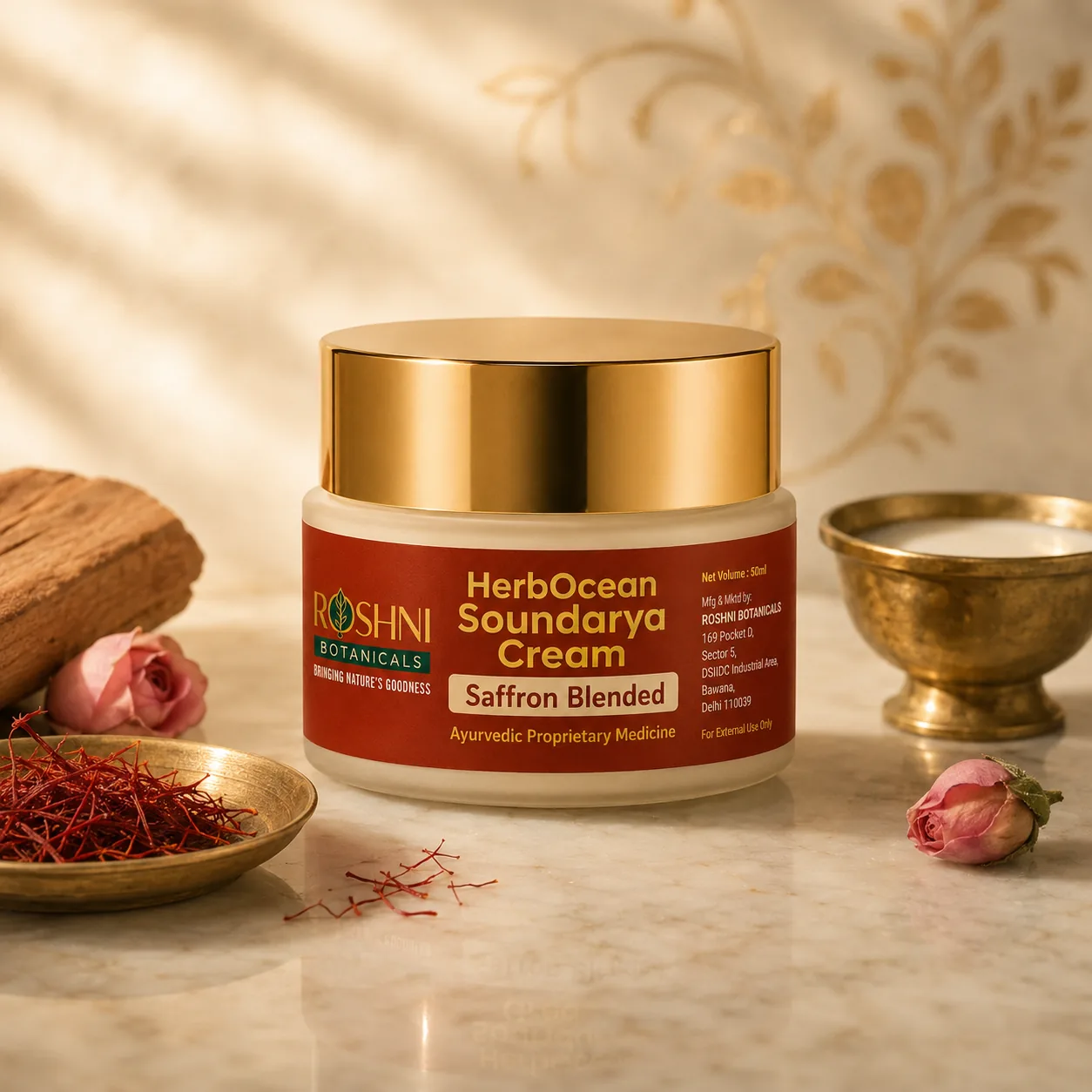
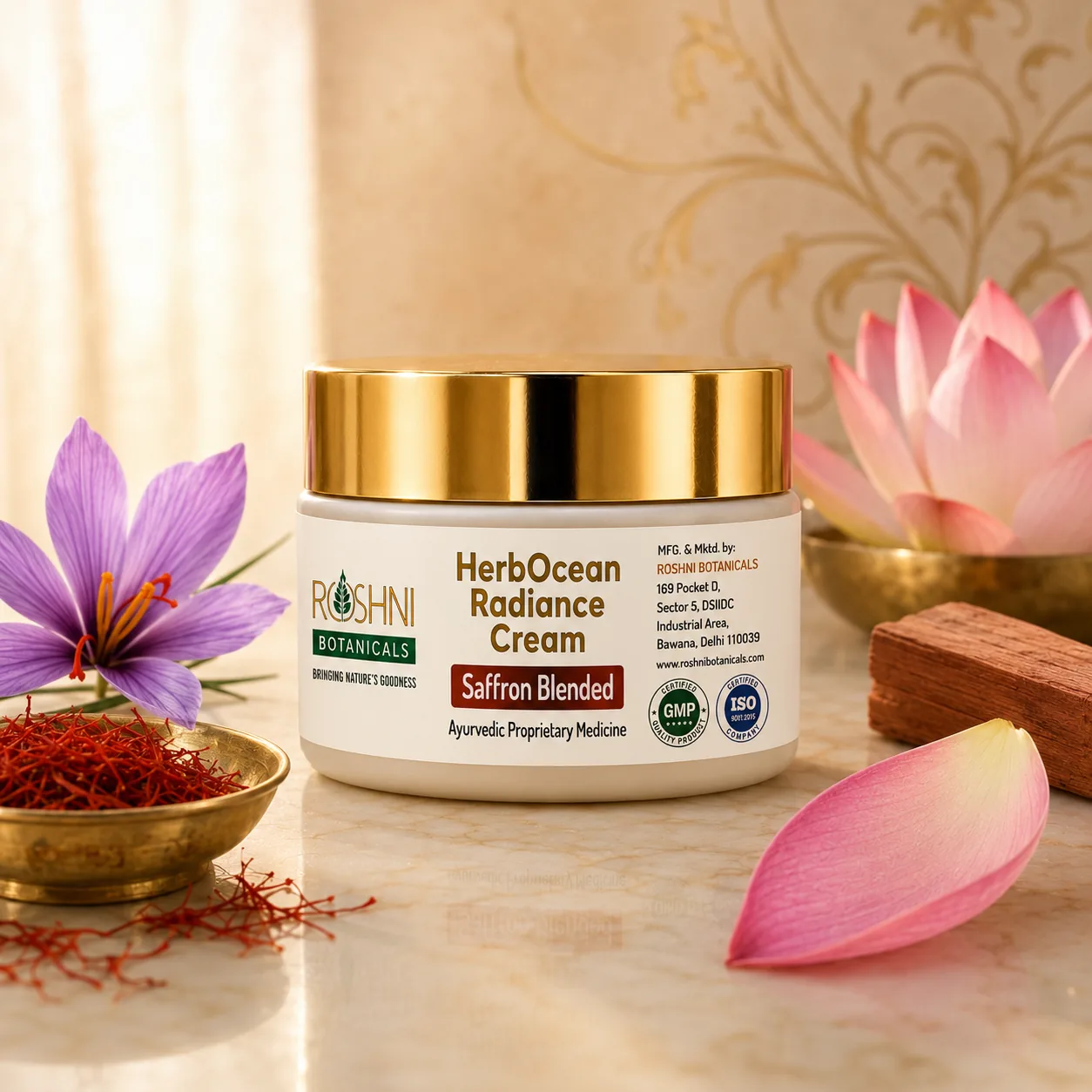
A rich saffron brightening and repair cream with bargad (Vatt) bark on a goat-milk and coconut base, with shea and kokum butters, traditionally used in the care of skin where post-acne marks (PIH) linger.