Chandan for Skin: Two Different Woods Sold Under One Name
White sandalwood and red sandalwood are two unrelated trees sharing a name. What separates them, what the tradition asks of each, and where both sit in the HerbOcean registers.
Chandan is probably the most familiar word in Indian skincare, and one of the least precisely used. It covers two entirely different trees, sold under names that overlap, in a market where a label rarely tells you which one you have bought. Before anything else, that confusion is worth clearing, because the two woods are not substitutes and our own registers declare them separately.
Key takeaways
- Two different trees share the name. White sandalwood is Santalum album, the fragrant heartwood; red sandalwood is Pterocarpus santalinus, a dense red timber with almost no scent.
- They are not interchangeable. Different botanical families, different traditional standing, different reasons for being in a formula.
- The botanical name is the only thing on a label that settles which wood is inside. A common name alone tells you very little.
- In the HerbOcean registers, white sandalwood sits in three preparations: Radiance Tailam, Radiance Cream and Soundarya Lepa.
- Red sandalwood travels further, appearing in seven of the nine formulations: Radiance Tailam, Radiance Cream and Radiance Lepa, Soundarya Tailam and Soundarya Cream, the Saffron Lip Balm and the Anti-Acne Roll-On.
Two Trees, One Word
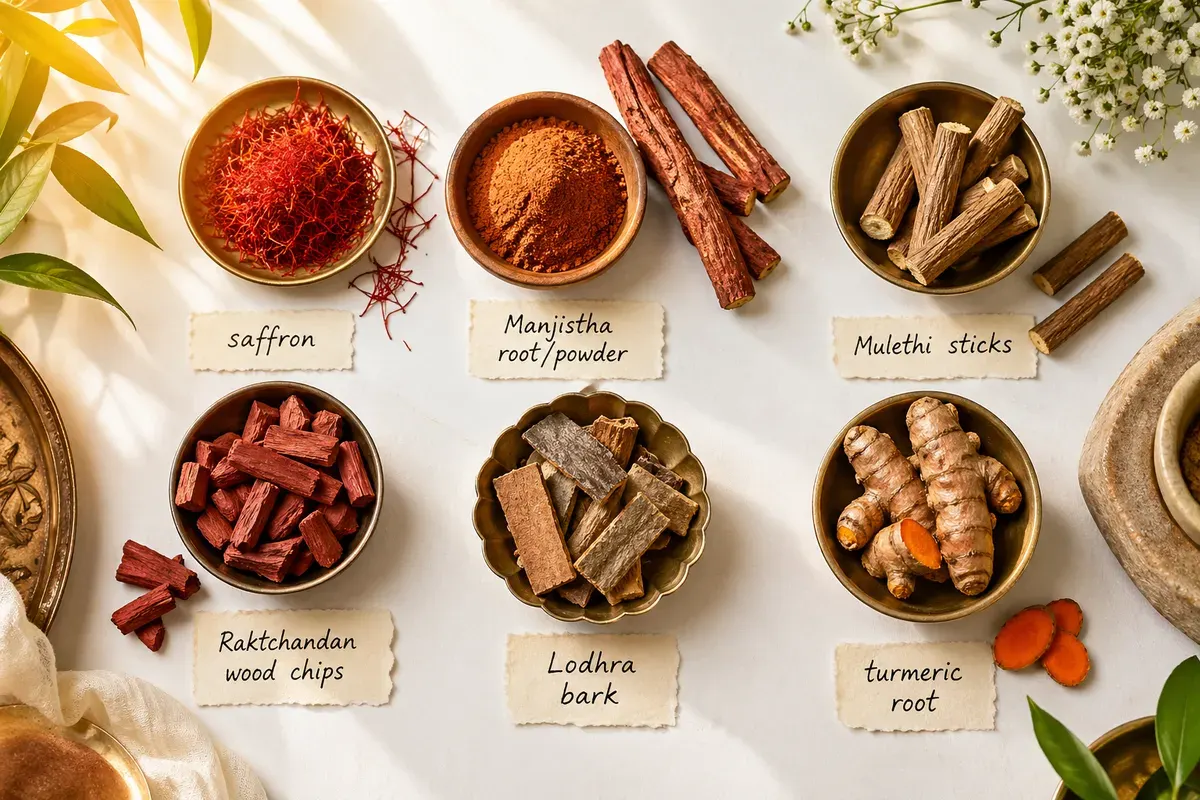
White sandalwood is Santalum album. It is the fragrant one, the heartwood behind the smell most people picture when the word chandan comes up, and a slow-growing tree that takes decades to build the scented core that makes it valuable. Red sandalwood is Pterocarpus santalinus, called Raktchandan in Sanskrit-derived usage. It is a legume, not a relation of the first tree at all, and its heartwood is a deep red timber prized for colour rather than fragrance. It is very nearly odourless.
The two also reach you in different forms, which compounds the confusion. White sandalwood is most often sold as a pale, fine powder, or as an oil distilled from the heartwood. Red sandalwood arrives as a coarser powder in a distinct brick or maroon red, and it is used for that colour as much as anything else, which is why it turns up in preparations where a deep red tint is part of the character. Put the two powders side by side and nobody would confuse them. Put them in separate packets labelled chandan and most people would.
That last point is the practical one. If a pack labelled red sandalwood smells strongly of anything, the smell is not coming from the wood. And if a pack labelled simply chandan smells of nothing, it is not white sandalwood heartwood. The two woods do not merely differ; they differ in the one property a customer can actually perceive without a laboratory.
Latin names on a label are not pedantry, then. They are the only thing that settles the question. A pack that gives you a common name and a picture has told you which tradition it wants to borrow from, not which wood is inside. This applies to our labels as much as anyone else's, which is why the botanical name is the thing worth looking for.
There is a reason the confusion persists rather than being cleared up. In ordinary Indian usage chandan is a category word, closer to timber than to a species, and it has carried that looseness for a very long time. Nobody at a counter is being dishonest when they hand you something labelled chandan; the word genuinely covers both. The problem only arises when a formulation depends on which one is inside, which is exactly when a common name stops being good enough.
What the Tradition Asks of Each Wood
White sandalwood has a long standing in Indian skin preparations, and it is traditionally used in the care of overheated, reactive, uneven-looking skin. That is a modest description and a deliberate one. What it points to in practice is skin that feels calmer and less easily provoked, which is a smaller thing than the category usually promises and a more honest one.
Red sandalwood has a classical standing of its own, and it is a different one. The two woods are not substitutes in a classical formula, which is the practical reason our register declares them separately rather than folding both under one comfortable word. A formulation that lists only chandan is telling you less than it appears to.
We are deliberately not attaching a potency word to either wood here, nor quoting a chapter and verse for the tradition behind them. Both are things we would want to check against a printed classical reference before printing, and the useful part of the tradition survives being described plainly without them. If you want the wider picture of how the classical skin register works, the Ayurvedic approach to melasma on Indian skin covers that ground properly, and our piece on Nagkesar looks at another of the woods and resins that turn up alongside these two.
Where the Two Woods Sit in the HerbOcean Registers
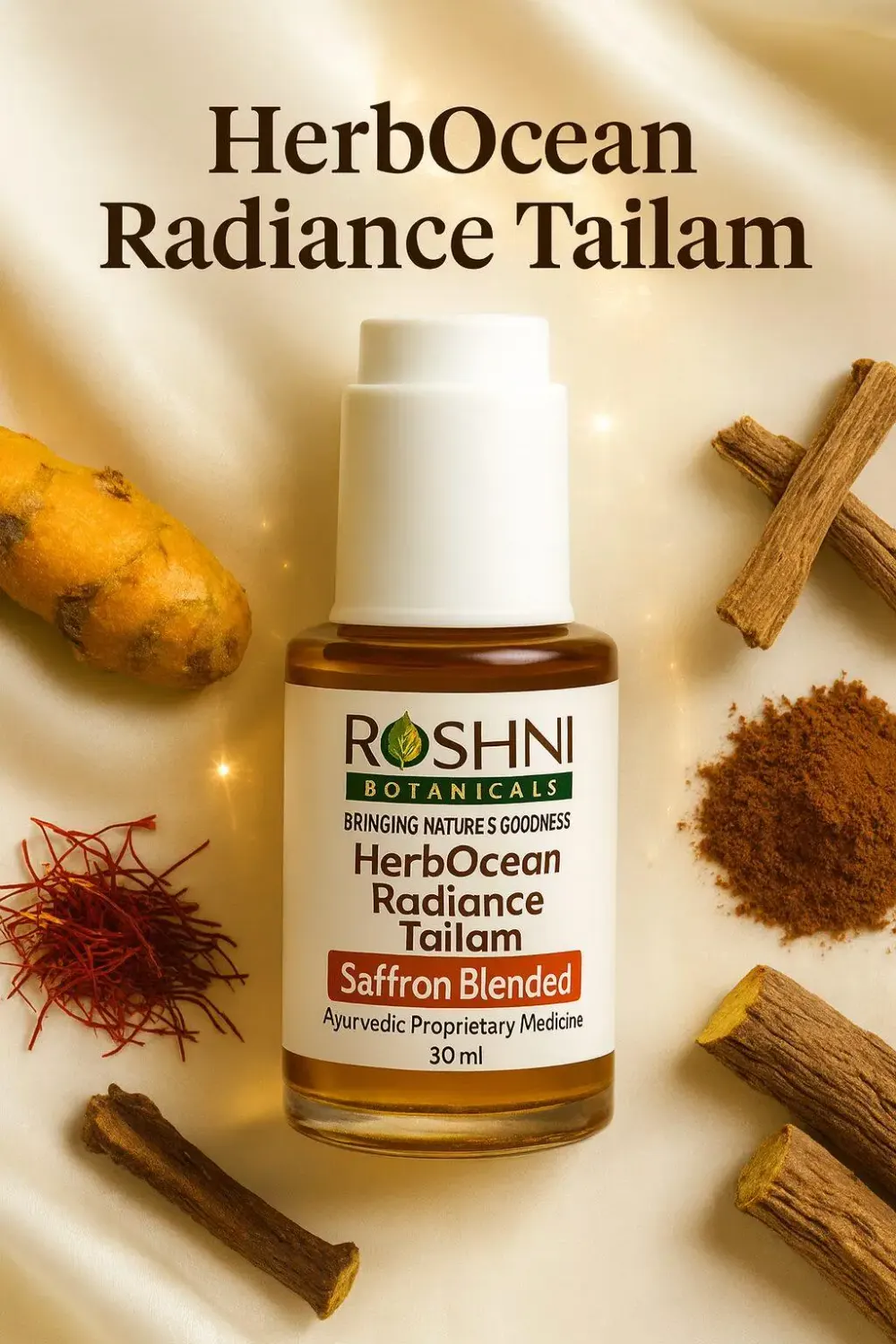
Among our facial oils and creams, white sandalwood belongs to the Radiance pair. HerbOcean Radiance Tailam is an AYUSH-licensed Ayurvedic medicine for external use, classically indicated for melasma (Vyanga) and traditionally used in the care of dark spots and uneven-looking skin. Its register runs to twelve botanicals: the three Triphala fruits, amla, baheda and harad, alongside white sandalwood (Chandan), red sandalwood (Raktchandan), turmeric (Haldi), Indian madder (Manjistha), costus root (Kuth), lotus (Kamal), wild Himalayan cherry (Padmaakh), Himalayan lily (Kakoli) and flame of the forest (Palash), in a sesame oil (Til tail) base with saffron (Kesar) and lavender, rose and mogra oils.
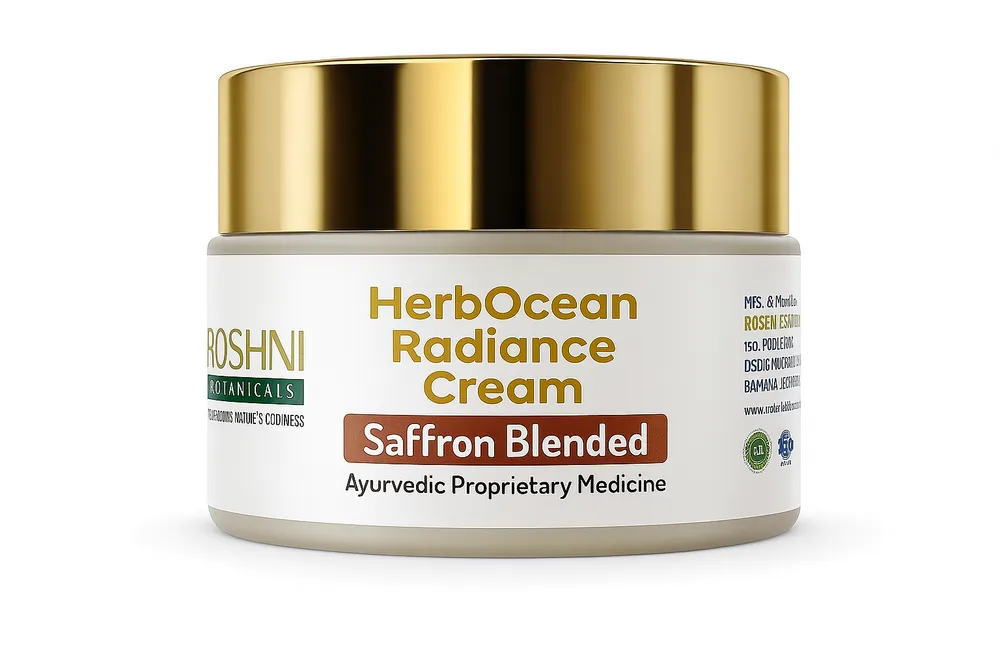
Radiance Cream builds the same twelve botanicals into a coconut-oil cream base, with saffron and the same three aromatic oils. The difference between the two is the carrier rather than the botany, which is worth knowing if you are choosing between an oil and a cream for the same concern.
Red sandalwood travels much further through the line. Raktchandan sits in seven of the nine HerbOcean formulations: Radiance Tailam, Radiance Cream and Radiance Lepa, Soundarya Tailam and Soundarya Cream, the Saffron Lip Balm and the Anti-Acne Roll-On. White sandalwood, by contrast, sits in three: the Radiance pair and Soundarya Lepa. Two woods, one word, and a genuinely different distribution across the range.
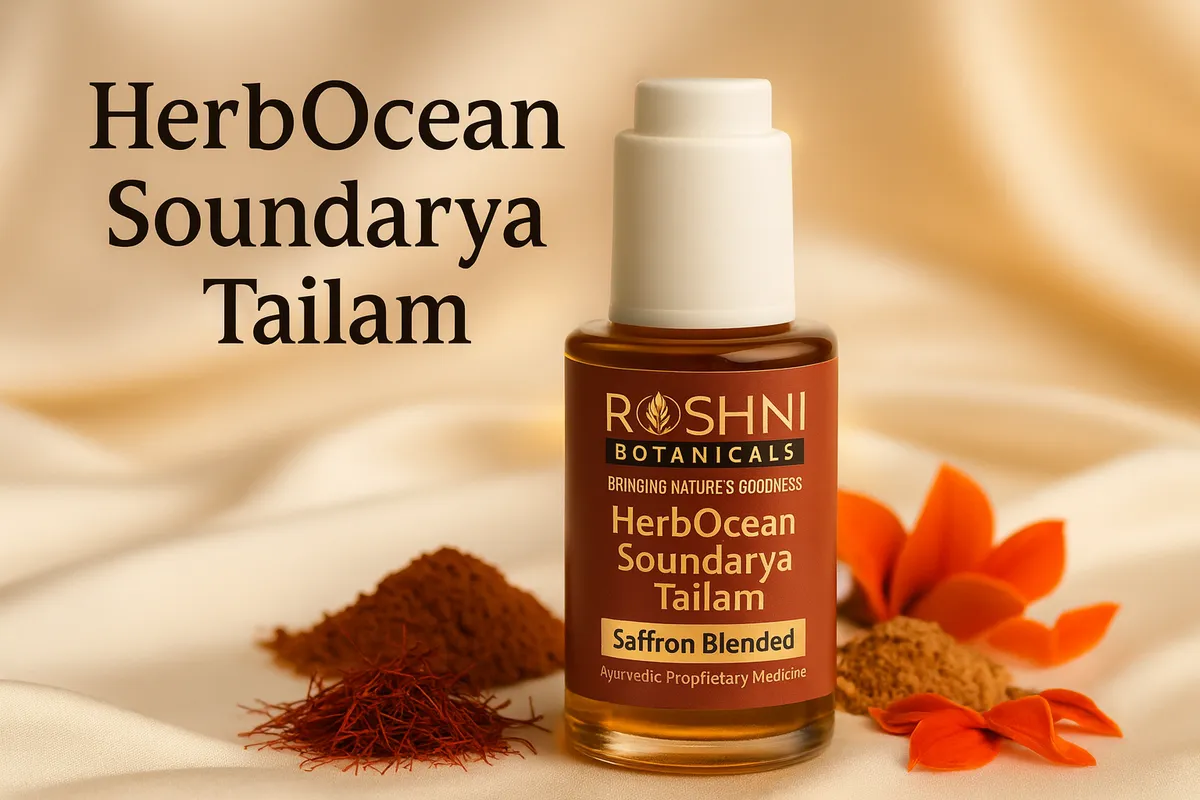
Soundarya Tailam sets its herbs in a sesame oil base by the goat-milk Kshira-paka method, in which the herbs are simmered with goat milk in the oil until the water is gone and only the medicated oil remains. Soundarya Cream carries that same Kshira-paka heritage into a coconut-oil cream. Both are AYUSH-licensed Ayurvedic medicines for external use under Licence No. DL-474 A&U, built on the forty-year Ayurvedic formulation legacy of Vaidya Shri Ram Prakash Ji. Roshni Botanicals manufactures in-house at Bawana, Delhi; the unit holds a Schedule-T GMP certificate for Ayurvedic drugs and is ISO 9001:2015 certified.
This is also why we publish both names in the register rather than the friendlier single word. A register that says chandan and leaves it there is asking you to trust the formulator on a point you could simply have been told. Listing Santalum album and Pterocarpus santalinus separately is duller to read and it removes the ambiguity, which seems the better trade.
Using Sandalwood Sensibly on Indian Skin
The household form most people know is a paste. Sandalwood powder worked into a thin paste and applied to the face is one of the oldest skincare habits in the country, and there is nothing wrong with it done sensibly. A thin layer, two or three times a week, rinsed off before it dries hard, is enough. The mistake worth avoiding is leaving a pack on until it cracks, which pulls at the skin as it tightens and leaves the surface tighter and more reactive than it started.
What you mix the powder with matters more than most people expect. Plain water is the least likely to cause trouble and the easiest to rinse. Rose water is pleasant and is still a fragranced ingredient, so it belongs in the patch test along with everything else. Milk and curd are traditional and are worth using fresh rather than left standing in a warm kitchen. Lemon juice and other acidic additions are the ones to leave out; they sting, they can leave the skin more reactive than they found it, and the paste works perfectly well without them.
On humid days a heavy pack can feel like more trouble than it is worth, and an evening oil is easier to live with. Whichever form you use, patch-test on the inner forearm before the first application, and stop at once if there is burning or redness. Sandalwood is well tolerated by most people, and well tolerated by most people is not the same as well tolerated by everyone.
Two groups should be more careful than the label suggests. If you already react to fragrances, treat any scented sandalwood preparation as a fragrance product and test it accordingly. And if your skin is currently inflamed, broken or recovering from a course of actives, leave packs alone entirely until it has settled; a paste that dries and tightens is the wrong thing on skin that is already irritated.
Between a pack and an oil, the honest answer is that it depends on your skin and the weather rather than on which is more classical. A pack sits on the surface, comes off with the rinse and suits skin that runs oily. An oil stays on, works into the surface overnight and suits skin that runs dry or feels tight after washing. Neither is a stronger version of the other, and choosing by texture is more sensible than choosing by tradition.
Set expectations on time, too. Classical preparations work slowly, and consistency over weeks does more than quantity in any single sitting. If marks and unevenness are the real concern rather than general care, keeping the skin protected from the sun and leaving spots alone will do more for the timeline than any single preparation you buy.
One last practical note, for when the label gives you nothing. If a pack names no botanical and you cannot tell from the colour, the honest position is that you do not know which wood you have, and you should treat it accordingly: patch-test it as you would anything unknown, and do not build a routine around it. That is not a counsel of suspicion. It is simply that a preparation you cannot identify is a preparation you cannot repeat, and repeatability is most of what makes a routine worth keeping.
Read the Label, Not the Word
Chandan is a word that covers two trees, and the word alone will not tell you which one you are holding. Patch-test first, give the routine time, and make the botanical name the thing you look for on any sandalwood label, ours included. That is a smaller and duller piece of advice than the category usually offers, and it is the one that survives contact with an actual shelf.
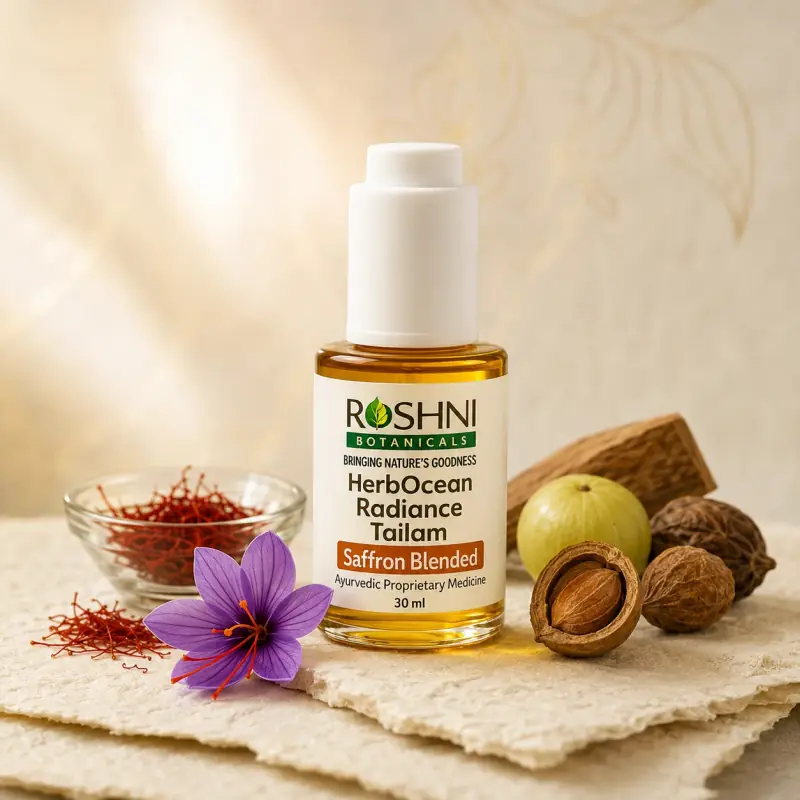
Radiance Tailam
A saffron brightening facial Taila with Manjistha and red sandalwood, traditionally used to support even tone where melasma, dark spots and PIH show.
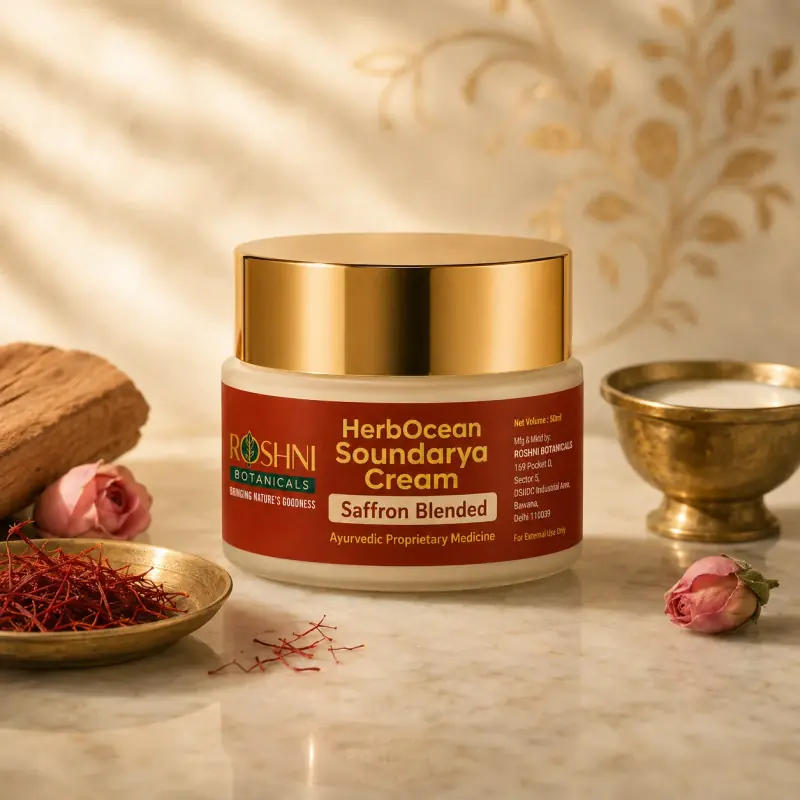
Soundarya Cream
A rich saffron brightening and repair cream with bargad (Vatt) bark on a goat-milk and coconut base, with shea and kokum butters — often reached for where post-acne marks (PIH) linger.
Part of our guide: Ayurvedic treatment for melasma on Indian skin.