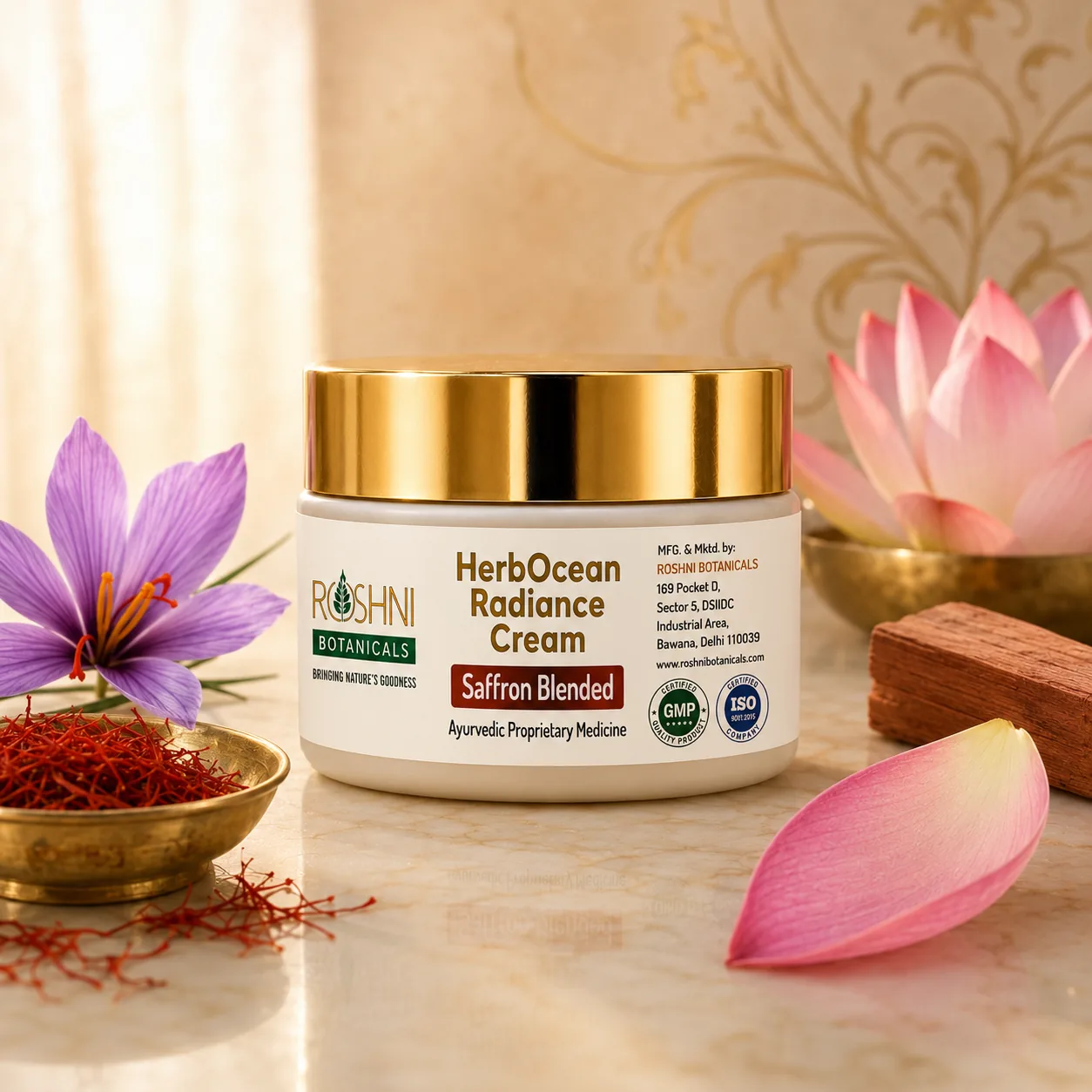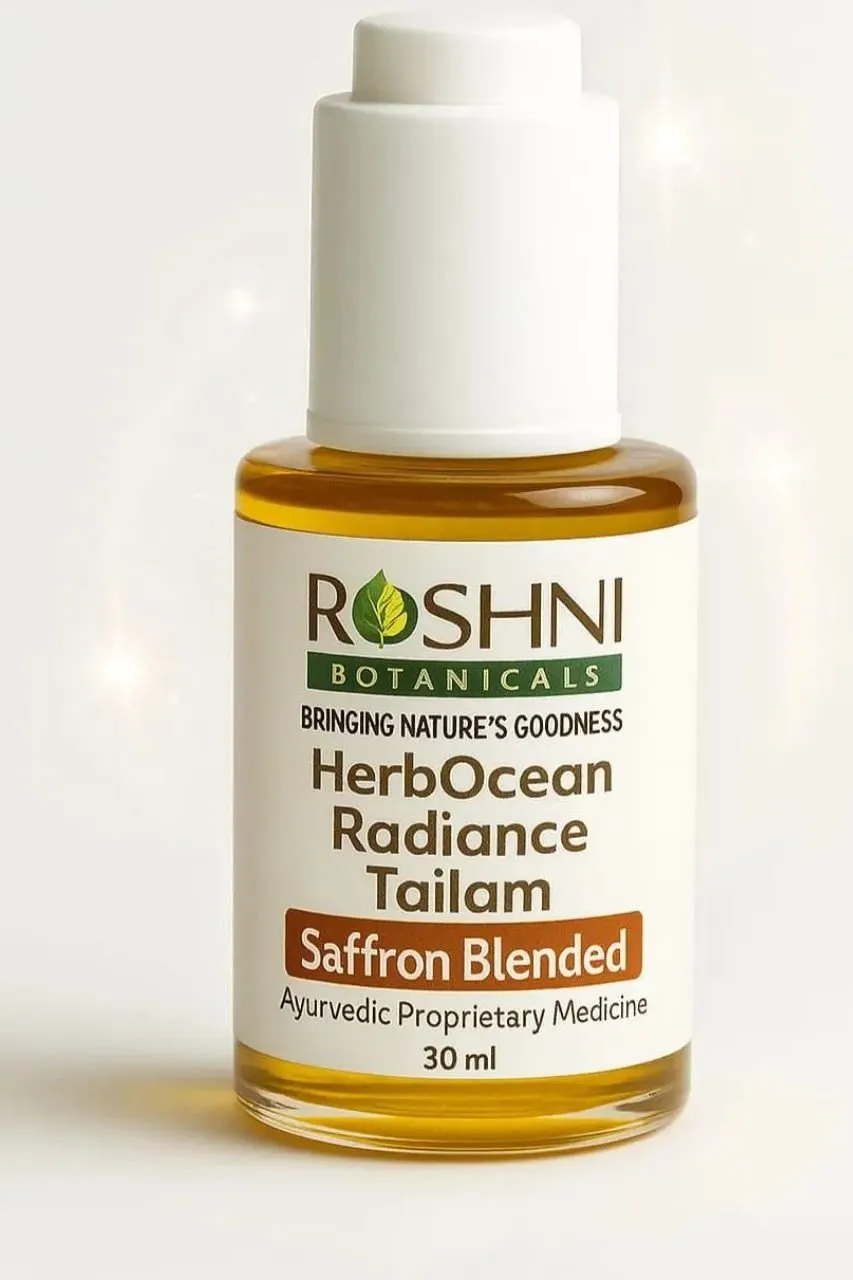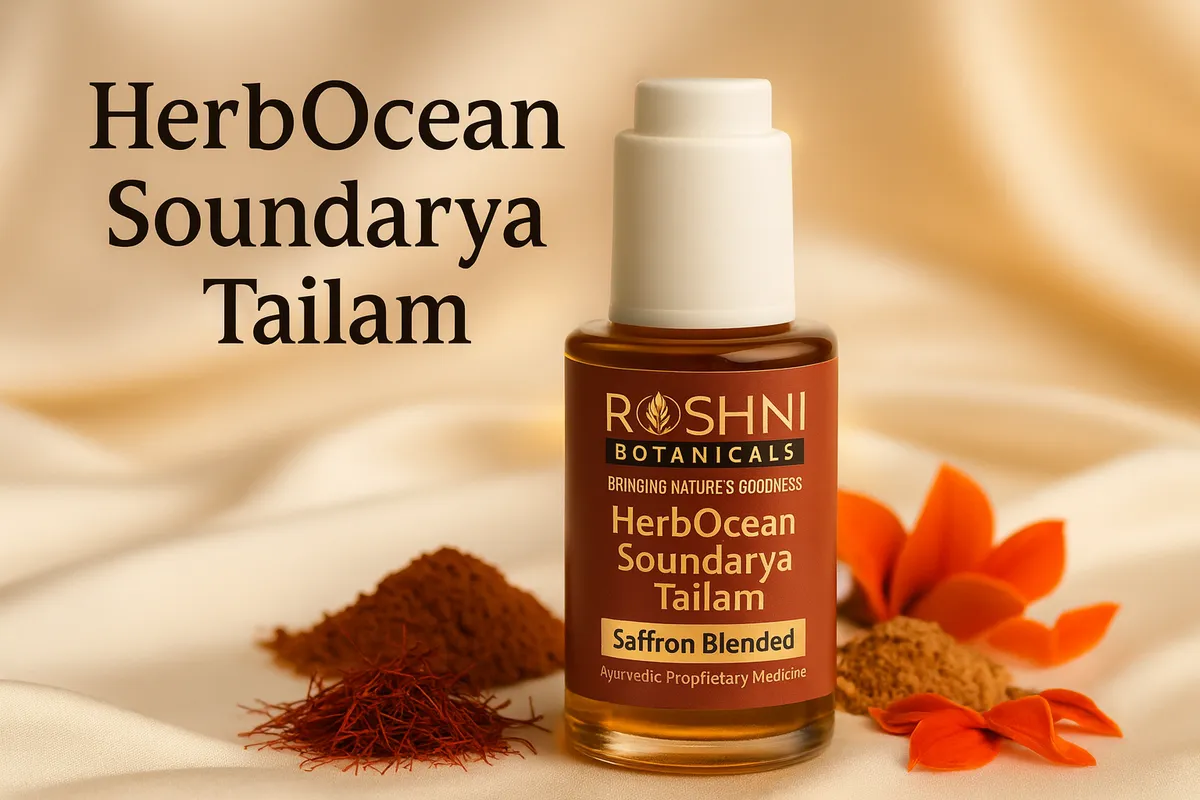
HerbOcean Radiance Tailam: A Classical Taila for Uneven Tone and Dark Spots
A sesame-based facial Taila with Triphala, Manjistha and saffron, classically indicated for melasma (Vyanga) and the dark spots and PIH melanin-rich Indian skin is prone to.
First, a point of clarity, because it matters. Radiance Tailam is for hyperpigmentation, the too-much-pigment side of things: melasma, dark spots, sun spots and post-inflammatory marks. It is not for hypopigmentation, the loss of pigment seen in conditions like vitiligo, which is a medical matter for a dermatologist. With that settled, here is what this oil actually is.
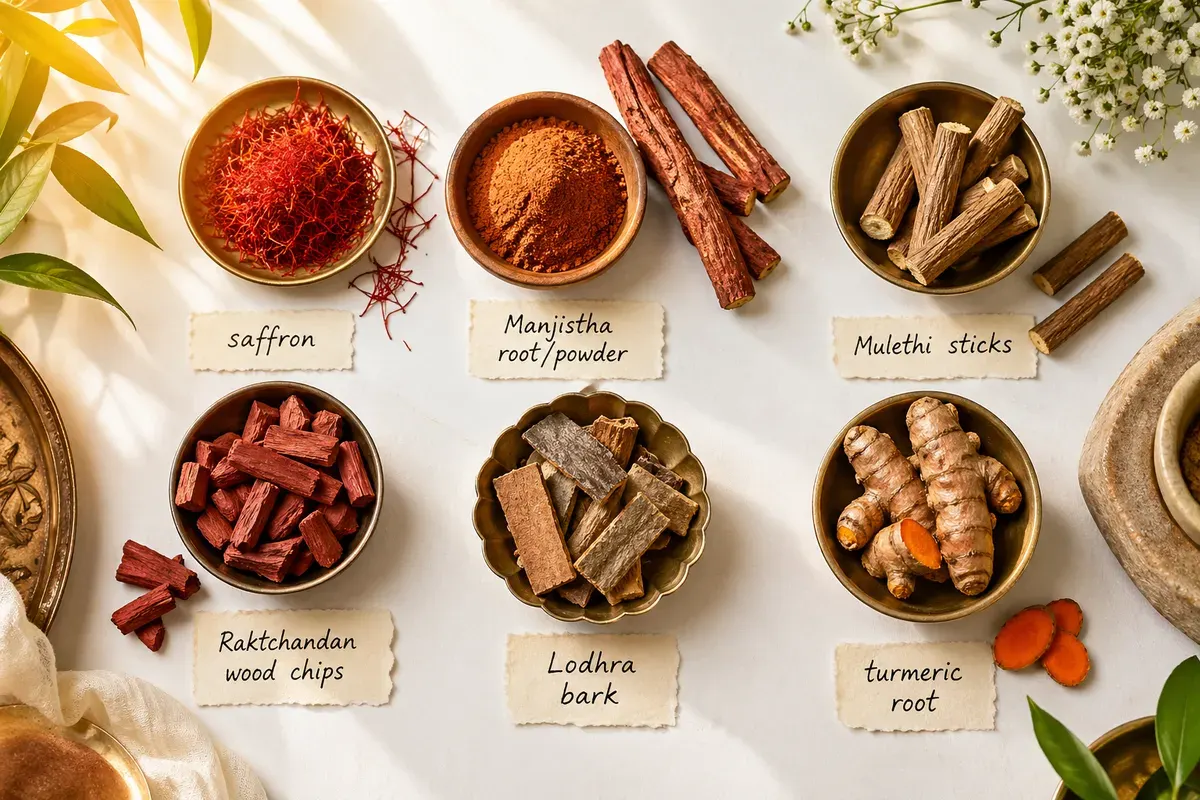
It is a classical Ayurvedic facial medicine, a Taila (medicated oil) in which Triphala sits alongside Manjistha, Haldi and Kesar (saffron) in a sesame base, made in-house under AYUSH Licence DL-474 A&U. In classical terms it is indicated for Vyanga, the old name for facial pigmentation, read through aggravated bhrajaka pitta (the aspect of Pitta that governs skin colour).
The classical herbs in this oil
Triphala is the trio of Amla, Harad and Baheda, three fruits that recur throughout classical skin care and are valued traditionally for a clear, even complexion. Alongside them the formula carries Manjistha (a classical skin herb), Haldi (turmeric, soothing for reactive skin), saffron and the sandalwoods, white and red.
Why Indian skin needs the gentle approach
Melanin-rich skin, broadly Fitzpatrick IV to VI, is quicker to react and slower to forget. A spot, a wax, a harsh scrub or an aggressive “brightening” treatment can all leave a mark that outlasts its cause. That is why post-inflammatory hyperpigmentation (PIH) is such a defining problem here, and why the classical instinct is the right one: calm the skin, do not provoke it. Pigmentation also answers strongly to light and heat, both of which sit under aggravated Pitta in the classical reading.
That word, brightening, covers two quite different things, and they are worth separating. An aggressive brightening treatment works by stripping or irritating, and on this skin that irritation becomes a fresh source of pigment. Gentle brightening support works the other way round: it keeps the skin calm and comfortable while daily sun protection holds the line. Radiance Tailam sits in the second group, a brightening Taila in the classical register rather than a peel.
The one habit that matters most
Daily broad-spectrum sunscreen does more for uneven tone than any oil ever will. Without it, sun exposure keeps darkening spots faster than gentle care can support them. So the routine is simple: a few drops of the Taila at night on clean skin, and sun protection by day, reapplied. The oil is traditionally used to support the look of even tone; it is not a cure, and no honest product in any system promises to erase melasma for good.
Hormones, heat and the things that set it off
Pigmentation rarely has a single cause. Oestrogen and progesterone nudge the pigment cells, which is why melasma so often appears during pregnancy or on the contraceptive pill, and why it can be stubborn while those influences last. Heat matters too, and not only sunlight: the warmth off a stove, a long commute, even visible light through a window can keep the pigment switched on, all of which classical thought would simply read as aggravated Pitta. Knowing this changes how you treat your skin. It argues for cool, calm and consistent rather than harsh and hopeful.
A day and night routine that makes sense
Keep it simple enough to actually follow. At night, cleanse and press a few drops of the Taila into clean skin. By day, the priority is protection: a broad-spectrum sunscreen, generously applied and reapplied, used even indoors near windows. Many people pair the night oil with the lighter Radiance Cream under sunscreen in the morning. Whatever you choose, the sunscreen is the part that is not optional, because without it the rest is effort poured into a leaking bucket.
A realistic timeline
Expect things to settle before they fade. Real evening of tone comes over months, and only with the sunscreen holding the line. See a dermatologist if a patch is spreading quickly, changing in an unusual way, or behaving differently from the rest, because anything irregular should be checked properly rather than assumed to be harmless.
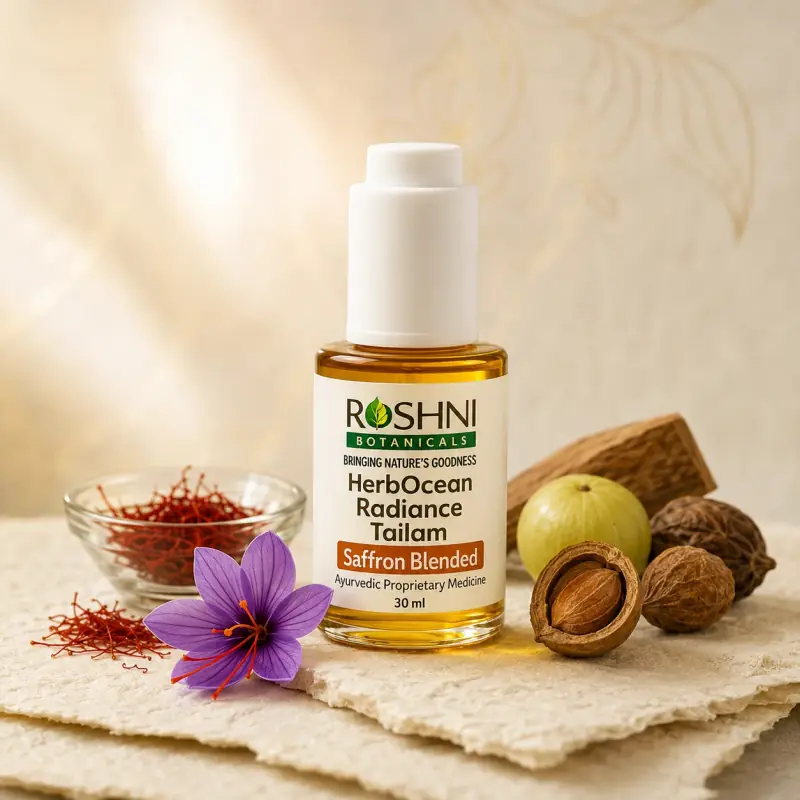
Radiance Tailam
A saffron brightening facial Taila with Manjistha and red sandalwood, traditionally used to support even tone where melasma, dark spots and PIH show.
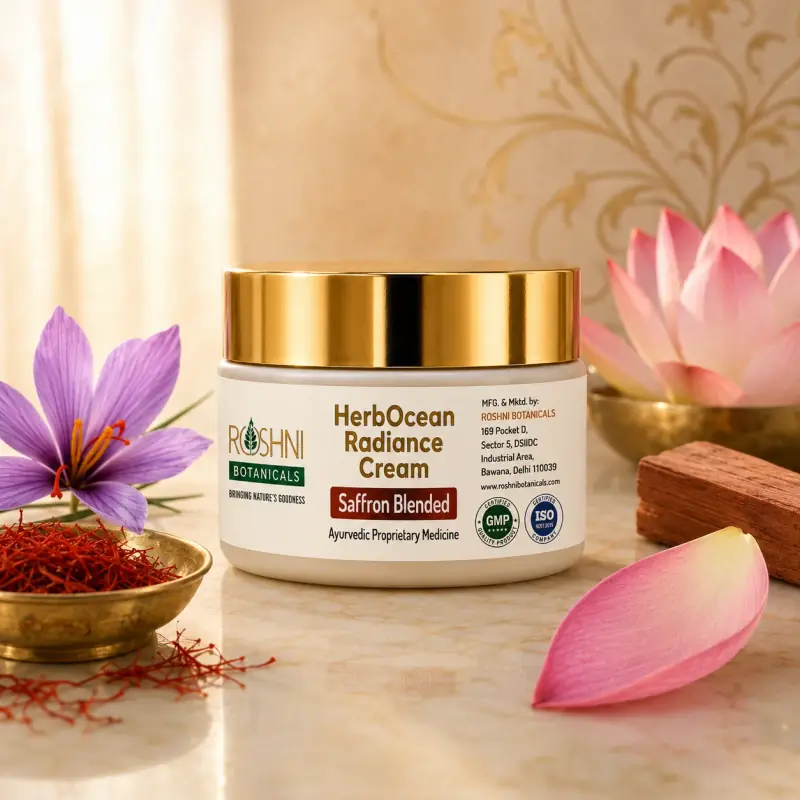
Radiance Cream
A daily saffron and sandalwood brightening cream with Manjistha, red sandalwood and lotus in a light coconut base. Supports a luminous, even-looking skin tone.
Part of our guide: Ayurvedic treatment for melasma on Indian skin.