What is the Difference Between Dark Spots and Pigmentation, and What Really Works?
They get used interchangeably, but a dark spot and a patch of pigmentation are not the same thing — and knowing which one you are looking at changes what actually helps.
Almost everyone uses the words interchangeably. You point at a mark on your cheek and call it a dark spot one day and pigmentation the next. For a routine that actually does something, though, the difference matters, because the two behave differently and respond to different care. Let us sort it out plainly, the way it actually shows up on Indian skin, and then look at what tends to help.
The important points first
- A dark spot is usually small and well defined: the brown mark a pimple leaves behind, a freckle, a single sun spot.
- Pigmentation is the broader word, and the patchy, larger, less even kind (melasma being the classic example) is often driven by hormones and sun together.
- Melanin-rich Indian skin marks more easily and holds those marks longer, so post-inflammatory hyperpigmentation (PIH) is the single most common complaint.
- Sun protection is not optional. Without it, almost nothing else you do will hold.
What is the difference between pigmentation and dark spots?
Think of it as one being a subset of the other. Pigmentation simply means colour in the skin from melanin, and any patch where there is more of it than the skin around it. Dark spots are the small, sharply outlined version: a mark left by a healed spot, a patch of sun exposure, a freckle that deepened over a summer. Melasma, by contrast, tends to arrive as larger, hazy, symmetrical patches across the cheeks, forehead or upper lip, and it is notoriously linked to hormones, pregnancy and the contraceptive pill as much as to the sun. One is a dot you can point to. The other is a cloud with soft edges.
What causes dark spots and pigmentation?
The triggers overlap, which is part of why people confuse the two. Ultraviolet light is the big one for both, and in India that means strong sun for most of the year. Hormonal shifts drive the melasma pattern in particular. And then there is the everyday cause that affects deeper skin tones the most: inflammation. A spot, a scratch, an aggressive scrub, even a harsh active ingredient can leave a brown mark behind once it heals, and on melanin-rich skin that mark lingers. In Ayurvedic terms this excess heat and aggravated Pitta (the dosha, or biological energy, associated with heat and metabolism) showing in the Twak (skin) as Vyanga, the classical word for facial pigmentation.
The Ayurvedic way to care for dark spots naturally
The classical approach does not chase the mark on the surface so much as cool the heat and support even, healthy Twak from underneath. That is where Rakta shodhana (blood purification) herbs come in, alongside cooling botanicals and slow oil-based preparations that the skin accepts gradually. It is unhurried care, measured in weeks, and it pairs naturally with the one non-negotiable: daily sunscreen. For the deeper, hormone-linked patches, our handbook on melasma for Indian skin goes much further.
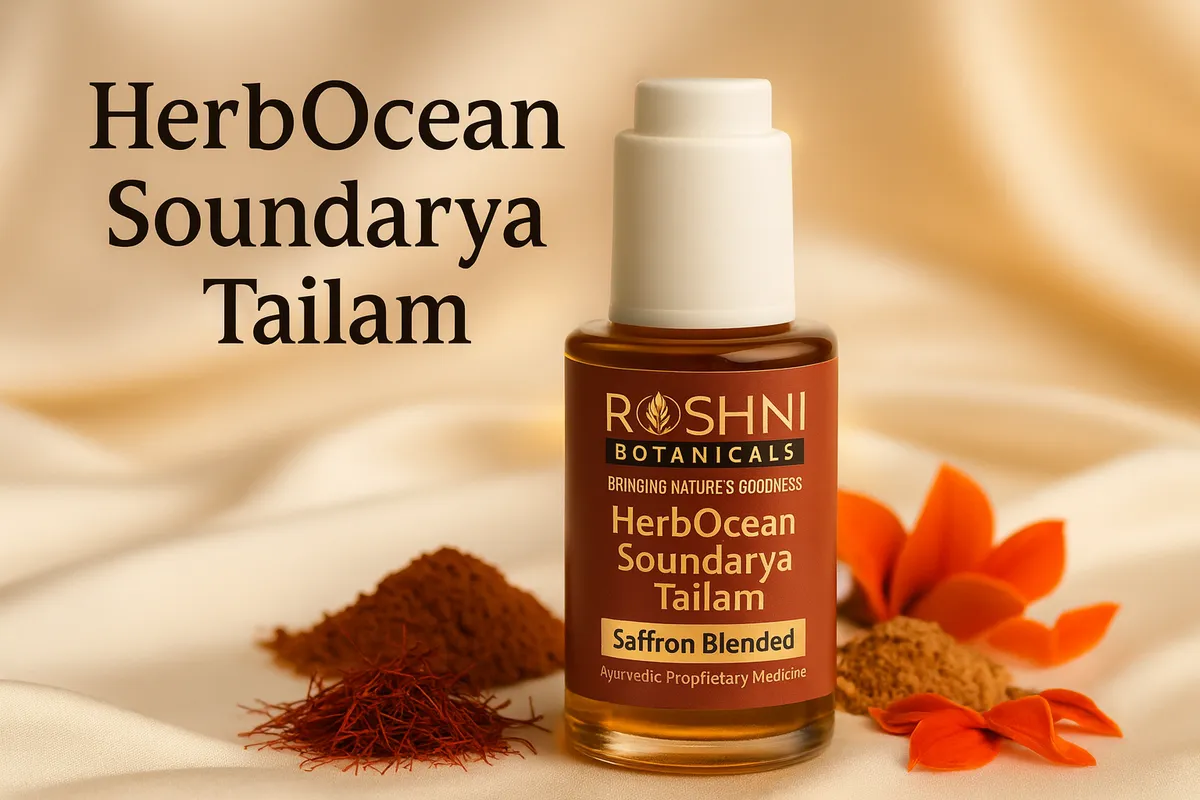
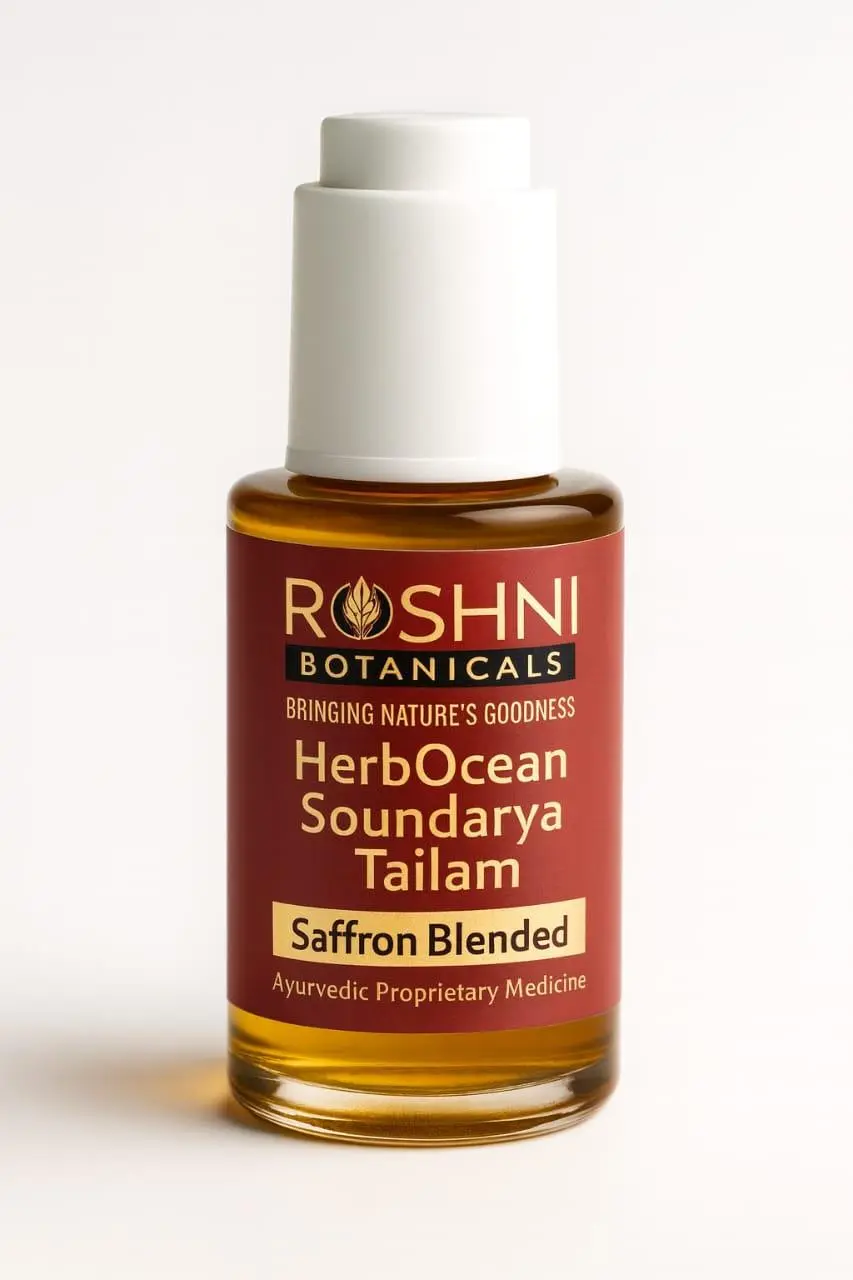
HerbOcean Radiance Tailam, an oil that works slowly and deeply
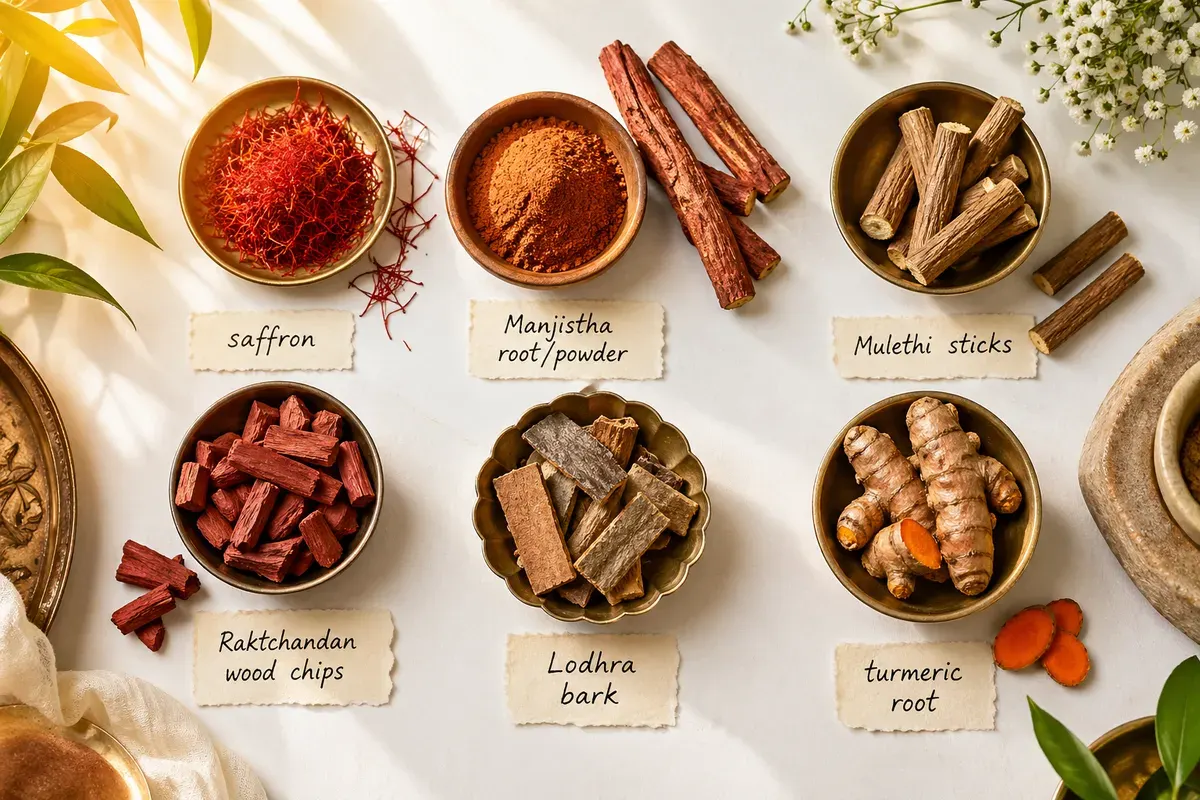
Our Radiance Tailam is built on the Triphala trio of Amla, Harad and Baheda together with classical complexion herbs: Manjith (Manjistha) for Rakta shodhana, Raktchandan (red sandalwood) and Chandan (sandalwood) to cool, Haldi (turmeric), Kamal (lotus), Padmaakh and Kesar (saffron), all carried in a sesame Taila (medicated oil). It is a few drops at night, pressed in, not a quick fix.
Why an oil suits this job
A Taila carries its herbs into the deeper layers of the skin barrier and stays there overnight, which is exactly when skin does its own renewal. That slow, lipid-friendly delivery suits the dry, hard-water, air-conditioned reality of much of the Indian year better than a watery layer that evaporates in minutes. It asks for patience rather than promising speed, and on pigmentation that is the honest trade.
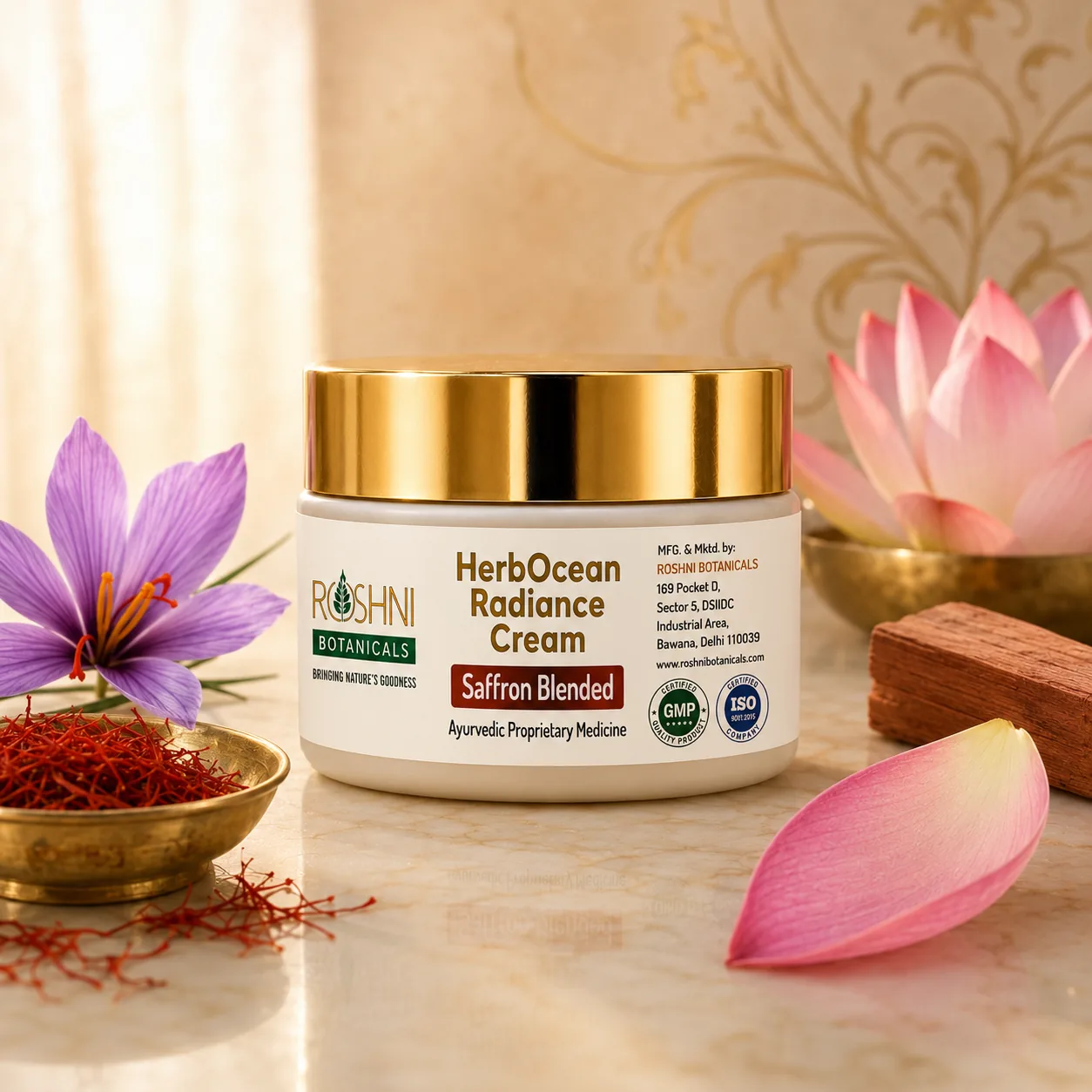
HerbOcean Radiance Cream for daily, even-tone support
Where the oil is the deep night treatment, the Radiance Cream is the lighter, everyday layer, the same Triphala-and-complexion-herb thinking in a coconut-rich cream base that sits comfortably under sunscreen by day. Many people use the cream in the morning and the oil at night.
Ingredients overview
- Triphala (Amla, Harad, Baheda), vitamin-C-rich and antioxidant by reputation, the backbone of both formulas.
- Manjith (Manjistha), the classical herb for even tone and blood purification.
- Haldi (turmeric) and Raktchandan, long used for clarity and calm.
- Kamal (lotus), Padmaakh and Kesar (saffron), the brightening, cooling herbs of the radiance line.
What to realistically expect
Honesty helps here. These are classical Ayurvedic preparations, traditionally used to support healthy, even-looking skin, alongside sun protection. Surface comfort and a fresher look tend to come first, over a couple of weeks. Anything to do with the marks themselves is a slow, gradual change measured over six to eight weeks and beyond, because skin renews on its own schedule. Consistency and sunscreen do more than any single bottle.
FAQs
For deeper, stubborn or sudden pigmentation, a dermatologist can offer options a topical oil cannot, and that is the sensible next step rather than waiting indefinitely. Explore the full Ayurvedic skincare range to build a routine around either product.
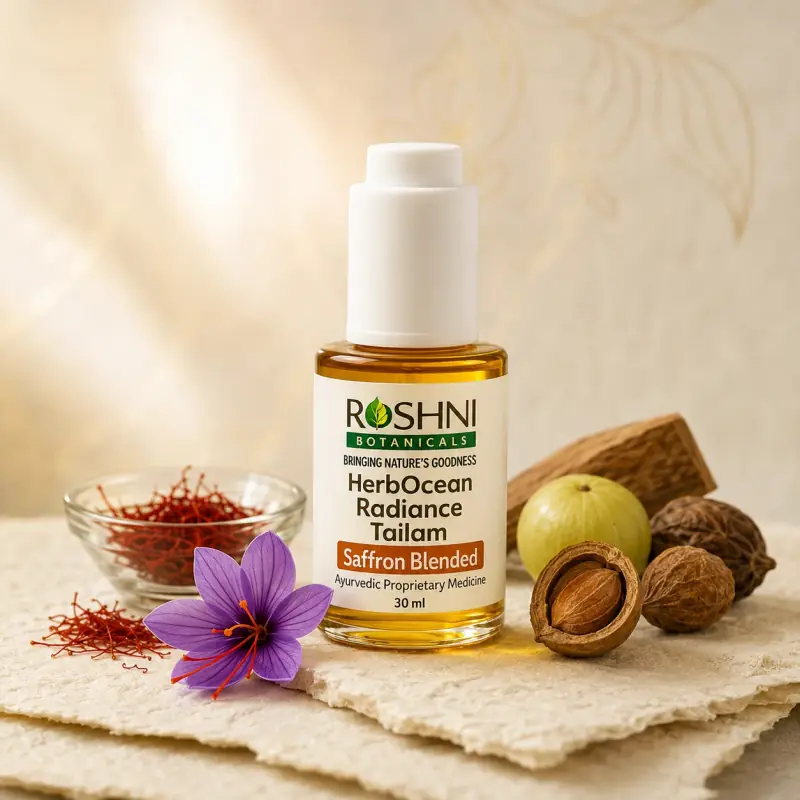
Radiance Tailam
A saffron brightening facial Taila with Manjistha and red sandalwood, traditionally used to support even tone where melasma, dark spots and PIH show.
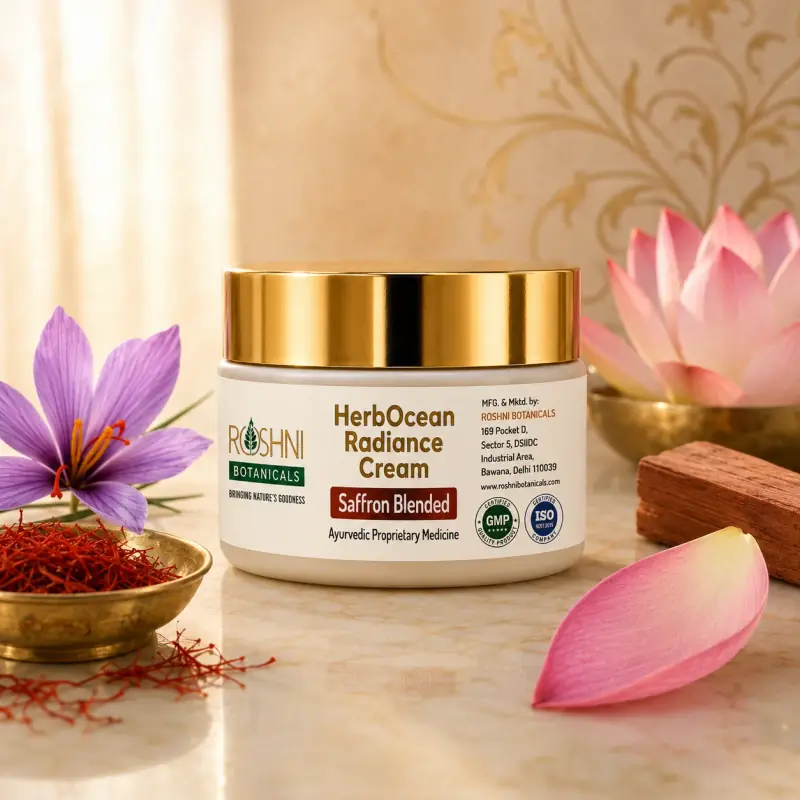
Radiance Cream
A daily saffron and sandalwood brightening cream with Manjistha, red sandalwood and lotus in a light coconut base. Supports a luminous, even-looking skin tone.
Part of our guide: Ayurvedic treatment for melasma on Indian skin.