Lotus for Skin: Inside HerbOcean Radiance Cream
The lotus has stood for calm and clarity in India for millennia. In a daily cream, the herb has a quieter, more practical job: supporting a comfortable, even-looking complexion.
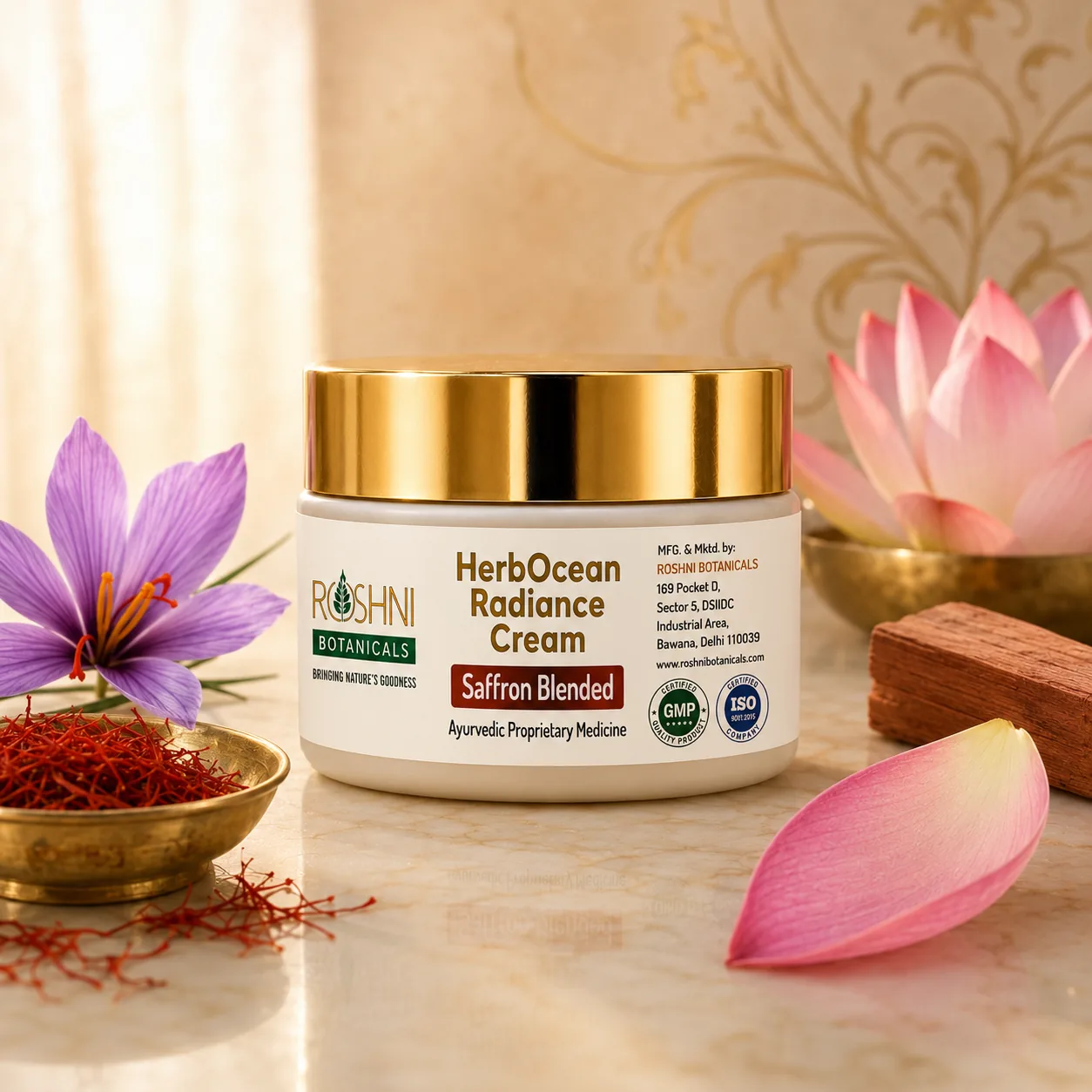
You have seen the lotus your whole life without thinking of it as skincare. It is in the temple carvings, the wedding decorations, the painting of a deity in your grandmother’s home. We file it under devotion, not the dressing table. Yet the lotus, Kamal, has a long, quiet record as a complexion herb too, and it has earned it. The plant rises clean out of muddy water, unstained, which is half the reason it became a symbol of purity in the first place. In classical skincare it sits among the cooling, brightening botanicals, the ones reached for when skin looks tired, overheated or uneven. Here is what it actually does in a daily cream, and how it sits in the HerbOcean Radiance Cream.
What makes lotus special for skin?
Strip away the symbolism and there is real chemistry. Lotus is rich in antioxidants and flavonoids, the kind of compounds that help skin defend itself against the everyday oxidative stress of sun and city pollution. That matters more than it sounds, because a good deal of what we call ageing and dullness is oxidative wear adding up over years. Lotus is also light and soothing rather than heavy or greasy, which is exactly what you want in something you leave on your face every day. It is not a harsh active that forces a change overnight. It is a gentle, daily kind of care, and on skin that reacts badly to strong actives, gentle is often what actually works.
Does lotus really do anything, or is it just pretty?
A fair question, because plenty of pretty ingredients are there for the label and nothing else. The honest answer with lotus is that it is genuinely a soothing antioxidant botanical with a long traditional record for clarity and even tone, and that it works best understood as part of a blend rather than a miracle on its own. It will not bleach a mark or rebuild your skin in a week, and anyone selling it that way is overselling. What it does is support comfortable, calmer, better-defended skin over time, and in a daily cream that is a worthwhile job.
Why this matters for Indian skin
Melanin-rich Indian skin has real strengths, but it also marks easily and holds those marks longer, so post-inflammatory hyperpigmentation (PIH) after a spot, a scratch or even an over-aggressive scrub is one of the most common complaints we hear. That is the reason a calm, cooling, low-irritation approach suits so many people here better than a routine built on strong actives that can inflame the skin and leave new marks behind. Lotus and the cooling herbs alongside it fit that brief. Add the strong sun and humidity most of the country lives with, and a soothing antioxidant layer under daily sunscreen starts to make a lot of sense.
The HerbOcean way: tradition in a usable texture
The thinking behind the Radiance Cream is not to chase whatever ingredient is trending this season. It is to take herbs with a genuine classical record and put them into a format you will actually reach for every morning. A herb only helps if it gets used, and a slow-cooked oil or a gritty paste, however authentic, often does not survive a busy weekday. So lotus sits alongside the Triphala trio and other complexion herbs in a coconut-rich cream base: the tradition does the work, and the texture makes it easy to keep up.
How lotus works for radiance
- Antioxidant protection, helping skin cope with the daily oxidative stress of sun and pollution.
- Even-tone support, the classical association of lotus and the herbs beside it with clarity.
- Gentle brightening, the fresher, less tired look that comes simply from comfortable, well-cared-for skin.
- Hydration and comfort, from a light base that does not sit heavy or feel greasy.
What is in the cream, and what each part does
- Kamal (lotus), the soothing, antioxidant-rich hero.
- Triphala (Amla, Harad, Baheda), vitamin-C-rich and antioxidant by reputation, the backbone of the radiance line.
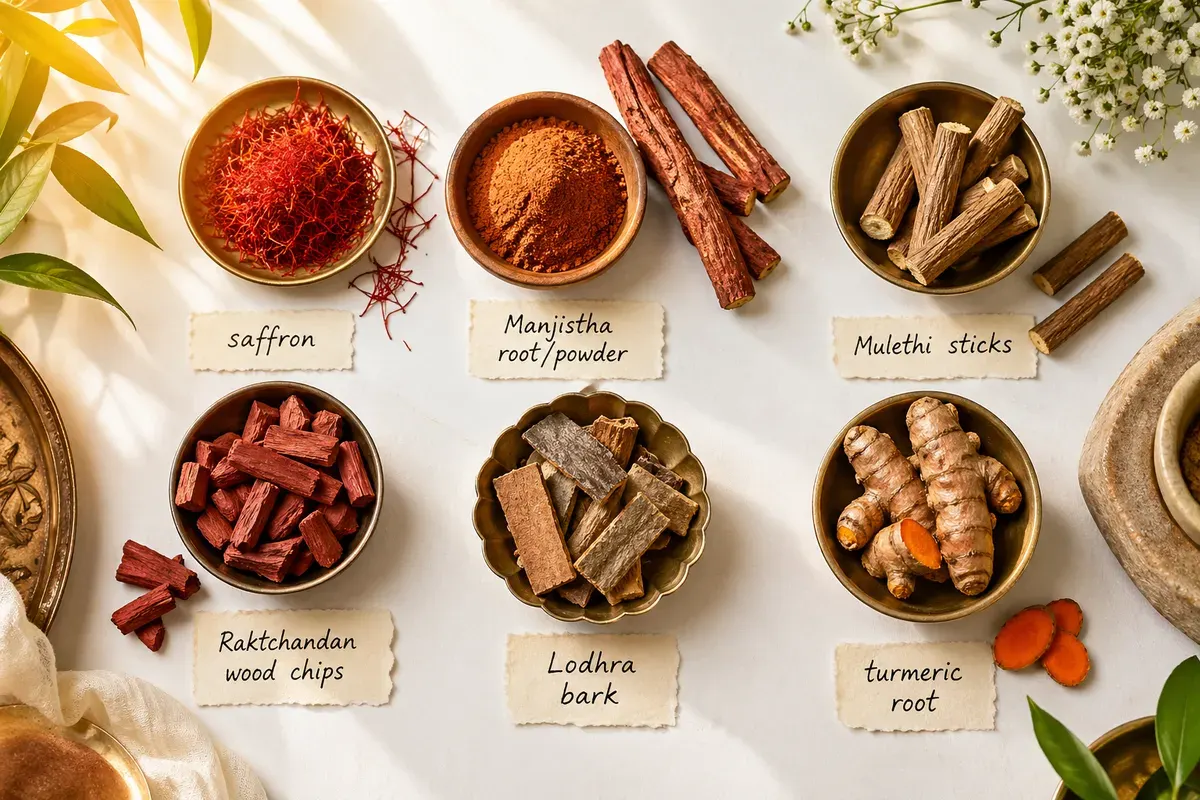
- Haldi (turmeric) and Manjith (Manjistha), classical herbs long tied to clarity and even tone.
- Chandan (sandalwood) and Raktchandan (red sandalwood), cooling and calming on warm, irritated skin.
- Padmaakh and Kakoli, the supporting classical botanicals of the formula.
- Coconut oil, the comforting base that carries it all.
Notice what is not in that list: no synthetic colour, no mystery "fragrance" doing the heavy lifting. It is a named formula, which is the first thing any honest cream should be.
How to use it
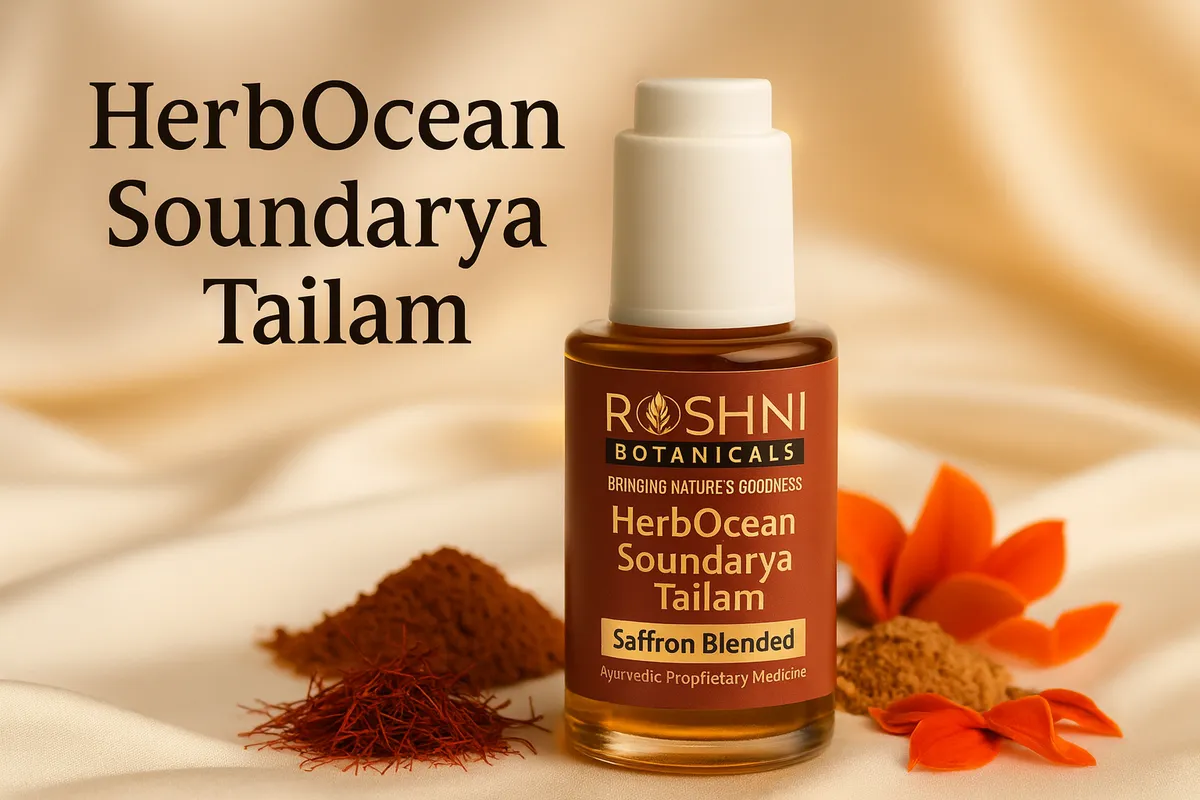
Keep it simple, because simple is what you will actually stick to. Cleanse, then smooth a small amount over the face and neck, morning and night. In the morning, always follow with sun protection. This is not a throwaway line: if you are working on even tone and you skip sunscreen, you are undoing the work every afternoon, and on Indian skin that shows. At night, on skin that wants more, press a few drops of Radiance Tailam into damp skin first and layer the cream over the top to seal it.
Safety and who it suits
The cream is made to suit most skin types and is free of paraben and synthetic colour. As with anything new, patch-test on the inner arm for a couple of nights and introduce it on its own before you start layering, so you actually know how your skin responds. If your skin is very oily or acne-prone, bring it in gradually rather than slathering it on from day one.
What to realistically expect
Let us be plain, because false promises help no one. This is a classical Ayurvedic cream, traditionally used to support healthy, comfortable, even-looking skin, alongside daily sun protection. What you tend to notice first, within a week or two, is comfort: skin that feels softer and looks a little less tired. Anything to do with tone is slow and gradual, a matter of six to eight weeks and beyond, because skin renews on its own schedule and nothing topical hurries it. Consistency and sunscreen will always do more than any single jar.
When to see a dermatologist
A daily cream is steady support, best paired with medical care when you need it. If you have stubborn or spreading pigmentation, a patch or mole that is changing, or marks that simply will not budge, a dermatologist can offer options a topical cream cannot, and that is the sensible next step rather than waiting indefinitely.
The short version
Lotus is more than a symbol. It is a gentle, soothing antioxidant herb that supports calm, comfortable, even-looking skin, and in the Radiance Cream it sits among classical complexion herbs in a base you can actually use every day. Be patient, wear sunscreen, and let it work over weeks. For the pigmentation side of the story, read on the difference between dark spots and pigmentation, and browse the full Ayurvedic skincare range to build a routine around it.
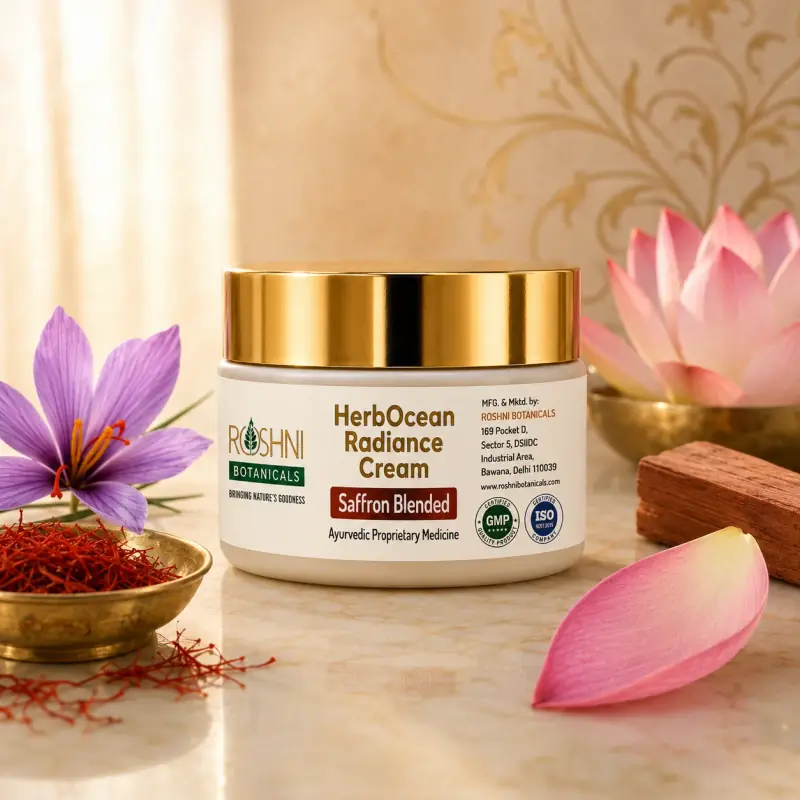
Radiance Cream
A daily saffron and sandalwood brightening cream with Manjistha, red sandalwood and lotus in a light coconut base. Supports a luminous, even-looking skin tone.
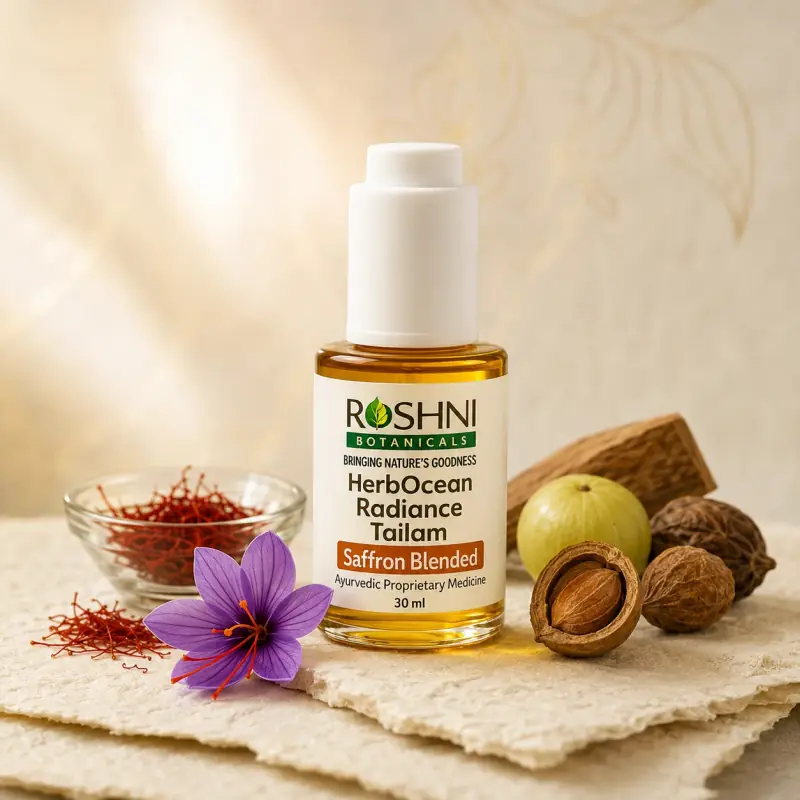
Radiance Tailam
A saffron brightening facial Taila with Manjistha and red sandalwood, traditionally used to support even tone where melasma, dark spots and PIH show.
Part of our guide: Ayurvedic treatment for melasma on Indian skin.