What Is in Radiance Cream? The Saffron Formula, Herb by Herb
Saffron, sandalwood, Manjistha and lotus on a coconut base: what Radiance Cream carries, why these herbs sit together, and where it fits in your day.
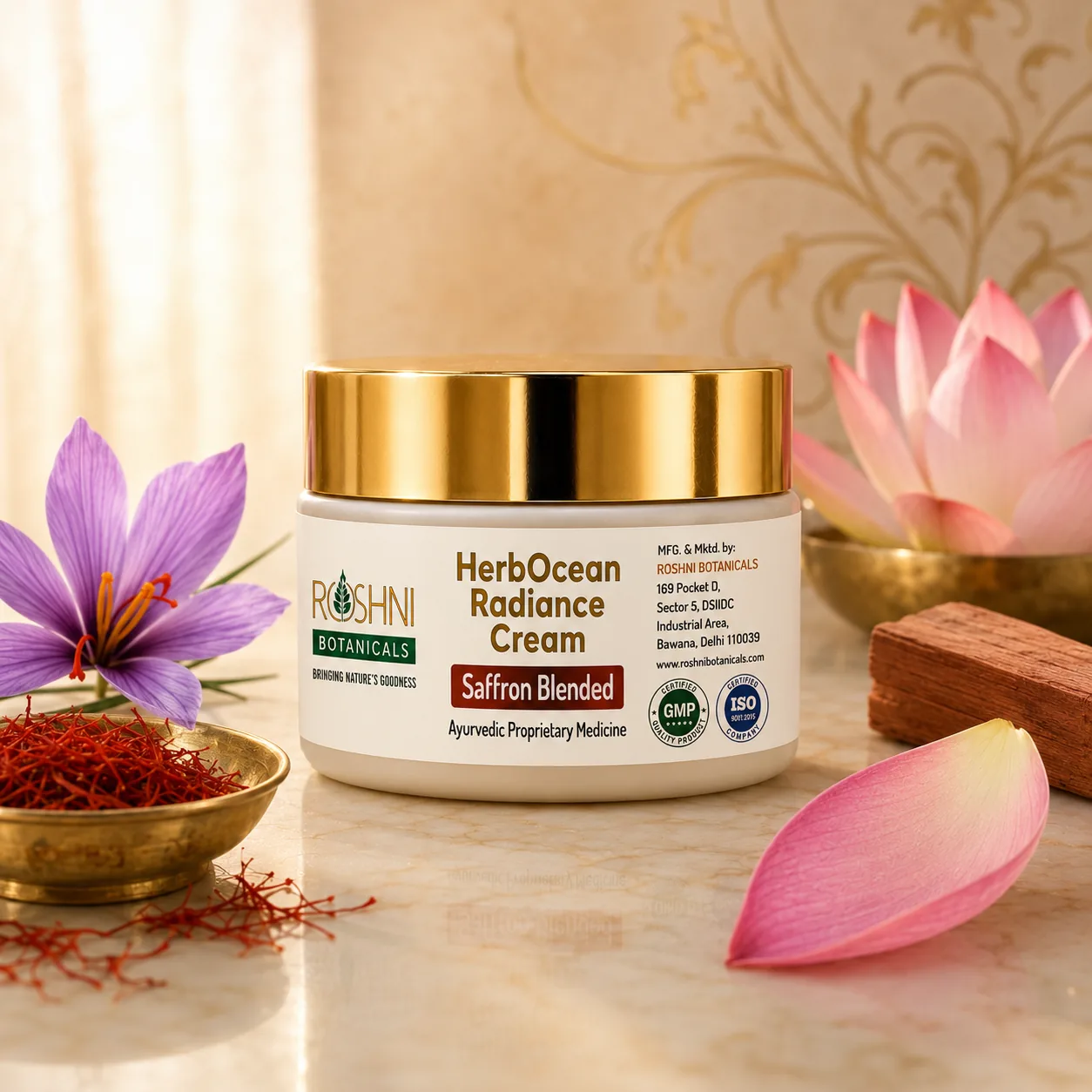
Radiance Cream carries saffron, sandalwood, Manjistha, lotus, red sandalwood and the bark of Padmaakh, with turmeric, Kakoli, costus root, Palash flower and the three fruits of Triphala, on coconut oil in a cream base. It is an Ayurvedic medicine, meant for external use. The product page declares that list, the classical texts group several of those herbs together, and a day of care for uneven tone has a clear place for the cream.
Read down the declared list and it is a long one: saffron, two sandalwoods, Manjistha, lotus, turmeric, a bark, a flower and three fruits. A list that long can look random. It reads better as a set, grouped the way the classical texts group herbs for the skin. So it is worth going through it slowly, herb by herb, and then turning to the practical part: how the cream is used, how it compares with the oil in the same range, and when a patch needs a dermatologist.
Key takeaways
- Saffron (Kesar) is declared in Radiance Cream, with twelve classical herbs, on coconut oil in a cream base.
- Each herb is given with its Indian name and its Latin name, as on the product page, so the two lists can be read against each other.
- The Charaka Samhita groups sandalwood, Padmaakh and Manjistha among the Varnya herbs (the classical group linked to the complexion), and turmeric, Harad and Amla among the Kushthaghna herbs (the herbs set against skin disease).
- Daily broad-spectrum sunscreen is part of any routine for uneven tone, because pigmentation responds strongly to UV.
- A patch that spreads, changes shape or colour, or appears suddenly belongs with a dermatologist, whatever cream you use.
What Goes Into Radiance Cream?
This is the declared list, in the order the product page gives it. Saffron (Kesar, Crocus sativus) comes first, then sandalwood (Chandan, Santalum album), Manjistha (Manjith, Rubia cordifolia), red sandalwood (Raktchandan, Pterocarpus santalinus), lotus (Kamal, Nelumbo nucifera) and the bark of Padmaakh (Prunus cerasoides, the wild Himalayan cherry). After these come turmeric (Haldi, Curcuma longa), Kakoli (Lilium polyphyllum), costus root (Kuth, Saussurea lappa), the flower of Palash (Butea monosperma, the flame of the forest) and the three Triphala fruits: Amla (Emblica officinalis), Baheda (Terminalia bellerica) and Harad (Terminalia chebula).
All of it sits on coconut oil (Nariyal) in a cream base, scented with oils of lavender, rose and mogra. Saffron sits at the head of that list, and the order is a way of reading the list, not a ranking of the herbs. If you have typed radiance cream mein kya hota hai into a search bar, this list is your answer, and the product page prints the same one.
The names shift with the language, which is why the list gives each herb in more than one form. Manjistha is Manjith on a formulation sheet, saffron is Kesar, coconut is Nariyal, and the Latin name is the one that settles any doubt, because it stays the same in every language. Read the product page and this list side by side and the two agree, herb for herb.
Together these make HerbOcean Radiance Cream, which is an Ayurvedic medicine for external use, classically indicated for facial pigmentation (Vyanga, the patches Hindi homes call jhaiyaan) and traditionally used in the care of dark spots and uneven tone. It is made in-house at our GMP-certified unit in Bawana, Delhi, under AYUSH Licence No. DL-474 A&U, and built on the 40-year Ayurvedic formulation legacy of Vaidya Shri Ram Prakash Ji. Vyanga is the classical name for the patchy facial pigmentation that dermatology calls melasma.
Why These Herbs Sit Together in One Cream
Classical Ayurveda uses single herbs, and it also works in sets. The Charaka Samhita sorts five hundred herbs into fifty groups of ten by the work they are known for, each group named for a single job, from the colour of the skin to the voice, and two of those groups take in several herbs from this list. Among the ten of the Varnya group are chandana, padmaka and manjishtha, the sandalwood, Padmaakh and Manjistha of the declared list. Among the ten of the Kushthaghna group are haridra, the turmeric in your kitchen, and abhaya and amalaka, the Harad and Amla of the Triphala three.
Varnya comes from varna, the word for colour and complexion, and the commentary on Charaka reads the group as herbs for the maintenance of the natural complexion of the skin. Kushthaghna joins kushtha, the classical word for skin disease, to a root that means to strike against it.
The Sushruta Samhita counts Vyanga as a Kshudra Roga, one of the minor diseases, and describes it as thin, round, painless brown patches that appear on the face, brought on, in its account, by anger and overexertion. Minor there names a class: forty-four conditions gathered in one chapter, from eruptions and nail troubles to Vyanga, and the same chapter describes the eruptions of youth that we now call acne.
Then there is the side of this set you already know. Chandan paste on the forehead. Haldi in the ubtan the night before a function, mixed with besan. A few strands of kesar in warm milk. Lotus on a puja thali. These sat in Indian homes long before anyone put them in a jar, and what a formula adds is the grouping, and the base that carries it.
Some of these herbs have a longer read of their own: what Amla, Baheda and Harad do for skin, Manjistha for skin and dark spots, and the classical saffron oil tradition that saffron face oils come from.
Why a Coconut Base, and Why a Cream at All
A cream base is an emulsion: oil and water held together in one smooth texture. Radiance Cream carries its herbs in coconut oil and a cream base, which the product page describes as a light one. Coconut oil has its own place in Indian homes, in the kitchen and on the hair, so the base is a familiar one.
Your skin does not want the same texture all year. When the air goes dry and cold across North India, skin can feel tight after washing, and a cream step is welcome; in humid weather the same face can feel oilier. How a coconut base sits on your own skin through those shifts is something only your skin can tell you.
The scent comes from lavender, rose and mogra, the three finishing oils. They are declared like everything else, so anyone who reacts to a fragrance oil can see them on the list before buying.
What Radiance Cream Is Classically Indicated For
Vyanga, the indication named on the product page, shows as flat brown patches on the cheeks, the forehead or the upper lip. Two findings show why sun cover sits beside any cream for pigmentation. A review of PIH, post-inflammatory hyperpigmentation, on skin of colour described darker skin as getting it more often and worse, and counted photoprotection, sunscreen included, as part of first-line care. It also notes that uneven pigment is among the leading reasons people with darker skin see a dermatologist. Closer home, in a clinic study of 312 people with melasma in West Bengal, more than half said sun exposure made their patches worse. Whatever a cream does, the sun has a say by day.
Melasma has more than one driver. Sun was the trigger the West Bengal patients named more than any other. Among the women in the same study, some named pregnancy or oral contraceptives as the trigger, and a family history of melasma turned up in a third of all the patients. The authors call the exact cause unknown, with genes, hormones and UV light all playing a part.
The same study gives a picture of who came in with it. Women outnumbered men by about four to one, the patches first showed at around thirty on average, and the pattern across the centre of the face was the one seen in more than half the patients.
Not every dark mark is melasma, and the difference matters before you choose a cream. Brown marks left behind after pimples are a different question from a patch that has sat on the cheekbone for years. For marks of that kind, the PIH review starts care with the inflammation that left them, so the pimples come first. It cautions too that irritation can deepen PIH, which is one reason the patch test matters on darker skin. For the wider classical and dermatology picture, from the kinds of pigmentation to what the clinic can offer, read Ayurvedic treatment for melasma on Indian skin.
How to Use Radiance Cream
The product page gives the direction. Smooth over clean skin morning and night. HerbOcean does not manufacture a sunscreen, and nothing in the range replaces one, so by day always follow the cream with a broad-spectrum sunscreen. Patch-test on the inner forearm 24 hours before first use and discontinue if irritation occurs; avoid the eye area.
Where the tap water is hard, rinse your face with warm water rather than hot. And pick a sunscreen you will wear every day, hazy mornings included; a cap or a dupatta helps when the sun is high, and neither replaces the sunscreen.
Radiance Cream and Radiance Tailam: How They Differ
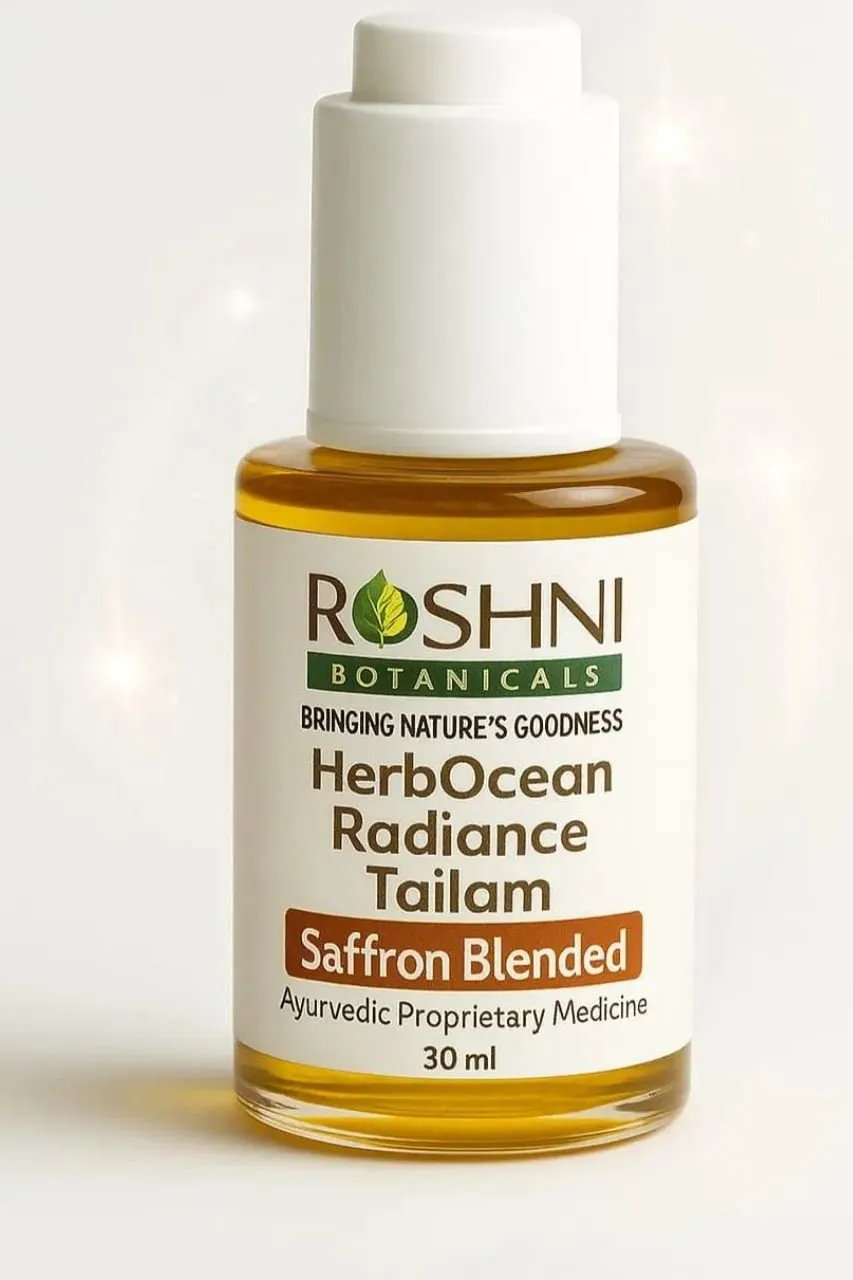
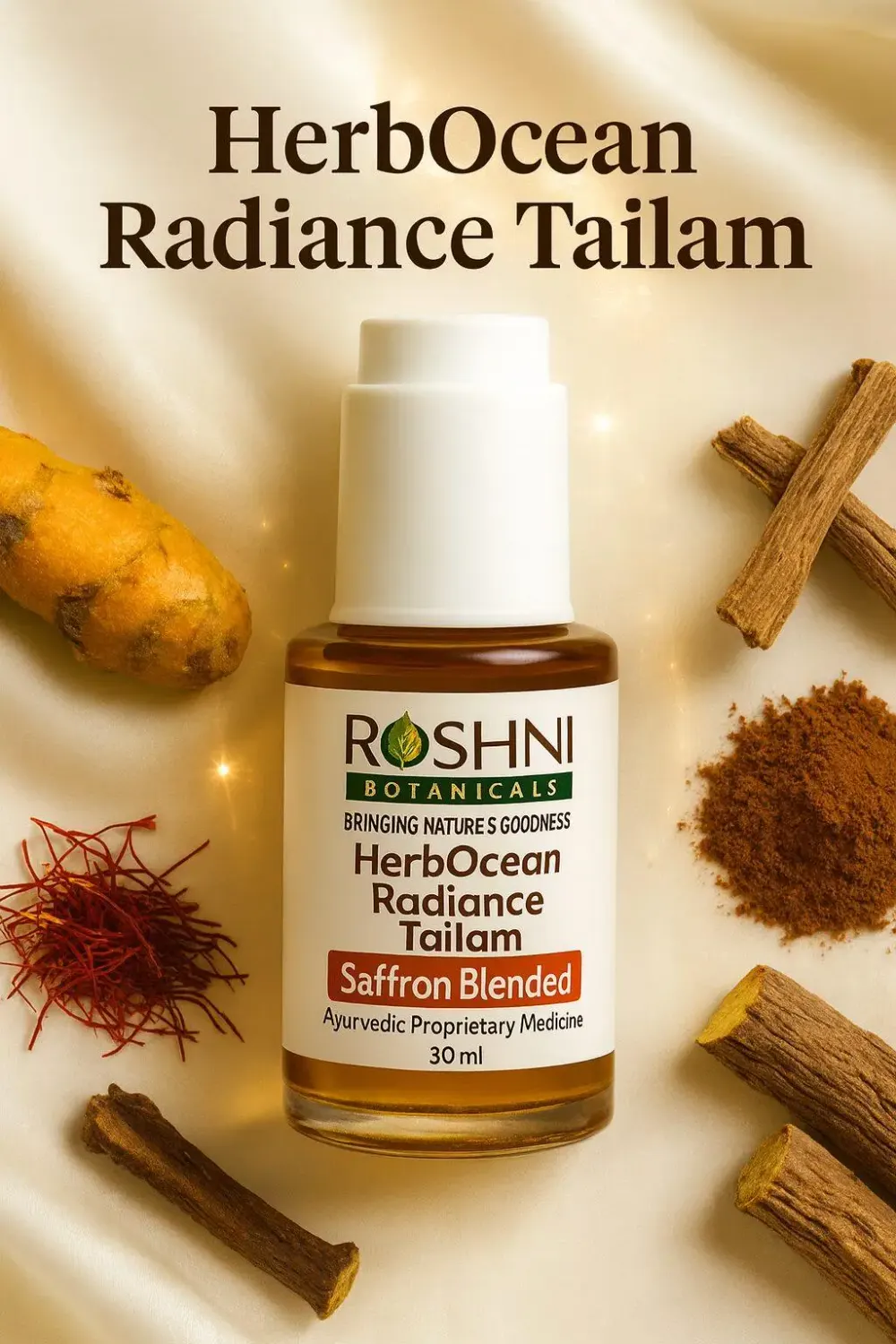
The same twelve herbs, with saffron, also come as an oil: HerbOcean Radiance Tailam, an AYUSH-licensed Ayurvedic medicine for external use, classically indicated for melasma (Vyanga) and traditionally used to support even tone where dark spots and post-inflammatory hyperpigmentation (PIH) show on melanin-rich Indian skin. The Tailam sits in a sesame (Til tail) base, while the Cream is made with coconut oil and a cream base. So the two differ in the base and the form, an oil beside a cream. Avoid the oil if you are allergic to sesame, the cream if you are allergic to coconut, and either if you are allergic to a listed botanical. If pregnant or breastfeeding, check with your doctor. Each product page carries its own direction, so follow the one for the product you use.
What to Expect, and When to See a Dermatologist
Pigmentation on melanin-rich skin changes slowly in any system, and a steady routine with daily sun cover is the realistic frame for it. No herb changes the colour you were born with. What you are caring for is the patch that came later.
A steady routine means the same few steps each day: a clean face, the cream as its page directs and the sunscreen before you step out. To judge the patch, compare photographs taken by the same window at the same hour; they tell you more than a mirror under changing bulbs.
Some signs call for a dermatologist rather than any cream. See one if a patch spreads, changes shape, carries more than one shade, itches, scales or bleeds. See one too if pigmentation arrives suddenly, sits on one cheek only, or follows a new medicine, including hormonal contraception. Burning, swelling or blistering after any application means stop, and get it seen the same day.
Reading the List Before You Decide
Open the product page and read its declared list beside the one you have just read; the two match line for line, saffron included. If melasma or long-standing dark spots are the reason you are reading, keep the daily sun cover going alongside the cream, because that is the part of the routine the research speaks to directly. The full range sits on one page: the Ayurvedic skincare range.
References: 1. Charaka Samhita, Sutra Sthana 4 (the fifty groups of ten herbs, among them the Varnya and Kushthaghna groups), cited at chapter level. 2. Sushruta Samhita, Nidana Sthana 13 (Kshudra Roga Nidana: Vyanga among the minor diseases), cited at chapter level. 3. Davis EC, Callender VD. Postinflammatory hyperpigmentation: a review of the epidemiology, clinical features, and treatment options in skin of color. Journal of Clinical and Aesthetic Dermatology, 2010; 3(7): 20 to 31. Narrative review, United States. 4. Achar A, Rathi SK. Melasma: a clinico-epidemiological study of 312 cases. Indian Journal of Dermatology, 2011; 56(4): 380 to 382. Clinic study, 312 patients, West Bengal, India. Educational, not medical advice.
Radiance Cream
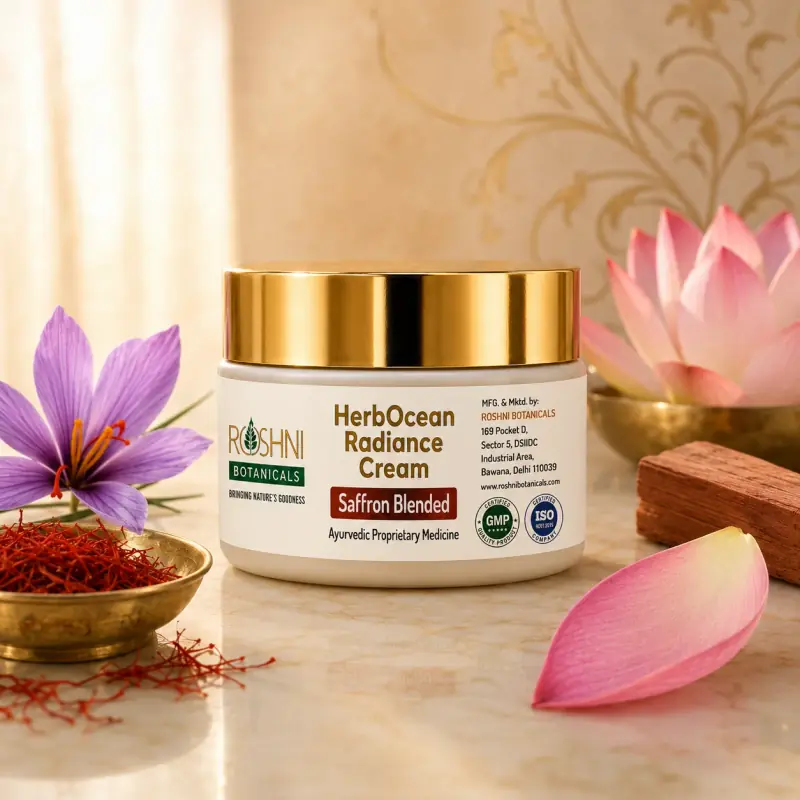
A daily brightening cream with saffron, sandalwood, Manjistha, red sandalwood and lotus in a light coconut base. It is an Ayurvedic medicine traditionally used in the care of melasma (jhaiyaan) and dark spots, for a luminous, even-looking skin tone.
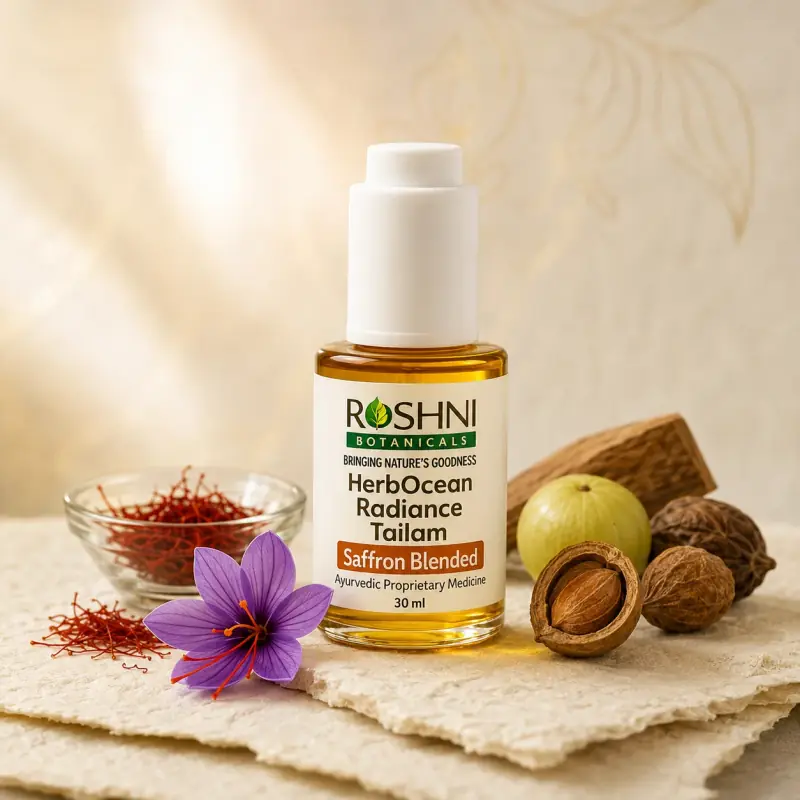
Radiance Tailam
A brightening saffron facial oil (Taila), an Ayurvedic medicine traditionally used in the care of melasma (jhaiyaan), dark spots, tanning and uneven tone.
Part of our guide: Ayurvedic treatment for melasma on Indian skin.
Frequently asked
This article is general educational content about Ayurvedic skin and hair care. HerbOcean products are classical Ayurvedic preparations for external use, made under AYUSH Licence DL-474 A&U and traditionally used to support healthy skin and hair. This is educational and not a substitute for professional medical advice; for persistent or worsening concerns, please consult a qualified dermatologist.