Can You Use a Face Oil in the Monsoon? A Humid-Weather Guide
Every monsoon guide says put the face oils away. The honest answer is smaller: 2 to 3 drops of a light classical Taila, at night, washed off by morning.
By mid-July, your skin feels sticky before lunch and the idea of adding oil to it sounds absurd. Every monsoon skincare article agrees: put the oils away, switch to gels, wait for October. Yet the classical Ayurvedic answer is not a flat no, and the honest dermatological answer is not either. Whether a face oil belongs in your monsoon routine comes down to three adjustments: how much you use, when you apply it, and whether you are breaking out.
Key takeaways
- Yes, you can use a face oil in the monsoon: 2 to 3 drops of a light, fast-absorbing facial oil (Taila, the classical medicated oil) pressed onto damp skin at night suits humid weather for most skin types.
- The blanket no-oils-in-monsoon rule confuses the base with the dose. Heavy butter-based occlusives do sit badly on sweaty skin; a few drops of a sesame-based classical oil, washed off in the morning, behave very differently.
- The greasiness people blame on face oils usually comes from over-application and daytime use, when the oil mixes with sweat, sunscreen and commute grime.
- Skip oil over active breakouts: on melanin-rich Indian skin, irritated pimples can settle into post-inflammatory hyperpigmentation (PIH), the dark mark that outlasts the pimple.
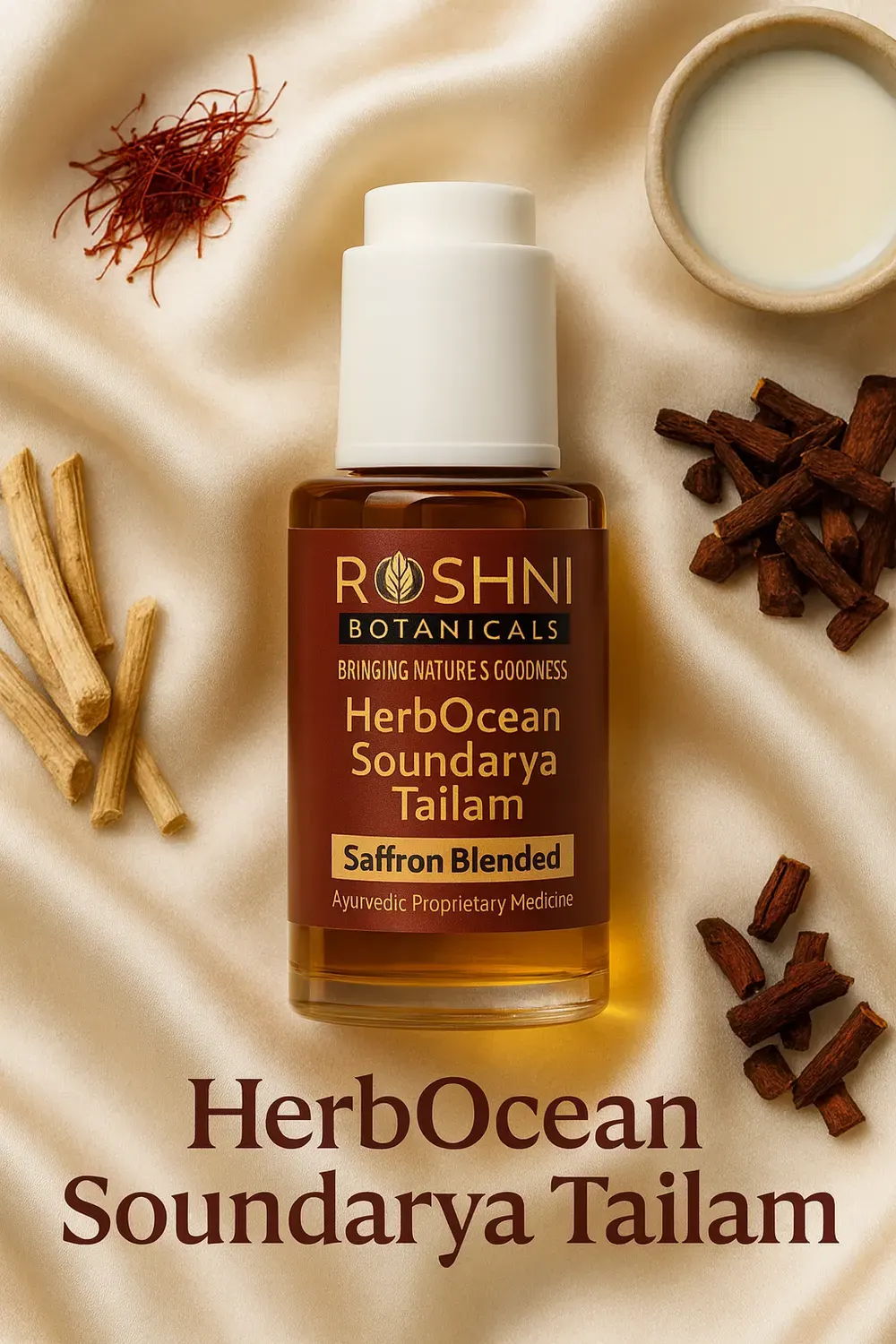
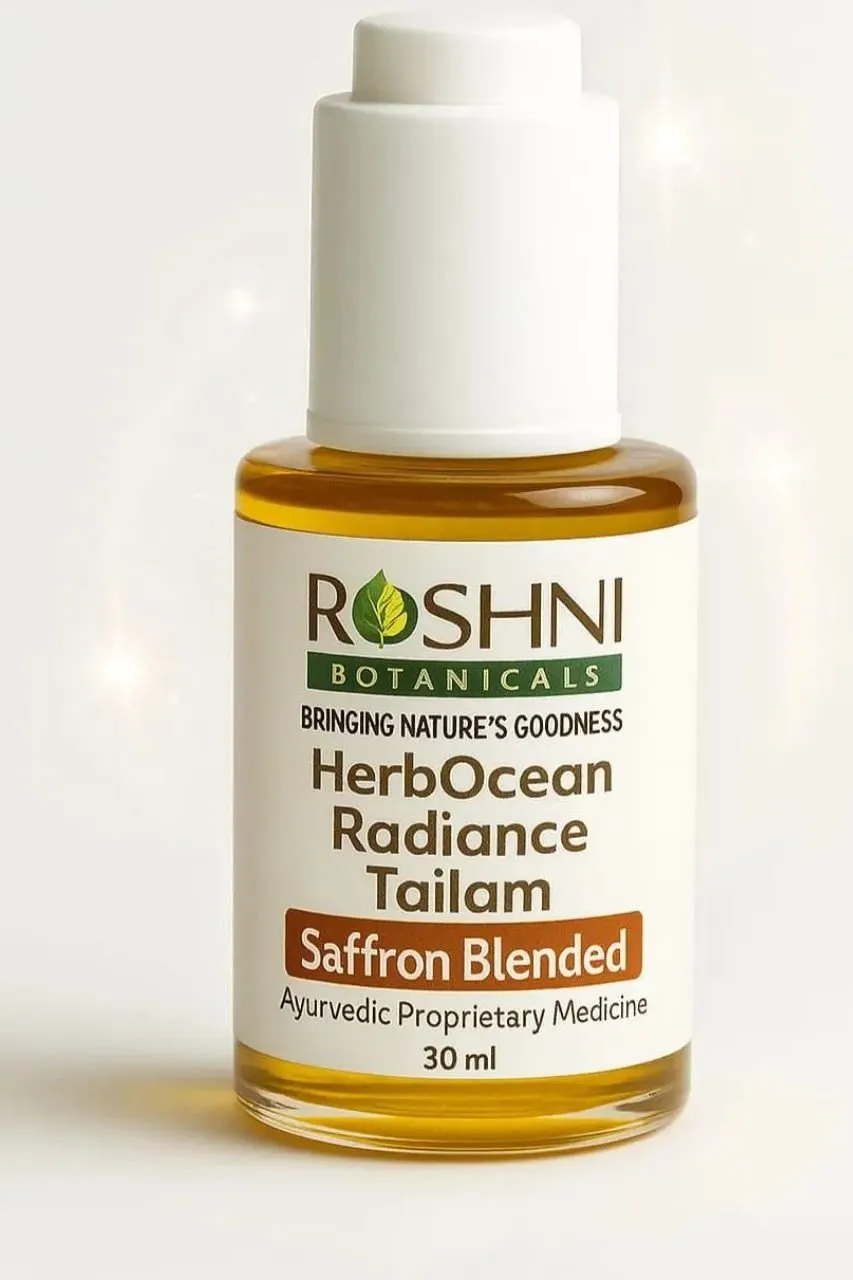
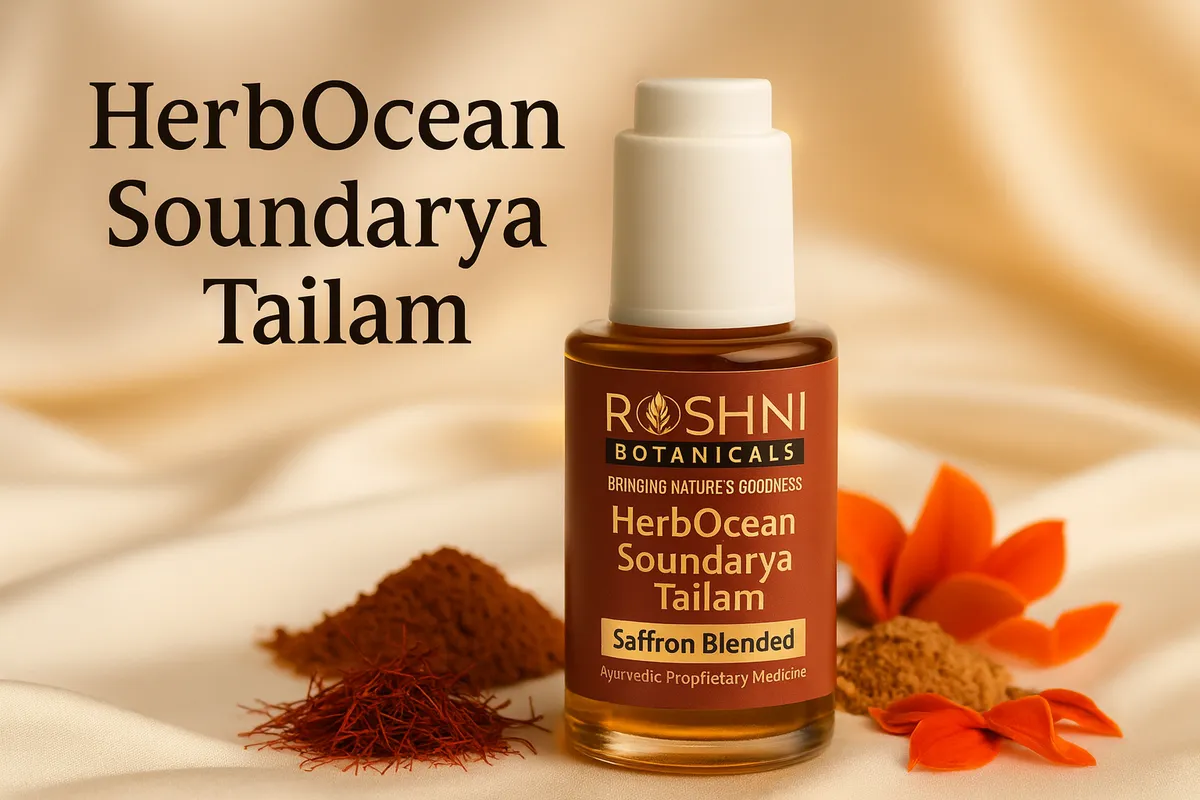
- HerbOcean Soundarya Tailam is made in the goat-milk Kshira-paka tradition, a saffron-infused sesame oil traditionally used in the care of dullness and fine lines, applied as a 2-3 drop night ritual.
The Short Answer: Yes, If You Adjust Quantity, Timing and Cleansing
Here is the answer the question deserves, stated plainly. A light facial oil can stay in your monsoon routine if you use 2 to 3 drops, apply them at night on damp, freshly cleansed skin, and cleanse well the next morning. Quantity, timing and cleansing are the three levers; get those right and the season stops being an argument against oil.
Notice what that answer is not. It is not a defence of slathering any oil at any hour. The advice to avoid oils in the monsoon exists because people do two things that genuinely backfire: they apply too much, and they apply it in the morning, where it spends the day mixing with sweat, sunscreen and the grime of a humid commute. By evening the face feels like a frying pan, and the oil takes the blame that belongs to the method.
The monsoon does add real stickiness. Humid air slows the evaporation of sweat, so the film of sweat and your skin’s own sebum sits on the surface for longer than it would in dry weather. That film is the greasiness you feel by noon, and it forms whether or not you used a face oil last night. A few drops pressed in before sleep are absorbed and cleansed away hours before the sticky part of the day begins.
What the No-Oils Rule Gets Wrong: A Classical Distinction
Classical Ayurveda never treated oil on the skin as a fair-weather practice. Daily oiling (Abhyanga) sits inside the classical daily routine (dinacharya), and the texts adjust the practice by season rather than suspending it; the Ashtanga Hridaya’s regimen chapters describe oiling through the year with seasonal moderation. The relevant faculty here is Bhrajaka Pitta (the Pitta sub-dosha governing skin lustre, colour and absorption): classical thinking regards the skin as an organ that absorbs and processes what is applied to it, which is why dose and preparation always mattered more than the calendar.
The modern no-oils rule also flattens a distinction the classical pharmacy took seriously: what the oil actually is. A butter-heavy occlusive balm and a herb-processed sesame oil are different objects. Sesame oil (til tail), the classical carrier, is comparatively light and fast-absorbing, which is exactly why the tradition built its facial preparations on it rather than on heavy fats. When a monsoon article says oils clog humid skin, it is usually describing the first category and condemning both.
One more distinction is worth keeping: the oil on your T-zone at 2 pm is your own sebum mixed with sweat, not last night’s three drops. Confusing the two leads people to strip their skin with harsh cleansers, which unsettles the barrier and leaves skin both shiny and tight, the familiar monsoon paradox.
The Indian Reality: Humidity, Hard Water and Melanin
Three local facts shape how this advice plays out on Indian skin. First, the humidity itself: most metros spend July and August above 80 per cent, so anything heavy layered in the morning will sit on unevaporated sweat. Night application is not a preference here; it is the difference between an oil that works and an oil that smothers.
Second, hard water. The borewell and tanker supply in most Indian cities carries dissolved minerals that stress the skin barrier at every wash, which is partly why monsoon skin can feel tight even while it looks oily. The morning-after cleanse should be thorough but gentle: lukewarm water, a mild cleanser, no scrubbing. A stripped barrier defeats the point of the night’s nourishment.
Third, melanin. Indian skin responds to irritation with pigment, so anything that inflames a breakout, including oil massaged over an angry pimple, can leave a post-inflammatory mark that lasts months. This is why the who-should-skip section below is not fine print; on melanin-rich skin, restraint around active breakouts protects the even tone you are working toward. Readers whose main concern is pigmentation itself will find the fuller plan in our guide to the Ayurvedic treatment for melasma.
It is also worth saying plainly: oil on the face is not a foreign idea you need convincing about. If you grew up watching malai worked into winter skin, or an ubtan mixed with a spoon of oil before a family function, you already carry the instinct that oil is nourishment. The monsoon question was never whether that instinct is right. It is a dosing question, and the answer changes with the weather the way your cooking changes with the seasons.
The Monsoon Night Ritual: How Much, When and How to Cleanse
The ritual itself takes two minutes, and it belongs at the end of your evening, after the day’s sweat and sunscreen are off your face.
- Cleanse gently and leave the skin slightly damp; a little surface moisture helps the oil spread thinly and absorb evenly.
- Warm 2 to 3 drops between your fingertips. In peak humidity, 2 drops are enough; this is the full dose, and more oil does not mean more nourishment.
- Press the oil into the skin with flat palms and light upward strokes for a minute; pressing, rather than rubbing, is the classical facial-massage (Mukha Abhyanga) habit worth keeping.
- Skip heavy creams layered on top in this season; the oil works alone on monsoon nights.
- In the morning, cleanse as usual and follow with your regular sunscreen; daytime sun protection is what guards the even tone the night ritual supports.
If your skin is very oily, run the same ritual two or three nights a week instead of daily and watch how your skin responds across a fortnight. The monsoon rewards small, steady doses over enthusiasm.
Set expectations the honest way, too. Softness shows up within days; the quieter work on dullness and tone-evenness is measured in weeks, not applications, so judge the ritual after a month rather than a mirror-check every morning. And let the ritual breathe with the season: on a night when you have been drenched through a commute or the air feels especially thick, skipping the oil for a night costs nothing. Consistency across the month matters far more than any single evening.
Why a Goat-Milk Kshira-paka Oil Is Not a Heavy Occlusive
This is where the kind of oil matters. HerbOcean Soundarya Tailam is made in the goat-milk Kshira-paka tradition: classical herbs are simmered with goat milk (Ajadugdh) in a sesame-oil base until the water has evaporated and only the medicated oil remains, a method that yields a lighter, silkier finish than butter-led balms. Saffron (Kesar) leads the formula, alongside Manjistha, liquorice (Mulethi), red sandalwood (Raktchandan) and Nagkesar, the classical complexion-supporting (Varnya) herbs, finished with traces of lavender, rose and mogra. It is an AYUSH-licensed Ayurvedic medicine for external use, traditionally used in the care of dullness and fine lines, not a cosmetic shortcut.
The craft behind it matters to the monsoon question. Soundarya Tailam was formulated by Vaidya Shri Ram Prakash Ji, the master vaidya (classical Ayurvedic physician-formulator) whose 40-year formulation legacy the HerbOcean line is built on, and made in-house at Roshni Botanicals’ GMP-certified unit in Bawana, Delhi. A vaidya building a facial oil in the Kshira-paka tradition is solving precisely the problem this article is about: how to deliver herbs to the skin in a base light enough for Indian weather. Readers who want the deeper question answered, whether face oils block pores at all, can read our companion piece on whether face oils clog pores; this post stays on the seasonal question.
Used as described, 2 to 3 drops at night on damp skin, it suits humid months for most skin types. It is for external use only; patch-test on the inner forearm for 24 hours before the first facial use.
Who Should Skip Face Oil This Monsoon (and When to See a Dermatologist)
Some skins should sit this ritual out, at least for now. If you have active breakouts, do not apply oil over them; congested, inflamed skin needs the breakout settled first, and on melanin-rich skin every irritated pimple is a potential dark mark. Our monsoon acne care guide covers that situation properly, including where targeted spot care fits. If your skin is reacting to something, red, itchy or stinging, this is also not the week to add anything new.
And a few situations belong with a dermatologist rather than a routine change: breakouts that are cystic, painful or suddenly widespread; a spread of small, itchy, uniform bumps that worsens after sweating, which may be fungal and worsens under oils; or pigmentation that appears suddenly or spreads quickly across the cheeks. A correct diagnosis first makes every later step, classical or modern, work better.
A Small Ritual for a Sticky Season
The monsoon does not ask you to abandon your face oil; it asks you to use it like a vaidya would, in drops, at night, on clean damp skin, washed off before the day turns humid. If a light facial oil sounds right for your monsoon nights, explore HerbOcean Soundarya Tailam, a saffron-infused Taila made in the goat-milk Kshira-paka tradition, and see whether the 2-3 drop night ritual suits your skin. Keep the morning sunscreen non-negotiable, keep the doses small, and let the season pass without costing your skin its glow.
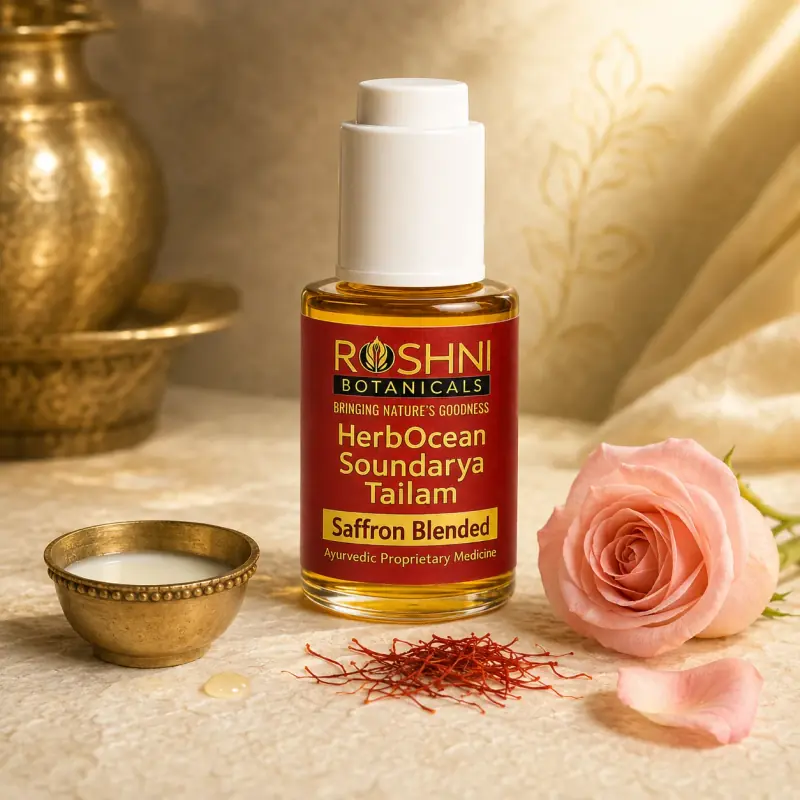
Soundarya Tailam
A saffron-infused facial Taila prepared in the goat-milk Kshira-paka tradition, with Manjistha, Mulethi and Kesar. For soft, bright, even skin.