How to Reduce Back Acne: An Ayurvedic Care Guide for Body Breakouts
Back acne is mostly habits you can fix this week: the shower order, the wardrobe, the straps. Plus the itchy look-alike to rule out first, and where a metered roll-on fits.
Back acne announces itself at awkward moments: while you are changing after a humid afternoon, when a kurta sticks to your back on the commute home, or in the week you restart gym classes. It is common, quietly frustrating, and rarely given the attention facial breakouts get. Most of it traces back to habits you can adjust this week. One thing needs sorting out first, though, because a common look-alike is managed quite differently.
Key takeaways
- The back is not an oilier version of your face. Its oil glands are fewer and less active, and the skin above them is thicker. What matters is coverage: sweat and friction sit against it for hours.
- Sweat on its own is not the culprit. The trouble is sweat that cannot evaporate under a shirt, a bra band or a bag strap, on skin being rubbed at the same time.
- The most overlooked trigger lives in your shower: conditioner and hair oil rinsing down the back and staying there. The fix is an order, not a product, and the whole sequence is below.
- Many small bumps of much the same size that itch, with no blackheads or whiteheads among them, may be Malassezia folliculitis, a yeast condition that imitates acne and does not answer to acne care. Get it confirmed, and keep oils and rich creams off the back until then, ours included.
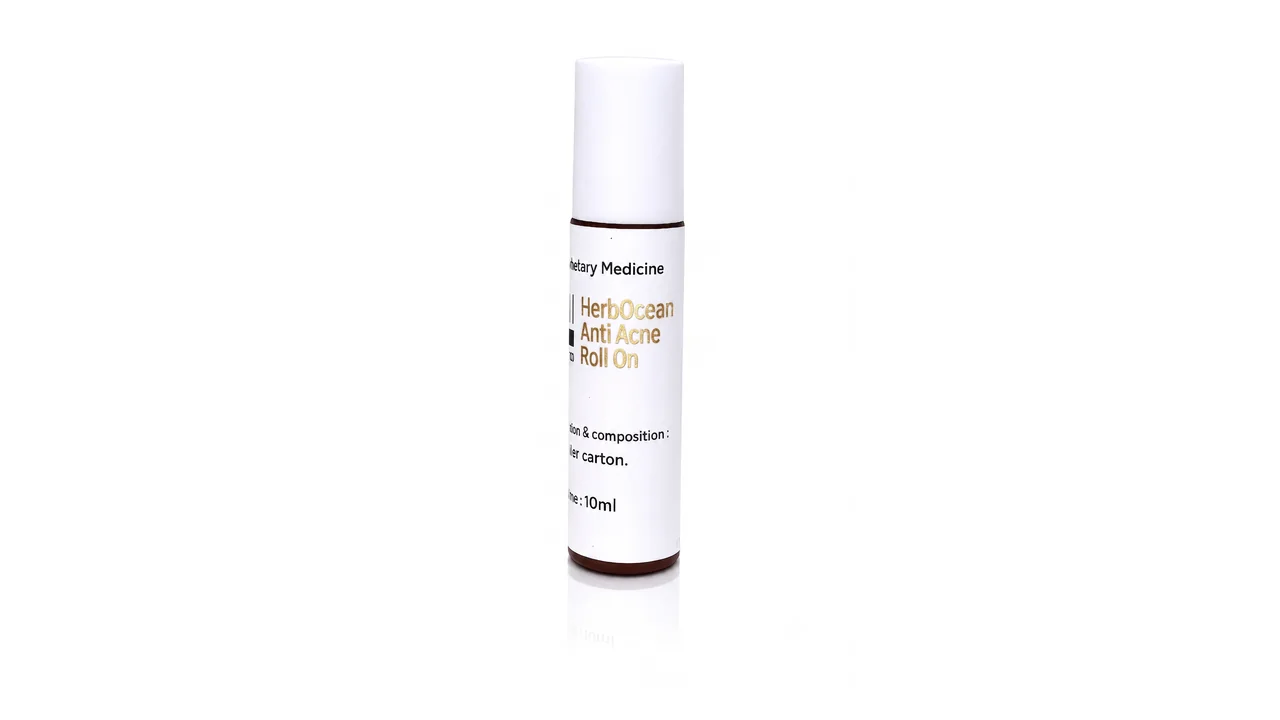
- The HerbOcean Anti-Acne Roll-On, an AYUSH-licensed Ayurvedic medicine (Licence No. DL-474 A&U) classically indicated for acne and pimples (Yuvanpidika), suits a few reachable spots: a metered dose, applied without fingers. A widely involved back belongs with a dermatologist.
Why Your Back Breaks Out When Your Face Does Not
Back skin is not simply an oilier face. Its oil glands are fewer and less productive than those on the forehead and nose, and the outer layer above them is thicker and sturdier. What the back has instead is coverage. It spends the entire day under cloth, so sweat that would evaporate from your cheeks in minutes stays pressed under a kurti or a shirt for hours. Then add friction: a bra band, a vest strap, a laptop-bag strap, a slung kit bag, the back panel of a two-wheeler jacket, each rubbing over sweat-softened skin through a commute. Dermatologists call friction-driven breakouts acne mechanica, and the back is its natural habitat. Damp gym clothes kept on for hours give the skin no chance to recover, and heavy body lotions under clothes add an occlusive film exactly where the back needs none.
Classical Ayurveda would not have found any of it surprising. Its reading of eruptions leans on congestion: heavy, sticky Kapha (one of the three doshas, the biological energies in Ayurveda) qualities accumulating where flow is blocked, with Vata and Rakta (blood) involvement alongside. A covered, sweat-occluded back in a humid month is congestion made literal, and the classical response was never to scrub it into submission but to take away what feeds it. For the fuller classical picture, our complete guide to the Ayurvedic treatment of acne is the deeper read.
The Conditioner Trap, and the Wash Order That Fixes It
Rich conditioners are built to cling to hair, and when you rinse them out under the shower, that film sheets down your back, over the shoulders and spine where back acne clusters, and much of it stays. The same is true of a weekly oiling. Nobody has tested whether hair-product residue causes back acne, so treat this as sensible sequencing rather than a proven cause. But if your breakouts sit in a band where your hair ends, it costs nothing to try. The problem is worse in hard-water homes, where mineral-heavy water rinses poorly and leaves residue layered on skin you rarely think to re-wash.
The sequence is simple enough to fix in a single wash: shampoo, then condition, then clip the hair up and off the back, then rinse it out with the lengths held forward, and leave body wash until last so the back is the final thing cleansed, after every residue has run down. In a hard-water home, finish with a mug of clean stored or filtered water over the back. Then dry the back properly before dressing, because a shirt pulled over damp skin recreates the very conditions you just washed away. If you keep a weekly oiling or champi (a traditional oil massage of the scalp and hair) habit, keep it. Only the order changes.
The Wardrobe Audit: What Touches Your Back All Day
Fabric decides how long sweat sits. Polyester and elastane trap it; cotton and modal let it leave. Favour breathable cotton for long days, and think of gym wear as a timed garment: out of it and into something dry soon after you finish. A sports bra or a vest worn damp through a morning is a compress of sweat and bacteria held against the exact zone back acne favours, so wash fitted tops after every single wear, not every second one. It is the daily-routine (dinacharya) instinct applied to laundry.
Then walk the strap map. Loosen the backpack on breakout weeks; shift a heavy tote or a slung kit bag from one shoulder to the other; let the dupatta hang looser on sticky days; open a two-wheeler jacket once you are off the road; and after a drenched commute, change the shirt rather than letting it dry on you. On a back that is already congested, friction is the difference between a pore that settles and a pimple that surfaces.
Two pieces of cloth you never wear matter almost as much. Your bedsheet collects the same sweat and oil the pillowcase collects for your cheek, so change it twice a week through the humid months, and do not assume yesterday’s towel is clean because it is yours. Dry towels fully between uses, and pat the back rather than sawing the towel across it.
The Look-Alike That Is Not Acne At All
Before you treat anything on your back as acne, rule out the condition that imitates it. Malassezia folliculitis, widely called fungal acne, is an inflammation of the hair follicles driven by a yeast that lives on everyone’s skin and sometimes overgrows. It favours the upper back, shoulders and chest, and it flares in the same sweaty, occluded conditions that drive ordinary back acne, which is why the two are confused so often.
A phone photograph of your own back in good light is usually enough to see the pattern. Malassezia folliculitis tends to show as many small bumps of much the same size, evenly spread across an area, and it usually itches. Ordinary back acne is mixed: blackheads, whiteheads and a few larger tender spots, scattered unevenly, and it does not usually itch. So look deliberately for the discriminator most people skip: blackheads and whiteheads. If there are none among the bumps, acne is the less likely answer.
Two further signals matter, because these are the ones people push through for months. This condition does not settle with ordinary acne care of any kind, ours included. And it can look worse rather than better on antibacterial treatment, so a rash that deteriorates while you treat it diligently is information, not a reason to try harder. Ask for it to be confirmed from a skin-surface sample rather than assumed from the look of it, because the treatment is different and the wrong one costs months.
One boundary, stated as plainly as we can put it: if that pattern fits your back, keep oils and rich creams off it until a dermatologist has seen you, and that includes ours. The yeast involved depends on skin lipids to grow. Nobody has tested oiling as a cause of it, and we are not claiming one, but there is no sense in adding an occlusive layer to skin that may be hosting it while the question is open.
Reachable Spots, Measured Care: Where the Roll-On Fits
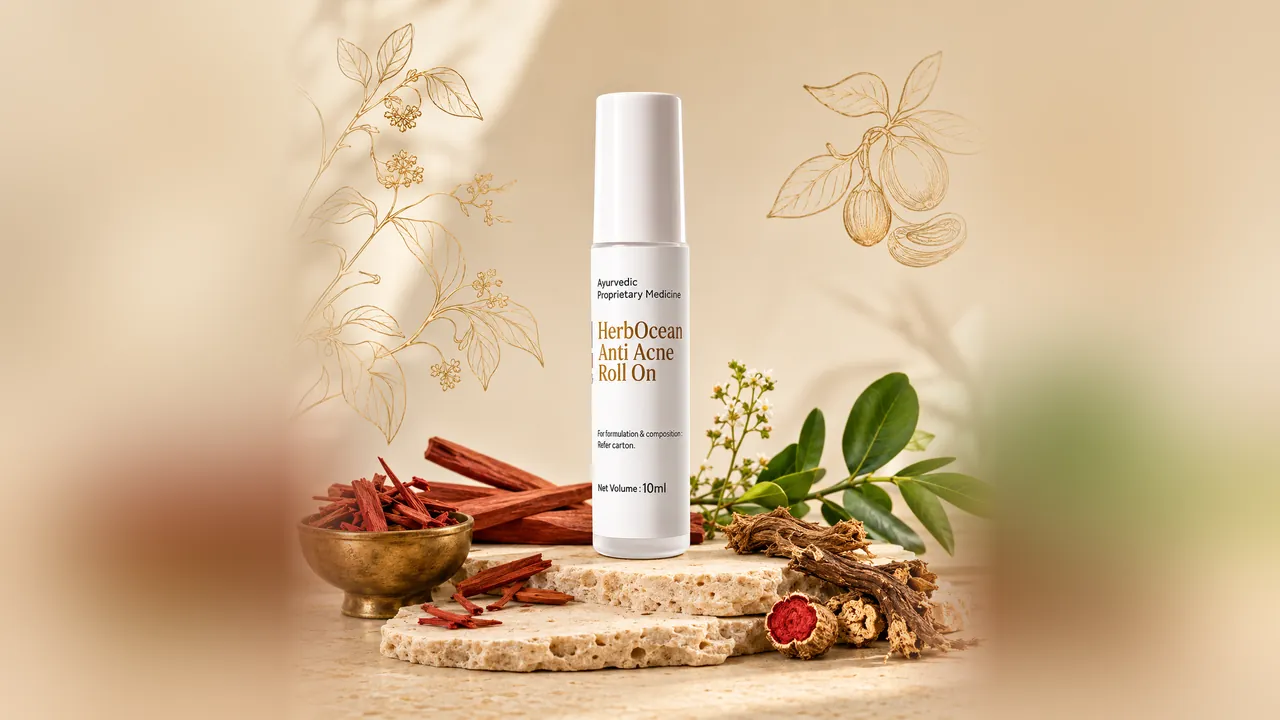
A few pimples will still arrive whatever you do, and the back makes them awkward to help. Creams need fingers and a mirror; pastes need a second person. This is where the roll-on format earns its place on the gym-bag shelf: the HerbOcean Anti-Acne Roll-On applies a metered dose through its rollerball, without fingers ever touching the spot, and most of the back is within your own reach. It is an AYUSH-licensed Ayurvedic medicine (Licence No. DL-474 A&U), classically indicated for acne and pimples (Yuvanpidika) and traditionally used in the care of post-acne marks and pigmentation (PIH).
The formula carries six classical botanicals in equal measure, the same dose for every one. No single herb leads the formula. They are Manjistha, Ayurveda’s foremost blood-purification (rakta shodhana) herb; astringent Lodhra; warming nutmeg, or Jaiphal; cooling red sandalwood, Raktchandan; bitter Indian Berberry, Daruhaldi; and costus root, Kuth. They sit in a light glycerine base with gluconolactone, sodium benzoate and a trace of lavender oil. No neem, no tea tree, nothing to guess at. It was formulated by Vaidya Shri Ram Prakash Ji, the master vaidya (a classical Ayurvedic physician and formulator) whose 40-year formulation legacy the HerbOcean line is built on, and made in-house at Roshni Botanicals’ GMP-certified unit in Bawana, Delhi.
Use it on clean, dry skin after the shower, on the spot and the skin just around it, morning and night. This is targeted spot care for a handful of reachable spots, not a body-wide answer: a back that is widely involved belongs with a dermatologist, not with any spot product, ours included. For external use only; patch-test on the inner forearm before first use, and stop if you notice stinging or redness.
No Picking: Why Back Marks Take Their Time
One rule matters more on the back than anywhere else. Melanin-rich Indian skin answers inflammation with pigment, so every squeezed pimple risks a flat brown mark, post-inflammatory hyperpigmentation (PIH). What makes the back particular is not the pigment itself, but that the same straps, waistbands and bands that helped cause the pimple keep re-provoking the mark while it is trying to settle. A back mark is a bruise that keeps getting bumped. So the spots you cannot reach, leave alone; the spots you can reach get the roll-on, not your nails. A spot that runs its course quietly leaves far less behind than one that was dug at through a shirt for a week.
For marks that have already formed and settled, HerbOcean Soundarya Cream is traditionally used in the care of post-acne pigmentation. It is a rich coconut-based cream, so use it on settled marks, on skin that is not sitting under a damp layer all day, and hold off while the itchy, uniform pattern above is still a possibility. Looser straps buy the marks the peace they need to soften, and a thin cotton camisole between a rough strap and a healing mark does more than any active ingredient will.
One boundary, in plain words: none of this is about changing your skin’s shade. Manjistha and Raktchandan sit in these registers for their classical place in skin care, and the goal with marks is skin that looks calm, settled and comfortable. No timelines are worth quoting here, and be wary of anyone who quotes you one. If the same weather is playing out on your face, our post on how humid weather changes acne care picks up there.
When Body Acne Needs a Dermatologist
Some patterns on the trunk deserve a clinician before any routine. See a dermatologist if breakouts spread widely across the back, chest and shoulders together; if lesions are deep, painful, cystic or leaving scars; if body acne arrives suddenly in adulthood after clear years; if nothing is settling under consistent basic care; or if breakouts track alongside other signals that deserve a proper work-up, irregular cycles being one example. And if what covers your back is a field of small, itchy, same-sized bumps with no blackheads among them, ask about Malassezia folliculitis by name. Stress can feed body breakouts more than most people expect, and our guide to stress acne and the rituals that calm it covers that thread. Correct name first, then care.
A Clearer Back, One Deliberate Minute a Day
Almost all of this is small corrections: the wash order, the back dried before dressing, cotton where polyester used to be, straps loosened, and hands kept off what you cannot see anyway. Keep the roll-on for the spots that still surface, and check the pattern before you treat it. Back skin is sturdy and answers well to modest, consistent care. It has simply never been given its minute.
References: Sushruta Samhita, Nidana Sthana 13 (Kshudra Roga), on Yuvanpidika (Mukhadushika), classically a facial eruption of aggravated Kapha, Vata and Rakta; body breakouts are framed here as the same pore-level process on trunk skin, not a distinct classical category. Mills OH, Kligman AM. Acne Mechanica. Archives of Dermatology. 1975;111(4):481-483 (the paper that first defined friction- and pressure-induced acne from straps, belts and packs). Davis EC, Callender VD. Postinflammatory Hyperpigmentation: A Review of the Epidemiology, Clinical Features, and Treatment Options in Skin of Color. Journal of Clinical and Aesthetic Dermatology. 2010;3(7):20-31.
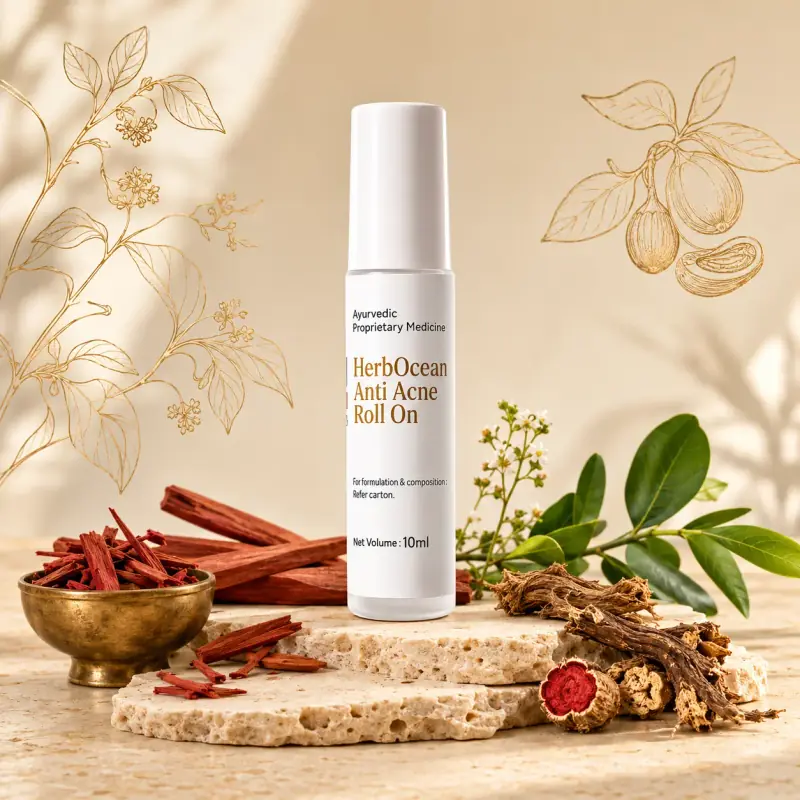
Anti-Acne Roll-On
Ayurvedic spot care for active pimples and post-acne marks (PIH) — a herbal roll-on classically indicated for acne (Yuvanpidika). Made in-house in Delhi.
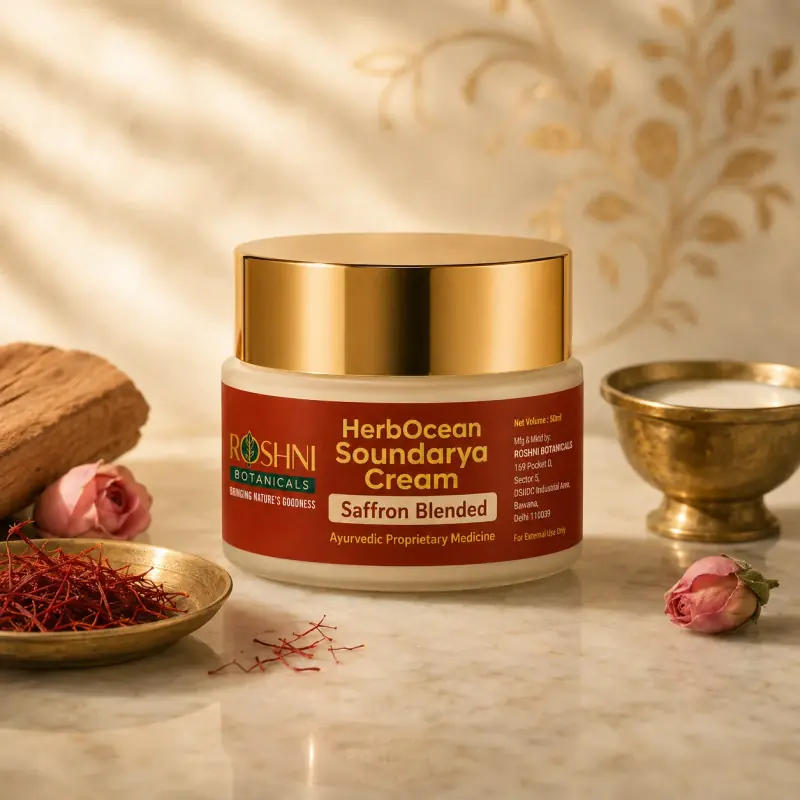
Soundarya Cream
A rich saffron brightening and repair cream with bargad (Vatt) bark on a goat-milk and coconut base, with shea and kokum butters, traditionally used in the care of skin where post-acne marks (PIH) linger.
Part of our guide: Ayurvedic treatment for acne: the complete guide.