How to Use an Ayurvedic Acne Roll-On: Steps and What to Layer
Five plain steps from one short direction, what to layer with a roll-on and what to keep apart, and the signs that send a pimple to a dermatologist.
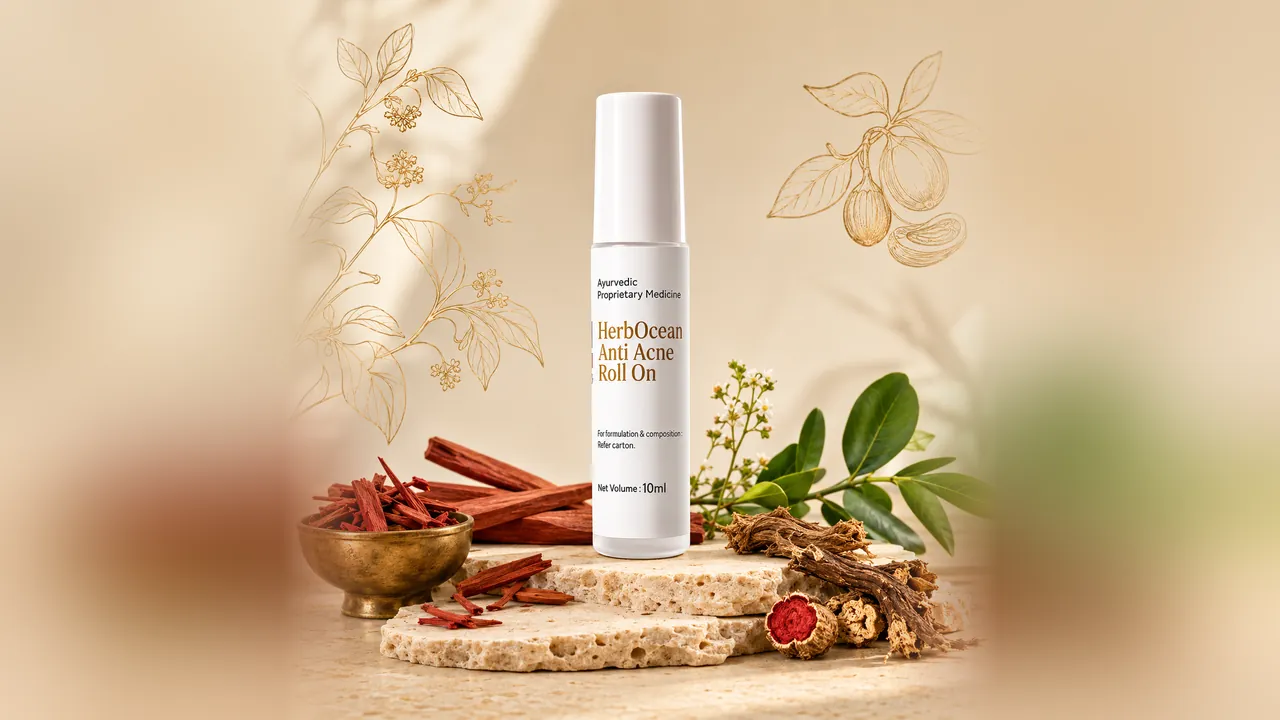
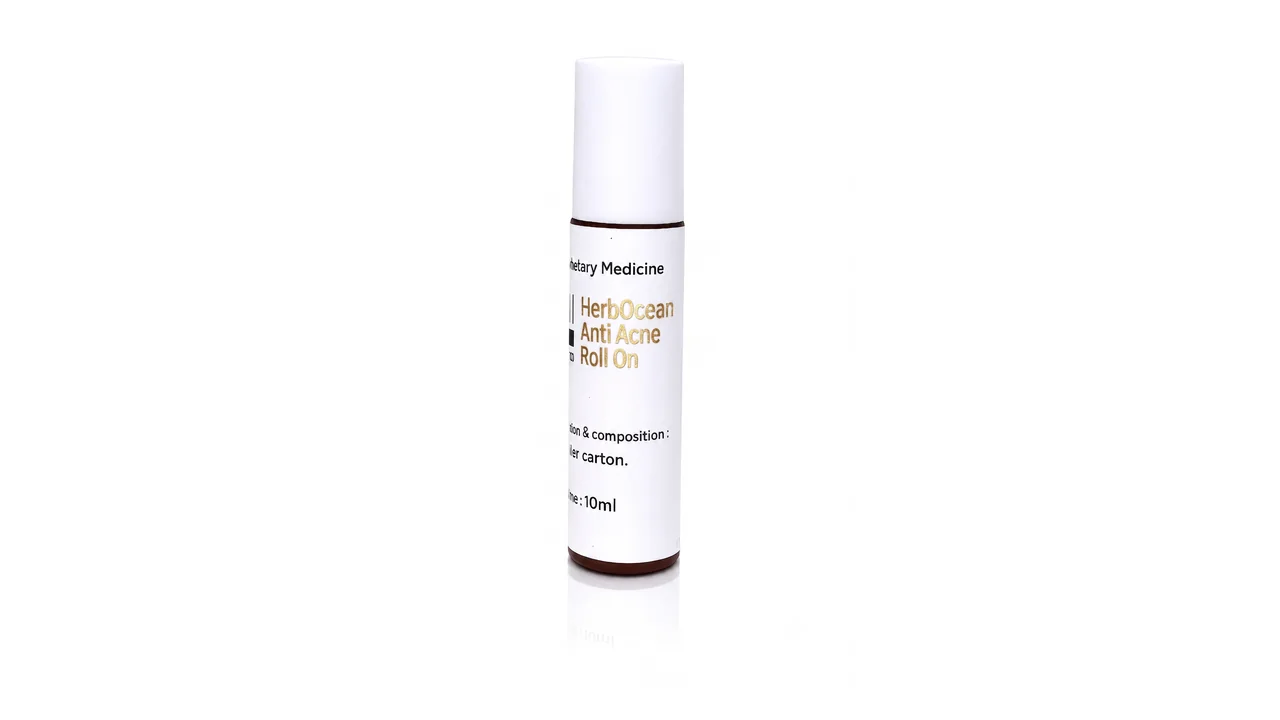
To use an Ayurvedic acne roll-on, follow the direction written for it. For HerbOcean Anti-Acne Roll-On, the product page sets that direction out in four short sentences: Cleanse and pat dry. Roll a thin layer directly over the pimple, morning and night. Nothing goes over it, no cream, moisturiser or sunscreen, until the pimple has settled; your usual moisturiser and sunscreen go only on the clear skin. For spot use, not full-face application. The roll-on itself is a small bottle with a rolling ball, so the herbs reach the pimple while your fingers stay off it.
If you ever tried toothpaste on a pimple, you know the scene: a thick smear, a hopeful look in the mirror, and fingers that kept wandering back to check. The steps for a roll-on are quick by comparison. The harder questions sit around them: what goes on before and after, what to keep apart, and which pimples need a dermatologist.
Key takeaways
- Sunscreen is the last step of a morning routine, after the moisturiser and on the clear skin only, never over an active pimple, because sunlight can deepen a fresh mark on melanin-rich skin.
- Lime or lemon juice on a pimple, followed by strong sun, can redden and blister the skin and leave a dark patch, so keep citrus for the kitchen.
- A pimple that has opened is the stage for a hydrocolloid patch, a small dressing that soaks up the fluid and covers the spot.
- On melanin-rich Indian skin, a picked pimple can leave a flat brown or grey patch behind it, post-inflammatory hyperpigmentation (PIH).
- Deep, painful or cystic bumps, sudden adult-onset acne, pimple-like bumps in unusual places and acne that leaves pitted scars all need a dermatologist.
What an Ayurvedic Acne Roll-On Is, and What Is Inside It
The Roll-On is an AYUSH-licensed Ayurvedic medicine for external use, classically indicated for acne and pimples (Yuvanpidika, the classical Ayurvedic term for acne, literally youthful eruption) and traditionally used in the care of post-acne marks and pigmentation (PIH). It carries six herbs in equal measure, Manjistha (Rubia cordifolia), Lodhra (Symplocos racemosa), Jaiphal (Myristica fragrans), Raktchandan (Pterocarpus santalinus), Daruhaldi (Berberis aristata) and Kuth (Saussurea lappa), in a glycerine and water base with lavender oil. It is made in-house at our GMP-certified unit in Bawana, Delhi, under AYUSH Licence No. DL-474 A&U, and built on the 40-year Ayurvedic formulation legacy of Vaidya Shri Ram Prakash Ji.
Classical Ayurveda described the pimple and its cause long before roll-on bottles existed. The Sushruta Samhita files the pimples that rise on young faces under Kshudra Roga, its minor conditions, and traces them to Kapha and Vata, two doshas (biological energies in Ayurveda), acting with Rakta, the blood. It likens them to the thorns of the silk-cotton tree.
As for the format, the roll-on is spot care for the red, raised pimple. The dark dots and small pale bumps of a clogged pore come a stage before that, as blackheads and whiteheads, and that earlier stage has care of its own.
How to Use an Acne Roll-On, Step by Step
Those four sentences hold five small steps at the basin, and together they answer pimple roll on kaise use kare, how to use a roll-on on a pimple.
Step 1, cleanse and pat dry. Wash with your usual mild cleanser, using your fingertips rather than a washcloth or a mesh sponge, which can irritate the skin. Then pat the skin dry with a soft towel, pressing rather than rubbing. Skip the scrub, because scrubbing irritates skin that is already inflamed. Dry skin gives the next step a clean surface to sit on.
Step 2, roll a thin layer. The direction says directly over the pimple, and that means the raised spot itself: the ball travels across the pimple and no further. Thin is the word to keep in mind, a light film over the spot.
Its caution belongs with this step, though the patch test in it comes before you ever start. For external use only. Patch-test on the inner forearm 24 hours before first use and discontinue if irritation occurs. Avoid it if you are allergic to a listed botanical, and keep it off broken skin and the eye and lip area. If pregnant or breastfeeding, check with your doctor.
Step 3, put nothing over the roll-on: cream, moisturiser and sunscreen all stay off skin where a pimple is active, and go only on the clear skin. That way the roll-on sits on clean skin with nothing on top of it. If your skin feels dry or tight after washing, reach for a moisturiser made for acne-prone skin on the clear areas, a light one if your skin is oily, and keep it off any pimple that is active.
Step 4, at both ends of the day. The roll-on belongs to your morning routine and to your night routine, each time on clean, dry skin.
Step 5, spot use, not full-face application. The roll-on is for the pimple itself, not for the clear skin around it or for the whole face. Cap it straight after use and keep it to yourself, as you would a toothbrush.
What to Layer With the Roll-On, and What to Keep Apart
In the morning the line-up is short: your cleanser, the roll-on on the pimple with nothing over it, then your moisturiser and a sunscreen last, both on the clear skin only. Night is the same routine minus the sunscreen. Sunscreen earns its place because sun on a fresh mark can deepen it. HerbOcean does not manufacture a sunscreen, and nothing in the range replaces one, so your sun protection stays a separate step. Where that step sits in a full day is set out in the morning and night order. If you wear makeup, take it off fully before your night routine, because makeup left on while you sleep can cause breakouts.
If a dermatologist has prescribed or advised a retinoid, salicylic acid or another acne medicine, ask that same doctor before you add any spot product to the same skin. Each works in its own way, and your doctor knows your whole routine. If you are new to Ayurvedic skin medicines, one concern, one product matches each concern to a single product.
Then there are the quick fixes from the bathroom shelf and the kitchen, toothpaste and a squeeze of lemon among them. Wanting to do something about a pimple at once makes sense, but these two are another matter. Toothpaste belongs on a toothbrush rather than on skin, and lime or lemon juice left on a face that then meets strong sun can redden and blister it and leave a dark patch of its own.
Pimple patches come in at a different stage. The roll-on goes on skin that is still closed, and a hydrocolloid patch belongs to a pimple that has broken open. Hydrocolloid dressings come from wound care, and a pimple patch is a small piece of one: its inner side soaks up fluid from the open spot and its outer side covers it. A 2025 review by Nguyen and colleagues calls the evidence for acne early, resting on one small pilot trial and a conference report.
Why Spot Care on Indian Skin Needs a Lighter Hand
The Fitzpatrick scale sorts skin into types by how it reacts to the sun, from the lightest, type I, to the darkest, type VI. A 2009 skin-typing review by Sachdeva ranks type V first for Indian skin and type IV second, and melanin runs deep in both.
Skin that carries this much melanin can answer inflammation by laying down extra pigment, so a pimple you pick, scrub or dry out hard can leave a brown or grey mark (PIH) that outlasts it. Reviewing this kind of pigmentation in 2010, Davis and Callender describe it as affecting darker skin with greater frequency and severity, list acne among its triggers, and note that sun and inflammation that lasts or returns can make it worse. Near the surface it looks brown, and deeper in the skin it can look blue-grey.
In humid weather, sweat and oil sit on the skin, and sweat on its own can irritate it, so it helps to wash after you have been sweating hard. A helmet or a cap holds that sweat against the forehead and hairline, so wash as soon as you can once it comes off. After a workout, pat the sweat away with a clean towel rather than rubbing it off, since rubbing can irritate the skin.
Hard groundwater can leave your face feeling tight after washing. If that tempts you to wash again or scrub harder, it is worth resisting. Danby and colleagues washed volunteers in water of different hardness and found more of the cleanser left on skin washed in hard water, with that leftover cleanser irritating it. In the same study, softening the water eased the effect. So keep to a mild cleanser and a pat dry, then your moisturiser on the clear skin, rather than a second round at the sink.
Haldi, besan and multani mitti have a place in Indian skincare that goes back generations, and putting a herb straight onto a spot is an old household practice. The roll-on follows the same idea with its own classical herbs, ready in the bottle.
The Mark a Pimple Leaves, and What to Reach For After
The first rule for marks is the dullest one: hands off. Do not squeeze, do not pick at a head, and do not try to dry a spot out with a strong astringent. Picking adds inflammation, and on this skin inflammation is what can leave the pigment behind. Squeezing can also push what is inside the pimple deeper into the skin, where it stirs up more inflammation, and carry in bacteria from your fingers. The more inflamed the spot, the more likely a scar. Touching your face can make acne flare as well.
Some marks stay put after the pimple has gone. HerbOcean Soundarya Cream is traditionally used in the care of post-acne marks: a rich saffron repair cream with bargad (Vatt) bark on a goat-milk and coconut base, with shea and kokum butters. It is rich, so very oily or acne-prone skin may not want it during an active phase.
Look at the surface first. A mark is flat: the colour has changed, but the skin itself is still smooth. A scar changes the surface, as a dip or a raised bump. If you cannot tell a mark from a scar, why a pimple leaves a brown mark sets the two apart.
When a Pimple Needs a Dermatologist
Some pimples belong with a dermatologist. Deep, painful, cystic or nodular bumps are the first kind, because they can leave scars once they clear. In the clinic, a dermatologist can inject a deep cyst or open and drain it with sterile tools, which carries less risk of a scar than squeezing it at home.
Sudden adult-onset acne is another, especially along the jaw and chin with irregular periods, since acne that starts in adulthood can be a sign of an underlying condition that a doctor should look at. Pimple-like bumps in unusual places, such as the armpit, groin or thighs, need a dermatologist too, as does acne that leaves pitted scars rather than flat marks. It also takes a dermatologist to say whether a crop of bumps that looks like acne is acne at all. And if a rash or burning stays after you stop the roll-on, show the skin to a dermatologist.
When the Next Pimple Rises
If a pimple is rising as you read, start at step 1 and work through to step 5. After that, the kindest thing your hands can do is stay away from it. Diet and the classical reading of acne get more room in our complete guide to ayurvedic treatment for acne.
References: 1. Sushruta Samhita, Nidana Sthana 13 (Kshudra Roga). The chapter on minor conditions; the pimples of the young from Kapha, Vata and Rakta. 2. Sachdeva S. Fitzpatrick skin typing: applications in dermatology. Indian Journal of Dermatology, Venereology and Leprology, 2009. Review; the scale from type I to type VI; type V, then type IV, for Indian skin. 3. Davis EC, Callender VD. Postinflammatory hyperpigmentation: a review of the epidemiology, clinical features, and treatment options in skin of color. Journal of Clinical and Aesthetic Dermatology, 2010. Narrative review of skin of colour, United States, not India specific; more frequent and more severe in darker skin, and can worsen with ultraviolet light. 4. Nguyen N, Dulai AS, Adnan S, Khan ZE, Sivamani RK. Narrative review of the use of hydrocolloids in dermatology: applications and benefits. Journal of Clinical Medicine, 2025. Narrative review; early evidence on acne from one pilot trial of 20 patients in Taiwan and one conference abstract; the senior author discloses industry ties. 5. Danby SG and colleagues. The effect of water hardness on surfactant deposition after washing and subsequent skin irritation in atopic dermatitis patients and healthy control subjects. Journal of Investigative Dermatology, 2018. Case control study, 80 participants with and without atopic dermatitis, Sheffield, United Kingdom; funded by a maker of water softeners. 6. Hankinson A, Lloyd B, Alweis R. Lime-induced phytophotodermatitis. Journal of Community Hospital Internal Medicine Perspectives, 2014. Case report, one patient, lime juice on the hands, then sun, United States. Educational, not medical advice.
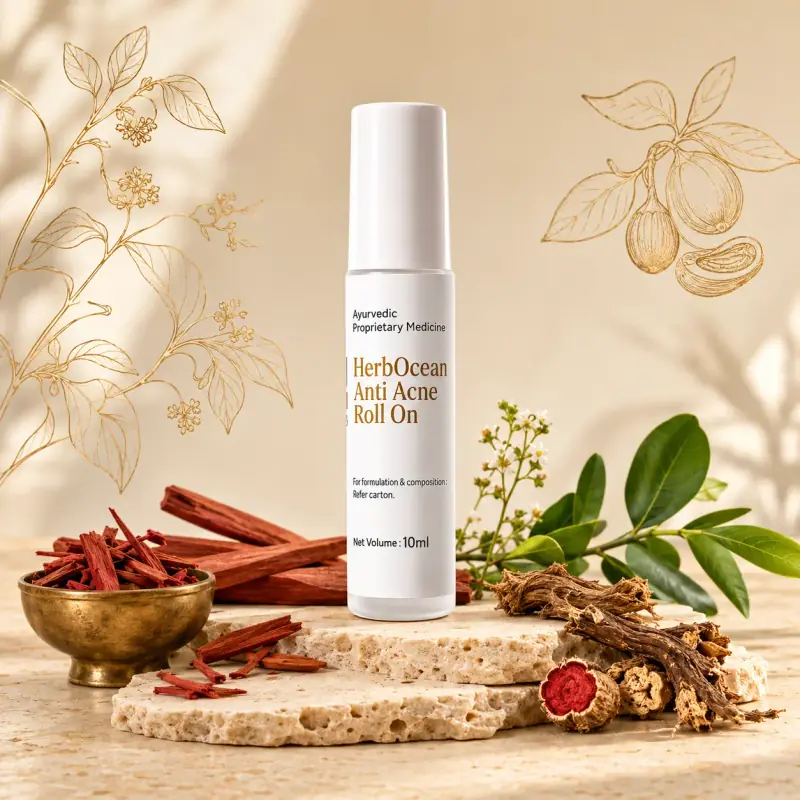
Anti-Acne Roll-On
An Ayurvedic medicine you roll straight onto the spot, classically indicated for acne and pimples (Yuvanpidika) and traditionally used in the care of the post-acne marks (PIH) they leave behind. Made in-house in Delhi with six classical herbs.
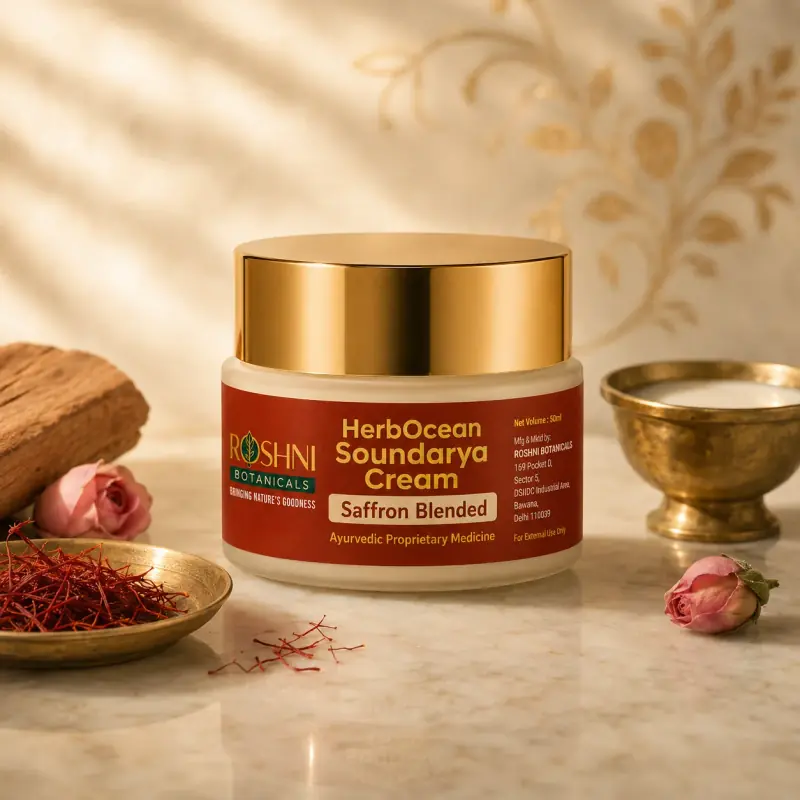
Soundarya Cream
A rich saffron cream for brightening and repair, with bargad (Vatt) bark on a goat-milk and coconut base. Made for dry, rough-feeling skin, it is an Ayurvedic medicine traditionally used in the care of skin where post-acne marks (PIH) linger.
Part of our guide: Ayurvedic treatment for acne: the complete guide.
Frequently asked
This article is general educational content about Ayurvedic skin and hair care. HerbOcean products are classical Ayurvedic preparations for external use, made under AYUSH Licence DL-474 A&U and traditionally used to support healthy skin and hair. This is educational and not a substitute for professional medical advice; for persistent or worsening concerns, please consult a qualified dermatologist.