Manjistha for Acne: The Blood-Purifying Herb in a Roll-On
Ayurveda has reached for manjistha against breakouts for centuries. Here is why the blood-purifier herb sits at the heart of an acne roll-on.
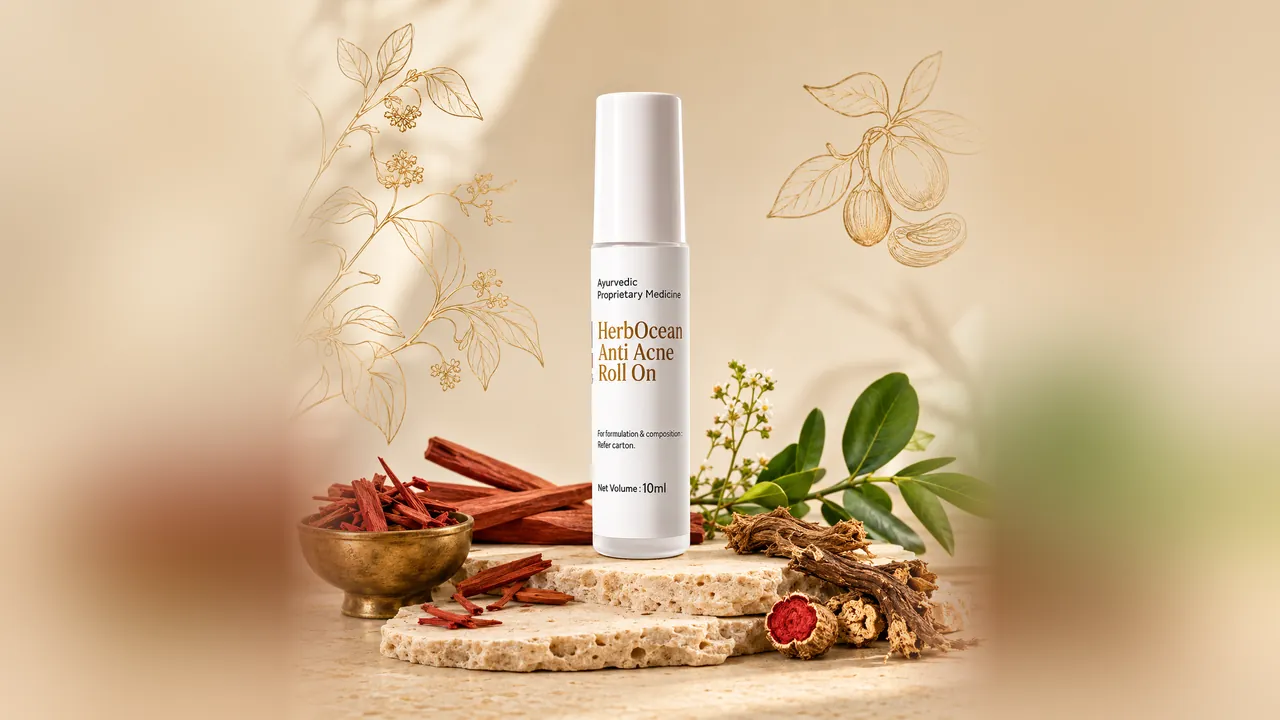
If acne ran in your family and an elder sent you to an Ayurvedic doctor, the word you would have heard is Manjistha. It is one of the tradition's most trusted herbs for problem skin, and its reputation rests on a simple idea: clear skin starts in the blood. The Sanskrit name hints at the plant itself, whose roots run a deep ruby red, and the same herb that dyes also, in the classical view, cleanses.
Why Ayurveda links acne to the blood
In the classical framework, breakouts are often read as a sign of heat and impurity in the Rakta dhatu, the blood tissue, stoked by aggravated Pitta. Manjistha (Rubia cordifolia) is the great Raktashodhaka, the blood-cleanser, and that is precisely the role it plays for acne-prone skin: it is traditionally used to cool the heat and calm the inflammation that show up on the surface as spots and the marks they leave behind.
What manjistha is traditionally used for
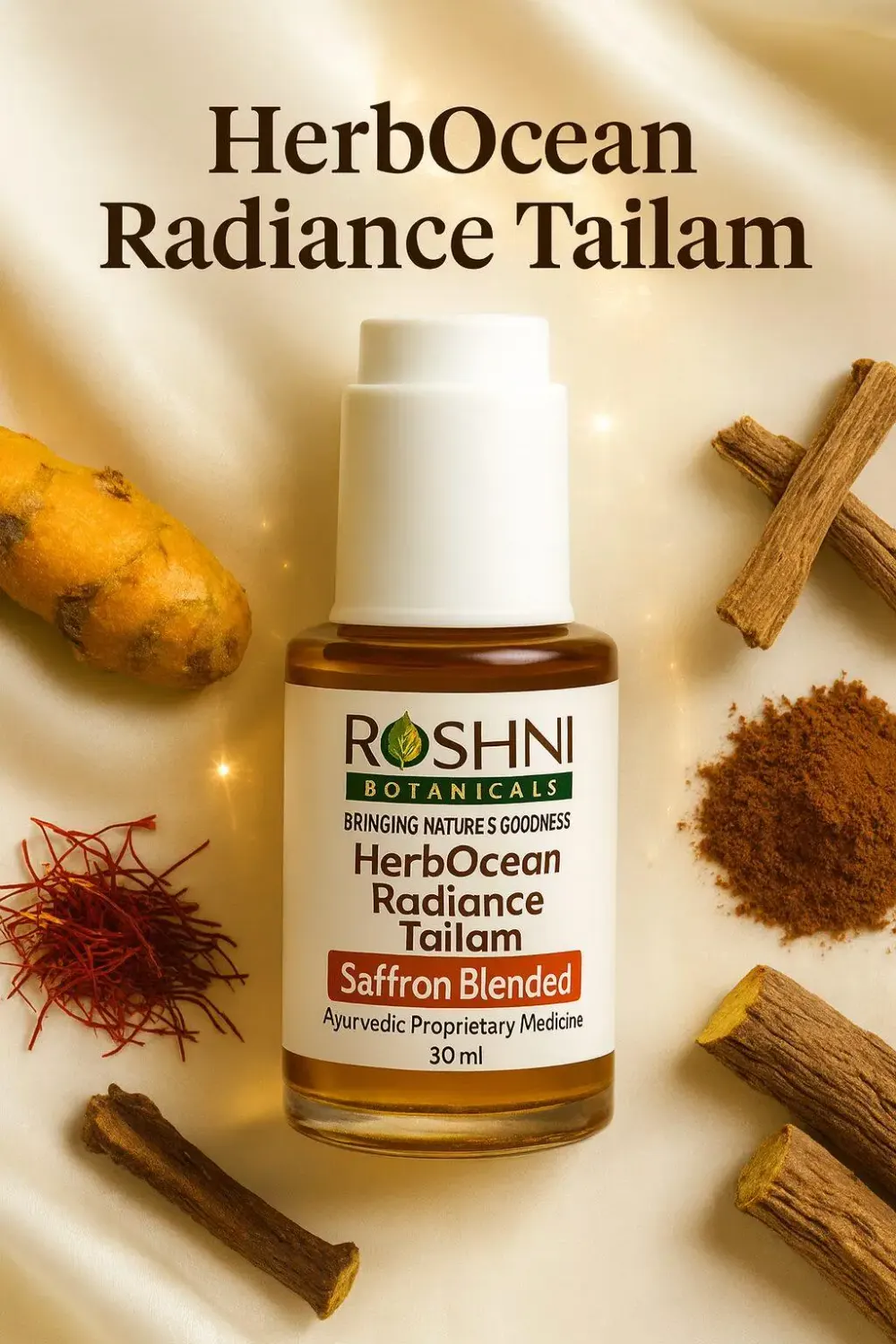
Beyond calming active, inflamed skin, manjistha has a long association with fading the pigmentation that lingers after a breakout, and with a clearer, more even-looking tone overall. That is also why it anchors our Radiance Tailam, the oil reached for where post-acne marks linger. It is a steady, supportive herb rather than a dramatic one, which is exactly what acne-prone skin tends to need: less provocation, more patience.
Manjistha in HerbOcean Anti-Acne Roll-On
No single herb does it alone, which is why HerbOcean Anti-Acne Roll-On sets manjistha among its classical companions: Lodhra for oil and pores, Daruhaldi and Kuth for their calming, clarifying reputation, and lavender oil to soothe. The roll-on format means you dab it straight onto the spot, twice daily after cleansing, without spreading it across the whole face. It is classically indicated for the care of Yuvanpidika, acne.
Where manjistha sits in the classical texts
Manjistha’s reputation is not a modern marketing invention. The classical compendia group it among the varnya (complexion-clarifying) herbs and reach for it wherever the skin and the blood are read as one system. Its standing is old enough that the name appears in formulations across centuries of Ayurvedic pharmacy, usually in exactly the role it plays here: the steady, cooling cleanser of the Rakta dhatu rather than a dramatic surface active. When a tradition keeps an ingredient in the same job for that long, it is telling you what the herb is for.
The company it keeps in the formula
A classical formula is built like a small team, and manjistha’s team-mates each cover a flank. Lodhra brings the astringency, toning pores and steadying oil where Kapha congestion drives the breakouts. Daruhaldi (Indian barberry) carries berberine-rich clarity, long used where skin needs calming and cleansing at once. Kuth (costus root) is the formula’s traditional calmer, classically used to settle the angry edge of a spot. Lavender oil, the one outsider, earns its seat by soothing the skin and the person attached to it. The point of the combination is coverage: heat, oil, congestion and irritation addressed together, which is how a many-sided condition like acne actually presents.
Small habits that make the roll-on work harder
Targeted care rewards technique. Cleanse first, always: applied over sweat or sunscreen, any spot step sits on a film instead of the skin. Dab, do not drag; the roll-on tip places the herbs exactly where the spot is, and rubbing only adds the friction that acne-prone skin resents. Keep it to twice a day, morning and night, rather than six anxious applications on day one and none by Friday. If you also use strong conventional actives, keep them to alternate times rather than layering everything into one sitting, and patch-test on the inner forearm if your skin is reactive. Since the marks that follow a breakout are pigment, daytime sunscreen quietly does half the work of keeping your tone even while the herbs do theirs.
One more habit worth keeping: leave the spot alone between applications. On melanin-rich Indian skin, every squeeze is a future brown mark, and the mark routinely outlives the pimple by months. Where the marks have already settled in, HerbOcean Soundarya Cream is traditionally used in the care of post-acne marks. The cheapest pigmentation care available is the squeeze you skip.
Monsoon, hard water and the busy season
Breakout patterns in India track the weather closely enough that you can almost plan for them. The humid months are the busy season for acne-prone skin: sweat and sebum sit together in the pores, collars and helmet straps hold dampness against the jaw, and congestion follows. This is when a precise spot step earns its place, catching the early bump before it organises into something deeper. Hard water adds its own quiet tax year-round, leaving skin slightly stripped after every wash and nudging it to compensate with oil; a gentle cleanser blunts most of that. Through all of it the manjistha logic stays the same: cool the heat, keep the channels clear, and let the skin settle at its own pace.
Honest expectations
Give it a few weeks of consistent use. Spot care calms and supports; it works best alongside the unglamorous basics of gentle cleansing, sleep and a diet that is not running your system hot. For the full method, read our ayurvedic treatment for acne, and for the manjistha-and-lodhra pairing specifically, see manjistha and lodhra for acne. Severe or cystic acne is a dermatologist's territory.
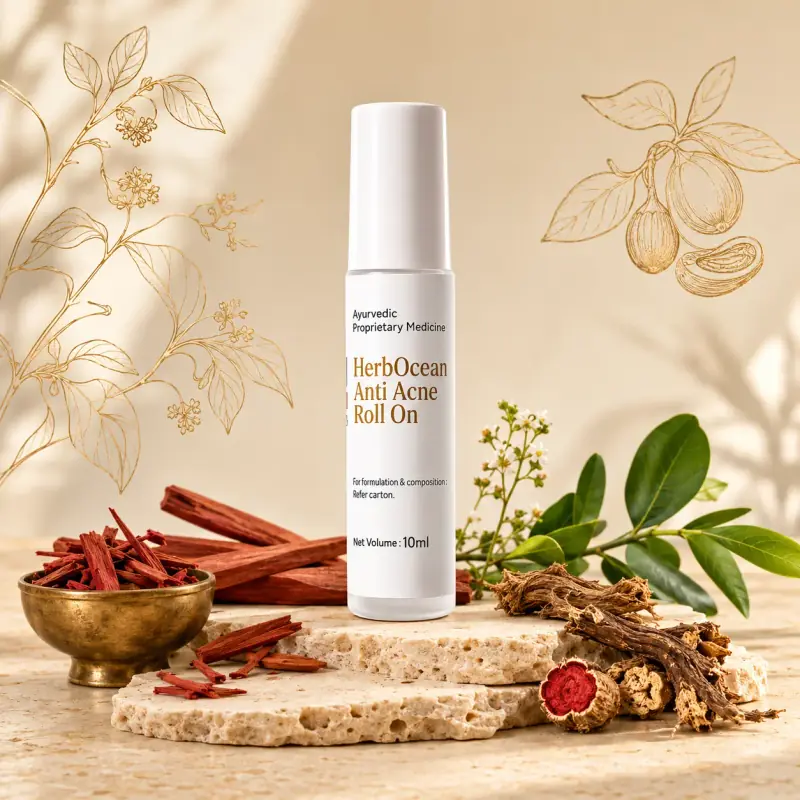
Anti-Acne Roll-On
Ayurvedic spot care for active pimples and post-acne marks (PIH) — a herbal roll-on classically indicated for acne (Yuvanpidika). Made in-house in Delhi.
Part of our guide: Ayurvedic treatment for acne: the complete guide.