
What’s Your Acne Dosha? An Ayurvedic Guide to Clearer Skin
Ayurveda does not treat all acne the same, because not all acne is the same. A quick guide to reading your breakouts by dosha.
Walk into an Ayurvedic consultation with a breakout and the first question is not "which cream" but "which kind". Ayurveda reads acne, Yuvanpidika (the classical Ayurvedic term for acne, literally "youthful eruption"), as a sign of imbalance rather than an isolated skin event, and it does not treat every breakout the same way. Knowing your pattern is genuinely useful, because it tells you what to calm.
The three patterns
Most acne leans toward one of two doshas, with a third playing a smaller role. Pitta acne is the hot kind: red, inflamed, tender pimples that can scar, often on skin that runs sensitive and warm. Kapha acne is the heavy kind: oily skin, clogged pores, whiteheads and the deeper cystic bumps that take their time. Vata shows up as drier skin with occasional small bumps, often stress-linked. Most people recognise themselves within the first description they read.
What each pattern is asking for
Pitta acne wants cooling and calming: gentle care, less heat in the diet, and stress that is kept in check, since Pitta flares with both literal and emotional heat. Kapha acne wants the opposite energy: lighter food, movement, and oil that is balanced rather than stripped or smothered. Reading the pattern saves you from fighting oily, congested skin with the same approach you would use on hot, reactive skin, which is how a lot of routines go wrong.
A two-minute self-check
You do not need a consultation to make a working guess. Ask three questions. Where do the breakouts sit: cheeks and temples that flush easily point to Pitta; forehead, jaw and back, with general oiliness, point to Kapha; scattered small bumps on otherwise dry skin suggest Vata. What do they feel like: hot, red and tender is Pitta; deep, slow and congested is Kapha; rough and fleeting is Vata. And when do they flare: after spicy food, sun and stressful weeks, that is Pitta again; in damp weather and heavy-food stretches, Kapha; through travel, late nights and skipped meals, Vata. Most people are a blend, and the pattern that scores twice out of three is the one to care for first.
Season and city change the answer
The same skin behaves differently across the Indian year, which Ayurveda formalises as Ritucharya (the seasonal routine). Peak summer aggravates Pitta: more redness, more inflamed spots, more sensitivity to sun. The monsoon swings the picture toward Kapha: humidity keeps pores congested, sweat sits on the skin, and fungal trouble, which can masquerade as acne, thrives in damp collars and gym wear. Winter in the north dries everything, and Vata-type roughness joins whatever else you have. The practical lesson is that your routine should loosen and tighten with the calendar: lighter, more frequent cleansing in the humid months; more moisture and less stripping in the dry ones.
City conditions layer on top. Hard water, standard issue in most metros, leaves a mineral film that irritates reactive Pitta skin and dries Vata skin further. Commute dust and helmet straps add friction exactly where Kapha congestion likes to sit. None of this demands new products; it asks you to adjust the basics: rinse after the commute, wash the helmet liner, keep the cleanser gentle.
Morning and night, by pattern
Whatever your pattern, the skeleton stays the same: cleanse, care for the spots, protect by day. Pitta skin does best with everything cool and minimal: lukewarm water, a fragrance-light cleanser, sunscreen without fail, and no enthusiastic scrubbing. Kapha skin earns a second cleanse on sweaty days and suits a clay-based weekly step to keep pores clear, but resist the urge to strip; over-washed oily skin produces more oil, not less. Vata-leaning skin needs the opposite discipline: shorter washes, a real moisturiser, and warm food and regular sleep doing half the skincare from the inside.
What the dosha lens is really doing
Reading acne by dosha can sound like personality-quiz territory, so it is worth saying what the framework actually achieves. It sorts breakouts by their driving tendency, heat, congestion or depletion, and then matches care to the driver instead of carpet-bombing the symptom. That is why the same classical herbs keep reappearing in different combinations: cooling manjistha where heat leads, astringent lodhra where oil leads, nourishing bases where dryness leads. Modern dermatology slices the same territory differently, by hormones, bacteria and keratin, and the two maps coexist happily. The dosha lens earns its keep at home, where it turns “my skin is acting up” into “my skin is running hot this month”, a problem you can actually do something about.
Where HerbOcean Anti-Acne Roll-On fits
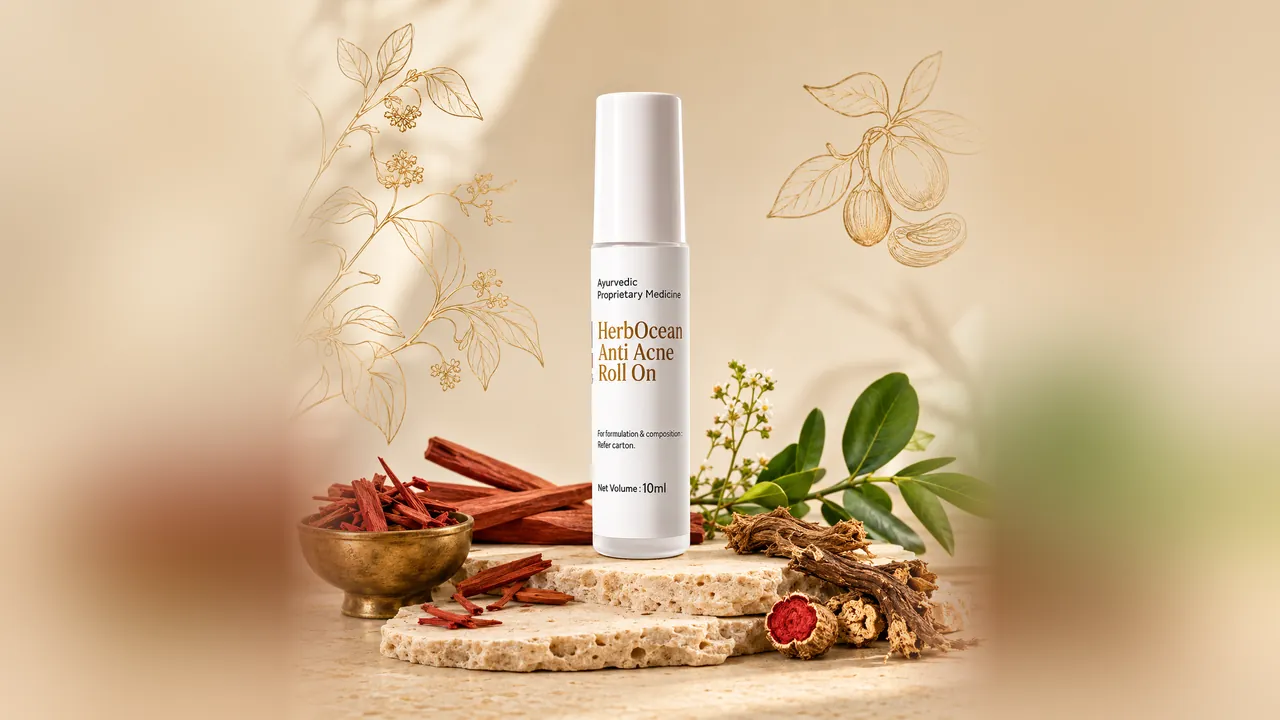
For the inflamed, spot-prone side of acne, targeted care helps. HerbOcean Anti-Acne Roll-On is built around classical Pitta-pacifying herbs: Manjistha and Lodhra, Daruhaldi and Kuth, with lavender oil, in a roll-on you dab straight onto the spot twice daily after cleansing. It is a focused spot step, classically indicated for the care of Yuvanpidika, not a wash for the whole face.
The part the bottle cannot do
Dosha-aware eating, sleep and stress management do at least half the work, especially for Pitta and Kapha patterns where diet and routine feed the imbalance directly. For the complete picture, read our ayurvedic treatment for acne, and if your acne is mostly the marks left behind, see fading acne marks the gentle way. Severe, cystic or sudden-onset adult acne deserves a dermatologist, not just a routine.
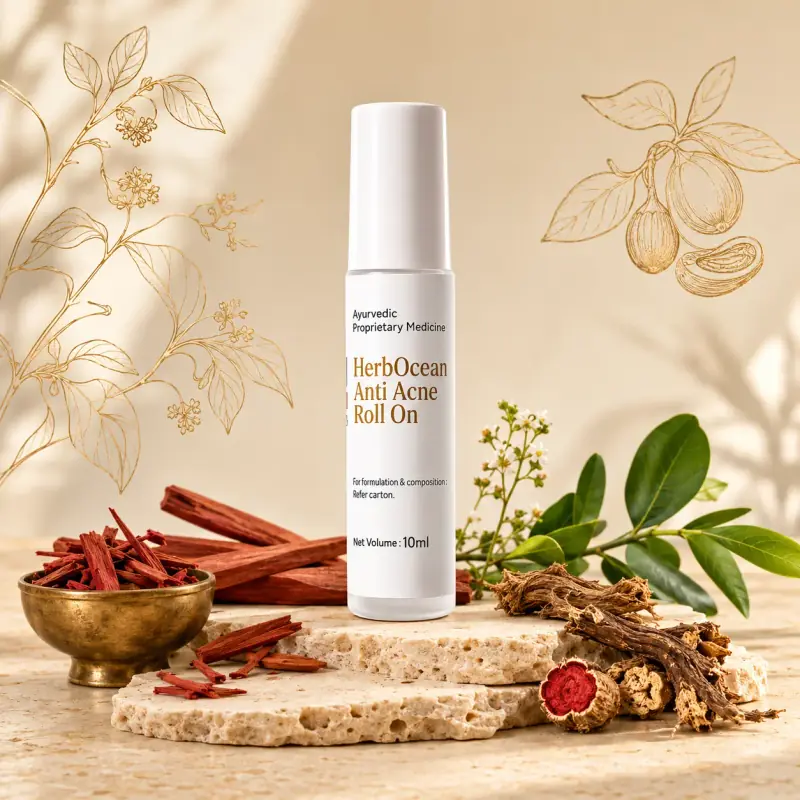
Anti-Acne Roll-On
Ayurvedic spot care for active pimples and post-acne marks (PIH) — a herbal roll-on classically indicated for acne (Yuvanpidika). Made in-house in Delhi.
Part of our guide: Ayurvedic treatment for acne: the complete guide.