
Jaiphal (Nutmeg) Benefits for Skin: The Kitchen Spice in Classical Pimple Care
Most people arrive with one blunt question: will jaiphal clear a pimple tonight? The honest answer, and the safer way to use the spice.
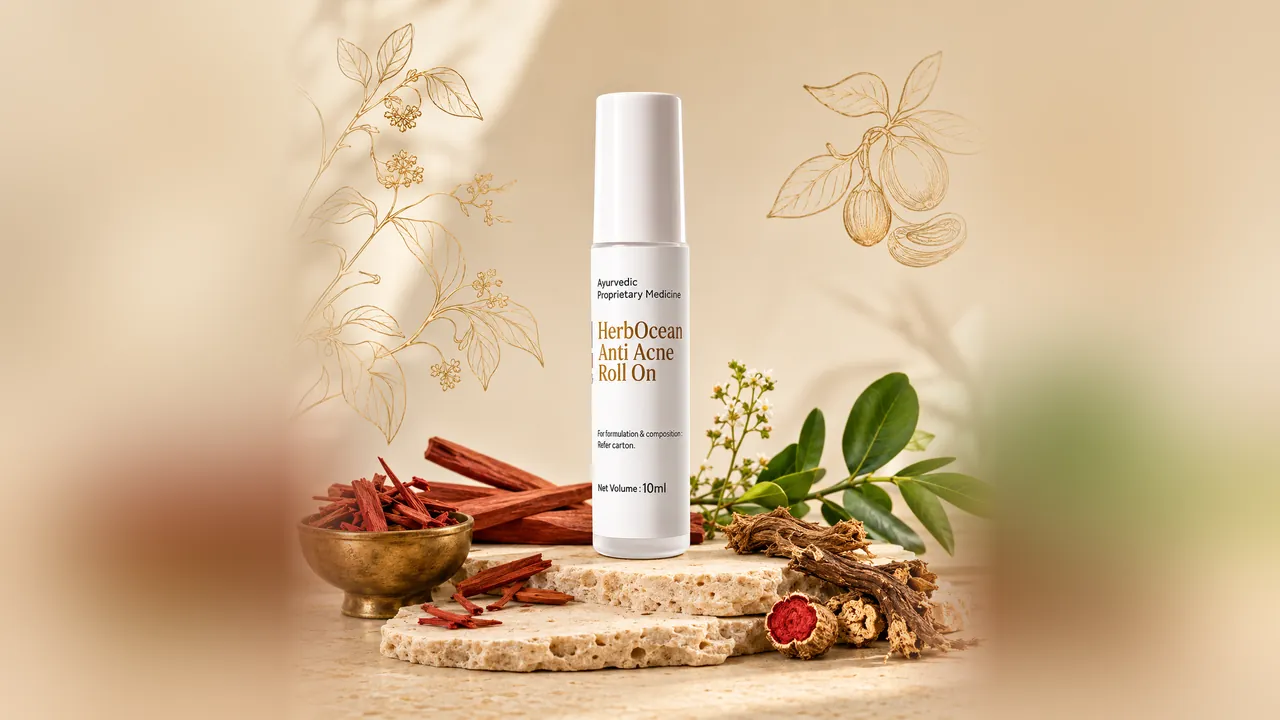
Somewhere in your family, someone has rubbed a jaiphal on a wet grinding stone and dabbed the paste on a stubborn pimple the night before a function. That nuskha is not superstition: nutmeg has a genuine, long-standing place in Indian household and classical skin care, and the instinct behind the wet stone was sound. But most people who search for jaiphal arrive with one blunt question, will it clear this pimple by tomorrow morning, and the honest answer to that question is where this page begins.
Key takeaways
- Jaiphal is Myristica fragrans, the same nutmeg in your masala dabba, with a long-standing place in Indian household skin care for pimples and for the marks they leave.
- No herb clears a pimple overnight. A pimple runs its own course, and the honest work is helping it settle without adding injury on top.
- Raw stone-ground jaiphal is unstandardised: the dose, coarseness and oil content change with every rubbing, so the same nuskha can feel gentle one week and stinging the next.
- On melanin-rich Indian skin the mark usually outlasts the pimple. Inflammation is what drives it, the pimple’s own and any you add on top, so gentleness protects you twice.
- HerbOcean Anti-Acne Roll-On carries jaiphal as one of six classical botanicals in equal measure, the same dose for every one, alongside Manjistha, Lodhra, red sandalwood (Raktchandan), Indian berberry (Daruhaldi) and costus root (Kuth).
The Nuskha on the Grinding Stone
Begin with respect, because the household practice earned it. Across North Indian homes the method is remarkably consistent: a whole jaiphal, three or four drops of water on the sil or a rough stone, a few circular rubs, and a fingertip of the pale paste pressed onto the pimple at night. Families repeated it because they saw it do something, and because the kitchen sorted its spices with real precision. Haldi went into the ubtan for the whole face, the gentle all-rounder of the masala dabba; besan carried the scrub; malai softened. Jaiphal alone was reserved for the single stubborn pimple, applied on a fingertip, never spread wide. The household pharmacy understood, without ever saying so, that this was the strong one, the spice you point rather than pour.
Some homes used to leave it on overnight; twenty minutes and a rinse is the version worth keeping, for the same reason a paste of any strong kitchen ingredient earns caution on a pimple. Compare that with what people reach for in a panic today: our post on toothpaste on pimples explains why the modern shortcut is worse than the old one.
You can watch the variation yourself, without opening a single text. The same nuskha soothes on Tuesday and stings on Friday, and the nut is the reason why. How hard you press, how coarse the stone is, how fresh the nut is: each changes the dose and the coarseness of what lands on your face, and jaiphal’s punch comes from volatile oils that weaken as a nut ages. No two rubbings produce the same paste.
Why Raw Jaiphal Can Backfire on Indian Skin
The variability costs more on Indian skin specifically. Melanin-rich skin answers irritation with pigment, so a harsh application that leaves the skin red for two days can leave it brown for months: post-inflammatory hyperpigmentation (PIH), the mark that outlasts both the pimple and the memory of the paste. Humid weeks raise the stakes further, because a gritty spice paste sitting on sweaty, occluded skin through a warm night is far more likely to irritate than the same paste on a dry one. A stone grind also leaves fine particles that drag as you rub them in, and dragging across an already inflamed spot adds injury to injury. The other quiet variable is enthusiasm: a nuskha that behaves well used once, on one pimple, gets used nightly on six in the week before a function, and frequency multiplies every other risk on this page.
So if the family method is staying in your life, give it the cautions the practice always assumed. Grind a very small quantity, with water. Dab a little of the paste on the inner forearm, rinse it off after a few minutes, and look at that spot again the next day before anything goes near your face; raw spice can sting, and some skins are simply reactive to nutmeg. Keep it to the spot itself, away from the eyes and lips. Keep it off broken or squeezed skin entirely, because a paste on broken skin is how a pimple becomes a scar. Twenty minutes, then rinse. And a spice paste left on far too long can leave a deeper mark than the original breakout ever would have.
What Jaiphal Can Actually Do for a Pimple
Stated plainly: jaiphal has a long-standing place in Indian household and classical skin care for pimples and for the marks they leave, and its entry in the classical materia medica sits among the aromatic herbs the tradition pointed at congested, eruption-prone skin. That classical placement matters more than it looks. A vaidya dispensing for the skin did not hand over a whole nut and a stone; the spice entered a weighed formulation, balanced by partner herbs and diluted to a deliberate dose, and the distance between the kitchen nuskha and that dispensed preparation was never the herb. It was the measuring. Jaiphal is not an overnight eraser, not a bleach, and not a standalone routine. A pimple runs its own course, over the time a breakout takes to settle, and the honest job of spot care is smaller than the internet pretends: the spot is left alone to settle instead of being picked at, and picking is what most often turns a spot into a mark.
The system around the spot earns most of the credit, and it stays boringly familiar: a gentle cleanse twice a day, hands kept off the pimple, light layers through the humid weeks, and daily sun protection so the mark a pimple leaves is not deepened by the commute sun. Diet questions come up constantly here, and one of them has actually been tested in a randomised trial: a low-glycaemic-load diet improved acne over twelve weeks (Smith and colleagues, 2007, 43 young men, Australia). Dairy shows consistent associations in the dietary reviews; late dinners belong to sleep and routine rather than to any trial. No amount of jaiphal outweighs the plate and the pillow. For breakouts along the chin and jawline that track with irregular cycles, which deserve a hormonal work-up, our post on hormonal acne and PCOS goes into it properly.
Humid Weeks, and the Marks a Breakout Leaves
Through the humid weeks, sweat and sebum keep pores congested, breakouts flare, and every flare on melanin-rich skin carries the same long tail: the brown mark that stays after the pimple goes. That is why gentleness is not cosmetic advice here; it is mark prevention. Inflammation drives the pigment, the pimple’s own inflammation and any that a harsh paste, a squeeze or a scrub adds on top.
For the marks themselves, dedicated care makes more sense than asking one spot preparation to do both jobs at once. Once active spots have settled, and only on settled skin, HerbOcean Soundarya Cream is traditionally used in the care of post-acne marks: a rich saffron repair cream with bargad (Vatt) bark on a goat-milk and coconut base, with shea and kokum butters, best paired with daily sun protection, because on melanin-rich skin sunlight is what sets a mark. One boundary in plain words: HerbOcean does not manufacture a sunscreen, and nothing in the range replaces one. And nothing here is about changing your skin tone; the goal is calm, settled, comfortable skin.
Jaiphal’s Measured Place in the Anti-Acne Roll-On
Here is what changes when a formulation desk takes over from the grinding stone. In HerbOcean Anti-Acne Roll-On, jaiphal is one of six classical botanicals held in equal measure, the same dose for every one: Manjistha, Lodhra, jaiphal, red sandalwood (Raktchandan), Indian berberry (Daruhaldi) and costus root (Kuth), carried in a glycerine and purified-water base, with lavender for aroma. No single herb leads the formula, and there is no neem in it and no tea tree. We have written at more length on Manjistha and Lodhra for acne, two of the six. Standing at the sil with a nut of unknown age, your dadi could not give you the same quantity twice. A declared formulation is her restraint written down, in the same proportion every time.
It is an AYUSH-licensed Ayurvedic medicine, Licence No. DL-474 A&U, classically indicated for acne and pimples (Yuvanpidika, the classical Ayurvedic term) and traditionally used in the care of post-acne marks. It is made in-house at our GMP-certified unit in Bawana, Delhi, built on the 40-year Ayurvedic formulation legacy of Vaidya Shri Ram Prakash Ji.
Use is deliberately unglamorous. For external use only. Cleanse and pat dry, then roll a thin layer directly over the pimple, morning and night, and follow with your moisturiser. It is spot care, not a full-face application, and not something to layer under makeup. Keep it away from the eyes and lips and off broken skin. Patch-test on the inner forearm before a first full application, and if you are pregnant or nursing, ask your Ayurvedic physician before use.
When to Put Down Both the Stone and the Roll-On
Some skin needs a diagnosis before it needs a preparation of any tradition. See a dermatologist for pimples that are deep, painful, cystic or scarring; for acne that arrives suddenly in adulthood; and for marks that keep darkening or spreading weeks after the pimple has gone despite daily sun protection. One humid-weather pattern deserves its own mention: a sudden spread of small, itchy, same-sized bumps across the forehead or chest that worsens after sweating may be folliculitis rather than true acne, and no spice, herb or roll-on is the right first move for it. Home care, classical or modern, works best on a problem that has been correctly named.
Keep the Instinct, Measure the Hand
The wet stone got one big thing right: when a pimple rises, reach for something small and deliberate rather than panic or picking. Keep that instinct exactly as your family taught it, and let the measuring happen on a formulation bench instead of a kitchen stone. For the bigger picture the nuskha always belonged to, doshas, diet, routine and how the classical formulations are built, our complete guide to ayurvedic treatment for acne fills it in. Dadi supplied the wisdom; the formulation desk supplies the weighing scale.
References: Bhavaprakasha Nighantu, the classical Ayurvedic materia medica, which records jaiphal (Jatiphala) among the aromatic herbs. Smith RN and colleagues. 2007 (randomised controlled trial of a low-glycaemic-load diet in acne; 43 young men, Australia; improvement over twelve weeks).
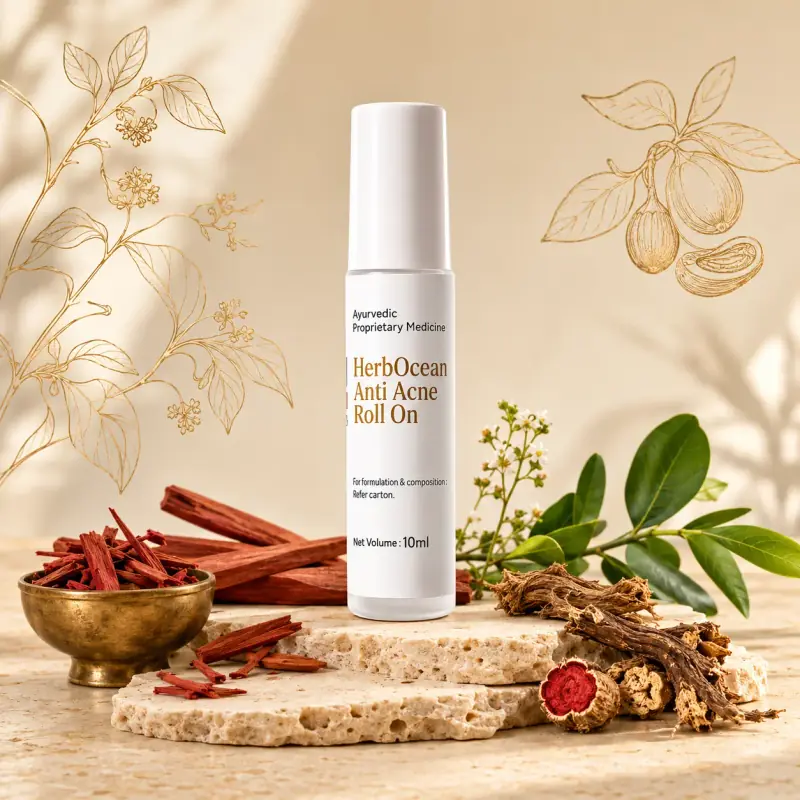
Anti-Acne Roll-On
Ayurvedic spot care for active pimples and post-acne marks (PIH) — a herbal roll-on classically indicated for acne (Yuvanpidika). Made in-house in Delhi.
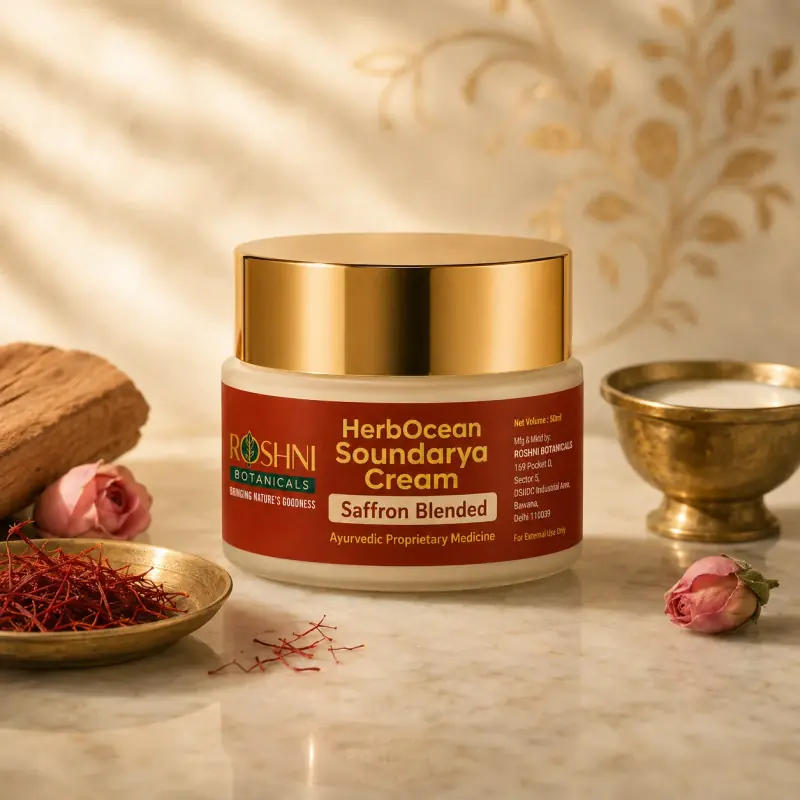
Soundarya Cream
A rich saffron brightening and repair cream with bargad (Vatt) bark on a goat-milk and coconut base, with shea and kokum butters, traditionally used in the care of skin where post-acne marks (PIH) linger.
Part of our guide: Ayurvedic treatment for acne: the complete guide.