
Toothpaste on a Pimple? What Desi Quick Fixes Really Do to Indian Skin
The 11 pm pimple, the function tomorrow, the toothpaste someone hands you. The instinct is right; the tool is not. What these quick fixes really cost melanin-rich skin, and what classical Ayurveda kept in the drawer instead.
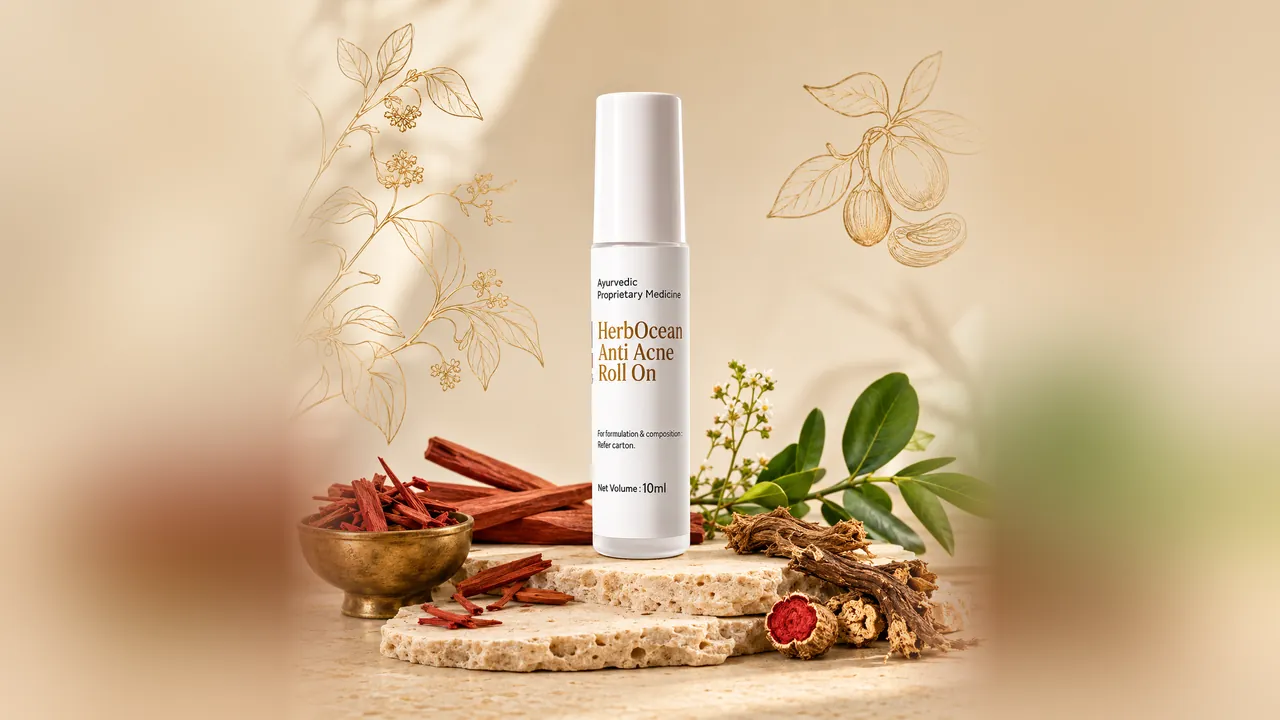
It is 11 pm, there is a haldi ceremony tomorrow, and a pimple has arrived exactly where the camera will find it. Someone in the house will reach for the toothpaste; someone else will hand you an ice cube or half a lemon, sure it worked for them once. The instinct to do something is sound, and it deserves respect rather than a lecture. This piece looks honestly at whether those midnight tools belong in your drawer, and at what a working Ayurvedic tradition would keep there instead. The short version is that the reaching is right but the tool needs upgrading, and a dose-controlled option like the HerbOcean Anti-Acne Roll-On is a skin-appropriate choice worth keeping in that drawer. Before that, it is worth understanding why the old fixes cost so much on Indian skin in particular.
Key takeaways
- Toothpaste is no fix for a pimple: its detergents, mint flavouring and, in some pastes, baking soda were made for teeth, and on facial skin they commonly cause irritation rather than repair.
- On melanin-rich Indian skin, irritation from a harsh home fix can trigger extra pigment, so a three-day pimple settles into a dark mark, post-inflammatory hyperpigmentation (PIH), that can last weeks or months.
- Ice offers brief comfort and a little de-swelling, but it has no herb action on the pimple and cannot change how the spot recovers.
- Raw lemon is highly acidic and photosensitising under strong Indian sun, which makes it one of the riskier quick fixes for darker skin tones.
- Classical Ayurveda was strict about exactly what the toothpaste hack gets wrong: a medicated paste (Lepa, a paste applied externally) has a prescribed thickness, comes off once it dries, and is not meant to be worn overnight.
- The HerbOcean Anti-Acne Roll-On leads with Manjistha and is an Ayurvedic medicine classically indicated for acne (Yuvanpidika, the classical Ayurvedic term for acne, literally "youthful eruption") and traditionally used in the care of post-acne marks.
The Midnight Toolkit: Toothpaste, Ice, Lemon and the Squeeze
Take each item in the midnight toolkit on its own terms, because they fail in different ways. Toothpaste feels productive precisely because it stings and dries; that sensation is the detergents and mint flavouring, and in some pastes baking soda, irritating the skin, not settling the pimple. It was made for enamel and gums, not for the thin skin of the face, and by morning you often meet a redder, angrier spot than the one you went to bed with. Ice is the gentlest of the three and genuinely comforting: it eases the swelling and dulls the throb for a few minutes, which is why it has survived so long. The catch is that its effect ends with the numbness, and the pimple carries on beneath, unchanged.
Raw lemon is the fix people trust the most and ought to trust the least, and here the objection is not folklore but a named condition. Healthy skin sits on the acid side of neutral: a multicentre study of 330 adults by Lambers and colleagues, published in the International Journal of Cosmetic Science in 2006, put the natural surface pH at around 4.7; the paper does not report the cohort's population, so read that as a general baseline rather than an Indian-specific figure. Lemon juice is far more acidic than that, which is the smaller half of the problem. The larger half is that lemons and limes carry furocoumarins, the psoralen compounds behind phytophotodermatitis, a reaction that needs only citrus juice on the skin and then sunlight to produce a burn-like flare, and which characteristically leaves hyperpigmentation behind once the inflammation settles. Under a strong Indian sun for most of the year, on skin already inclined to make pigment, that is a short road to a mark that lingers.
Then there is the steam-and-squeeze, quietly the most expensive fix of them all. Pressing a pimple may empty it for a satisfying second, but it pushes the inflammation deeper and tears the skin around it, and it often leaves a mark that can outstay the original spot by weeks, and at times a small pitted scar. None of this is meant as a scolding. These habits exist for an honest reason: someone needed to do something at 11 pm, the chemist was shut, a function waited in the morning, and the face had to look its best. The reaching is right. It is only the tool that lets you down.
Why Harsh Hacks Cost More on Indian Skin
Here is the part the international advice usually leaves out. Melanin-rich Indian skin is quick to make pigment, and it does not ask permission first. When the skin is inflamed, whether by the pimple itself or by the toothpaste, lemon and squeezing you reached for, the pigment-making cells nearby respond by laying down extra colour as the area recovers. Dermatologists call what is left post-inflammatory hyperpigmentation, or PIH: a flat brown or greyish mark that is not dirt and not a true scar, only pigment set down during the repair. The hard arithmetic is that a pimple which lasts three days can leave a mark that lasts three months, and the harsher the midnight fix, the darker and more stubborn that mark tends to be. It is the single biggest real-world cost of the toothpaste habit, and it is exactly the cost most advice forgets to mention.
Indian dermatology has treated this as its own problem rather than a footnote to acne. A consensus document on post-inflammatory hyperpigmentation in acne, published by Kubba, Bajaj, Thappa and colleagues of the Indian Acne Alliance in the Indian Journal of Dermatology, Venereology and Leprology in 2009, addresses the marks as a distinct clinical concern for Indian patients rather than an afterthought once the spots clear. A 2010 review of PIH in skin of colour by Davis and Callender, in the Journal of Clinical and Aesthetic Dermatology, describes inflammation of almost any kind as the usual trigger and notes that the marks run both more common and more persistent in darker skin. Neither is a promise about any product; both are simply the reason to be gentle tonight.
When you are caring for marks that have already settled in, patience matters more than force, and HerbOcean Soundarya Cream, traditionally used in the care of post-acne pigmentation, earns a place in the routine used steadily over weeks rather than in one anxious night. Season tilts the odds further. Humid monsoon weeks bring more breakouts at precisely the time weddings and pujas cluster, and sweat trapped under a thick layer of toothpaste worsens the irritation instead of drying it off. Hard water and an already stressed skin barrier only add to the load. The single most useful rule is a quiet one: the gentler you are with an active pimple, the lower the chance of a lasting mark.
What the Grandmothers Actually Used, and Why Their Logic Was Better
It helps to notice that the grandmothers rarely reached for the bathroom shelf at all. The dadi-nani ke nuskhe (household remedies) ran on measured pastes, not improvisation. Multani mitti (fuller's earth) went on as a weekly calming pack for the whole face, left for a sensible while and washed off, never a daily scrub. Small quantities of jaiphal (nutmeg) or haldi were ground fresh and dabbed on the spot itself in careful amounts, not smeared thickly and forgotten overnight. The restraint was the point. If you want the practical version of that weekly rhythm, see how multani mitti fits into weekly acne care and keep it to an occasional ritual rather than a nightly habit.
Look under the practice and you find a principle the classical texts are unusually precise about. A medicated paste, a Lepa, was never meant to be harsh, thick or long-worn. The classical Lepa tradition sets thickness by purpose, the Sharngadhara Samhita giving a complexion-directed (Varnya) paste about half an angula and a dosha-directed one about a quarter, and it is firm that a lepa comes off once it dries rather than being left to sit, and that a paste is not to be applied at night and worn through it. Read that list again with a tube of toothpaste in mind: wrong material, no measured thickness, applied at bedtime, left to dry hard on the face until morning. The tradition did not merely fail to recommend the hack; it ruled out every part of it, centuries before anyone thought to try. That is dose control, described long before the phrase was coined, and it is why the grandmothers' method beats the bathroom-shelf version for one plain reason: it respected the skin it was working on, and it kept the dose in hand.
The Modern Classical Answer: A Roll-On in the Drawer
This is where a modern classical option earns its keep in the drawer. The HerbOcean Anti-Acne Roll-On is dose-controlled spot care built on the grandmothers' logic rather than against it: an Ayurvedic medicine classically indicated for acne and pimples, delivered through a measured rollerball tip instead of a smear you have to guess at, so your fingers never touch the spot. It leads with Manjistha, the classical blood-purifying (rakta shodhana) herb, alongside Lodhra, Jaiphal, Raktchandan (red sandalwood), Daruhaldi and Kuth, carried in a light base of glycerine and water with gentle preservation and a trace of lavender oil. There is no neem in it and no tea tree; the formula is precisely what its register says, and nothing borrowed from a passing trend. It is formulated by Vaidya Shri Ram Prakash Ji, a classical vaidya (a master Ayurvedic formulator) whose 40-year formulation legacy the HerbOcean line is built on, and it is an AYUSH-licensed Ayurvedic medicine (Licence No. DL-474 A&U) for external use, made in-house at Roshni Botanicals' GMP-certified unit in Bawana, Delhi.
Because it is made for facial skin and kept in proportion, it is also traditionally used in the care of the post-acne marks and pigmentation (PIH) that the harsh hacks so often create. That is the whole quiet argument of this piece: be gentle with an active spot, because the harsher the handling, the greater the chance of a mark that lingers. If you want the fuller picture of where a roll-on sits within a complete regimen, our guide to the Ayurvedic treatment of acne, explained step by step lays out the routine around it, from cleansing to the care of marks.
Keep the honest cautions in plain view. It is for external use, so patch-test on the inner forearm first and give it a day. And no roll-on is the answer to everything. See a dermatologist for painful, deep cystic acne, for breakouts that arrive suddenly in adulthood when you never had them before, and for marks that keep darkening over several weeks despite gentle care. Those situations deserve a doctor's eye, not a drawer remedy, and reaching for one is not defeat; it is the same good instinct, pointed at the right help.
The Instinct Was Right
The reaching for something at 11 pm was never the mistake; that instinct has looked after Indian skin for generations. What it needed was a better tool than whatever happened to sit nearest the sink. Keep the HerbOcean Anti-Acne Roll-On in your drawer for exactly these nights, patch-tested and ready, and let the toothpaste go back to your teeth where it belongs.
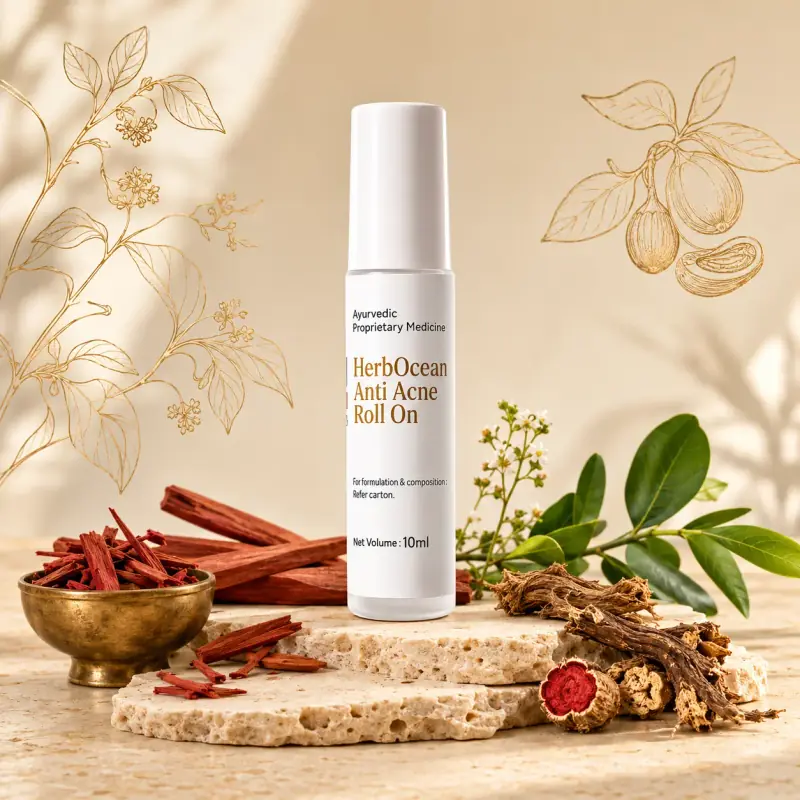
Anti-Acne Roll-On
Ayurvedic spot care for active pimples and post-acne marks (PIH) — a herbal roll-on classically indicated for acne (Yuvanpidika). Made in-house in Delhi.
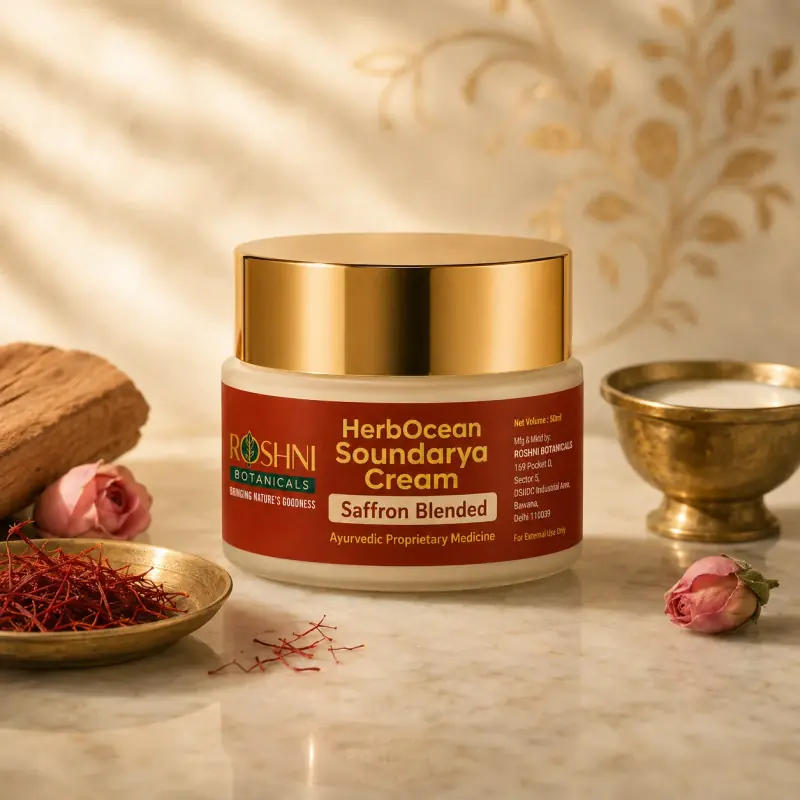
Soundarya Cream
A rich saffron brightening and repair cream with bargad (Vatt) bark on a goat-milk and coconut base, with shea and kokum butters, traditionally used in the care of skin where post-acne marks (PIH) linger.
Part of our guide: Ayurvedic treatment for acne: the complete guide.