Teenage Acne: A Calm, Simple Ayurvedic Routine for the School Years
The first pimple turns up around class 8 or 9, and the advice turns up from everywhere at once. A short, calm routine for teenage skin, written for the teenager and the parent reading over their shoulder.
The first pimple usually arrives somewhere around class 8 or 9. The second one arrives before anyone has decided what to do about the first. Between school, the games period and a humid Indian afternoon, teenage skin is oilier, sweatier and under more scrutiny than at any other age. This is written for both of you: the teenager, and the parent reading over their shoulder.
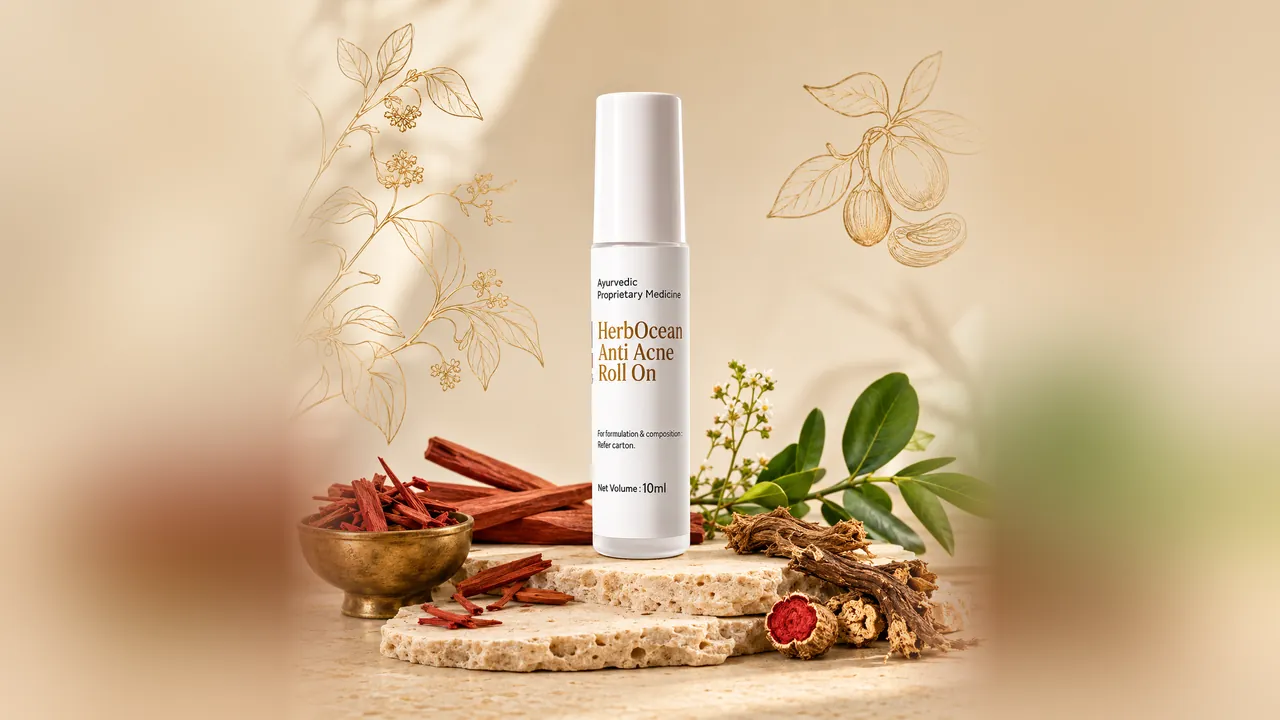
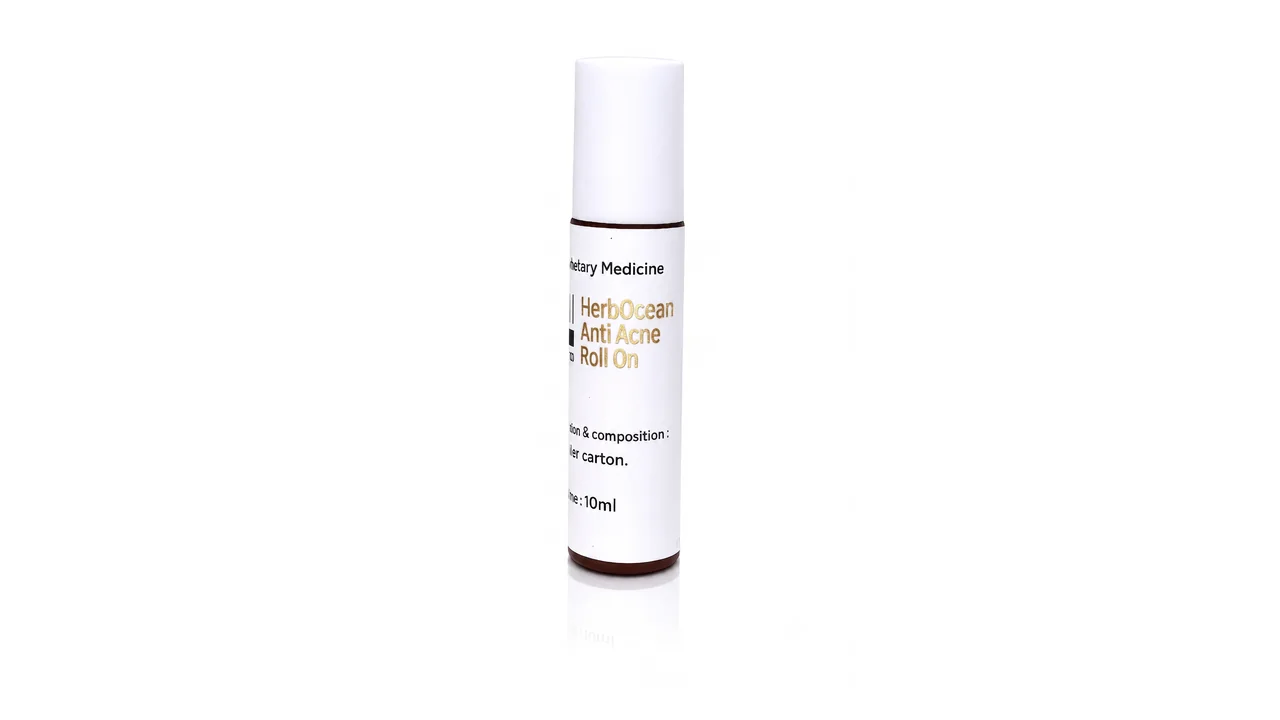
Teenage acne (Yuvanpidika, the classical Ayurvedic term) begins when puberty raises oil production while the cells lining the pore stop shedding cleanly. So the most useful routine at this age is the simplest one: a gentle cleanse twice a day, a light moisturiser, daily sunscreen, and spot care only where a pimple has actually appeared. The HerbOcean Anti-Acne Roll-On is an AYUSH-licensed Ayurvedic medicine for external use (Licence No. DL-474 A&U), classically indicated for acne and traditionally used in the care of the post-acne marks that melanin-rich Indian skin is prone to.
Why puberty brings breakouts, in plain language
At puberty the hormones of adolescence enlarge the skin's oil glands, so they produce more sebum. At the same time the cells lining the pore stop shedding cleanly and stay stuck together. Between them they block the follicle, and inflammation runs alongside the whole process rather than politely waiting until the end. What you see is a whitehead, a blackhead or an inflamed pimple.
That is ordinary developmental biology. Not a hygiene failure, and not the result of anyone being careless or lazy. Worth saying plainly, because most teenagers have already been told otherwise by someone.
Classical Ayurveda has its own reading, and it sits alongside the physiology rather than replacing it. These eruptions are grouped under Yuvanpidika, literally youthful eruptions, and described as disturbed doshas (the three biological energies in Ayurveda) acting together with vitiated blood (Rakta) in the skin (Twak). Sushruta Samhita sets the condition out in its Nidana Sthana, chapter 13, naming Kapha and Vata along with vitiated blood. In everyday practice you will also hear acne-prone skin read through aggravated Pitta and Rakta. Not a contradiction: Pitta's classical seat is the blood, as Ashtanga Hridaya sets out in its Sutrasthana chapter 11, so the two readings describe the same territory from different ends.
Then there is the weather. Humid air keeps sweat sitting under a school uniform collar all day. The games period leaves the face damp for hours. Skin that never quite feels clean is what pushes a teenager into washing it five times a day, and humidity has its own full guide in our monsoon acne care routine. The difference here is age, not season.
One short routine beats a ten-step shelf
One exception first. If a dermatologist has already put you on something, that regimen is the routine, and nothing here should be added on top without asking them.
For everyone else, three moves.
Cleanse morning and night. Use a light moisturiser, even on oily skin. Wear sunscreen every day, not only school days, because the marks left behind darken on a Sunday afternoon just as readily. After games, a plain-water rinse does the job; a third round of cleanser does not.
Those three, and the shortness is the point. Anything that adds irritation on top of the acne is working against you, and on melanin-rich skin that matters more than most routines admit.
Which brings us to the Instagram problem. A self-assembled stack of layered acids, retinoids and four serums at once, chosen without supervision because it looked good in a fifteen-second video, usually backfires at this age. The actives themselves are not the problem. Those same molecules, chosen and supervised by a dermatologist, are a legitimate and often excellent route for a teenager with acne, and nobody should read this page as steering them away from one. The problem is the self-assembly.
Hard water is one practical reason many teenagers wash three and four times a day. Delhi's groundwater is genuinely hard: in one survey of fifty samples across South West Delhi, four out of five fell into the very hard class, well past the level the Bureau of Indian Standards sets as acceptable. Most of the city's piped supply is treated surface water, so this matters most if your building draws on a borewell. Calcium reacts with your cleanser and leaves some of it on the skin, which is why the face can feel filmy and still not clean, and why the instinct is to wash again.
The fix is unglamorous. Lukewarm water rather than hot. Pat dry instead of rubbing. Moisturise while the skin is still damp. If your skin is very dry, or you have had eczema, wash less rather than more, and speak to a doctor before adding any spot product, ours included. The wider routine sits in the complete guide to ayurvedic treatment for acne.
There is one more thing, and it is deliberately not a fourth step. The HerbOcean Anti-Acne Roll-On is used only on some days, and only where a pimple has actually appeared: an Ayurvedic medicine for external use, made under AYUSH Licence No. DL-474 A&U, classically indicated for acne (Yuvanpidika) and traditionally used in the care of post-acne marks.
The botanicals in it are Indian madder (Manjistha), the astringent bark Lodhra, nutmeg (Jaiphal), red sandalwood (Raktchandan), Indian berberry (Daruhaldi) and costus root (Kuth), in a glycerine and demineralised-water base. All six are present in equal measured weights, and no single herb leads this formula. One thing it does not contain, despite what readers assume of an Ayurvedic acne product: neem. The full composition, preservatives included, is listed on the product page. The formulation is built on the 40-year Ayurvedic formulation legacy of Vaidya Shri Ram Prakash Ji, and made in-house by Roshni Botanicals at Bawana, Delhi, in an ISO 9001:2015 certified facility.
Then the part that matters, because a teenager will be applying this without an adult in the room. It is for external use only, and it goes on according to the directions printed on the pack. Patch-test first: a little on the inner forearm, left for a full day. Keep it away from the eyes. Do not put it on skin that is broken or has been squeezed open. Stop if the skin stings, reddens or itches, and stop even if that begins weeks in rather than on day one. One person, one roll-on. With a younger teenager a parent should supervise the first few days; under twelve, ask a doctor first. The mechanics are in how ayurvedic spot care actually works.
Scrubs, picking, and the marks they leave on Indian skin
The instinct to scrub is understandable and almost always wrong here. Dragging a gritty walnut-shell scrub across skin that already has inflamed spots adds injury to a follicle that was inflamed to begin with. On melanin-rich skin, every extra round of inflammation raises the risk of post-inflammatory hyperpigmentation (PIH): the flat brown marks left behind after a spot settles.
And that squeaky-clean feeling afterwards, the one that feels like proof it worked? Usually a sign the cleanser has taken rather more than the day's oil with it.
Picking is harder to write about, because every teenager does it and no amount of stern advice has ever stopped anyone. So, plainly, and without any shaming: squeezing pushes inflammatory contents sideways into the surrounding skin rather than out of it, and adds a fresh round of inflammation to a spot that already had one. On melanin-rich skin that is the round which tends to leave a brown mark behind.
Replacements work better than prohibitions. Leave it alone, put targeted spot care on it, and keep hands away from the face during study hours, when most of the damage quietly happens. If the picking has stopped feeling like a choice, or it is leaving open wounds, mention that to a doctor in its own right rather than filing it under bad habits.
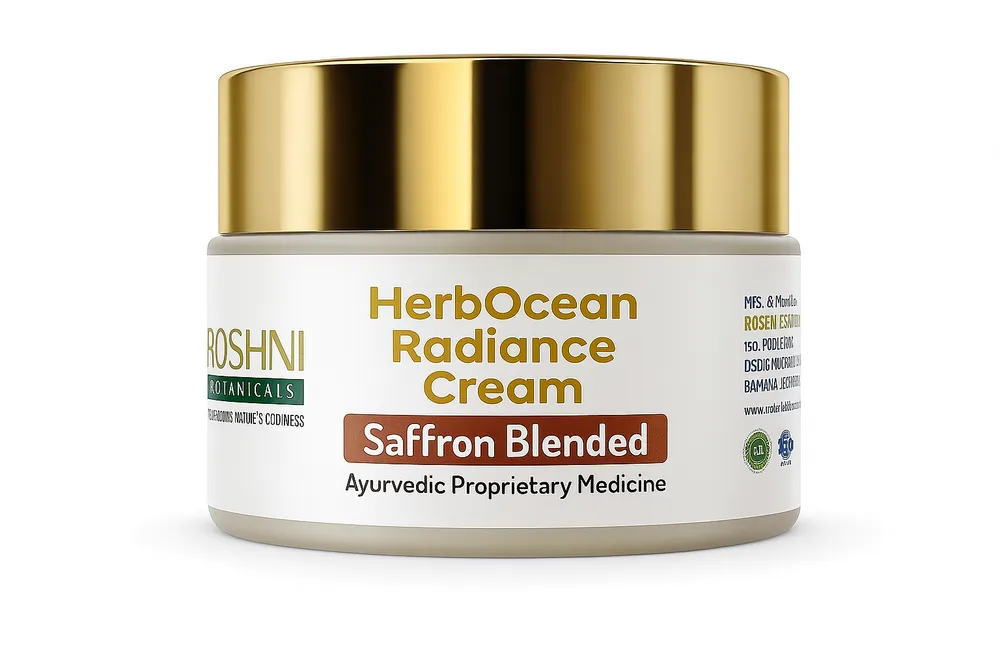
The marks do settle, nearly all of them, given time and daily sunscreen. Leaving a spot alone is simply a shorter road than picking it. Where marks already exist, we have a whole guide to teen acne marks and how to care for them gently, and HerbOcean Soundarya Cream is traditionally used in the care of post-acne marks.
Household remedies deserve a serious answer rather than a dismissal, because a teenager is going to try them regardless. Haldi and besan in a family ubtan have a long, real place in Indian skincare and need no apology. Neat lemon juice is the one to leave alone, and not only on spots: lemon and lime carry furocoumarins, and skin carrying them that then meets sunlight can react. On melanin-rich skin that can leave brown marks lasting months, sometimes with no redness or stinging beforehand to warn you. The toothpaste question comes up every time, and the verdict is no. The reasoning is in toothpaste on pimples, and multani mitti gets its own assessment in multani mitti for acne.
Canteen food, exam stress, and when to see a dermatologist
Start with the conclusion, because it is the part that gets lost. No food has been shown to cause acne, and nothing anyone ate is the reason this is happening.
What has been studied is whether changing the diet helps once acne is there, and the honest summary is untidy. Some trials abroad have reported fewer lesions on a low-glycaemic-load diet. An Indian randomised controlled trial of eighty-four patients, published in the Indian Journal of Dermatology, Venereology and Leprology in 2019, tested that same diet alongside standard topical care and found no significant improvement in acne counts, though body-mass index and insulin resistance did improve. The dairy research is observational rather than experimental, so it can show an association but cannot establish a cause, and the associations are modest. It includes Indian data as well as international.
Studied, mixed, unsettled, no established cause. Which is exactly why this is not a reason to put a growing teenager on a restrictive diet. Adolescence is the worst possible time to start cutting out food groups on the strength of a contested association. And for the teenager reading: nothing you ate caused this. If your skin has started changing how you eat, whether that is skipping meals, avoiding foods or feeling guilty afterwards, tell a parent or a doctor about that separately.
Exam season is more concrete. Unit tests, coaching classes, short sleep, the chin resting on the palm for two hours of revision, a warm phone screen pressed to the cheek. Three habits that fit a real timetable: wipe the phone screen daily, keep hands off the jaw while studying, protect sleep in the week before exams. Not a wellness routine. Three things.
Now the part that matters most.
First, about waiting. The routine above deserves about six weeks of patience if the acne is mild: a few blackheads, whiteheads and the occasional spot. If it is inflamed, spreading, or any sign below is present, there is no waiting period at all.
Book a dermatologist now, rather than after months of home care, if any of this is true.
- There are deep, painful lumps under the skin. Do not wait to see whether they settle. These are the ones that scar.
- The acne is leaving marks that are pitted, indented or raised.
- Breakouts cover the chest and back as well as the face. Those areas need a different approach, so raise them specifically; back acne has its own guide.
- The onset was sudden and severe. If it arrives with fever, aching joints, feeling generally unwell, or spots that crust or ulcerate, that is urgent rather than routine, and worth being seen within a day or two.
- It began or worsened after starting something new: steroid tablets, a steroid cream, an unlabelled cream recommended by a chemist or a relative, a gym supplement, an anti-epileptic, lithium, or a hormonal contraceptive. Carry the packet to the appointment.
- In a girl, the acne sits alongside periods that are irregular or have stopped, coarse hair growth on the face, chest or stomach, or darkened velvety skin at the neck or underarms. Ask for a general medical assessment alongside the skin one, because together these can point to a hormonal cause such as PCOS. We have written separately about hormonal acne along the chin and jawline.
- A parent or sibling had acne severe enough to need tablets from a dermatologist.
- Six weeks of simple, consistent care has changed nothing.
- The teenager is avoiding school, photographs or friends because of it.
That last one is not a lesser reason than the others. Book for it, and say it out loud at the appointment, because it changes what a good doctor offers you. And if skin is making anyone feel hopeless, that is not something to hold until an appointment slot opens up. Tell a parent, a teacher you trust, or your family doctor today.
Why the hurry? Because scarring from the teenage years does not fade on its own the way marks do, and the treatments that genuinely improve it are medical ones that work best when started early.
The one instruction that carries all of this
Less, done consistently, beats more, for ordinary teenage breakouts. It is not a reason to sit out any of the signs above; for those, more is what is needed, and sooner.
Keep the HerbOcean Anti-Acne Roll-On to hand as measured, no-mess spot care for the pimples that are actually there: an Ayurvedic medicine for external use, classically indicated for acne (Yuvanpidika).
And a note for the parent. Your job here is two things at once: make this ordinary rather than a crisis, and know the signs that mean booking a dermatologist without waiting. Calm is not the same as waiting. Your steadiness will do more for them than any single product.
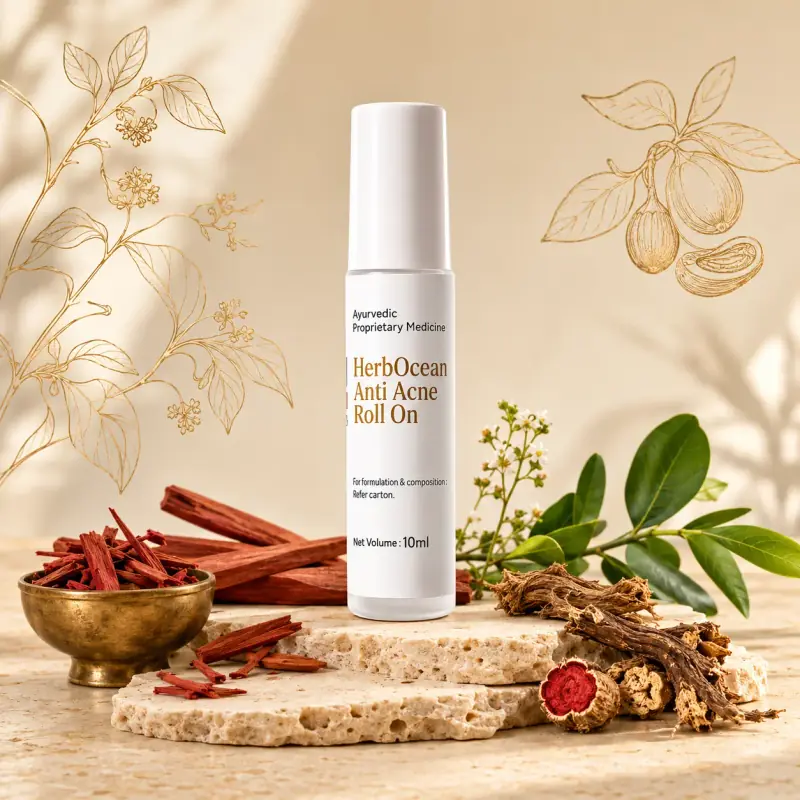
Anti-Acne Roll-On
Ayurvedic spot care for active pimples and post-acne marks (PIH) — a herbal roll-on classically indicated for acne (Yuvanpidika). Made in-house in Delhi.
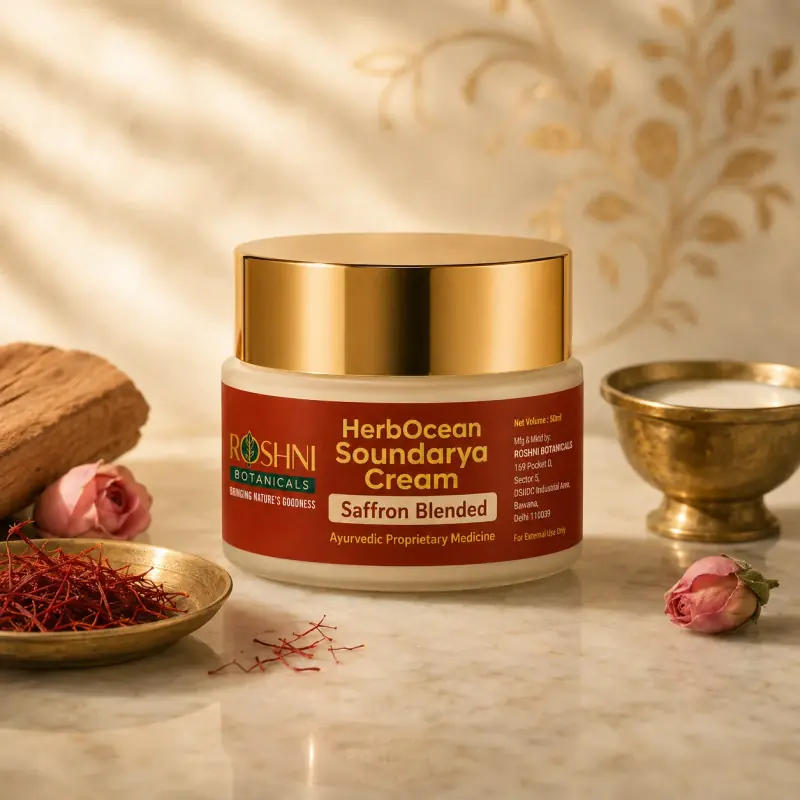
Soundarya Cream
A rich saffron brightening and repair cream with bargad (Vatt) bark on a goat-milk and coconut base, with shea and kokum butters — often reached for where post-acne marks (PIH) linger.
Part of our guide: Ayurvedic treatment for acne: the complete guide.