Ayurvedic Hair Oil for Men: An Honest Guide to Hair Fall, Flaky Scalp and Dull Hair
An honest, India-aware guide to ayurvedic hair oil for men: what a classical Bhringraj Taila helps with for hair fall, flaky scalp and dull hair, and what it honestly cannot.
The strands show up on the pillow first. Then the comb. Then the bathroom drain, and you are trying not to count. The temples start to look like they are slowly asking a question you are not ready to answer.
Here is the thing: if you are riding city traffic daily, keeping your head under a helmet for two hours, and washing with the mineral-heavy water most Indian taps run, your scalp is under real, consistent stress. That is before genetics even enters the picture.
Before you reach for another bottle promising regrowth in ninety days, it helps to understand what a hair oil can actually do for a man's scalp, and what it honestly cannot. The short version: a classical HerbOcean Hair Oil can do real work on a stressed scalp, but it is not a cure for genetic balding.
Key takeaways
- In Ayurveda, hair fall is Khalitya (the classical term for hair loss), linked to aggravated Pitta (one of the three doshas) and the health of the Rakta (blood) and the scalp. An oil works on the scalp and the visible hair, not on your hormones.
- There are two broad pictures for men: androgenetic (male-pattern) thinning, which is hormonal and genetic and belongs with a doctor; and scalp-driven or stress-driven shedding, where a classical hair Taila (medicated oil) and regular oiling genuinely help.
- An ayurvedic hair oil for men is traditionally used to support a calmer scalp, less breakage and better lustre. It is not a cure, and it will not reverse a genetically receding hairline.
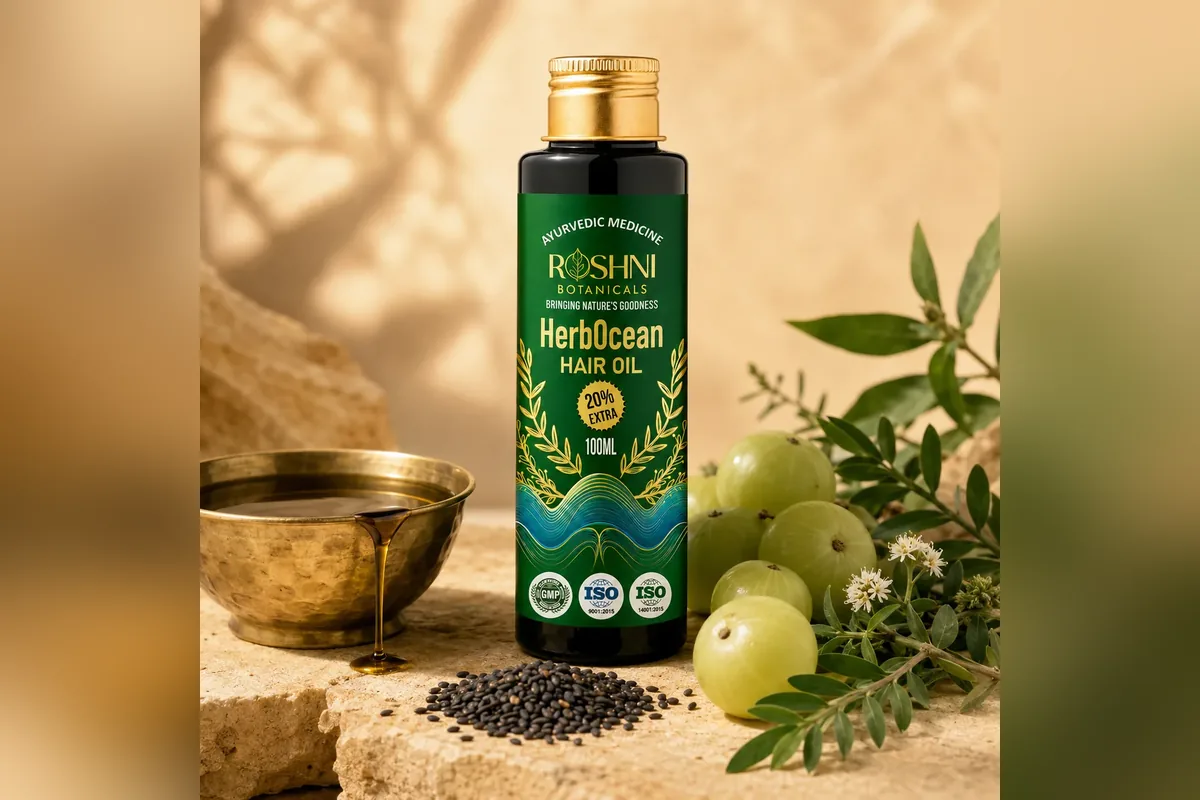
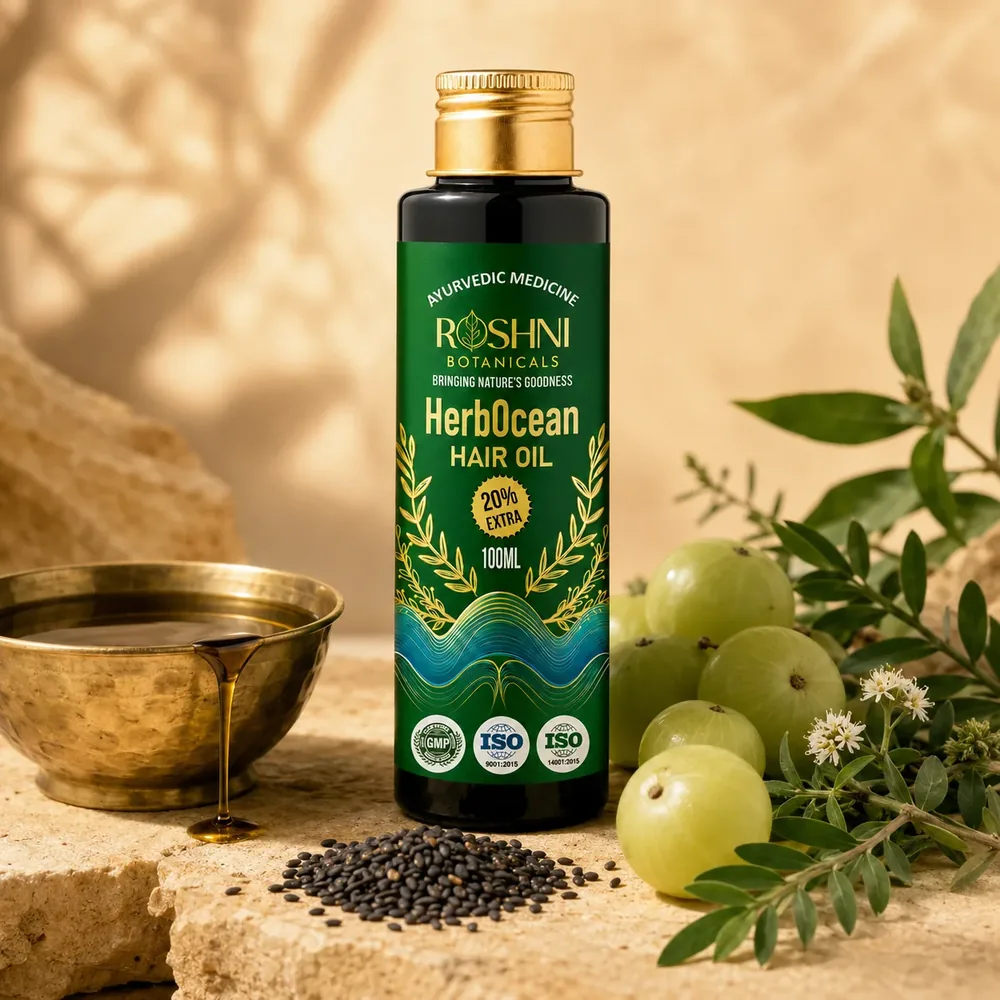
- HerbOcean Hair Oil is a sixteen-botanical classical Taila of Bhringraj, Brahmi, Amla, Jatamansi, Neem and more in a sesame-oil base, formulated by Vaidya Shri Ram Prakash Ji under AYUSH Licence DL-474 A&U.
The Classical Lens: What Ayurveda Calls Khalitya
Classical Ayurveda calls hair fall Khalitya, and does not treat it as a surface problem. Hair is considered a by-product of asthi dhatu (bone tissue) in classical physiology, and the scalp's health, its lustre and the strength of the roots, is tied to Bhrajaka Pitta (the Pitta sub-dosha that governs the skin and its lustre) and to clear Rakta (blood). When Pitta runs hot and the Rakta is vitiated, the roots weaken and shedding increases. Sushruta named the more aggressive, patchy form Indralupta (akin to alopecia areata), describing it as a combined Pitta-Vata picture.
What this means for men specifically is worth sitting with. The modern male routine is almost designed to aggravate Pitta: long commutes in heat and sun, high-stress work hours, irregular meals, a scalp kept warm and damp under a helmet or cap all morning. None of that changes your genes. But it absolutely changes the environment your follicles live in, and that environment is exactly what oiling can reach.
Why Indian Men's Scalps Face Their Own Set of Stressors
A hair care routine that works in a mild, temperate climate often struggles in Indian conditions. Men's scalps here face a fairly specific set of problems:
- Hard water. The water in most Indian metros is mineral-heavy. Washing with it daily leaves a residue on the scalp and hair; you feel it as dryness, dullness, and strands that snap more easily than they should.
- Helmets, caps and trapped sweat. A scalp sealed under a helmet through a long city commute becomes warm, humid and closed off, exactly the conditions that trigger flaking, itch, and hairline friction where the strap and rim press.
- Monsoon humidity. The damp months bring their own problem: a sweaty, flaky, itchy scalp that Ayurveda recognises as Darunaka (dandruff with scalp dryness and itching), a Kapha-Vata picture that thrives when sweat has nowhere to go.
- Daily harsh washing. Many men shampoo every single day with strong cleansers. It feels clean. It also strips the scalp of its own oils and leaves it irritable and reactive.
Pick any two or three of those, combine them with a reasonably stressful life, and you have shedding that has little to do with your genetics and more to do with what actually causes hair loss day to day. That is the part an oil can actually work on.
So What Is “Ayurvedic Hair Oil for Men” Actually For?
Here is the distinction most product pages quietly avoid making.
Male-pattern thinning, a hairline that is gradually receding or a crown that slowly thins, is androgenetic. It is genetic and hormonal. No oil, Ayurvedic or otherwise, reverses it. That conversation belongs with a dermatologist.
Scalp-driven and stress-driven shedding is a different picture entirely. More strands after an illness, a difficult few months at work, a crash diet, or simply months of hard water and helmet friction: these are situations where the follicles are essentially healthy but the environment around them is poor. This is where a classical hair Taila and a steady oiling habit do quiet, real work.
An ayurvedic hair oil for men is traditionally used in the care of Khalitya and Darunaka: to support a calmer, less flaky scalp, help reduce the breakage that hard water and helmet friction cause, and bring some lustre back to dull hair. That is a meaningful, achievable outcome. It is just not a new hairline. If you want the full picture on what drives shedding, our guide to ayurvedic hair oils for hair fall goes deeper.
The Keshya Herbs, and Where HerbOcean Hair Oil Fits
Ayurveda has a whole class of herbs called Keshya, herbs considered hair-supportive in the classical literature. HerbOcean Hair Oil is built around them, processed into a Til tail (sesame oil) base, the classical carrier valued for how well it draws botanicals into the Twak (skin) of the scalp.
The Hair Herbs That Lead the Formula
- Bhringraj (Eclipta alba): the Keshya rasayana (a rejuvenative hair tonic), classically called the king of hair herbs, and traditionally used to support the roots and the lustre of Kesha (hair). There is good reason Ayurveda calls Bhringraj the king of hair herbs.
- Amla: Vitamin C-rich and Pitta-pacifying, used for centuries to support hair and a cool, settled scalp.
- Brahmi and Jatamansi: calming herbs. This matters more than it sounds, because stress is a genuine driver of male shedding, and both are traditionally used to ease the scalp and quiet the mind alongside it.
- Neem: for a clean scalp that is prone to flaking, classically valued in Darunaka care.
- Curry leaf and rosemary oils: traditionally associated with follicle support and scalp circulation.
The formula is rounded out with Shikakai, Nagarmotha, Tulsi, Gudal and a few aromatic oils, all in the sesame base. It is Vaidya Shri Ram Prakash Ji's forty-year formulation legacy, not a quick blend assembled from trend ingredients. The full herb register is on the HerbOcean Hair Oil page.
How to Oil Correctly: Champi as a Practice, Not a Chore
The oil matters. The application matters just as much, maybe more.
Shiro abhyanga (head and scalp massage with oil) is the practice Ayurveda has recommended for centuries. Your grandfather called it champi, and he probably did it more consistently than you do. If you want the step-by-step, our full ayurvedic hair oiling routine walks through it. For a realistic men's week:
- Frequency: two to three times a week. That is it. Daily oiling under a helmet is not the goal and it is not necessary.
- Technique: warm a small amount of oil slightly, even between your palms is enough. Work it into the scalp itself, not just the lengths, using the pads of your fingers (not nails) in slow, deliberate circles for five to ten minutes. The massage is the point: it calms you, and it stimulates the scalp.
- Timing: oil the night before a wash day. Leave it overnight, then rinse out in the morning with a mild shampoo. If overnight feels like too much, an hour before the shower works fine.
- Helmet hygiene: do not seal a freshly oiled, sweaty scalp under a helmet for a long ride. Oil the evening before, wash it out in the morning, and keep the helmet's inner lining clean; wipe it down regularly and use a liner if you can.
- Handle it gently: dial back the daily harsh shampoo, do not rub your scalp raw with a towel, and avoid combing hard through wet hair. These small things add up.
When to See a Dermatologist or Trichologist
Oiling is supportive care. It has real limits. See a doctor if:
- You are shedding in handfuls, or noticing sudden, diffuse thinning over a few weeks.
- You see a fast-spreading bald patch, possibly Indralupta, or a hairline or crown that keeps progressing month to month.
- Your scalp is sore, painful, or has severe dandruff and itching that is not settling with a gentler routine.
- The hair changes are coming alongside other things such as fatigue, weight shifts or feeling generally off, which can point to thyroid or iron issues that a simple blood test will pick up.
A classical hair oil sits comfortably alongside medical care for hair fall. It just is not a substitute for it.
A Calmer Scalp Beats a Hopeful Promise
The men's hair-oil aisle makes a lot of noise about regrowth on a timer. The quieter, more honest reality: oil your scalp two or three times a week, actually massage it in properly, fix the hard-water and helmet basics you have probably been ignoring, and see a doctor for anything sudden or genetic.
That is a routine that holds up. If a classical Taila belongs in it, take a look at HerbOcean Hair Oil, or start with our complete guide to ayurvedic treatment for hair fall. A steadier scalp and less breakage are real, achievable goals, and that is worth something.
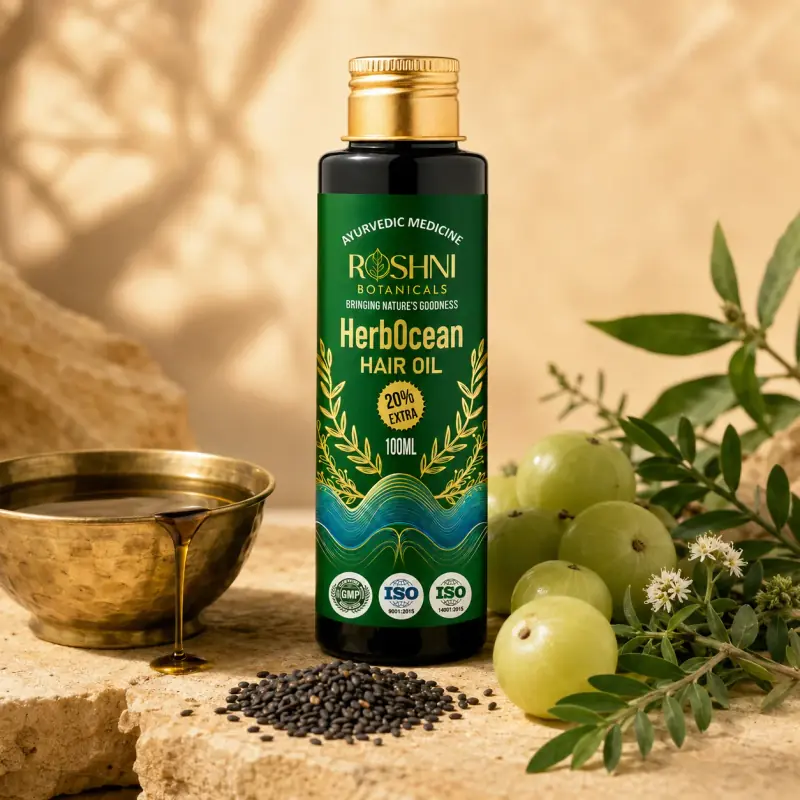
HerbOcean Hair Oil
A classical Taila for hair fall, dullness and a flaky scalp, with sixteen botanicals like Brahmi, Jatamansi, Amla and Neem in a slow sesame base.
Part of our guide: The definitive guide to Ayurvedic hair oils for hair fall.