What Causes Hair Loss and How Ayurveda Can Help You Naturally
Before you panic about the hair in the drain, it helps to know what is normal, what is not, and where classical scalp care genuinely fits in.
The hair in the drain, the extra strands on the pillow, the parting that looks a shade wider: it is one of the most common worries people bring to us, and one of the most misunderstood. Some shedding is completely normal. Some is a signal. Knowing which is which is the first useful step, and it tells you whether scalp care is enough or whether you need a doctor.
A quick overview
Hair falls for many reasons: stress, illness, low iron or protein, thyroid trouble, hormones, dandruff, heat and genetics. Ayurveda answers the everyday, lifestyle-driven kinds with something simple and old, scalp nourishment and massage, while being honest that the medical kinds need medical help.
What does "normal" hair loss mean?
Losing somewhere around fifty to a hundred hairs a day is normal. Hair grows in cycles, and a share is always in the resting, shedding phase. What is worth noticing is a change: a sudden jump in shedding a couple of months after an illness, a high fever, childbirth or a crash diet (a pattern called telogen effluvium), or slow, steady thinning at the crown or parting over months.
Common causes of hair loss, and how they show up
- Stress: diffuse shedding a couple of months after the stressful event.
- Thyroid imbalance: thinning along with fatigue, weight or skin changes.
- Iron, B12 or protein deficiency: common on largely vegetarian diets, shows as increased fall.
- Illness or childbirth: a sudden wave of shedding two to three months later.
- Dandruff and an unsettled scalp: itch, flakes and breakage.
- Heat and tight styles: breakage and traction at the hairline.
- Hormones and genetics: the gradual, patterned thinning that runs in families.
Ayurveda’s point of view
Classical thinking links hair fall to a few simple things: too much heat and stress (aggravated Pitta and a taxed nervous system), an inflamed or under-nourished scalp, and an inconsistent Dinacharya (daily routine). The remedy that follows is unglamorous and effective, calm the scalp, feed the root, and do it regularly.
How HerbOcean Hair Oil works, hands-on and root-focused
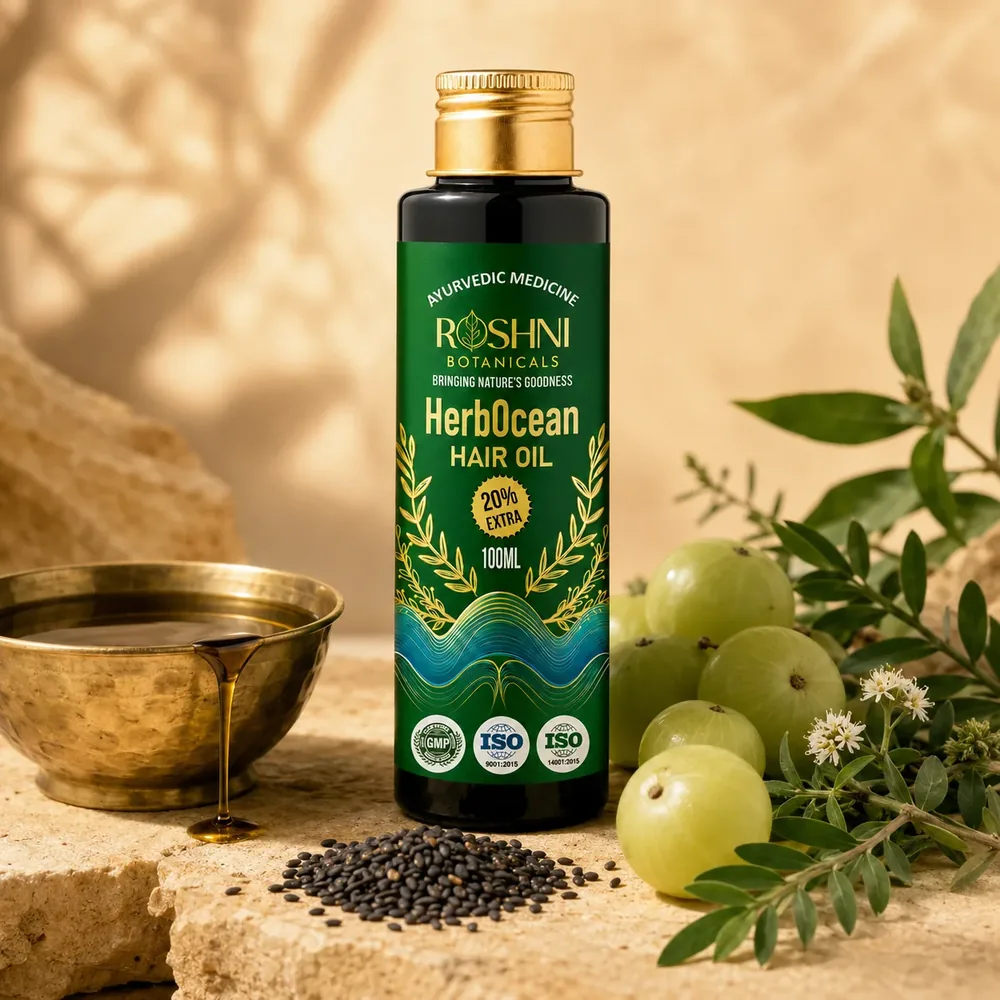
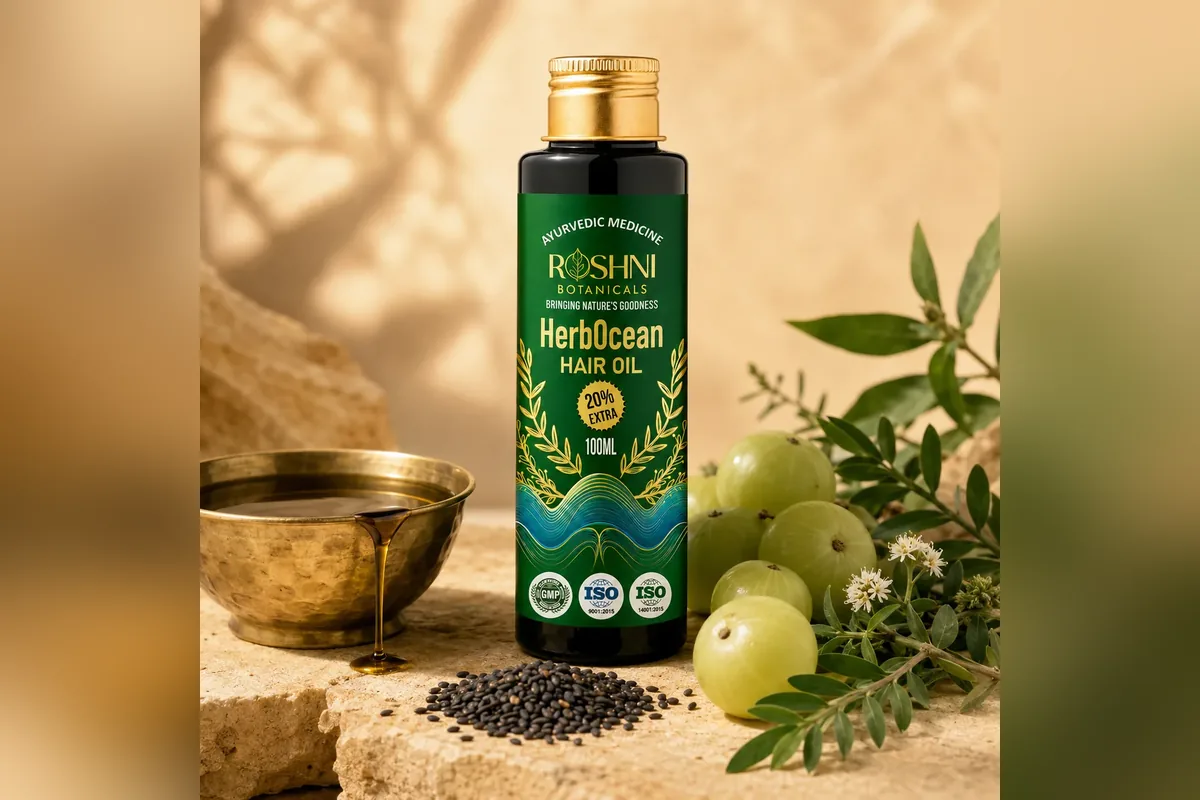
The HerbOcean Hair Oil puts named herbs onto the scalp in a slow sesame Taila, to be worked in by hand. The massage matters as much as the oil, because it is what brings the routine and the blood flow to the root.
The roles of the ingredients, in plain terms
- Bhringraj, the classical "king of hair", the anchor of the blend.
- Amla, vitamin-C-rich by reputation and long tied to strong hair.
- Brahmi and Jatamansi, cooling and calming, for the stress side of shedding.
- Neem and Tulsi, for a clean, balanced scalp.
- Shikakai, Gudal (hibiscus), rosemary and curry-leaf oils, the supporting cast for strength and shine.
The link between stress, sleep and shedding
A slow oil massage is not only for the hair. The aromatic, cooling herbs and the act of massage are genuinely calming before sleep, and since stress is one of the most common drivers of shedding, that wind-down is part of the point rather than a bonus.
How to get the most out of it
For general fall, oil and massage the scalp two or three times a week and leave it an hour or overnight. For dryness and frizz, focus the oil on the lengths. For flaking, work it into the scalp and let it sit before a thorough wash. Always wash out properly.
A simple weekly plan
Three short scalp massages a week (say a few minutes on three evenings), one of them left overnight, with a proper wash after. Alongside that: enough protein and iron, water, sleep, and a gentler hand with heat and tight hairstyles.
Things that make hair fall worse
- Tight ponytails, braids and buns worn every day.
- Very hot water on the scalp.
- Daily heat styling without a thought for protection.
- Crash diets and chronically low protein or iron.
- Ignoring a thyroid problem that needs treating.
Who can use HerbOcean Hair Oil?
Men and women, most scalp types and ages. Patch-test the essential oils first, oil less often if your scalp is very oily, and check with a doctor before starting anything new in pregnancy.
When to see a dermatologist
Regular oiling is traditionally used to support a healthy scalp and everyday hair. It is not a substitute for medical care when hair loss is sudden, rapid or patchy: see a doctor for bald spots, a painful or scarred scalp, or shedding after childbirth or illness that has not settled in a few months. A blood test and a scalp check often find something fixable, like low iron or a thyroid issue. For the deeper routine, read our definitive guide to hair oils for hair fall.
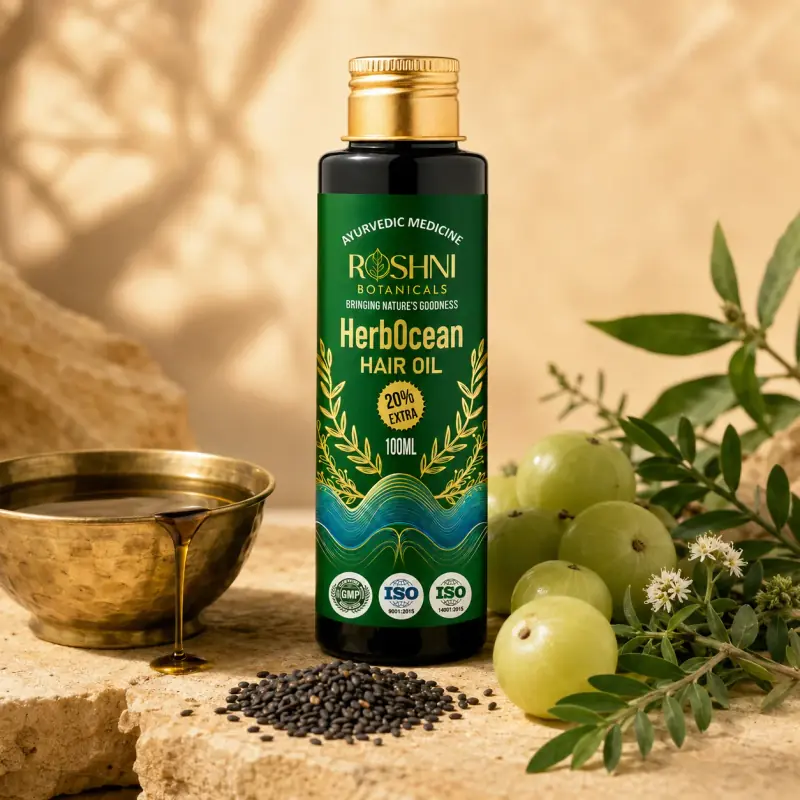
HerbOcean Hair Oil
A classical Taila for hair fall, dullness and a flaky scalp, with sixteen botanicals like Brahmi, Jatamansi, Amla and Neem in a slow sesame base.
Part of our guide: The definitive guide to Ayurvedic hair oils for hair fall.