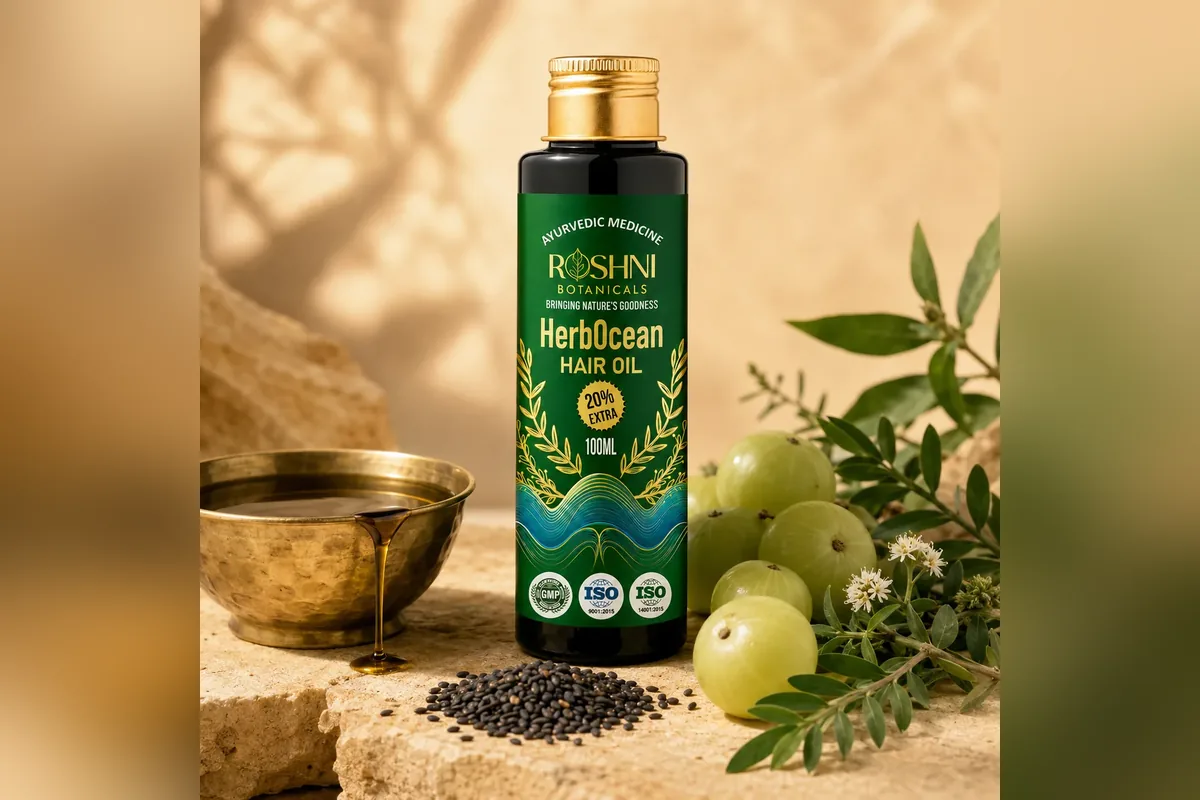
A Practical Guide to Healthier Hair with HerbOcean Hair Oil
Less theory, more routine: how to actually use a classical hair Taila week to week, and the everyday habits that matter as much as the oil.
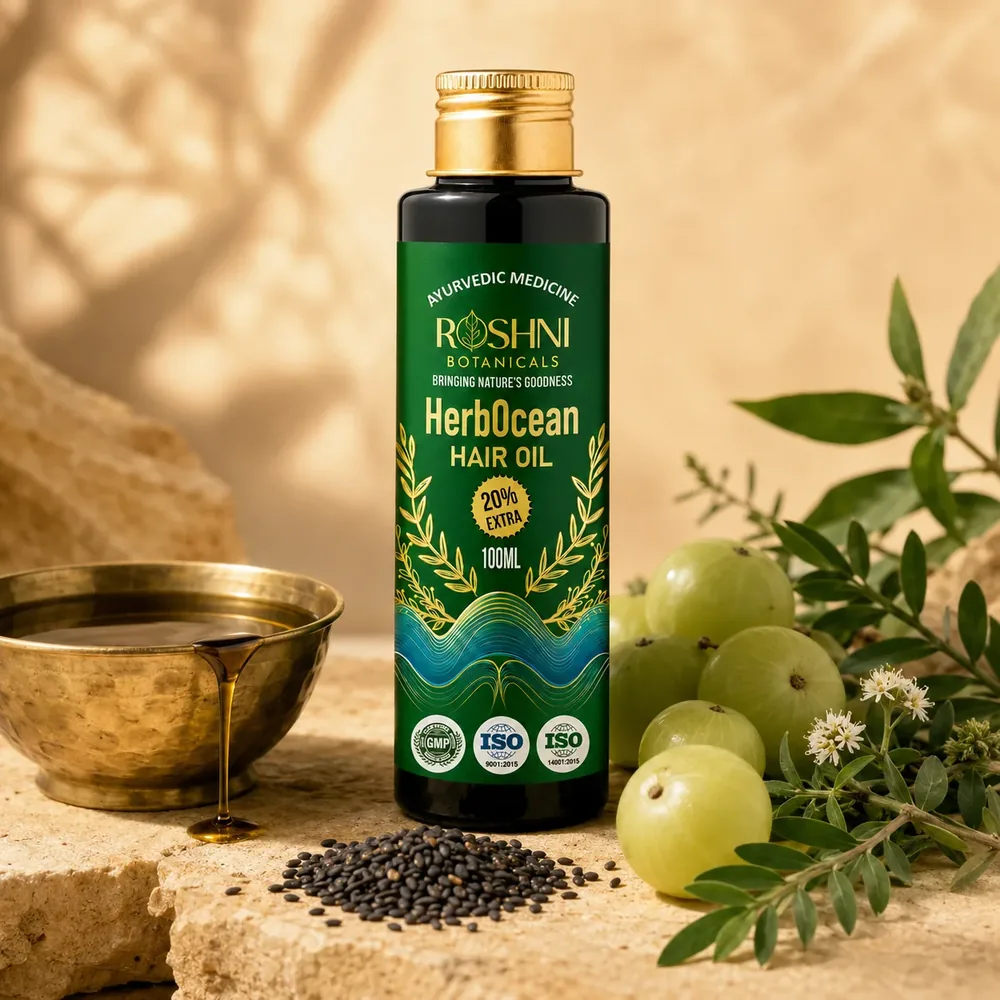
You can read about herbs all day, but hair care lives or dies by the routine you actually keep. So here is the practical version: how to use HerbOcean Hair Oil week to week, and the unglamorous habits that do as much work as the oil.
The weekly rhythm
Two or three times a week is the sweet spot for most people. Warm a little oil, part the hair, and spend five to ten minutes working it into the scalp with the fingertips. Leave it on for at least an hour, or overnight if it suits you, then cleanse. That is the whole ritual, and the consistency matters more than any single session.
The massage, done properly
The massage is not a formality. Use the pads of the fingers, not the nails, and move in slow circles across the whole scalp, section by section. This is the heart of abhyanga (oil massage), and it is also a few quiet minutes that take the edge off a long day, which is no small thing given how closely stress and shedding travel together.
Washing it out without the fight
The common complaint is that oil is hard to rinse. The trick is to apply shampoo to dry, oiled hair first, work up a little emulsion, and only then add water. A mild, gentle shampoo lifts the oil without the squeaky over-stripping that drives people away from oiling altogether.
The half that isn’t the oil
No oil outruns the basics. Enough protein and iron in the diet, enough water, enough sleep, and a lighter hand with heat styling all show up in your hair eventually. In India, low iron in particular is a very common, very fixable reason for shedding. Treat the oil as one good habit among several, not the whole answer.
What to watch, and when to see a doctor
Know your own baseline, and notice a clear change from it: a widening parting, visible thinning, or shedding that will not settle. Regular oiling is traditionally used to support a healthy scalp and everyday hair, not to treat medical hair loss. Sudden, rapid or patchy loss, or a painful, scarring scalp, belongs with a dermatologist.
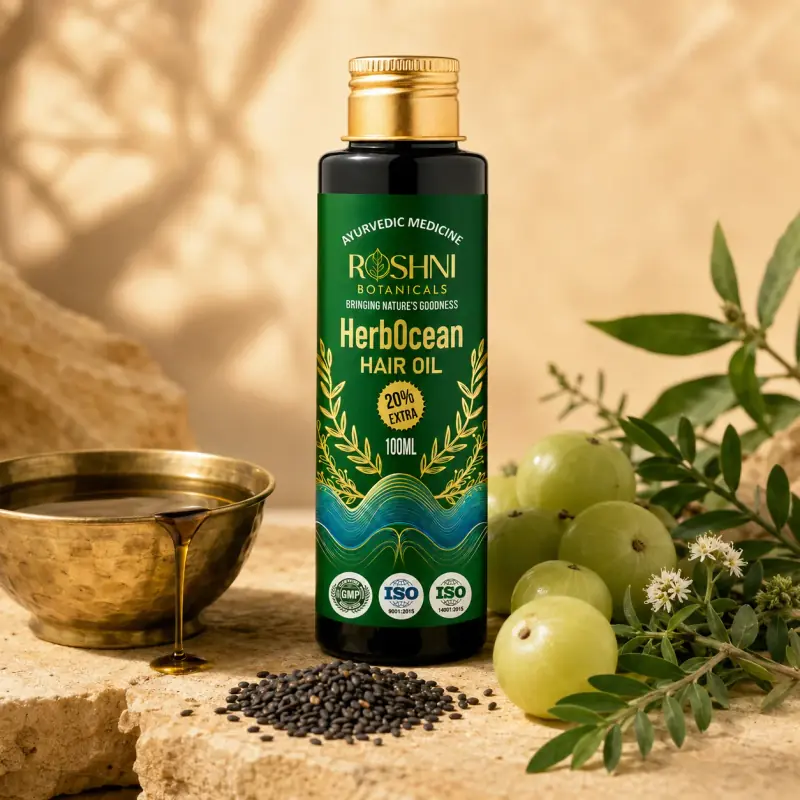
HerbOcean Hair Oil
A classical Taila for hair fall, dullness and a flaky scalp, with sixteen botanicals like Brahmi, Jatamansi, Amla and Neem in a slow sesame base.
Part of our guide: The definitive guide to Ayurvedic hair oils for hair fall.