
Masoor Dal Face Pack: How Indian Homes Make It and Where It Goes Wrong
What masoor is, how Indian homes make the red lentil pack, what the texts and studies record, and where it goes wrong on melanin-rich skin.
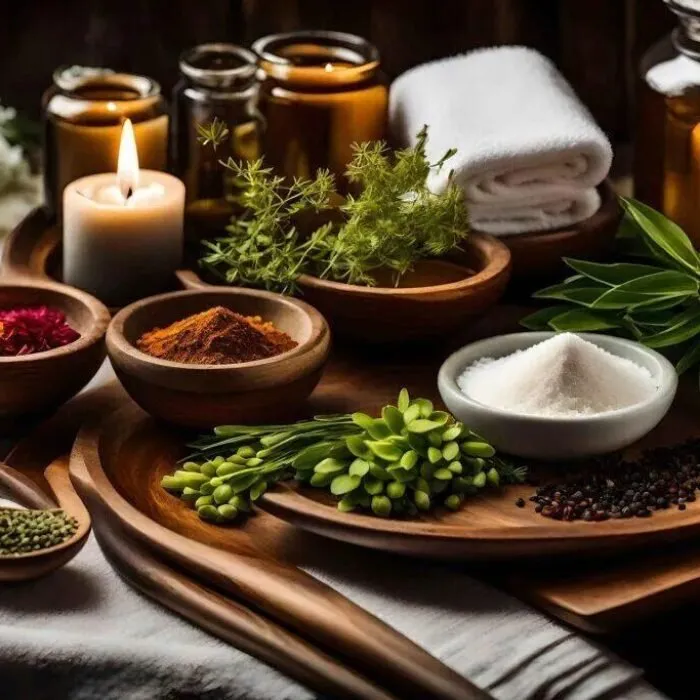
A masoor dal face pack is red lentil (Lens culinaris), soaked and ground or milled fine, then loosened with milk or rose water into a paste that Indian homes spread on the face and rinse away. It belongs to the ubtan tradition of grain pastes. PubMed indexes no trial in people of a masoor paste on its own, so what you know about it comes from household use, not from a study.
If your home kept a steel dabba of ground masoor next to the besan, you already know this pack. Soaked dal on the sil, a splash of milk or gulab jal, a thin layer on the face, a cool rinse over the sink. It is a habit worth knowing well, from the grind to the rinse.
Key takeaways
- Masoor dal is red lentil, a legume, and the Sanskrit name for the lentil is Masura.
- Homes either soak and grind the dal or grind it dry and sieve it, then stir in milk or rose water to make a fresh paste.
- No PubMed-indexed trial in people has tested a masoor paste by itself, so household knowledge of it comes from use, not measurement.
- Melanin-rich skin can answer irritation with a dark mark, and a coarse grind, a cracked pack, lemon or a home pack over a pimple can each irritate.
- Lentil is a legume, and allergy to legumes that reaches the skin has been reported in published cases.
What Masoor Dal Is, and Why It Ends Up on the Face
Masoor is red lentil, a legume in the same family as chana and moong. In Sanskrit the lentil is Masura, and you can hear the Hindi word sitting inside it.
Its place on the face comes from ubtan, the grain and herb pastes that Indian homes mix on a sticky afternoon or before a family function, and sometimes for no reason at all. Besan, haldi, multani mitti, gulab jal: you know the line-up. Masoor sits in the same steel dabba, and sometimes it is there simply because it was what your nani liked to grind.
How Indian Homes Make a Masoor Dal Face Pack
Ask around the family and you will hear of two ways. In one, whole or split dal is soaked and then ground to a paste on the sil or in the mixer jar. In the other, the dry dal goes into the grinder and the powder is passed through a sieve. Either way, you loosen the ground masoor with milk or rose water until it spreads without running.
That is close to the whole method, which is why the answer to masoor dal ka face pack kaise banaye is shorter than you might expect. What careful households add is a habit rather than an ingredient. They mix a new batch each time, keep the layer thin, and rinse it away with cool water and light hands while it is still soft. Afterwards your usual moisturiser goes on the clear skin, and sunscreen by day.
The grind matters. A kitchen mixer may not take dal as fine as a flour mill can, and the sieve is what separates a smooth paste from a gritty one. Some homes turn to the pack when the face feels oily or heavy. No study has measured what a home masoor paste on its own does to the oil on the skin, though, so that use rests on habit alone.
Besan is the other grain in that dabba. Besan is gram flour from chickpea and masoor dal is red lentil, so both are legumes. Masoor can be ground at home, while besan comes from the shop already milled fine. A coarse home grind rubbed over dry skin can irritate, and so can a fine flour when a dried layer is scrubbed off. No ranking can be given between the two grains, and no trial has compared them.
What the Classical Texts Say About a Face Paste
Ayurveda has its own name for a herbal paste spread on the face and washed away: a medicated face paste (Lepa). The Ashtanga Hridaya describes face pastes of three kinds: a paste for a dosha (the doshas are the three biological energies in Ayurveda), a paste for a poison, and a paste for the skin tone. The Sharngadhara Samhita gives the external paste a chapter of its own.
A home masoor pack looks like a Lepa, a paste worn thin and rinsed away, yet the two are made differently. A classical medicated face paste is made to a set formula that stays the same from batch to batch; a home pack is one grain and a splash of liquid. Whatever the paste, the sensible habit is to rinse it off before it dries hard. For the method step by step, read how a classical face paste is applied.
One limit holds for every paste, home or classical. A paste that is rinsed off soon after it goes on does not reach pigment that sits deep. If dark patches are what brought you to masoor, turn first to Ayurvedic treatment for melasma on Indian skin.
What Modern Research Has Tested on Masoor
Look on PubMed and you will find no trial in people of a masoor paste on its own. That gap cuts both ways. It does not mean the pack does nothing, and it does not mean household use has proved anything. What research does offer is narrower, and it still helps you: how melanin-rich skin responds to irritation, and how a legume can set off an allergy through the skin.
Household use is a long record of how people live with a paste, what feels comfortable and what stings. Give it weight for that, but do not mistake it for a measurement.
Where a Home Masoor Pack Goes Wrong for Melanin-Rich Skin
Davis and Callender reviewed post-inflammatory hyperpigmentation (PIH) in darker skin, meaning the dark mark an inflamed spot leaves behind. It affects darker skinned patients more often and more severely, they write, and irritation can make it worse. So on melanin-rich Indian skin, any slip that irritates can end as a mark. Four of them come up with masoor.
The first is a coarse grind rubbed over dry skin. Gritty dal pushed across the cheeks works like sandpaper, and the redness that follows is irritation. If your tap water is hard, your face can already feel tight after a wash, before the pack has even gone on.
The second is leaving the pack on until it cracks and pulls. A set paste tugs at the skin, and scraping it off dry finishes the damage. Dry air sets a layer faster, so if your face already feels stretched, look at skin care for dry, cold air first, and wash the paste off while it is still soft.
Then come the additions. Lemon is acidic enough to sting, and a sting is exactly the irritation this skin can turn into a mark. Haldi can leave a yellow stain on skin and cloth, and scrubbing at the stain takes you straight back to the first slip.
Last is a pack over an active pimple, and the rule is plain: a home pack stays off an active pimple; keep it to the clear skin until the pimple has settled. The pimple itself has its own care, set out in Ayurvedic treatment for acne. Marks come as a later step, and there is a page on brown and red marks after pimples. If you lean on clay rather than dal, multani mitti on acne-prone skin covers that pack.
Who Should Take Care Before Putting Masoor on the Face
Lentil is a legume, and allergy to a legume that reaches the skin is on the published record. Kalogeromitros and colleagues reported a single child, an eight-year-old girl who had repeated severe allergic reactions (anaphylaxis) linked to lentils.
The first ones came after she ate cooked lentils; a later one came simply from breathing the air over a pot of lentil soup as it cooked. Afterwards she broke out in hives when her skin touched raw chickpeas, and her skin prick tests reacted strongly to lentil and chickpea and more weakly to other legumes, among them peanut, pea and soybean.
A letter by Akpinar reports another single case, under a title that tells the story: Urticaria and Anaphylaxis in a Child after Skin Contact of Lentil Soup. Single cases tell you nothing about how often this happens. They do tell you that the route through the skin is real.
So if lentils, chickpeas or any other legume give you a reaction when you eat them, keep masoor and besan off your face altogether. If you have no such history, try a little of any new mix on the inner forearm before it reaches your face. Keep a home pack off skin that is broken, raw or sunburnt.
Where Soundarya Lepa Fits Beside the Home Pack
HerbOcean Soundarya Lepa is a classical medicated face paste (Lepa) of Mulethi, Masoor, aloe and white sandalwood, a weekly mask that helps maintain calm, cared-for skin. It carries Mulethi (Glycyrrhiza glabra), Masoor (Lens culinaris), aloe (Aloe vera), white sandalwood (Svetchandan, Santalum album) and Kuth (Saussurea lappa) in a bentonite clay and purified water base, with lavender, rose and mogra oils. Used as directed, this classical Lepa helps improve the look of dull, tired skin.
Mix with a little water or rose water into a smooth paste. Apply an even layer over clean skin, leave for 10 to 15 minutes, then rinse with cool water. Once or twice a week. Rinse once it is just touch-dry, so it does not over-dry the skin. Not for skin with active pimples: keep the paste to the clear skin until they have settled.
Patch-test on the inner forearm 24 hours before first use and discontinue if irritation occurs; avoid the eye area. Avoid it if you are allergic to a listed botanical, keep it off broken skin, and keep contact brief if your skin is very sensitive. If pregnant or breastfeeding, check with your doctor. It is made in-house at our unit in Bawana, Delhi, under AYUSH Licence No. DL-474 A&U, and built on the 40-year Ayurvedic formulation legacy of Vaidya Shri Ram Prakash Ji.
White sandalwood is one of the two trees Indian homes call chandan, as chandan on the skin and the two woods explains, and Mulethi, the licorice herb, has a page of its own, Mulethi for the skin.
When to See a Dermatologist, and the Habit to Keep
If your lips, tongue or throat swell or breathing turns difficult after a pack, get emergency medical help at once; if your face swells, hives spread or the skin blisters, see a doctor straight away. Book a dermatologist if pigmentation comes on suddenly, keeps spreading or stays put; if stinging or redness does not settle after you rinse; if pimples are deep, painful or leaving pitted scars; or if any patch changes in shape or colour, itches or bleeds.
Masoor has a long place in Indian homes, and it keeps that place when it is ground fine, mixed fresh, worn thin, rinsed soft and kept to clear skin, the way careful households make it.
References: 1. Ashtanga Hridaya, Sutra Sthana 22. 2. Sharngadhara Samhita, Uttara Khanda 11 (Lepa Vidhi). 3. Davis EC, Callender VD. Postinflammatory hyperpigmentation: a review of the epidemiology, clinical features, and treatment options in skin of color. Journal of Clinical and Aesthetic Dermatology. 2010;3(7):20 to 31. A review. PMID 20725554. 4. Kalogeromitros D, Armenaka M, Galatas I, Capellou O, Katsarou A. Anaphylaxis induced by lentils. Annals of Allergy, Asthma and Immunology. 1996;77(6):480 to 482. A case report, one child. PMID 8970438. 5. Akpinar O. Urticaria and Anaphylaxis in a Child after Skin Contact of Lentil Soup. Indian Journal of Pediatrics. 2018;85(7):575. A letter and case report, one child. PMID 29594938. Educational, not medical advice.
Frequently asked
This article is general educational content about Ayurvedic skin and hair care. HerbOcean products are classical Ayurvedic preparations for external use, made under AYUSH Licence DL-474 A&U and traditionally used to support healthy skin and hair. This is educational and not a substitute for professional medical advice; for persistent or worsening concerns, please consult a qualified dermatologist.