Acne Scars vs Marks: The Honest Self-Check to Do Before You Spend a Rupee
A flat brown or red mark is pigment. A true acne scar is changed texture. The fingertip and side-light self-check, and why each needs its own answer.
A breakout settled down weeks ago, and the spots it left behind are still sitting on your cheeks. Before you spend three thousand rupees on a serum, spend two minutes on one question: is that a mark, or is it a scar? The answer decides everything that follows, including whether any bottle can help at all.
Key takeaways
- A mark is a flat colour change, brown pigment or pink-red vessel activity, sitting level with the skin. A scar is a texture change, left where tissue was lost or overgrown as the spot repaired.
- The home check needs only side lighting and a clean fingertip. Colour you can see but cannot feel is most likely a flat mark; a dip, pit or ridge you can feel points to a scar. Feeling something is a reason to see a dermatologist. Feeling nothing is not an all-clear.
- True scars come in four patterns: icepick, boxcar, rolling, and raised or keloidal. No topical preparation from any system has been shown to restore lost tissue to normal skin.
- On melanin-rich Indian skin, flat marks routinely stay visible for months rather than weeks, which is why not squeezing spots matters more than any purchase.
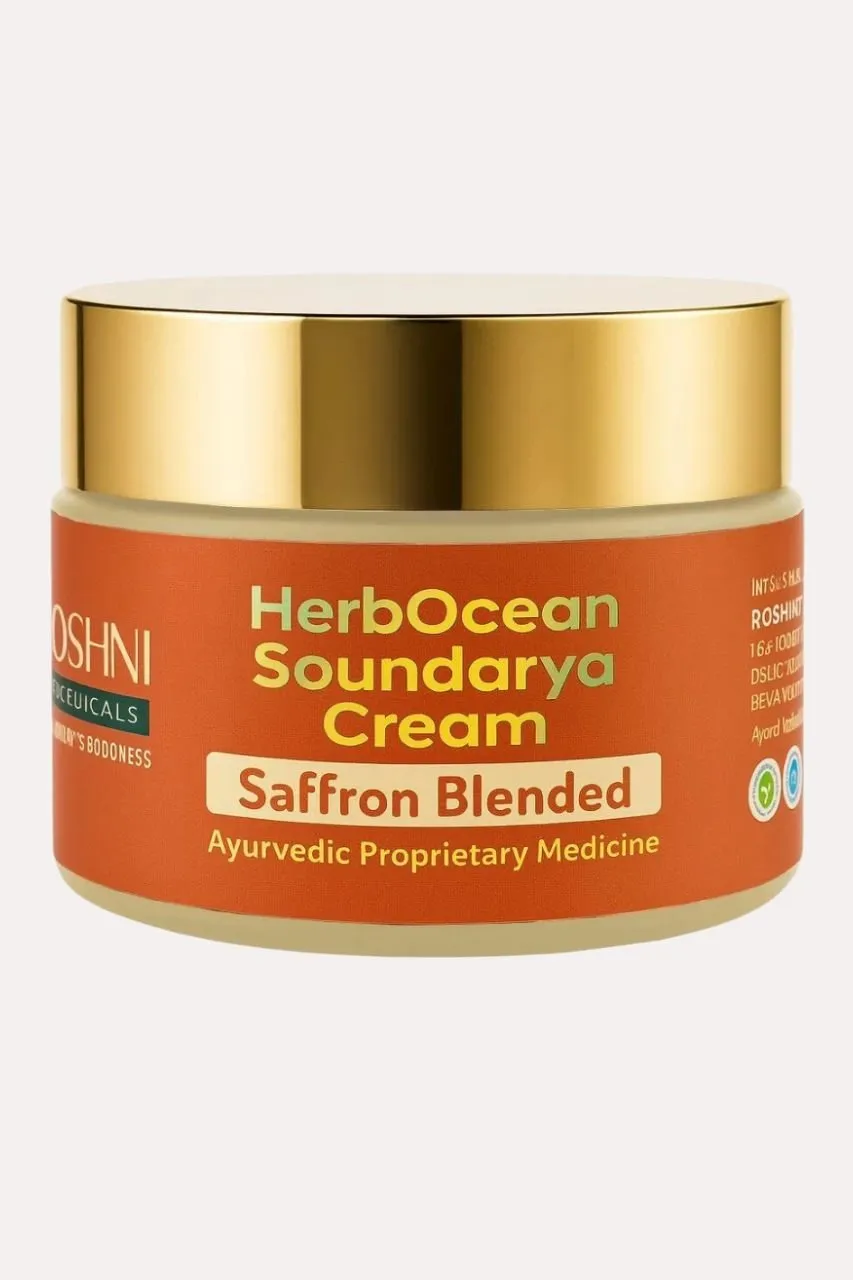
- HerbOcean Soundarya Cream is traditionally used in the care of flat post-acne marks, and makes no claim of any kind on textural scarring.
Mark or Scar: The Two-Minute Check You Can Do Tonight
Start with the physical definition rather than the marketing one. A mark is purely a colour change sitting level with the skin surface: brown where pigment was deposited during inflammation, pink or red where small blood vessels are still settling after the spot has gone. A scar is different in kind, not in degree. It is a change in the architecture of the skin itself, left where collagen was lost or overgrown while the skin repaired. The two can look alike in a bathroom mirror at noon, which is exactly how so much money gets spent on the wrong problem.
Here is the check. Wash your face and pat it dry, so no oil or sweat confuses your fingertips. Set a lamp to one side of your face, or stand side-on at a window, so the light rakes across the cheek instead of falling flat on it. Then run a clean fingertip slowly across each spot, and gently stretch the skin beside it. Colour you can see but cannot feel is most likely a flat mark. A dip, a narrow pit or a raised ridge you can feel, or one that throws a small shadow in that raking light, points to a scar.
Two honest limits on that, because a home check is a home check. A deep spot still settling can feel firm for months without being a scar, and a broad shallow scar can escape a fingertip entirely. Do not press on tender or inflamed spots. Feeling something is a reason to see a dermatologist. Feeling nothing is not an all-clear, and if the appearance is not improving over months, that is worth a professional look regardless of what your fingertip reported.
Textural scarring comes in four recognised patterns. Icepick scars are narrow, deep punctures, as if the skin were pricked. Boxcar scars are wider depressions with sharp vertical edges. Rolling scars are broad, soft undulations across the cheek. Raised or keloidal scars are thickened tissue sitting above the skin line, which is the opposite problem: excess tissue rather than lost tissue.
Why Marks Linger Longer on Indian Skin
Melanin-rich Indian skin responds to inflammation by making pigment, readily and quickly. The same spot that would leave a faint pink shadow on skin with less melanin can leave a defined brown mark here, and that mark can stay visible for many months. Dermatologists call this post-inflammatory hyperpigmentation, or PIH. It is not damage in the way a scar is: the architecture of the skin is intact. Where the pigment sits decides the pace. Melanin held in the upper layers clears as those layers renew, over months, while pigment driven deeper by heavier or repeated inflammation fades far more slowly and may not clear fully.
That distinction explains something people find discouraging. A fresh spot in an area that already carries marks lays down fresh pigment beside the old, so the patch can look unchanged in the mirror while the individual marks are genuinely fading. Knowing this before you start saves you from judging a perfectly sensible routine a failure at week three.
The household remedies (nuskhe) deserve a serious word. Lemon juice, toothpaste dabs, hard besan or sugar scrubbing, and daily multani mitti on already-raw skin are common, well-intentioned, and all capable of adding a fresh round of inflammation on top of an existing mark. If multani mitti is a fixture in your routine, our post on multani mitti for acne sets out how to use it without leaving the skin tight and raw. Anything that stings or scrapes an inflamed spot is working against you. Squeezing is the habit most worth breaking, and persistent picking can increase the risk of scarring. Be straight about the standing of that advice, though: the UK guideline calls the evidence on scarring risk factors limited and still advises against picking, and one cross-sectional study of 225 Thai adults with acne found roughly 2.7 times the odds of facial scarring in those who sometimes squeezed or picked (Yan and colleagues, Journal of Cosmetic Dermatology, 2025). Strong clinical agreement, thin evidence, and nothing pointing the other way. If you want the two mark types compared with each other, pigment against vessel, read how brown marks differ from red ones.
What Honest Care Can Support, and What It Cannot
Draw the boundary once, clearly. Consistent external care is traditionally used in the care of flat post-acne marks, and it can help maintain a calmer, more comfortable skin surface while the colour settles. Textural scarring is a structural matter that belongs with a dermatologist, whose in-clinic options work on the skin's architecture in ways no over-the-counter preparation reaches, and the dermatologist will match the option to the scar pattern.
On the topical question, we would rather be precise than sweeping. No topical preparation from any system, Ayurvedic or modern, has been shown to restore lost tissue to normal skin. Prescription topical retinoids are the one topical class with controlled-trial evidence for improving atrophic scar scores, including a trial run at an Indian tertiary centre, and even they do not restore the architecture. HerbOcean holds no such evidence of its own, and we are not going to imply otherwise. If active breakouts are still appearing alongside the marks, start with the fundamentals in our complete guide to ayurvedic treatment for acne, because every new spot is a candidate for a new mark.
Set expectations on time before you set them on products. Progress on flat marks is measured in months, not in the week or two most product pages imply, and two habits are worth building: daily sun protection, and leaving spots entirely alone. Sun protection is not an accelerator. It keeps existing marks from darkening and stops new ones forming, which is a smaller and more honest promise. Hard water deserves a mention too. Delhi's groundwater is the measured case, and mineral-heavy water often leaves skin feeling tight and reactive after washing, which pushes people towards harder scrubbing, which restarts the irritation cycle. A gentler cleanse and a softer touch will do more for your marks than a stronger scrub ever could.
Where HerbOcean Soundarya Cream Fits, and Where It Does Not
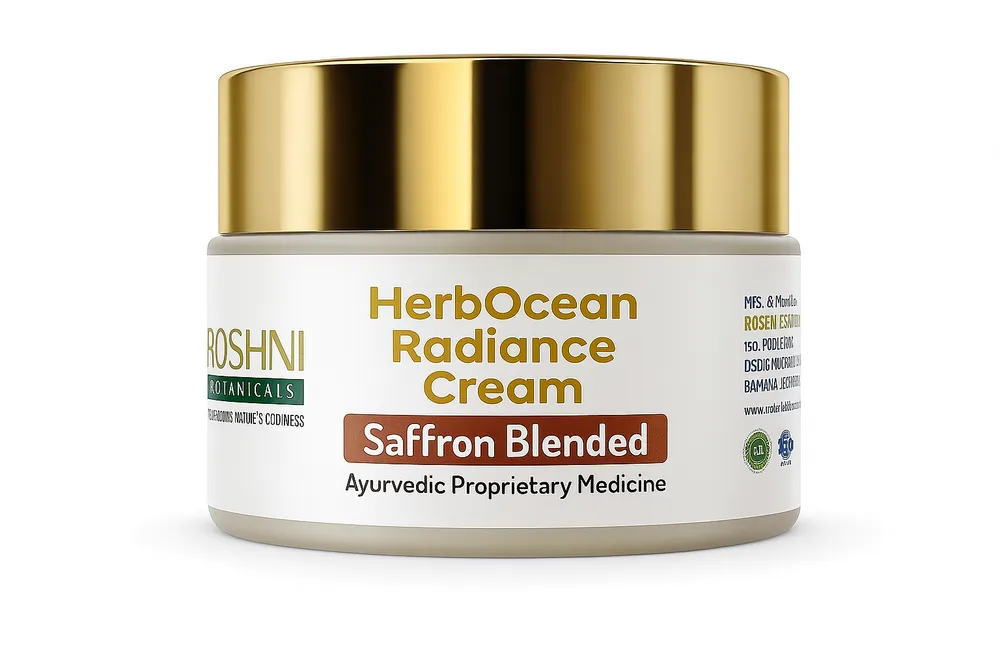
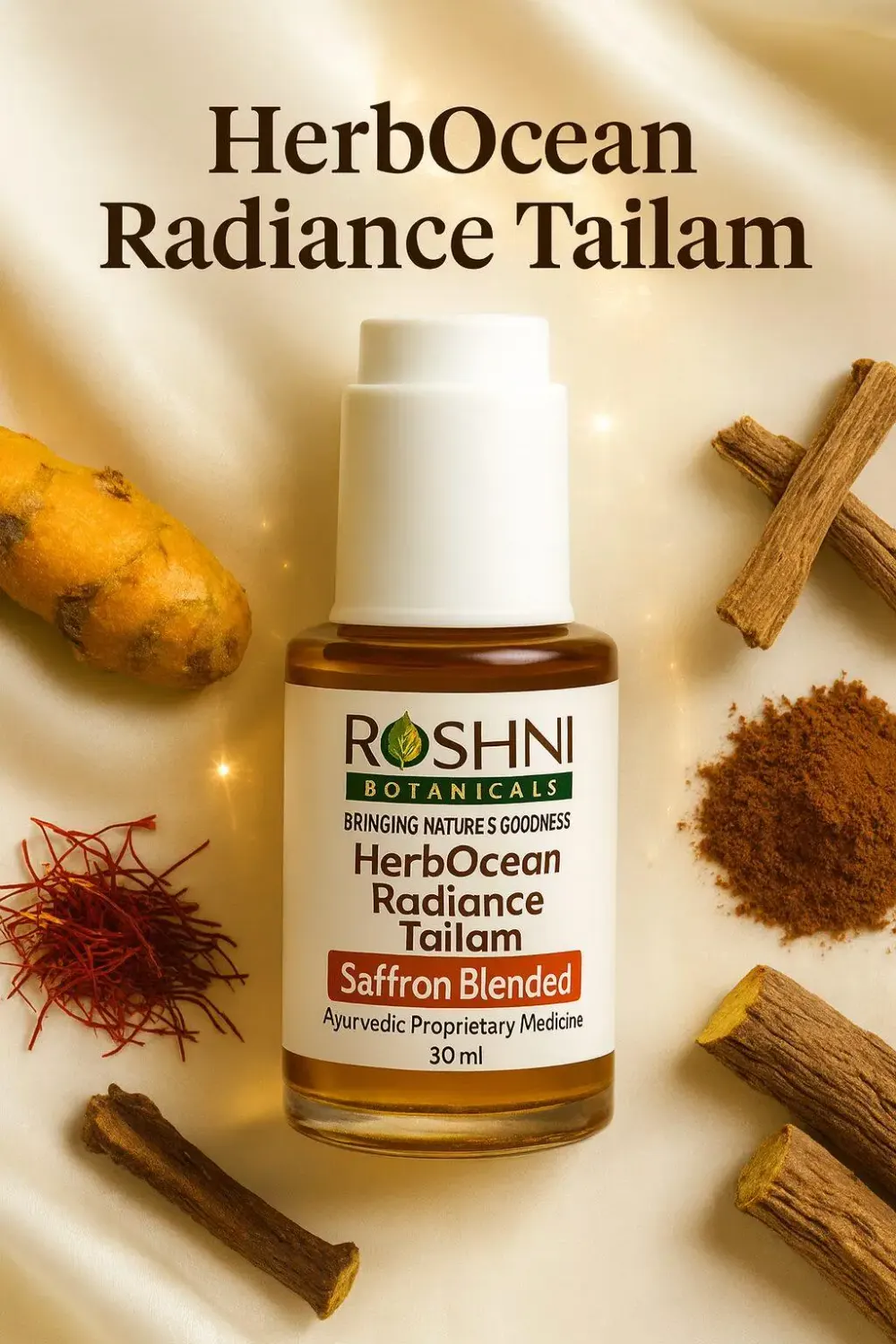
HerbOcean Soundarya Cream is an AYUSH-licensed Ayurvedic medicine for external use: a rich saffron repair cream with bargad (Vatt) bark on a goat-milk and coconut base, with shea and kokum butters. It is made in-house at our GMP-certified unit in Bawana, Delhi, under AYUSH Licence No. DL-474 A&U, and built on the 40-year Ayurvedic formulation legacy of Vaidya Shri Ram Prakash Ji.
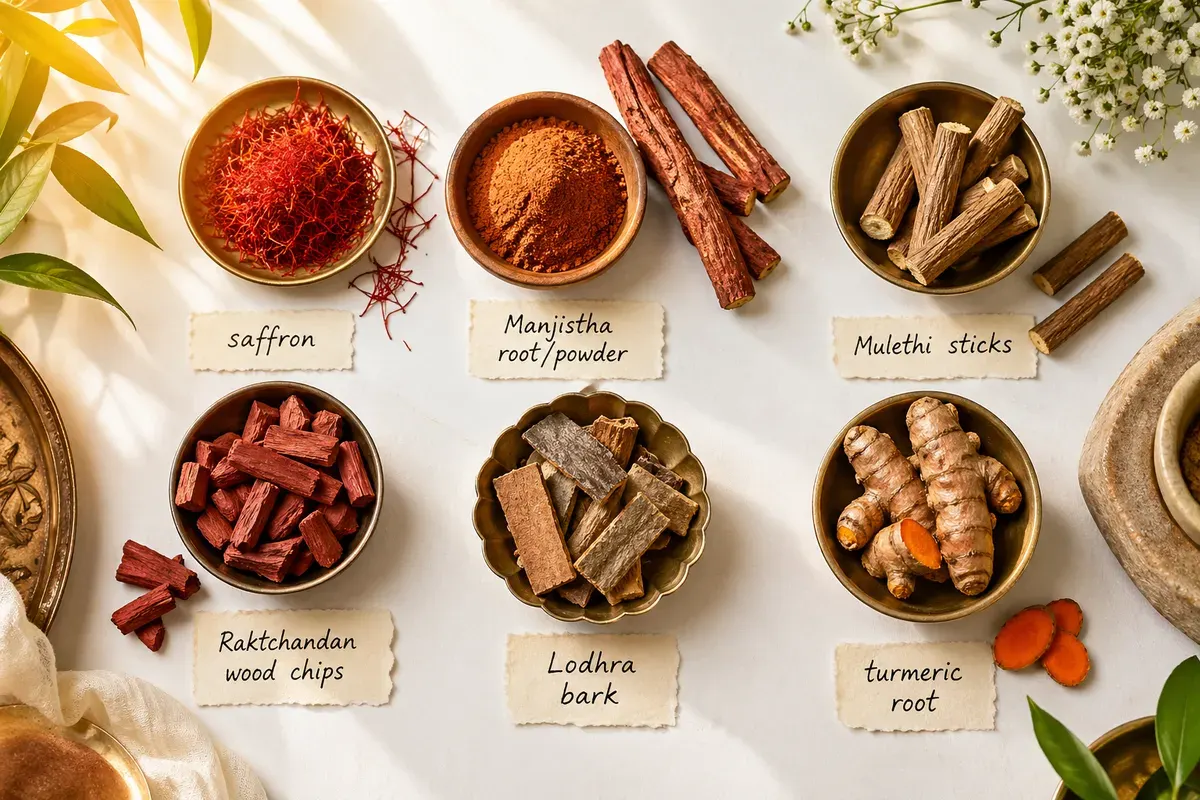
Its register: bargad bark (Vatt), saffron (Kesar), goat milk (Ajadugdh), Manjistha (Indian madder), liquorice (Mulethi), red sandalwood (Raktchandan), Ceylon ironwood (Nagkesar), beautyberry (Priyangu), lac resin (Laksha), flame of the forest (Palash) and Indian barberry (Daruhaldi), carried in coconut (Nariyal) with shea butter, kokum butter and vitamin E, finished with lavender, rose and mogra oils. The complete ingredient declaration, base and excipients included, is printed on the pack and listed on the product page. We make no purity or all-natural claim for it.
Let this be plain. The cream makes no claim of any kind about skin tone; the goal is calm, settled, comfortable skin. And it makes no claim whatsoever on icepick, boxcar, rolling or raised scarring, because that is a question of skin architecture and belongs with a clinician.
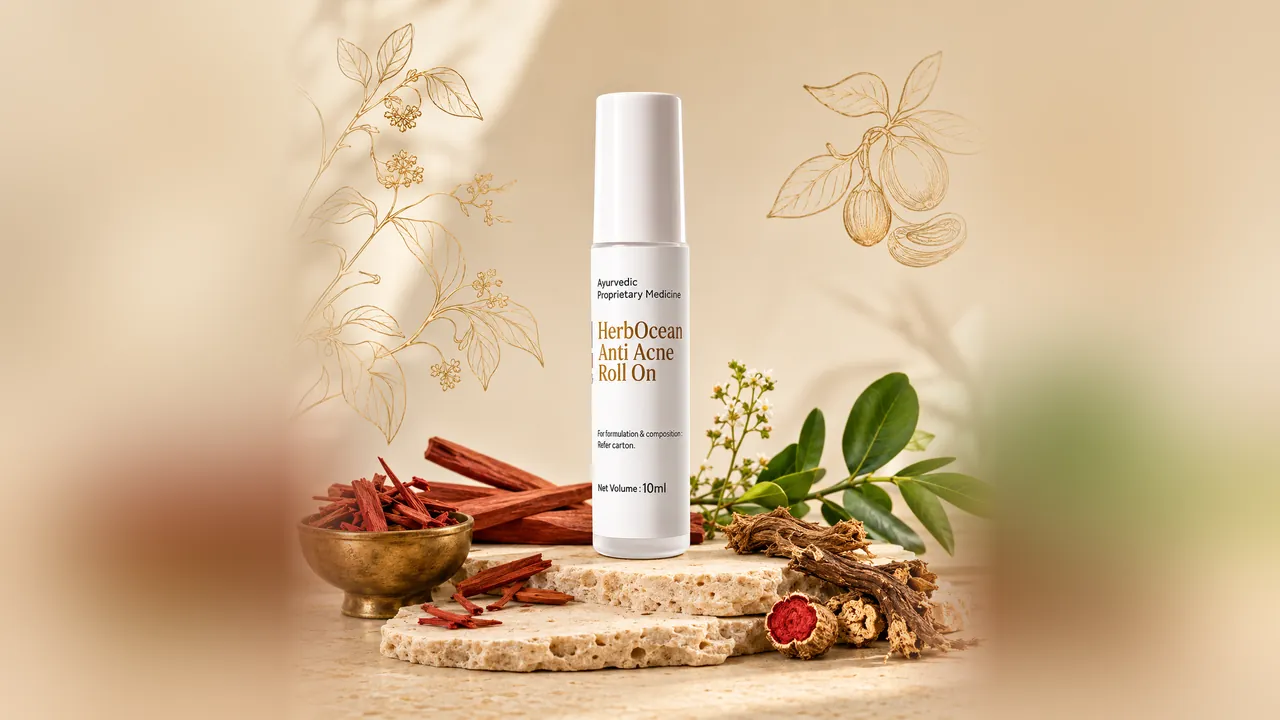
Use it as a thin layer at night on cleansed skin, over the whole affected area rather than dabbed on single spots, after a patch test on the inner forearm. It is for external use only. Not for broken, weeping or actively inflamed skin, and stop if it stings or burns. Soundarya Cream is not a sunscreen and carries no sun protection factor; your daytime sunscreen is a separate product and a separate step. Active, inflamed pimples are a different job from the marks they leave behind. For those, reach for the HerbOcean Anti-Acne Roll-On; the cream is for the marks they leave behind.
When to See a Doctor Rather Than Buy Another Bottle
See a dermatologist if you have deep, painful nodules or cysts sitting under the skin; if you can feel a spot as a pit or a ridge; if scarring is already forming while new spots keep appearing; if raised, thickened tissue is growing beyond the original spot; if marks show no sign of settling at all; or if acne has appeared suddenly in adulthood, or alongside irregular periods or unusual hair growth. Go sooner rather than later if acne is affecting your mood, your sleep or your willingness to go out; that is reason enough on its own. On timing, the UK NICE acne guideline reviews first-line treatment at twelve weeks and notes that improvement can take six to eight weeks to become noticeable, so give a steady, unchanged routine a full twelve weeks before concluding it has failed. Seek same-day care for sudden, severe, crusted or ulcerating acne with fever.
One thing sits outside this entirely. If any mole or mark changes size, changes shape or changes colour, or itches, oozes or bleeds, or a sore refuses to heal, have it looked at by a doctor promptly. That is not a post-acne mark question, and it should not wait behind one.
Two Minutes Tonight, Then Spend Accordingly
Run the fingertip and side-light check tonight, and you will know which half of the problem you are actually buying for. If what you find is flat colour, a classical preparation traditionally used in the care of post-acne marks is a reasonable place to put your money. If you felt a dip or a ridge, book the dermatologist. The check costs nothing, and it is the cheapest good decision available to you.
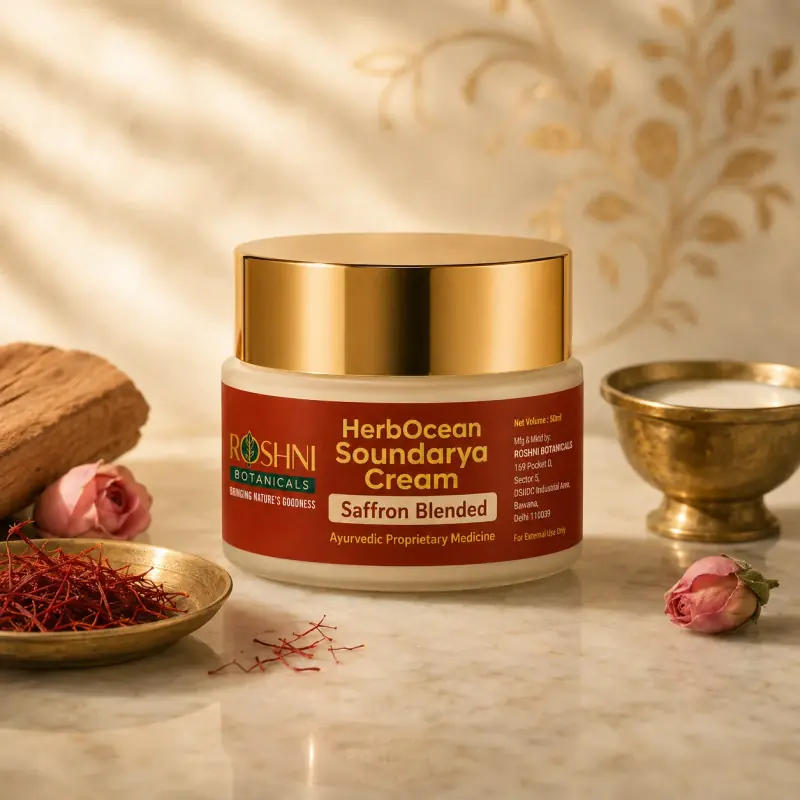
Soundarya Cream
A rich saffron brightening and repair cream with bargad (Vatt) bark on a goat-milk and coconut base, with shea and kokum butters — often reached for where post-acne marks (PIH) linger.
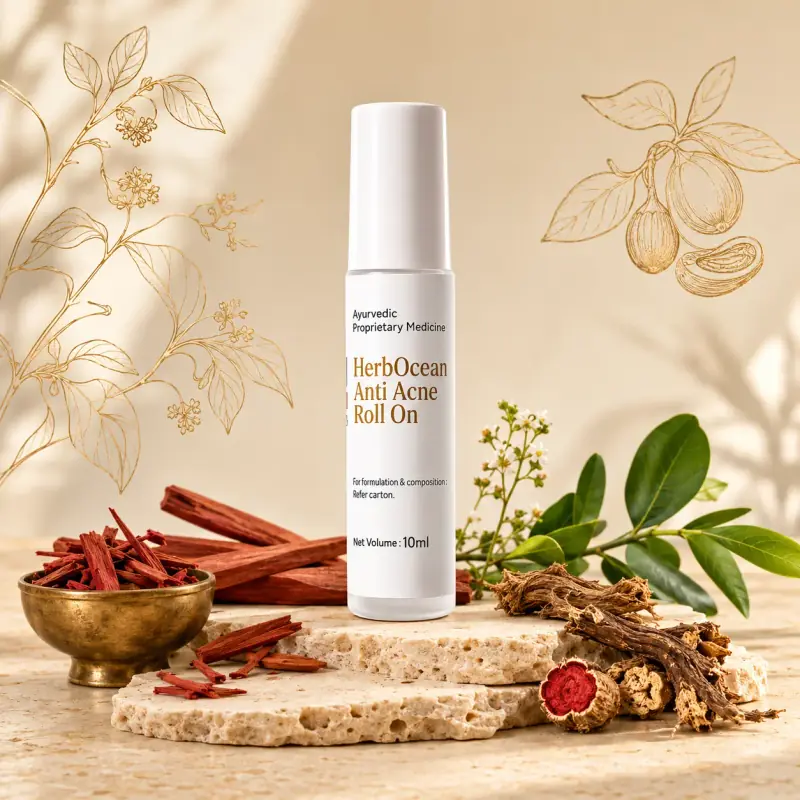
Anti-Acne Roll-On
Ayurvedic spot care for active pimples and post-acne marks (PIH) — a herbal roll-on classically indicated for acne (Yuvanpidika). Made in-house in Delhi.
Part of our guide: Ayurvedic treatment for acne: the complete guide.