Soundarya Cream or Radiance Cream? Choosing the Right Ayurvedic Cream for Your Skin
Two creams, two different questions. Dryness, dullness and post-acne marks point to one jar; facial pigmentation and dark spots point to the other.
Two jars, two Sanskrit names, and one reader stuck on a checkout page. The two creams were formulated for two different questions. Once you know which question your skin is asking, the choice is quick.
The routing goes by concern. Everyday dryness, dullness and the care of post-acne marks sit with one jar. Melasma, older dark spots and uneven tone sit with the other. Both are Ayurvedic medicines for external use.
Key takeaways
- The concern that bothers you most decides which jar you buy, not which one sounds stronger on paper.
- Soundarya Cream is the rich saffron repair cream on a goat-milk and coconut base, with shea and kokum butters.
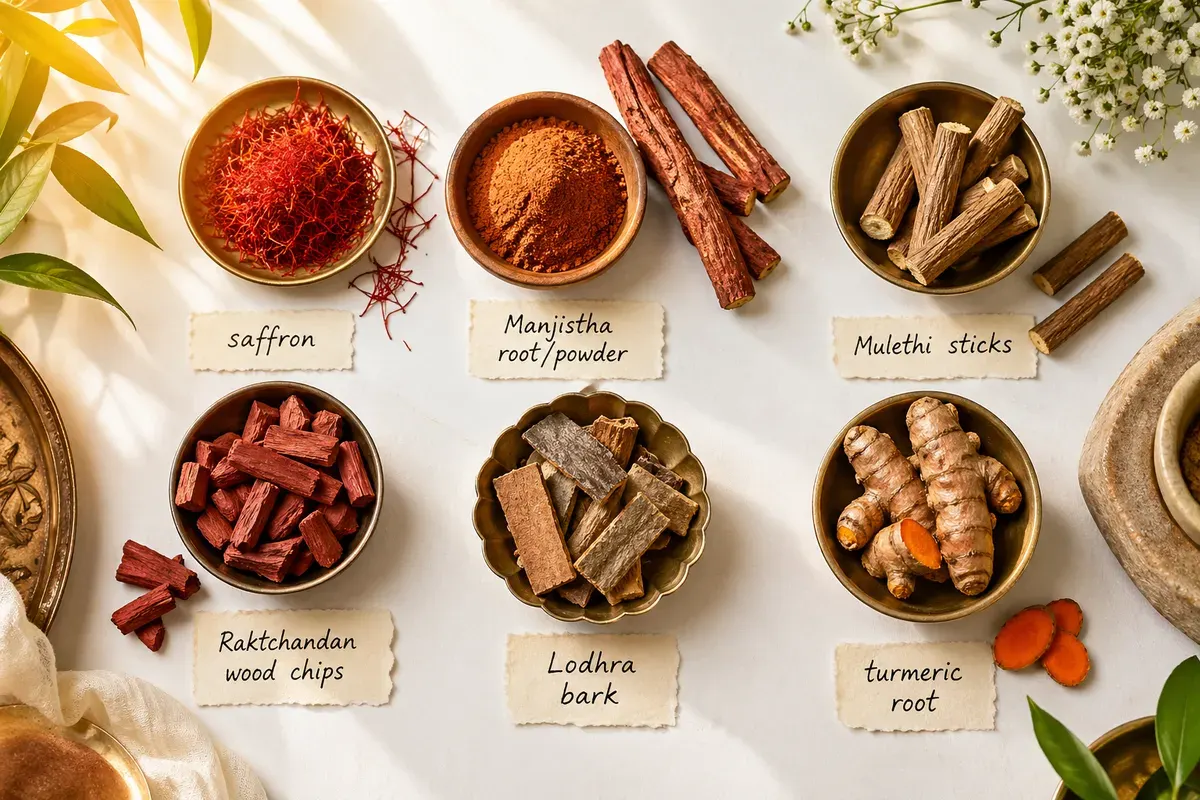
- Radiance Cream leads with saffron (Kesar), sandalwood (Chandan), Manjistha, red sandalwood (Raktchandan), lotus (Kamal) and wild Himalayan cherry bark (Padmaakh), with the Triphala fruits declared behind them.
- Sun cover is a daytime job of its own: a broad-spectrum sunscreen, a cap or a scarf, and shade through the harshest hours.
- Comfort is the first thing to watch for, while anything to do with pigmentation is watched patiently across roughly eight to twelve weeks of steady use.
Start With the Question Your Skin Is Actually Asking
Most people search for the better cream, which is why buying guides end in a shopping list instead of a decision. Skin concerns do not arrange themselves into a ranking. They arrive in families, and each family has its own classical answer. Spend a minute on what your face is actually doing. That is the only input this decision needs.
The first family is comfort. Skin that feels tight after washing. Dullness by evening, even when nothing in particular has gone wrong. Flaking at the sides of the nose, a papery feel across the cheeks, and marks left behind after breakouts settled weeks ago.
Dryness, dullness and post-acne marks belong together because each one is a question about a barrier that wants feeding. Post-acne marks are what melanin-rich Indian skin tends to leave behind after any inflammation, so they are common here and they settle slowly. This family is uncomfortable rather than urgent, and it responds well to being fed.
Pigmentation is the second family. Here the question is what has settled into the skin, not how it feels day to day. Melasma sits symmetrically: the same territory on both cheeks, often a band above the upper lip and a spread across the forehead. The classical texts describe facial pigmentation of this kind as Vyanga. Older dark spots outlast whatever caused them. Long-standing by nature, they deepen with sun exposure, and they ask for patience measured in months rather than weeks.
The routing is short. If the loudest complaint is dry, tight and tired skin, that points to Soundarya Cream. If it is a set of patches that has been sitting there for months, that points to Radiance Cream. Brown shadow left after acne is still Soundarya Cream, because post-acne marks belong to the comfort and repair family rather than to the melasma conversation. A reader carrying both concerns has not chosen wrongly whichever jar reaches the door first.
Timing matters more than usual just now. As the monsoon pulls back in North India the air dries out over some weeks rather than overnight, and a face that behaved through the rains often asks a different question once they end.
And if neither family sounds like you, if your skin is simply comfortable, neither jar is urgent. A cream answers a barrier that is asking for something, and a face that is not asking does not need one.
When Soundarya Cream Is the Right Jar
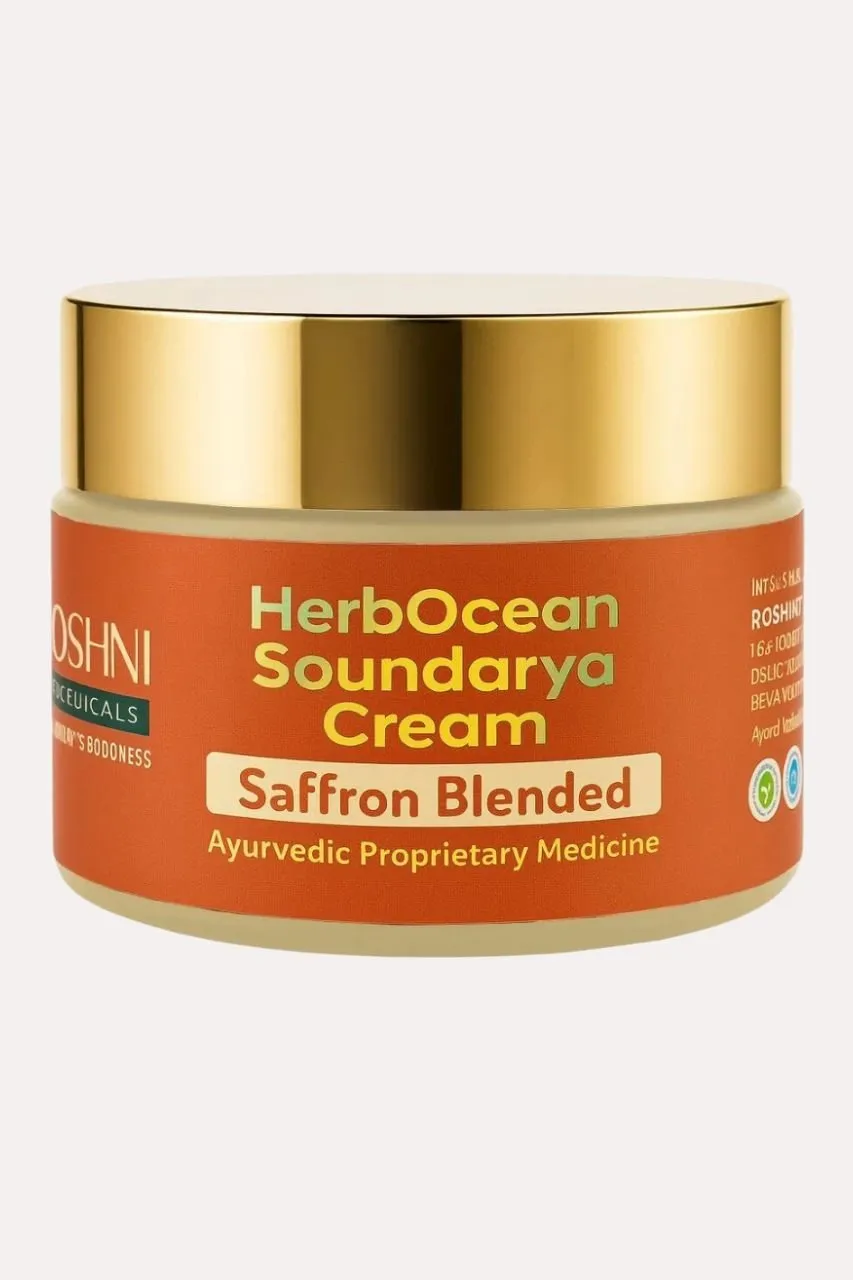
HerbOcean Soundarya Cream is a rich saffron repair cream with bargad (Vatt) bark on a goat-milk and coconut base, with shea and kokum butters. Vitamin E rounds it off, and the butters carry the herbs into something wearable through a working day. It is an Ayurvedic medicine for external use, traditionally used to support soft, nourished skin, and it helps maintain comfort in dry, depleted skin. Where post-blemish marks (post-inflammatory hyperpigmentation) linger, it is traditionally used to support evenness.
The ingredient list is short and classical: goat milk (Ajadugdh), bargad bark, Manjistha, liquorice (Mulethi), red sandalwood (Raktchandan), flame of the forest flower (Palash), beautyberry fruit (Priyangu), lac resin (Laksha), Indian berberry (Daruhaldi), Ceylon ironwood (Nagkesar) and saffron (Kesar), in a coconut base with shea and kokum butters and vitamin E, finished with lavender, rose and mogra. There is a longer read on what goat milk does for a dry, tight barrier.
Reach for this jar if your skin feels tight after washing, if dullness sets in through the afternoon, if the drier air after the rains has left your cheeks papery, or if you are caring for post-acne marks that are settling on their own. Think of it as feeding a barrier that has had a hard season.
Much of the dryness that turns up in Delhi after the rains is self-inflicted: washing the face again and again through a hot day takes skin lipids and proteins along with the grime, and that is where the tight feeling comes from. Still waking up tight after a face oil at night? A cream usually settles that, because it holds moisture where an oil alone cannot.
When Radiance Cream Is the Right Jar
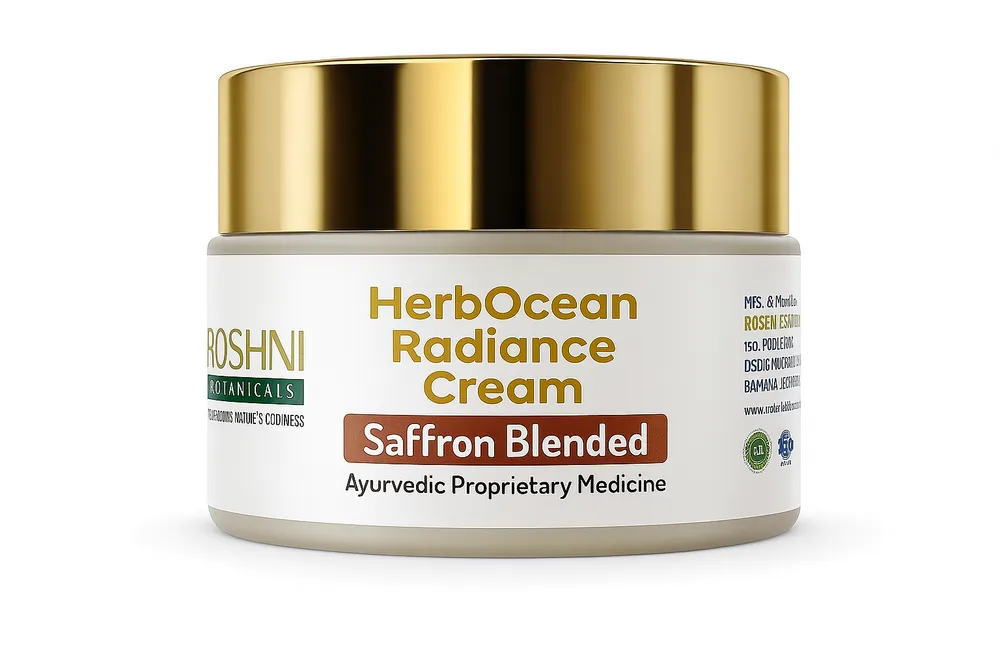
HerbOcean Radiance Cream is an Ayurvedic medicine for external use, classically indicated for facial pigmentation (Vyanga, the patches Hindi homes call jhaiyaan) and traditionally used in the care of dark spots and uneven tone. It is a daily saffron and sandalwood brightening cream with Manjistha, red sandalwood and lotus in a light coconut base. Behind those, declared and not foregrounded, sit the Triphala fruits (Amla, Baheda and Harad), turmeric (Haldi), costus root (Kuth), a Himalayan lily (Kakoli) and Palash. There is a longer read on a night routine for dark spots.
Three things about Indian skin shape what this cream is for. Melanin-rich skin marks readily after inflammation, so one angry breakout can still be visible many months later. Sun exposure is the trigger Indian studies name most often, with pregnancy and the contraceptive pill behind it, which is why many women here first notice the patch around a pregnancy. And the sun after the rains stays strong enough in the afternoons to set patient evening care back.
None of that is cause for despair. Expect the work to be slow, seasonal and cumulative rather than dramatic. For the classical picture alongside the Indian dermatology context, the handbook on melasma for Indian skin covers both.
Expect the change to be gradual, and expect what happens outdoors to matter as much as what happens at the basin. Marks that have been sitting for months settle slowly on melanin-rich skin, and many months is the ordinary course rather than a sign that anything has gone wrong.
If pigmentation is your reason for buying, daytime sun care does more of the work than any jar will: a broad-spectrum sunscreen, a cap or a scarf, and shade through the harshest hours. Keep the layer thin while the last of the humidity hangs about.
How to Use Either Cream Well in an Indian Climate
Both creams go on the same way, and how much you use matters more than when. Warm a small amount and press into clean skin, morning or night. Keep the layer thin, and give it a moment to settle before anything goes over it.
Soundarya Cream suits dry skin and anyone who wants a richer leave-on cream. Very oily or acne-prone skin may find it rich, so keep it to the dry areas if that describes your face. Radiance Cream is the lighter texture of the two. Smooth over clean skin morning and night. By day, always follow with a broad-spectrum sunscreen. HerbOcean does not manufacture a sunscreen, and nothing in the range replaces one, so sun cover stays a step of your own.
Hard water across Delhi and much of North India costs a cream routine more than most people credit. It makes a cleanser harder to rinse off, so more of it stays on the skin, and in a British study of the effect, skin washed in hard water held on to more cleanser, lost more water and irritated more easily than skin washed in soft water, most clearly where the barrier was already fragile. Wash with lukewarm water rather than hot, and if the tap at home runs hard, a final splash from a jug of boiled-and-cooled or RO water is a preference many households keep, and it costs nothing to try. Change one thing at a time, and give a jar a fair run before you judge it.
Then the cautions, which apply to both jars. For external use. Patch-test on the inner forearm 24 hours before first use and discontinue if irritation occurs; avoid the eye area. If pregnant or breastfeeding, check with your doctor. Do not stack either cream under a heavy oil while the air still holds moisture, and stop if anything stings.
Using Both in One Routine, and What to Watch For
If you own both, the simplest split is by area. Radiance Cream goes over the areas you are watching, morning or night, and on any morning you use it, follow it with a broad-spectrum sunscreen. Soundarya Cream goes across the rest of the face for comfort under whatever the day brings. Thin layers both times.
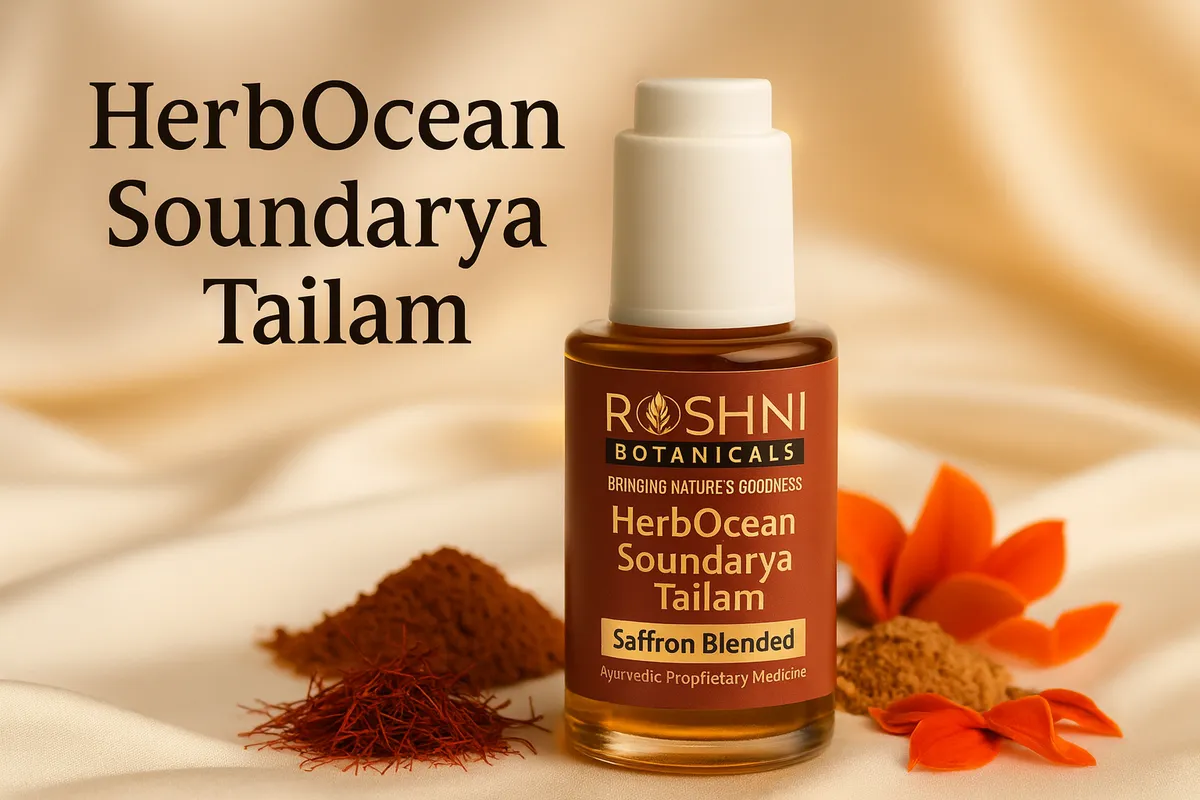
North India still holds enough moisture in the weeks the rains take to leave that a heavy layer simply sits there, and skin congested by noon usually got too much product, not too little. While the air is still humid, one layer at night is enough. Our Tailams are light, herb-infused oils, so they go into slightly damp skin first and the cream seals them, which is the short version of how a face oil and a face cream differ. For the oils themselves, Soundarya Tailam, made by the goat-milk Kshira-paka method (the classical milk-and-oil method, in which herbs are simmered with goat milk in the oil until the water has gone and only the medicated oil remains), or Radiance Tailam, the face oil chooser routes you the same way, by concern.
Most readers are not buying both. If you can buy only one right now, buy for the concern that bothers you most, not the one that sounds more serious on paper. Post-monsoon tightness, flaking and dullness point to the first jar. Long-standing patches on the cheeks, upper lip or forehead point to the second. If both apply, begin with the one you would notice every morning and add the other later.
Expectations are where this decision usually goes wrong. Comfort is what you notice first. Watch for softness, for less tightness after washing, and for a face that looks less tired by evening.
Anything to do with pigmentation is watched across roughly eight to twelve weeks of steady use, and that is a window for patience rather than a promise about an outcome. Consistency beats intensity. Steady use over several months serves you better than daily devotion for two weeks followed by a jar at the back of a drawer. And compare nothing week to week, because slow change is hard to see in a face you look at every day.
When to See a Dermatologist Instead
Some things do not belong with a cream at all. A patch that is spreading, changing shape or growing an irregular border, a mark that is asymmetrical or carries more than one shade of brown inside it, a mark that appears suddenly with no breakout before it, pigmentation that arrived after starting a new medicine including hormonal contraception, pigmentation that itches, scales or bleeds, or deep painful cystic acne along the jaw: all of these belong with a dermatologist, and sooner rather than later. Get the right eyes on an unusual pattern first, and keep any cream off that mark until they have seen it.
Pick the Concern, Then Pick the Jar
The framework fits in two lines. Comfort, dryness, dullness and the care of post-acne marks point to Soundarya Cream. Melasma, dark spots and uneven tone point to Radiance Cream.
Both are AYUSH-licensed Ayurvedic medicines for external use, made in-house at our GMP-certified unit in Bawana, Delhi, under AYUSH Licence No. DL-474 A&U, and built on the 40-year Ayurvedic formulation legacy of Vaidya Shri Ram Prakash Ji.
Open whichever product page matches the concern you arrived with, read the full ingredient list, and check that the formulation suits your skin before you buy. Keep the layer thin while the air still holds moisture, and keep the daytime sun cover going alongside either jar. And if the whole routine needs rebuilding as the rains pull back, our post-monsoon skin reset walks through it week by week.
References: Sushruta Samhita, Nidana Sthana 13 (Kshudra Roga), on Vyanga among the classical facial discolourations. Sharngadhara Samhita, Madhyama Khanda 9 (Sneha Kalpana), on the classical preparation of medicated oils, including those processed with milk as the liquid medium. Achar A and Rathi SK, Melasma: a clinico-epidemiological study of 312 cases, Indian Journal of Dermatology, 2011: 312 patients in West Bengal, India, the centrofacial pattern the commonest, sun exposure the precipitating factor named most often, by more than half, and, among 250 women, 56 naming pregnancy and 46 the oral contraceptive pill. KrupaShankar DS and colleagues, A cross-sectional, multicentric clinico-epidemiological study of melasma in India, Dermatology and Therapy, 2014: 331 patients across four Indian regions, sun exposure named a major precipitating factor, and a history of melasma in about half of the women with multiple pregnancies against roughly a quarter of single women. Davis EC and Callender VD, on post-inflammatory hyperpigmentation in skin of colour, Journal of Clinical and Aesthetic Dermatology, 2010: a review reporting that post-inflammatory hyperpigmentation follows inflammation more often in skin of colour, is a particularly common sequela after acne in darker skin, and may take months to years to settle on its own; United States populations, non-Indian. Ananthapadmanabhan KP and colleagues, Cleansing without compromise: the impact of cleansers on the skin barrier and the technology of mild cleansing, Dermatologic Therapy, 2004: a review reporting that harsh surfactants damage skin proteins and lipids and leave after-wash tightness, dryness and irritation; non-Indian. Danby SG and colleagues, The effect of water hardness on surfactant deposition after washing and subsequent skin irritation, Journal of Investigative Dermatology, 2018: 80 participants in the United Kingdom, healthy volunteers and atopic dermatitis patients, in which skin washed in hard water retained more cleanser, lost more water and was more easily irritated; non-Indian. Abbasi NR and colleagues, Early diagnosis of cutaneous melanoma: revisiting the ABCD criteria, JAMA, 2004: a review which keeps asymmetry, border irregularity, colour variation and diameter and adds evolving, naming change in size and shape, itching, bleeding and shades of colour as reasons to have a pigmented mark examined; United States. India Meteorological Department, normal dates for the onset, progress and withdrawal of the southwest monsoon over India: the exit is a staged line that takes weeks to cross the country, the northwest drying ahead of the peninsula and the coasts. Educational, not medical advice.
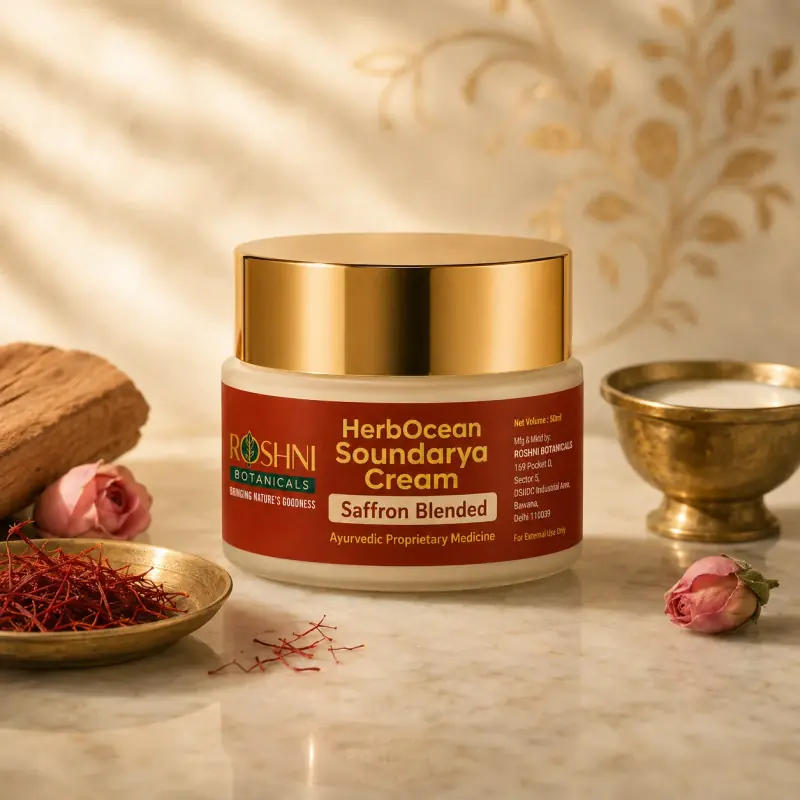
Soundarya Cream
A rich saffron brightening and repair cream with bargad (Vatt) bark on a goat-milk and coconut base, with shea and kokum butters — often reached for where post-acne marks (PIH) linger.
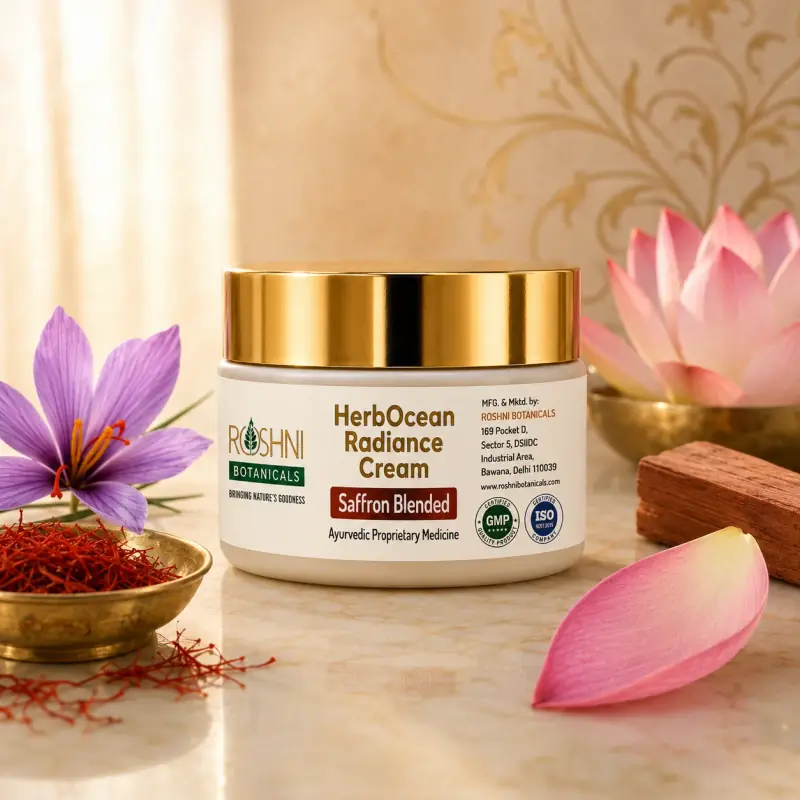
Radiance Cream
A daily saffron and sandalwood brightening cream with Manjistha, red sandalwood and lotus in a light coconut base. Supports a luminous, even-looking complexion.
Part of our guide: Ayurvedic treatment for melasma on Indian skin.