The September Skin Reset: Your Post-Monsoon Skincare Routine for Indian Skin
The monsoon leaves India in stages, so your routine should change in stages too. A week-by-week guide to the September transition.
India does not leave the monsoon on a single date. In the first week of September a reader in Delhi may still be waiting for the air to lose its heaviness, while Mumbai and Kochi are wiping humidity off their foreheads. Your skin answers the weather outside your window, nobody else’s. So what follows is a sequence rather than a swap: reassess textures slowly, rebuild a barrier worn thin by sweat, hard water and months of extra washing, and then get ahead of the pigmentation load that arrives once the sky clears.
Key takeaways
- The monsoon leaves India in stages. The northwest usually dries ahead of the coasts and the south, so read the season where you actually live, not off a calendar.
- Two self-checks tell you whether your transition has begun: how your face feels an hour after washing, and whether sweat still sits on your forehead by mid-morning.
- Gel-weight products were the right answer to humid air. As the air dries, they work better with a richer night partner beside them.
- Hard water, which many Indian households deal with, can be one of the stressors behind rough, reactive post-monsoon skin. Wash less often, but never skip the evening cleanse.
- In this routine, HerbOcean Radiance Cream is the night-side step. It carries no sun protection factor of any kind.
September Is Not One Season: Read the Transition City by City
The India Meteorological Department tracks the monsoon’s exit as a moving line, and that line takes weeks to cross the country. Its normal withdrawal dates place the start of the exit in the second half of September, with the country cleared through October, and the actual dates shift year to year, so take every seasonal step in this post as conditional on the weather where you actually live. Broadly, the northwest dries out ahead of the peninsula and the coasts. Coastal and southern cities stay humid long after Delhi and Jaipur have begun to feel the change, and the south-east coast then moves into a second rainy season of its own from October. Anyone who has flown from Delhi to Goa in early autumn knows how unsubtle that gap is.
Two small checks tell you more than any forecast will. Notice how your face feels roughly an hour after a morning wash. Tight, faintly rough, hungry for something? The air around you has started pulling moisture faster than it did in July. Now notice whether sweat still sits on your forehead by mid-morning. Sweat that lingers means humidity is holding. Skin that dries down fast and stays dry means your transition has begun. Run both checks over a few days before you change anything, because one dry afternoon proves nothing.
The Texture Reassessment, Done Gradually
Gel-weight products suited the monsoon, and they were the right answer to air that was already holding water against your skin. As the air dries, a light water-based layer with nothing over it does less: water needs something richer above it to stay put, which is why the same gel that was enough in July starts asking for a partner. Do not retire it. Give it a partner instead. Through September and October most Indian skin does better with a light daytime texture and a richer night step beside it. A wholesale swap over one weekend rarely goes well.
Week one is for watching, nothing else. Keep your existing routine, run the two checks above, and note what your skin actually does. Week two, ease back on washing. If the humid weeks pushed you to a third wash most days, September is when that third one can go, and keep the water lukewarm. Less often does not mean skipping the evening cleanse: sunscreen, sweat and city grime all need to come off at night, so keep one thorough but gentle wash before bed and let the extra daytime washes go.
Week three is when the richer night step comes in, applied to slightly damp skin so the water has something holding it in place. Water first, seal second. Get that order wrong and the rich layer sits on dry skin, which is exactly where the complaint that a cream does nothing usually begins. By week four you are reviewing the routine, not the results; those move on a slower clock. This schedule paces the changes you make. It is not a timeline for results.
Written out as a Dinacharya (daily routine), the sequence is short. Morning: a lukewarm rinse or a mild cleanser, your light water-holding layer onto still-damp skin, and sunscreen last. Night: cleanse once, properly; leave the skin slightly damp; add the one richer step; and add nothing else new that week. On the night side, a medicated oil (Taila) or a night cream is the richer partner most people reach for at this time of year. Give the richer step its own night when clay is in the picture, because adding it straight after a clay mask asks too much of skin that has just been drawn tight. Introduce one new step at a time, and give it a few nights on a small area before it goes across the whole face; if the test area stings, reddens or itches, stop there and do not take it to the face. Our night routine for dark spots post makes the case for keeping the night to one measured step rather than a stack, and through the humid months that was the advice here too; as the air dries, a second, richer layer starts to earn its place.
Rebuilding a Barrier the Monsoon Wore Down
By September a lot of Indian skin is quietly worn out. Months of sweat, of washing the face whenever it felt greasy, of water that runs hard in many Indian cities: the barrier ends up depleted. You feel it as roughness under a fingertip, see it as dullness that survives a good night’s sleep, and notice it when a serum that was uneventful in July suddenly stings. Your skin type has not changed. The surface simply needs less interference for a while, and a gentler routine supports the barrier.
Hard water deserves its own mention, because it is the stressor most readers cannot control. Water with a heavy mineral load can leave a residue on the skin, and it works with soap in ways that can make cleansing harsher than you intended. The practical adjustments are ordinary, and none of them is a cure for anything: cleanse less often, pick a mild cleanser, and keep the water lukewarm rather than hot, because hot water and hard water each make a wash harsher, and there is no reason to stack them. One scope note in plain words: this is general seasonal-transition guidance. If you have eczema, rosacea, or skin that is actively inflamed or broken, leave scrubs, clay and ubtan out of it and take the routine to a dermatologist instead of adjusting it yourself.
Clay and ubtan are different habits, and September asks different things of them. Multani mitti draws oil, which was useful when your face was producing plenty of it; skin tends to produce less oil as the air cools, so the clay that suited the humid weeks starts pulling in the wrong direction, especially if a mask is left on until it cracks. A besan ubtan is a gentler habit with its own weekly rhythm, which our seven-night ubtan rhythm post sets out, and loosening the besan with curd or milk rather than plain water suits skin that has started to dry down. Say plainly what stays and what goes. Carry forward: your gel cleanser, your morning sunscreen, and the ubtan at its own steady rhythm. Set aside for now: the mattifying products you bought for peak humidity, the blotting sheets, and the clay-mask habit that belonged to the oily weeks. Nothing needs throwing away. September is a rotation, that is all, and the monsoon kit comes back next June.
Sun Care by Day, and Where Radiance Cream Fits at Night
Once the cloud cover lifts, ultraviolet exposure climbs, and our post on why cloud cover is not sun protection sets out what actually gets through a grey sky. The clear weeks matter most on melanin-rich skin. A pimple settles; the brown mark it leaves settles far more slowly, because melanin-rich skin can respond to a rising ultraviolet load with pigment that outlasts the original trigger. The same goes for patches of melasma across the cheeks and upper lip. Classical Ayurveda named this facial pigmentation Vyanga, and these are the patches Hindi homes call jhaiyan. Light exposure is what deepens both, which makes the weeks after the rains the most expensive ones in the year to skip sun care. Visible light matters here too, not only ultraviolet, which is one reason a tinted sunscreen often suits deeper skin tones. So the daytime rule is boring and absolute: sunscreen every morning, reapplied through the day, and applied on days spent indoors beside a window too. The classical regimen for this season says the same thing in its own vocabulary, warning against exposure to the returning sun. Our during-the-rains pigmentation plan covers the months this post picks up from; through the rains the lighter cream suited the daytime, and as the air dries it earns the night slot in this plan.
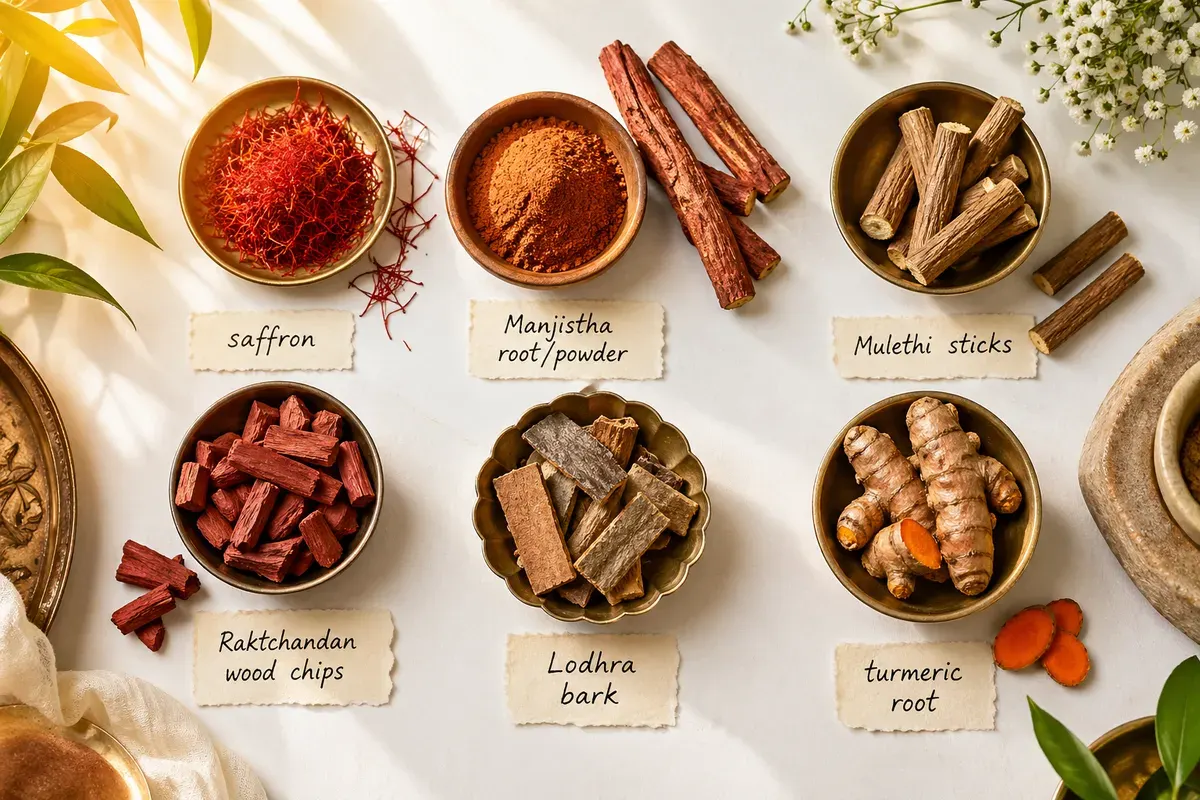
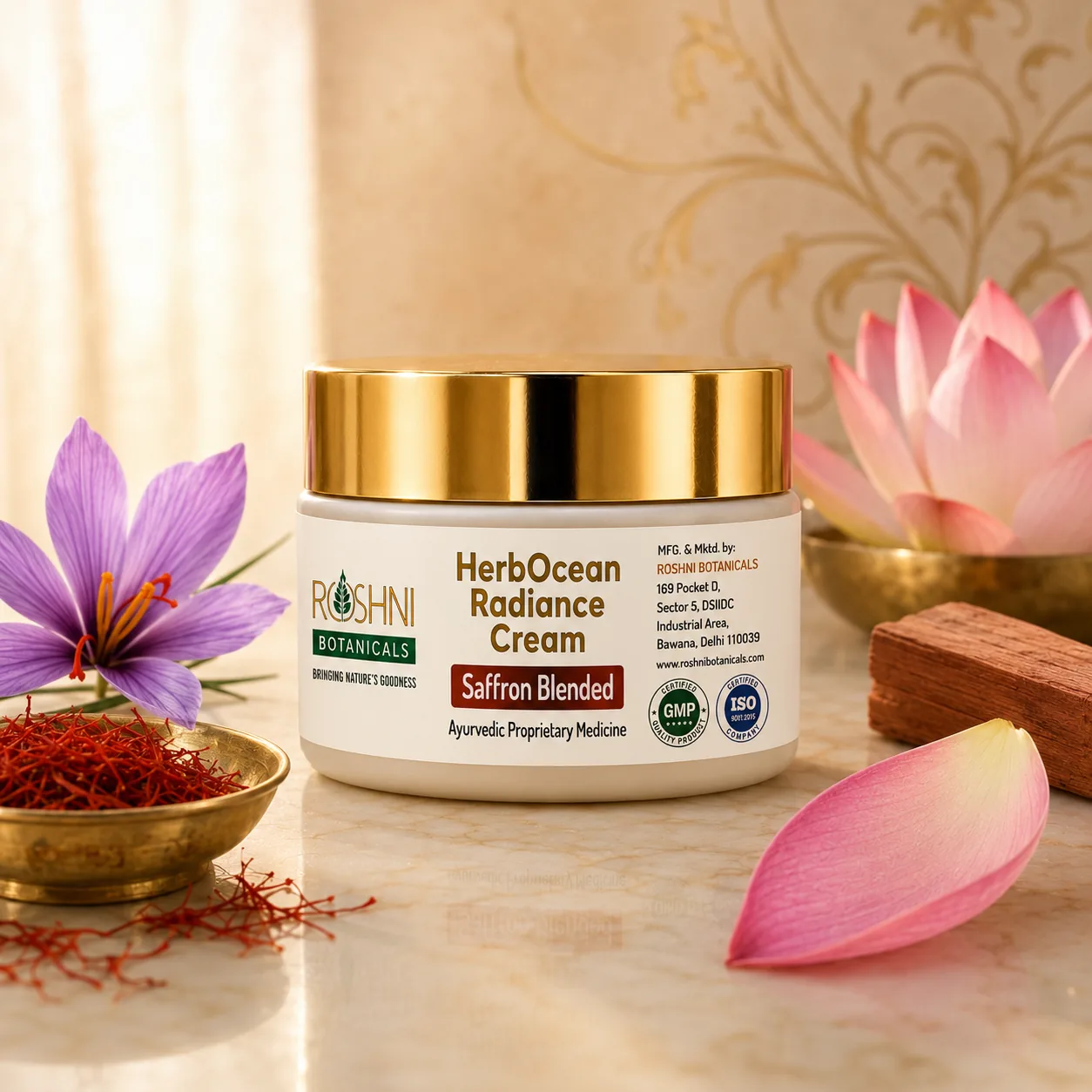
HerbOcean Radiance Cream sits on the night side of this plan: a daily saffron and sandalwood brightening cream with Manjistha, red sandalwood and lotus in a light coconut base. It is an AYUSH-licensed Ayurvedic medicine traditionally used in the care of dark spots and facial pigmentation (Vyanga). The full declaration of botanicals sits on the product page. Use a pea-sized quantity at night on clean skin.
Two boundaries, in plain words. Radiance Cream carries no sun protection factor of any kind and is not a substitute for a daytime sunscreen, so in this plan it sits at night, beside a daytime sunscreen and never in place of one. HerbOcean does not manufacture a sunscreen, and nothing in the range replaces one. Second, this cream makes no claim about skin tone or shade. What this page is describing is calm, settled, comfortable skin. For external use. Patch-test on the inner forearm 24 hours before the first full application, and if you are pregnant or breastfeeding, check with your doctor first.
The line is built on the 40-year Ayurvedic formulation legacy of Vaidya Shri Ram Prakash Ji, and Radiance Cream is made in-house at our GMP-certified unit in Bawana, Delhi under AYUSH Licence No. DL-474 A&U.
Self-care has limits, though. A dark patch that appears suddenly, an existing patch that changes colour, border or texture, or itching or burning that persists after you stop a product: each of those is a reason to see a dermatologist. So is melasma that keeps spreading despite consistent daily sun care. Home care works best on a problem that has been correctly named.
One Step at a Time
The monsoon asked a lot of your skin. September is when you give something back, slowly. Watch for a week, wash a little less, add one richer night step, and keep the morning sunscreen non-negotiable as the sky clears. None of that runs to a deadline. If pigmentation is your concern this season, HerbOcean Radiance Cream is the night side of that plan, never the morning one, and our guide to Ayurvedic care for melasma on Indian skin sets out the deeper picture.
References: India Meteorological Department, normal dates for the onset, progress and withdrawal of the southwest monsoon over India (the staged, northwest-first exit and second-half-of-September commencement described above).
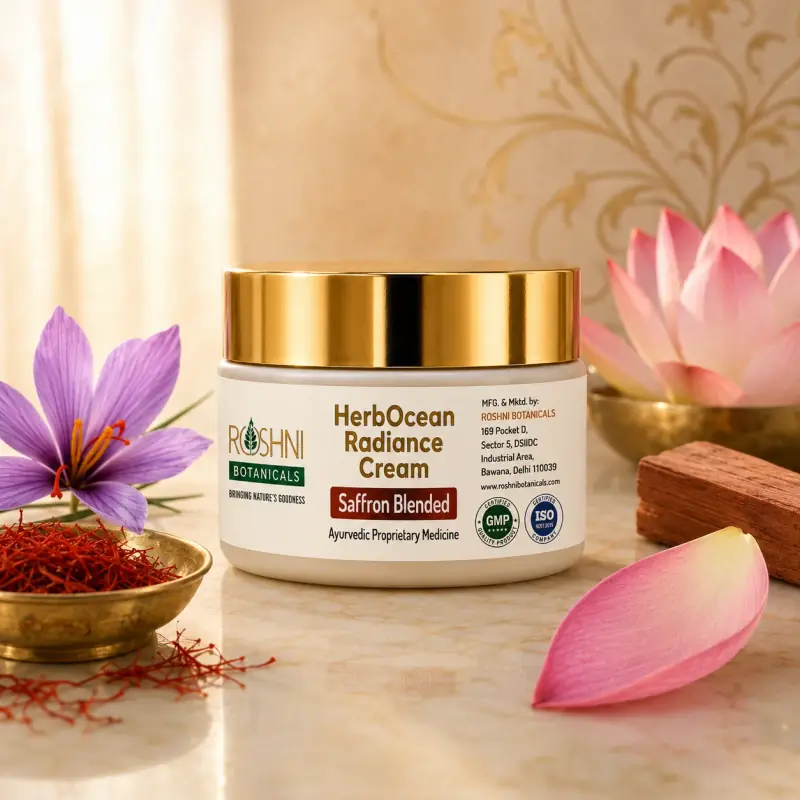
Radiance Cream
A daily saffron and sandalwood brightening cream with Manjistha, red sandalwood and lotus in a light coconut base. Supports a luminous, even-looking skin tone.

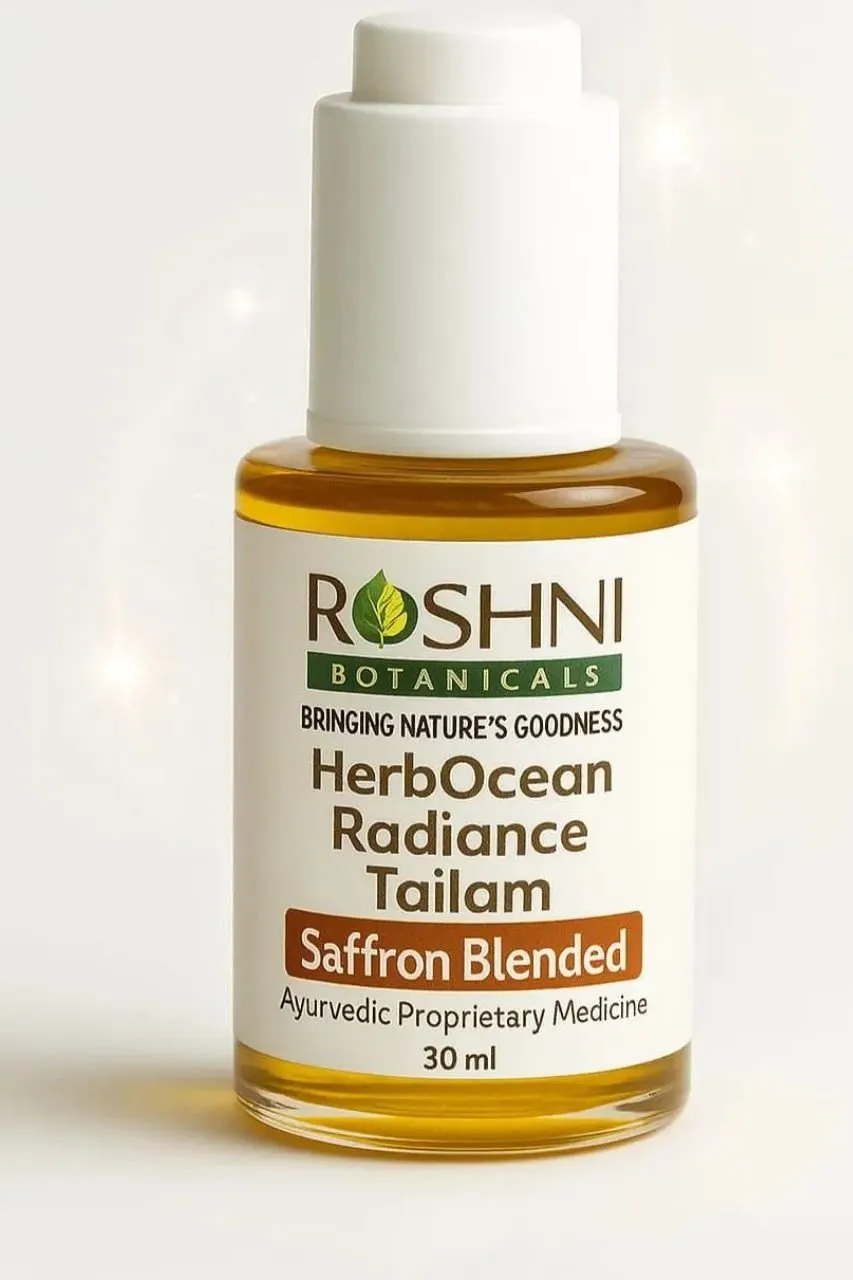
Radiance Tailam
A saffron brightening facial Taila with Manjistha and red sandalwood, traditionally used to support even tone where melasma, dark spots and PIH show.
Part of our guide: Ayurvedic treatment for melasma on Indian skin.