
Shikakai and Reetha: The Traditional Indian Hair Wash, Explained Properly
The shikakai and reetha wash, written straight: what the pods and shells do, what the method costs you, and the cautions that belong in it.
Ask anyone who grew up watching a grandmother soak shikakai pods overnight in a steel patila, and two things come back. The hair felt different afterwards. And at some point, the eyes stung. Both memories are accurate. Most writing about this wash keeps the first half and quietly drops the second, which is how a perfectly good tradition starts sounding like a sales line.
So here is the wash taken seriously as a cleansing system: what the pods are doing, what the method really costs you, and the trade-offs stated plainly, so you can decide whether it earns an evening of your week.
Key takeaways
- Shikakai (Acacia concinna) pods and reetha (soapnut, Sapindus) shells are sold dried and loose at almost any pansari, the neighbourhood herb-and-dry-goods shop, and are traditionally soaked or simmered with dried amla into a rinse.
- The lather is thin. That is ordinary for a saponin wash, and lather is a poor guide to how clean the hair actually gets.
- The rinse stings sharply if it runs into the eyes. Tilt the head back while pouring, keep the eyes shut, and flush at once with plenty of clean water if it happens.
- Long hair tangles more after this wash than after a conditioning shampoo, because the rinse offers none of the slip a conditioner is designed to give.
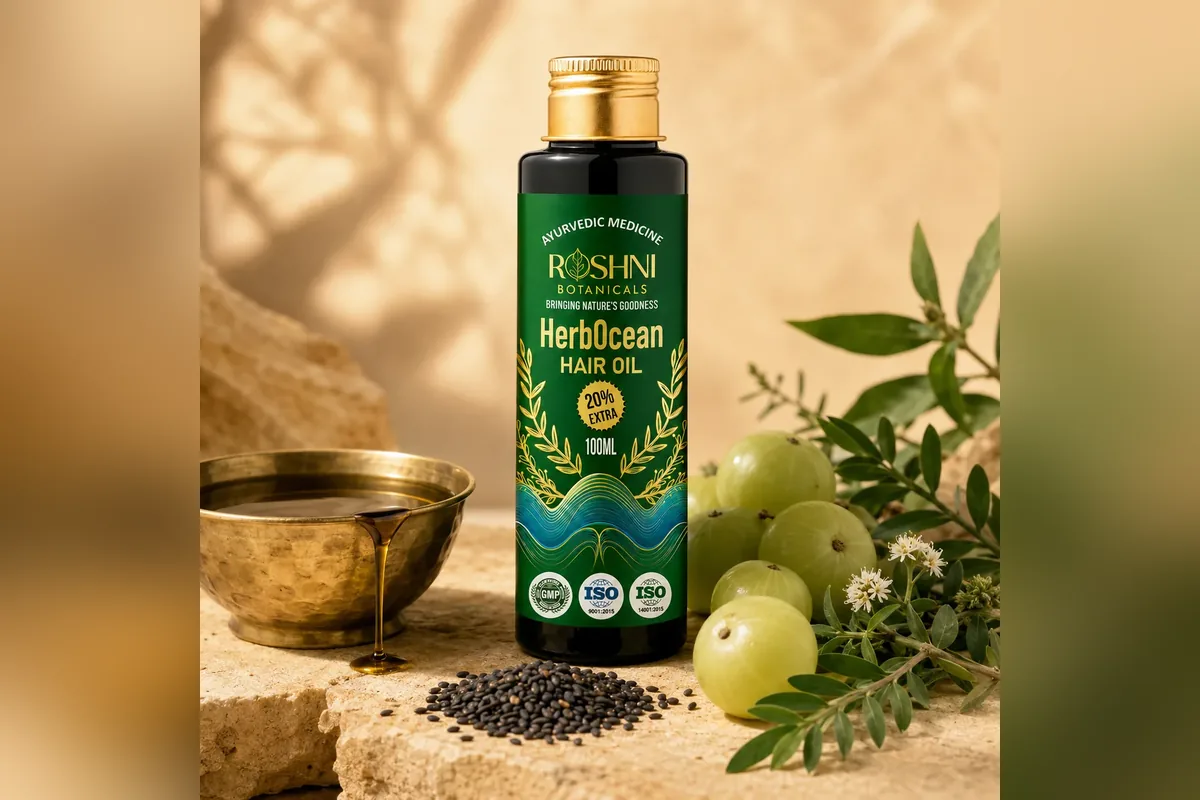
- Shikakai also appears as one of twelve herbs among the sixteen botanicals in HerbOcean Hair Oil, where it is infused into the sesame oil base for a pre-wash oiling.
What Shikakai and Reetha Actually Are
Shikakai is the dried pod of a climbing thorn shrub, sold in loose brown pieces or as powder. Reetha, the soapnut, is a round, sticky-skinned shell rather like a dried date. Dried amla (Indian gooseberry, Emblica officinalis) usually goes in with them. All three sit in open sacks at the pansari, and in most households nobody ever wrote the proportions down. You learned by eye, from whoever washed your hair when you were small. That is part of the charm, and part of the cost, as the next section sets out. We have written separately about shikakai and its two roles, in the wash and in an oil.
The cleansing comes from saponins, plant compounds that act as mild natural surfactants: they lower the surface tension of the water, loosen the oil film and the grime held in it, and keep that oil suspended long enough for the rinse to carry it away (Sang and colleagues, Heliyon, 2023, a review of tropical herbs in hair care; the surfactant chemistry of soapnut saponins is set out in Sochacki and Vogt, Plants, 2022). Reetha is the better-studied half of the pair; for shikakai the saponins are confirmed, the measurements are thinner.
At the sink, what you notice is the consequence. The rinse loosens much of the oil film on hair and scalp while raising noticeably less foam than a sulphate shampoo, and after a heavy champi oiling one round often does not take all of it off.
That low foam is the first thing that unsettles people. Foam is a poor predictor of cleansing, though: surfactant chemists measure the two separately, and some of the strongest detergents in ordinary use foam hardly at all (Arzhavitina and Steckel, International Journal of Pharmaceutics, 2010). A thin, loose lather is normal for a saponin wash, thinner still on a freshly oiled head, and what lather there is tends to sit rather than vanish. Think of this as a different cleansing system from modern shampoo rather than a superior one.
Shampoo is convenient, consistent bottle to bottle, and formulated with conditioning agents already built in. The pod rinse is cheap, variable, and close to how hair got washed in most Indian homes two generations ago. Both get hair clean. What differs is what each one asks of you in return.
The Trade-Offs Nostalgia Skips
Start with what a nostalgic listicle will not tell you. Long hair tangles after this wash, sometimes considerably. Human hair carries a slight negative charge when wet, and a conditioner works by laying positively charged agents over it as a lubricating film. This rinse deposits nothing of the kind, so expect more tangling, especially on long hair. Run a wide-tooth comb through before you wash and you save yourself a good deal of pulling afterwards.
Home batches vary too. Pods differ by season and by shop, your simmering time differs by mood, and the wash you make this month will not be identical to the one you made two months ago. Hair used to shampoo can also take a few washes to feel normal to you, which is as much a recalibration of what clean feels like as any change in the hair. Then there is the plain matter of effort. Soaking, simmering, cooling and straining take an evening of attention. Unscrewing a bottle does not.
The eye sting deserves its own paragraph. The rinse stings sharply if it runs into the eyes, and being a plant does not make a molecule kind to a cornea. Pour with the head tilted well back and the eyes firmly shut, use a mug from a bucket rather than tipping the whole jug, and keep the liquid along the hairline and away from the forehead. If it does get into an eye, take contact lenses out first if you wear them, hold the lid open, and flush with clean, gently running water for a good ten minutes without rubbing. If pain, redness or blurring carries on after you have flushed, have the eye examined the same day.
One stinging wash is usually all it takes for a child to refuse the next one, which is why the memory sticks. So an actual instruction for children, not just a memory: think twice before using this on a small child at all, and never on a baby or toddler. For an older child, an adult prepares and pours, the head goes well back, a dry folded towel goes over the eyes, and you stop the moment the child complains. Keep the jug out of reach between pours.
Hard water changes the experience too. Mineral-heavy supply changes how any low-lather rinse feels and rinses out, and our guide to hard water and hair fall covers what your tap is doing to your hair.
One note on humidity. When the air is heavy, hair takes noticeably longer to dry, so wash early in the day and let it dry fully before evening.
A Starter Method, and the Cautions Inside It
Take what follows as a starting point. Households vary it freely, and yours will too.
The day before, do two things. Comb the hair out with a wide-tooth comb, so it goes into the wash untangled. And patch-test: dab a little of the strained rinse, or a strong pinch of the soaked liquid, on the inner forearm, leave it a few minutes as it would sit on the scalp, rinse it off, and leave the spot alone for at least twenty-four hours, longer if your skin reacts easily. Redness, itching or a raised patch there means this wash is not for you.
Then the wash itself. Take roughly equal parts dried shikakai pods and reetha shells, a small handful of each for shoulder-length hair, with dried amla if you like it in the mix. If the sting worries you, start with less reetha than shikakai: the shell is the part most associated with the sting, and the rinse still cleanses with a smaller share of it. Soak the lot overnight in about a litre of water, or simmer it gently until the water darkens and the pods go soft. Let it cool completely before you go near it.
Now strain it well, twice if you have the patience, through a muslin cloth. Skimp here and gritty plant residue ends up in the hair, which is tedious to comb out later. Pour the strained liquid slowly through wet hair with the head tilted back, work the scalp with your fingertips, then rinse thoroughly with plain water. A few drops of oil worked through the damp lengths afterwards, lengths and ends only, restore some of the slip the wash does not provide.
Make only what you will use that day. This is plant matter in water with nothing in it to preserve it, so a jug left standing in warm weather turns quickly. Use it the same day and pour away what is left, rather than saving it for next week.
Powder or Whole Pods?
Shikakai and reetha both sell as ready powder, and the powder is a fair shortcut: it needs no overnight soak, a short simmer or even a hot-water steep does the job. The catch is straining. Powder slips through muslin far more easily than pod fragments do, so sieve it dry first, then strain the liquid twice, or resign yourself to grit. You will also see the powder sold for mixing into a thick paste that sits on the head for twenty or thirty minutes. We prefer the strained rinse described here: it does the same cleansing work, rinses out far more easily, and leaves nothing behind to dry into the roots.
Most people who keep this up settle back into whatever rhythm they already washed on. How often to wash in general is a bigger question, and our post on how often you should actually wash your hair answers it properly.
If your hair is coloured, chemically processed or carrying henna, accounts of how saponin washes behave on it are mixed, and any effect would build over repeated washes rather than showing in a single try. If you have just applied henna, give the colour a day or two to settle first. And if the colour matters a great deal to you, this is not the wash to experiment with first.
If your scalp is currently sore, broken or under a doctor’s care, leave this wash aside until it has settled. A saponin rinse will sting on broken skin, and if a doctor is already treating the scalp, ask them before adding anything new to it.
Two thresholds close the method. Urgent, the same day: redness spreading from the scalp onto the face, or swelling of the eyelids or face. And book a dermatologist if the scalp itches, burns or flakes persistently after washes, if there is sudden patchy hair loss, or if you notice tender, weeping or crusted patches on the scalp. That is the same threshold you would apply to anything else you put on your skin.
Where the Same Tradition Lives in an Oil
The same shikakai turns up in a second form. In the sixteen-botanical HerbOcean Hair Oil it is one of twelve herbs, alongside Bhringraj, Jatamansi, Brahmi, Amla, Nagarmotha, Chharila, Sugandhbala, Gudal (hibiscus), Tulsi, Gulab (rose) and Neem, infused into a sesame oil (Til tail) base. The lavender, curry leaf and rosemary at the end are finishing oils rather than herbs, which is why the formula is described as sixteen botanicals and not sixteen herbs.
HerbOcean Hair Oil is an Ayurvedic medicine for external use, traditionally used in the care of hair fall and dull hair. It slots into the pre-wash champi rhythm plenty of households already keep: oil the scalp and lengths the way the step-by-step oiling routine lays it out, then wash. Oiling before the wash also makes the pre-wash detangling easier, since oiled hair combs with less pulling; the slip after the wash comes from those few drops through the lengths, not from anything that survives the rinse. Washing before a function or an occasion? That is the order to follow.
Two boundaries are worth saying out loud. Hair simply does not grow faster than it grows, whatever a packet may suggest: growth rate is set at the follicle, and what a steady routine can influence is narrower, the comfort of the scalp and how much hair you lose to breakage and rough handling. And nothing you wash with stops hair fall, the pod rinse and your shampoo alike. An Ayurvedic oil sits in a different register rather than a stronger version of the same promise: the Hair Oil is described by its classical indication and left there. Our definitive guide to Ayurvedic hair oils for hair fall control sets out what a routine can and cannot reasonably govern.
The formulation carries the forty-year Ayurvedic formulation legacy of Vaidya Shri Ram Prakash Ji, the master formulator behind the HerbOcean line. It is made in-house at our GMP-certified unit in Bawana, Delhi, under AYUSH Licence No. DL-474 A&U. For external use. Patch-test before first use.
Keep the Tradition in Whichever Form Fits Your Week
You do not have to pick a side. Some weeks the pods are worth an evening. Other weeks a bottle is simply what your life allows, and alternating between the two is an entirely ordinary thing to do. If the wash appeals, use the method above with both cautions attached to it. If it does not, the same shikakai is already at work in the pre-wash champi. Either way the thresholds stand: persistent itching, burning or flaking after washes, or sudden patchy hair loss, means it is time to see a dermatologist.
References: Sang SH, Akowuah GA, Liew KB, et al. Natural alternatives from your garden for hair care: revisiting the benefits of tropical herbs. Heliyon. 2023;9(11):e21876 (narrative review; covers shikakai and reetha saponins as natural surfactants). Sochacki M, Vogt O. Triterpenoid saponins from washnut (Sapindus mukorossi Gaertn.), a source of natural surfactants and other active components. Plants. 2022;11(18):2355 (review of soapnut saponin surfactant chemistry). Arzhavitina A, Steckel H. Foams for pharmaceutical and cosmetic application. International Journal of Pharmaceutics. 2010;394(1-2):1-17 (foam formation is a cosmetic attribute, not a measure of cleaning).
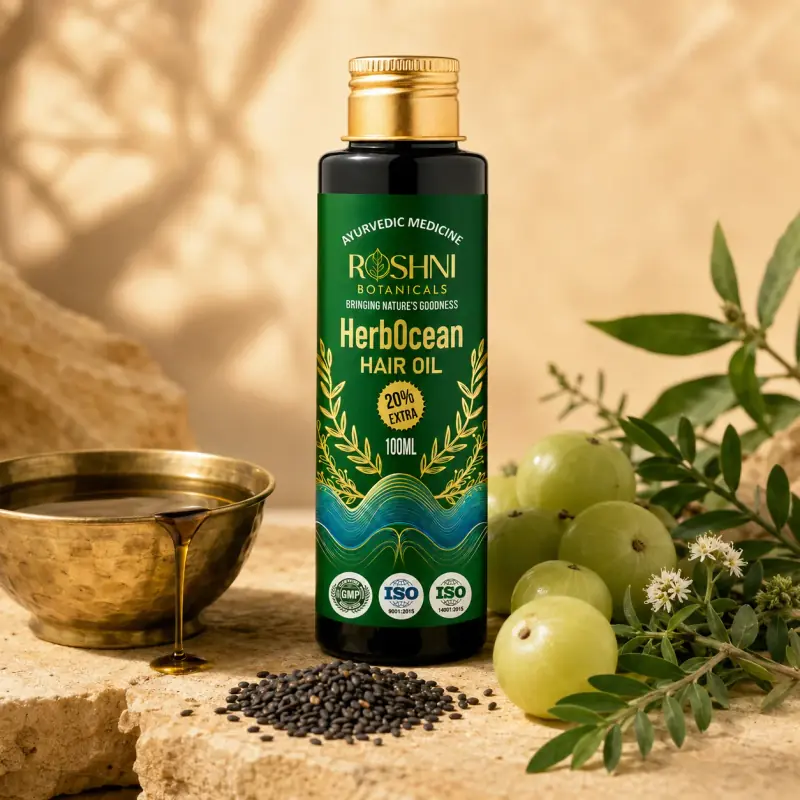
HerbOcean Hair Oil
A classical Taila for hair fall, dullness and a flaky scalp, with sixteen botanicals like Brahmi, Jatamansi, Amla and Neem in a slow sesame base.
Part of our guide: The definitive guide to Ayurvedic hair oils for hair fall.