Dark Elbows, Knees and Knuckles: Patient Ayurvedic Care for Body Pigmentation
Elbows, knees and knuckles darken from friction and pressure. The texture test that shows when a doctor should look, and the patient care that helps.
The darkening over elbows, knees and knuckles is, time and again, friction and pressure at work: skin that is leaned on, knelt on and bent all day thickens a little, dries out and, on melanin-rich skin, holds more pigment. It can settle once the friction comes down, the skin stays moisturised and the exposed areas get sun care. A velvety, thickened darkening that also shows at the neck or in the skin folds is a different pattern, and it deserves a doctor and a blood sugar check.
You notice it when you roll up a sleeve, sit cross-legged on the floor or rest your hands on a keyboard: the skin over the elbows, knees and finger joints sits darker and rougher than the skin around it. Few things skin does are more ordinary, and few get scrubbed harder. What helps is quieter than the home remedies people pass around, and one pattern in this family belongs with a doctor rather than a jar.
Key takeaways
- Elbows, knees and knuckles darken from friction and pressure: the skin thickens, dries out and, on melanin-rich skin, holds on to more pigment.
- Texture is the first test. Rough, ashy skin points to friction. A velvety, slightly raised darkening deserves a doctor and a blood sugar check.
- Scrubs, neat lemon juice and baking soda add irritation, and melanin-rich skin can turn that irritation into marks of its own.
- Less friction, steady moisture and sun care come first. An Ayurvedic oil joins the night step after them.
- Softer, less ashy, more comfortable skin is the first change to look for; colour, if it shifts, follows later.
Why Elbows, Knees and Knuckles Darken in the First Place
Think about the work these spots do all day. Elbows lean on desks and car window ledges. Knees take your weight when you kneel for puja, sit cross-legged or squat for floor work. Knuckles fold, stretch and get washed again and again. Skin answers repeated pressure the way a working hand grows a callus: it thickens a little, holds on to dead cells and turns dry and ashy. And ashy skin already looks darker before any extra pigment arrives.
Then the pigment follows. Sachdeva set out the Fitzpatrick typing of Indian skin in 2009, with type V the largest group and type IV behind it, and skin with that much melanin answers repeated irritation by making more of it. That is post-inflammatory hyperpigmentation (PIH). A little extra depth of colour over the joints is ordinary. It is not a defect, and it says nothing about how clean you are.
Knuckles take the harder road. They meet soap and detergent again and again, and hard water leaves skin drier, with its barrier under strain: in a United Kingdom study of 80 participants, skin that had been washed in hard water carried more cleanser residue and more irritation afterwards. Then there is the sun on the backs of your hands. Friction, dryness and light, all on one small patch of skin. Gloves and a hand cream by the sink do more for knuckles than any scrub.
Ayurveda reads the same picture in its own language. Skin (Twak) that is dry, rough and worked all day looks like a Vata picture, Vata being the dosha that carries dryness and roughness (Ayurveda works with three such biological energies). So classical care turns to oil: the Charaka Samhita counts Abhyanga (classical full-body oil massage) among the daily habits that keep the skin in good condition.
The underarms and the neck have stories of their own, with razors, deodorants and chains in them, and they get their own pages. This one stays with the joints.
The Texture Test: Friction Darkening or Something a Doctor Should See
Run your fingertips over the dark patch. Friction darkening feels rough, dry or a little ashy. It sits exactly where the pressure falls, and it crept in slowly.
A different pattern feels soft, velvety and slightly raised, sometimes with small skin tags nearby. It shows on both sides of the body, at the back of the neck, the underarms and the groin first of all, and sometimes over the knuckles, elbows or knees. Doctors call this acanthosis nigricans, and Indian research has linked it with insulin resistance, the state in which the body responds less well to its own insulin. One Indian study in children and young people found the link in those of normal weight as well, so it deserves attention whatever your build.
This pattern needs a doctor and a blood sugar check rather than a cream, Ayurvedic or otherwise. See a physician if the skin feels velvety, if the darkening appeared or spread quickly, or if it came along with weight change, excessive thirst, frequent urination or irregular periods. Let the doctor choose the tests, and expect a look at the elbows and knees themselves, since the same velvety change can sit there.
Two more look-alikes belong with a dermatologist: thick, well-defined, scaly patches over the elbows or knees, and any darkening that turns up suddenly, itches or spreads quickly when your routine has not changed at all. So the short version runs like this. Rough and ashy, where you lean or kneel, arrived slowly: friction, and nobody to see unless it changes. Soft and velvety, at the neck or in the folds as well: a physician and a blood sugar check before any jar. Thick, scaly or sudden: a dermatologist.
Why Scrubbing, Lemon and Quick-Fix Creams Make It Worse
In Hinglish the question runs kohni ka kalapan kaise kam kare, and the answers passed around are scrubs, lemon halves and baking soda with milk. The trouble is this. The darkening is the skin answering friction, so a loofah, a pumice stone or a gritty scrub adds more of the cause. The patch looks smoother for a while, and then the skin thickens again to protect itself.
Neat lemon juice and baking soda can sting and dry a patch that is already rough. Lemon carries a second catch. Citrus left on skin that then goes out into the sun, on the forearms or the backs of the hands, can set off phytophotodermatitis, a reaction whose dark marks outlast the sting.
Creams sold on a quick change of colour can sting too, and on melanin-rich skin a sting can settle into a mark of its own, the very mark you were trying to lose.
Underneath all of this sits a colour question. No herb changes the colour you were born with. Patient care supports calmer, softer skin over the tone that is naturally yours.
This is not a case against tradition. A smooth ubtan, or a besan and haldi pack, kept on for a short while and rinsed away with no rubbing, is a fine way to keep it. The rubbing is what backfires, not the heritage.
A Patient Routine: Moisture, Less Friction and Sun Care
Start with moisture, because dry skin over a joint looks darker and rubs harder. Oil or moisturise your elbows, knees and hands straight after the bath, while the skin is still a little damp, and pat dry. Where the water is hard, keep the soap mild and moisturise right after washing instead of scrubbing. In dry air your hands will want it after every wash.
Next, take some of the pressure off. A small cushion or a folded cloth under the elbows at the desk and in the car helps, and so does a soft mat under the knees for floor work and puja; a thin folded towel does the job when there is no mat, and for the elbows the cheapest fix is the one you carry everywhere, a sleeve. Loose cotton rubs less than tight synthetic fabric. Gloves for dishwashing and detergent work spare the knuckles.
Sun reaches more of the body than you might expect: forearms and elbows in short sleeves, the backs of your hands on a two-wheeler or in the car. Sunscreen on the exposed areas belongs in the morning step. HerbOcean does not manufacture a sunscreen, and nothing in the range replaces one, so your sun protection stays a separate step.
Where the Night Oil Fits
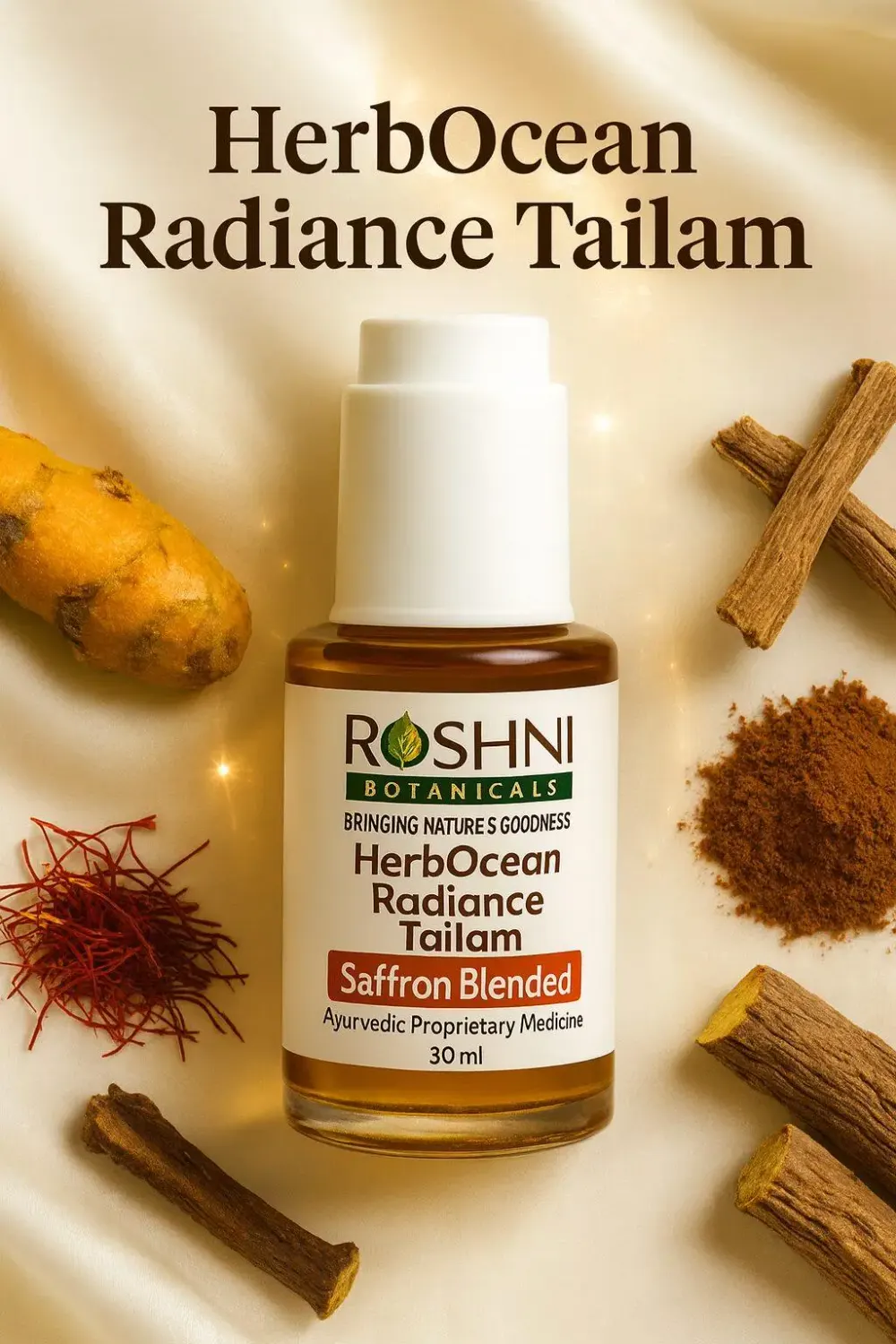
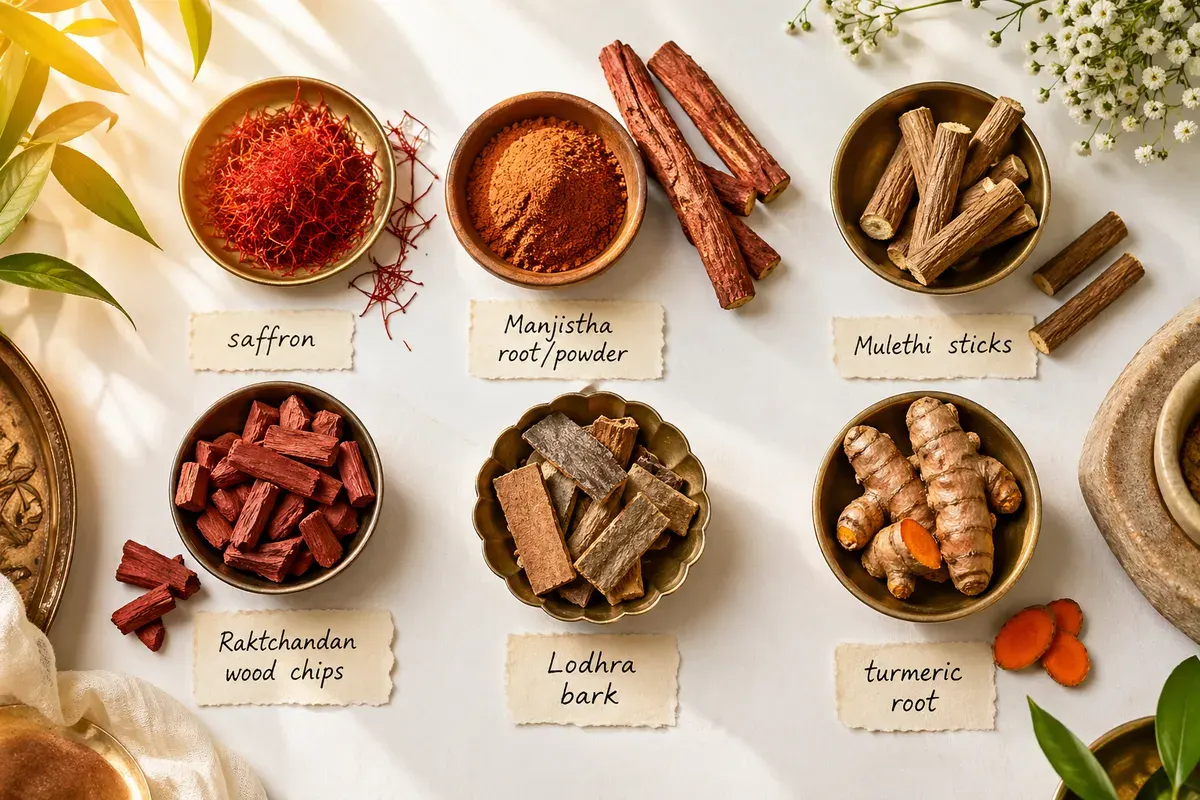
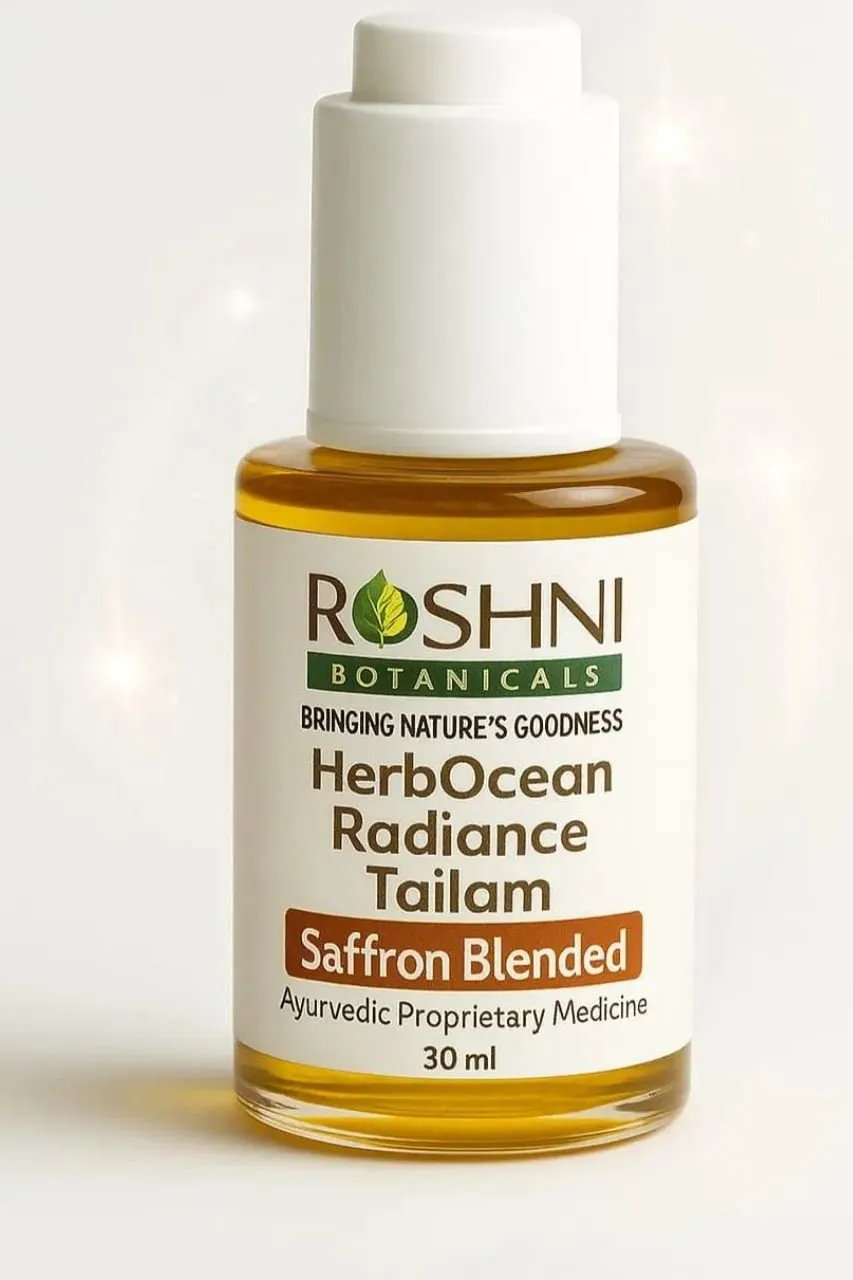
Once the friction is down and the skin is getting its moisture, an Ayurvedic medicine can join the night step. HerbOcean Radiance Tailam is an AYUSH-licensed Ayurvedic medicine for external use, classically indicated for melasma (Vyanga) and traditionally used to support even tone where dark spots and post-inflammatory hyperpigmentation (PIH) show on melanin-rich Indian skin. Its twelve herbs, in equal measure, are Amla, Baheda, Harad, Chandan (sandalwood), Raktchandan (red sandalwood), Haldi (turmeric), Manjistha, Kuth (costus root), Kamal (lotus), Padmaakh (wild Himalayan cherry) bark, Kakoli and Palash (flame of the forest) flower, with Kesar (saffron) and with lavender, rose and mogra oils, in a sesame (Til tail) base. It is made in-house at our GMP-certified unit in Bawana, Delhi, under AYUSH Licence No. DL-474 A&U, and built on the 40-year Ayurvedic formulation legacy of Vaidya Shri Ram Prakash Ji. One of those herbs has a page of its own, on Manjistha for skin and dark spots.
Its classical indication is Vyanga, which the classical texts place on the face. So on elbows, knees and knuckles, think of it plainly for dark spots and uneven tone.
The direction is short. At night, press a few drops over clean skin, concentrating on areas of uneven tone. The right amount differs from person to person. Patch-test on the inner forearm 24 hours before first use and discontinue if irritation occurs; avoid the eye area. For external use only. Avoid it if you are allergic to sesame or a listed botanical. If pregnant or breastfeeding, check with your doctor. Keep it off broken or cracked skin.
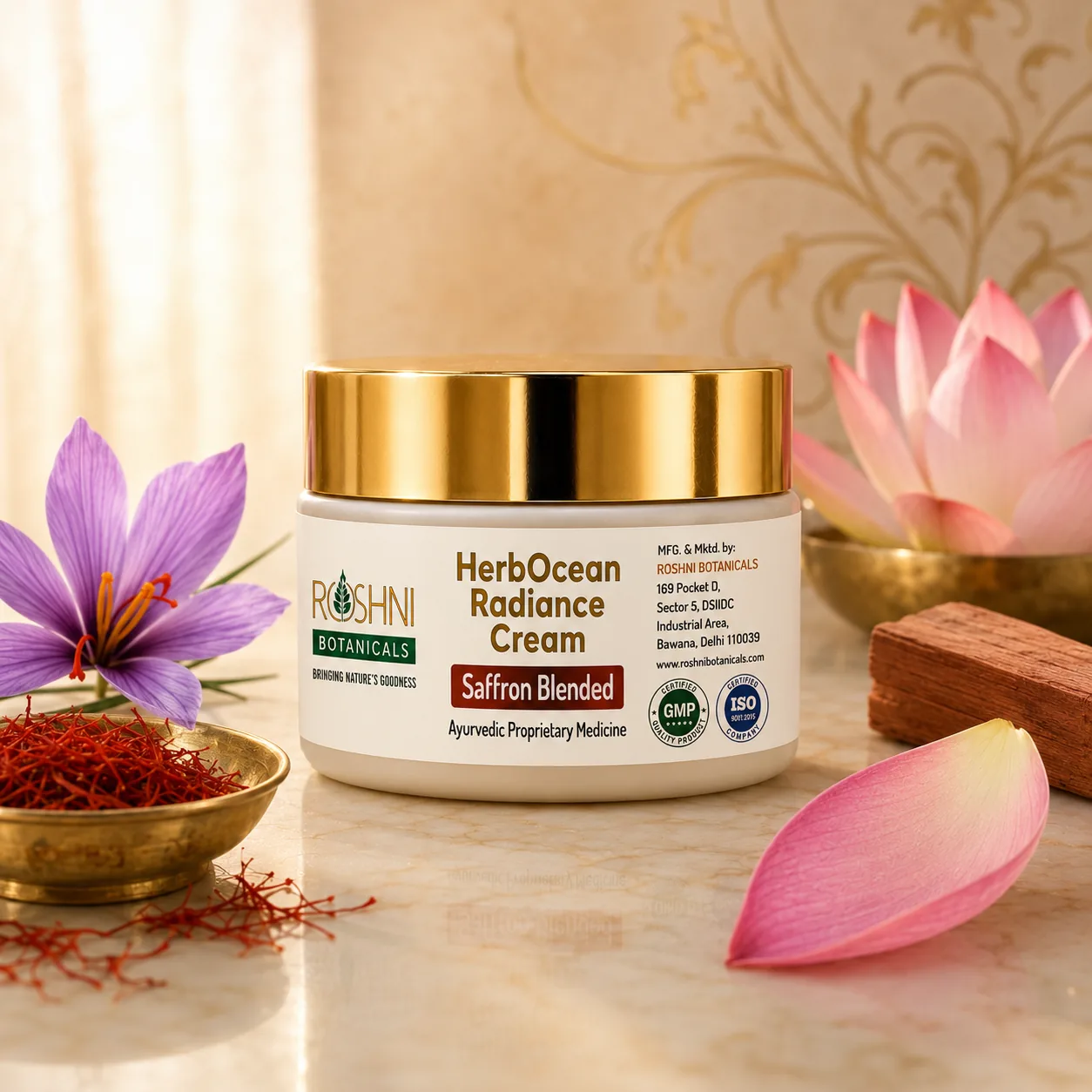
By day the companion is HerbOcean Radiance Cream, which is an Ayurvedic medicine for external use, classically indicated for facial pigmentation (Vyanga, the patches Hindi homes call jhaiyaan) and traditionally used in the care of dark spots and uneven tone. The product page itself pairs the two, cream for the day and oil for the night, and the cream sits under your sunscreen. Keep the oil in its place: after the friction is down, and never ahead of the doctor visit for velvety skin.
What Change Looks Like, and When to Ask for Help
Skin over the joints is thicker than facial skin and keeps getting rubbed, so it answers slowly. Watch the texture first. Skin that feels softer, looks less ashy and is more comfortable to lean on is the early sign. Colour, if it shifts at all, comes later, settling closer to the skin around it. Photographs help, taken in the same light now and then, because change this slow is easy to miss from one day to the next.
Know when to ask for help. If the skin turns velvety, or your neck and folds darken too, see a physician for a blood sugar check. If you notice scaly plaques, itching or sudden spread, or nothing has changed despite steady care, see a dermatologist. If your real concern is the face, read Ayurvedic treatment for melasma on Indian skin.
Start With the Friction
Begin small: a cushion under the elbows, a soft mat under the knees, gloves for the dishes and moisture after every bath. Run the texture test, and if the skin feels velvety, see a doctor before anything else. For the night step, that Tailam is the one in our range made for dark spots. The rest of the Ayurvedic skincare range is there when you want it.
References: 1. Nithun TM, Ranugha PSS, Betkerur JB, Shastry V. Association of acanthosis nigricans and insulin resistance in Indian children and youth: a HOMA2-IR based cross-sectional study. Indian Dermatology Online Journal, 2019. Cross-sectional study, 60 cases and 30 controls, India; the link held at normal weight. 2. Varthakavi PK and colleagues. Acanthosis nigricans: a dermatologic marker of metabolic disease. Indian Journal of Dermatology, Venereology and Leprology, 2002. Original study, 36 patients, India. 3. Danby SG, Brown K, Wigley AM and colleagues. The effect of water hardness on surfactant deposition after washing and subsequent skin irritation in atopic dermatitis patients and healthy control subjects. Journal of Investigative Dermatology, 2018. Case control study, 80 participants, United Kingdom. 4. Ellis CR, Elston DM. Psoralen-induced phytophotodermatitis. Dermatitis, 2021. Narrative review; the marks that follow the reaction. 5. Hankinson A, Lloyd B, Alweis R. Lime-induced phytophotodermatitis. Journal of Community Hospital Internal Medicine Perspectives, 2014. Case report, one patient, United States. 6. Charaka Samhita, Sutra Sthana 5. The daily regimen; oil massage among the habits that keep the skin well. 7. Sachdeva S. Fitzpatrick skin typing: applications in dermatology. Indian Journal of Dermatology, Venereology and Leprology, 2009. Review; type V, then type IV, for Indian skin. Educational, not medical advice.
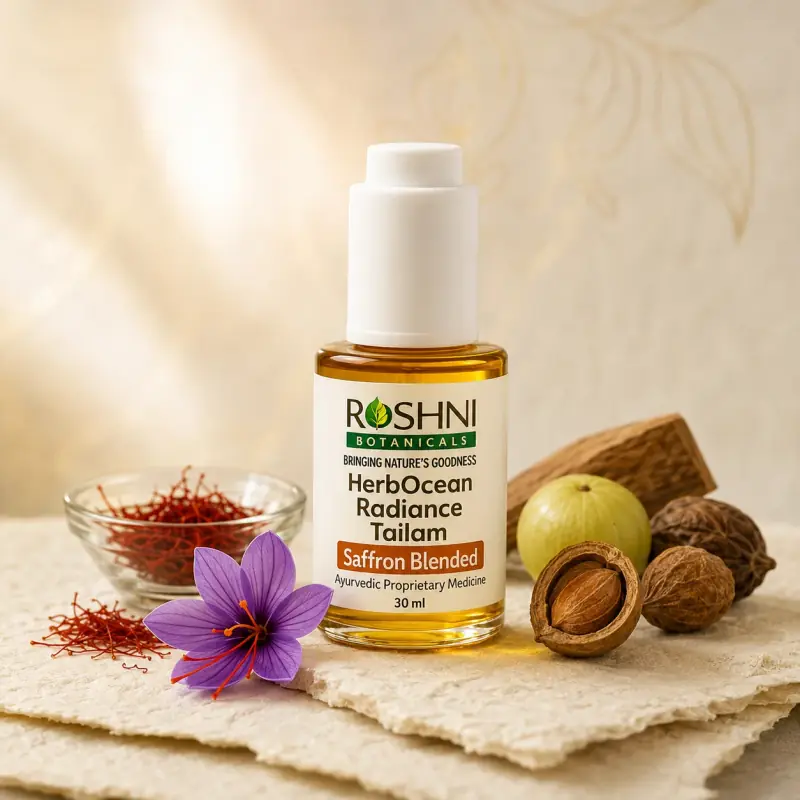
Radiance Tailam
A saffron brightening facial Taila with Manjistha and red sandalwood, traditionally used to support even tone where melasma, dark spots and PIH show.
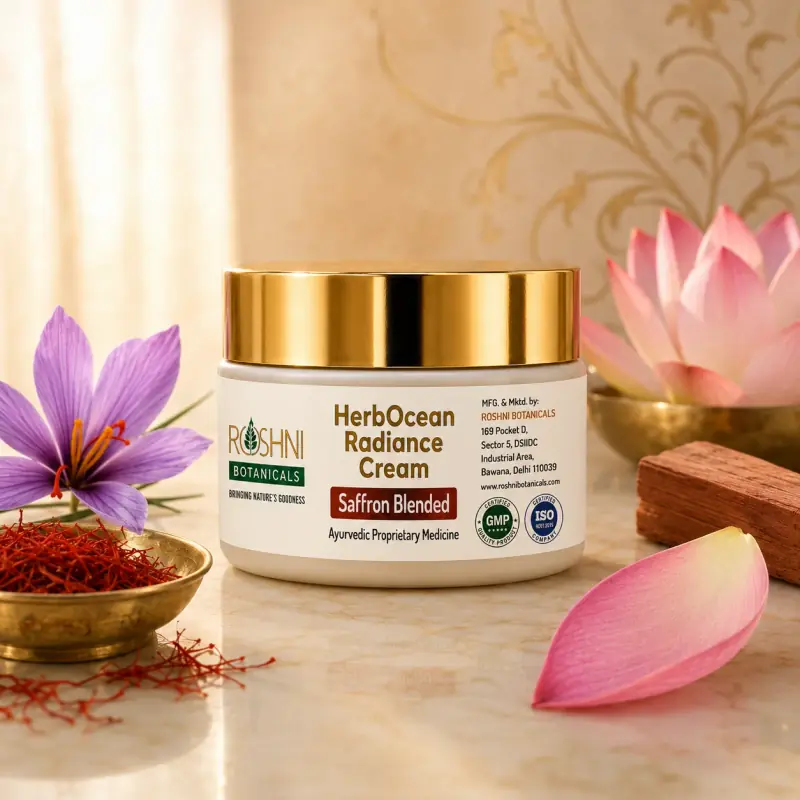
Radiance Cream
A daily saffron and sandalwood brightening cream with Manjistha, red sandalwood and lotus in a light coconut base. Supports a luminous, even-looking skin tone.
Part of our guide: Ayurvedic treatment for melasma on Indian skin.