Neck Pigmentation and Decolletage Care: The Zone Your Routine Forgets
Neck and chest pigmentation has four drivers of its own, and one texture test that tells you whether it needs a doctor rather than a routine.
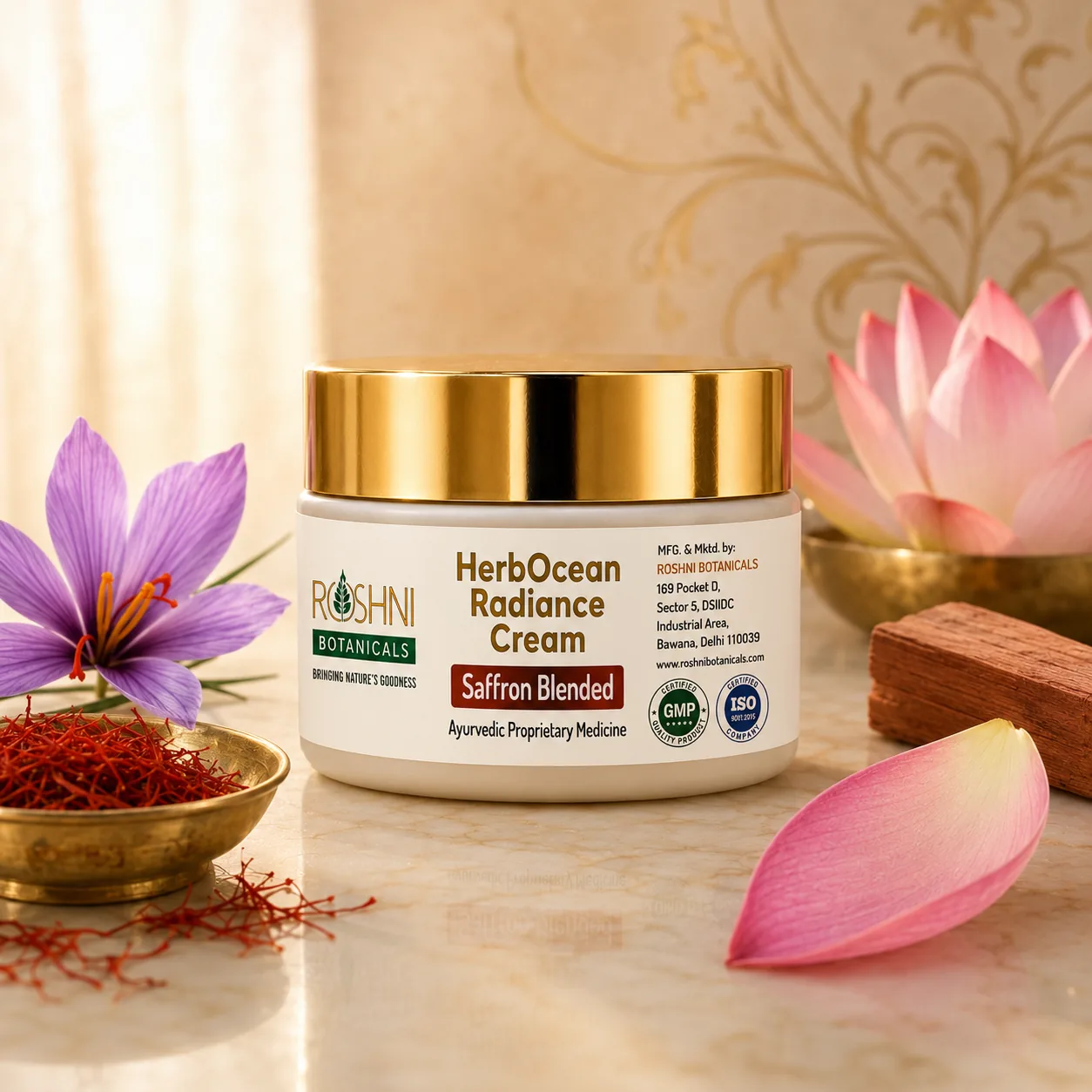
You notice it in a photograph, usually. A face that looks calm and even, sitting above a neck and chest that look patchy and mottled. Chains that never come off, perfume sprayed straight onto the neck, a routine that ends at the jaw: every one of them has been working on you for years. One thing to be clear about before anything else. HerbOcean Radiance Tailam is a night-time medicated oil (Taila), the one this routine ends with. It carries no sun protection factor of any kind, and it is not a substitute for sunscreen.
Key takeaways
- Neck and decolletage pigmentation has four drivers of its own: sun that has been adding up on skin your sunscreen rarely reaches, friction from chains and collars, fragrance sprayed onto the neck before daylight, and a skincare routine that stops at the jaw.
- Texture is the doctor test. Flat patchiness from sun and friction feels like the skin around it. A velvety, thickened darkening in the folds can be acanthosis nigricans, and that needs a physician first.
- The Ayurvedic answer extends the routine you already have. Every step that currently stops at the jaw, from cleanser to night oil to morning sunscreen, gets carried down to the collarbone.
- On melanin-rich Indian skin, small repeated episodes of friction or irritation can settle as post-inflammatory hyperpigmentation (PIH). That is why neat lemon juice, baking soda and gritty scrubs leave the neck worse than they found it.
- HerbOcean Radiance Tailam is an AYUSH-licensed Ayurvedic medicine for external use. It carries no sun protection factor of any kind, and nothing in it changes your skin's natural colour.
Why the Neck and Decolletage Pigment Differently From the Face
Start with the sun, the first of the four. The neck and the open V of the chest take sunlight on every commute, every school run and every balcony chai, yet almost nobody carries sunscreen below the jaw. Cloud cover does not switch this off, and our post on sun protection covers why sunscreen still earns its place under cloud. The instruction here is short. Whatever sunscreen you apply to your face in the morning goes down to the collarbone too, and that job belongs to an actual sunscreen, never to a facial oil.
The second driver is friction. A mangalsutra or chain, blouse hooks, the edge of a dupatta and the strap of a heavy bag rub the same lines of skin, day after day. Rubbed skin answers with pigment. The third hides inside a good habit: perfume and deodorant sprayed straight onto the neck before you step into daylight can work against you, because some fragrance ingredients are reported to make skin more reactive to sunlight. The practical fix costs nothing. Spray fragrance onto your clothes or into the air and walk through the mist, and keep the neck itself bare of perfume before daytime.
The fourth driver is the demarcation line itself. Years of cleanser, moisturiser and care that stop at the jaw leave a visible border where looked-after skin ends and ignored skin begins. It is the least dramatic of the four and probably the most common.
The skin in this zone also behaves differently. The neck is generally described as thinner than the cheek, in near-constant movement, and carrying fewer oil glands, so it dries out and gets irritated faster. On melanin-rich Indian skin, what follows is well recognised: each small episode of irritation can settle as post-inflammatory hyperpigmentation (PIH), a brown mark that outlasts its cause by months. The underarms are a different story, and we covered them separately in why the underarms darken and what actually helps. That zone is a fold problem driven by friction, deodorant and shaving. The neck is primarily a sun-and-friction problem, on skin that is always on show.
The Honest Self-Check: When a Dark Neck Needs a Doctor, Not a Routine
Run your fingertips across the darkened area. Flat, patchy discolouration from sun and friction feels exactly like the skin around it. Acanthosis nigricans feels different: velvety and thickened under the fingers, sitting symmetrically in the folds of the neck, and often showing up at the underarms, knuckles or groin at the same time. Nothing you rub on is the answer to that, this oil included. It can be an early signal worth investigating properly, rather than something to hide under a scarf or scrub at harder.
See a doctor rather than starting a routine if any of these apply to you. The darkening thickened over weeks rather than years. The texture is velvety, or it comes with skin tags. The change arrived alongside irregular periods, unexplained weight change, excessive thirst or frequent urination. You notice itching, scaling or rapid spread. Or it appeared suddenly when you have changed nothing at all. Ask your physician whether metabolic screening makes sense in your case, and let them choose the tests. A dermatologist is also the right first stop for any pigmentation that is deepening fast, and not behaving like slow sun damage.
This is worth saying plainly rather than burying in a caution at the end. A dark neck is one of the more common reasons people buy a pigmentation product, and it is also one of the few skin signs that can be pointing at something systemic. Checking the texture takes ten seconds and costs nothing, and it is the difference between a routine that might help and a routine that quietly delays a diagnosis.
Two boundary lines keep this article in its lane. The fold-and-friction story of the underarms already has its own page, linked above, and will not be repeated here. And if your patchiness extends to the arms, back or knees, our guide to body pigmentation in Ayurveda covers those zones. This one stays with the neck and decolletage.
Extend the Routine Down: A Jaw-to-Collarbone Method
You do not have to buy anything new, and there is no second routine to learn. The whole method extends the daily routine (dinacharya) you already follow: every step that currently stops at the jaw gets carried down to the collarbone and the top of the chest. Cleanser at night, then the oil, then moisturiser if you use one. Sunscreen in the morning, and it has to be an actual sunscreen, because the night oil contributes nothing to sun protection. Work with light, upward strokes from the collarbone towards the jaw for about two minutes, and never drag downward on damp skin. The pressure of a head-oiling massage (champi) is about right: firm enough to feel, gentle enough to repeat nightly.
Hard water deserves a plain mention, and Delhi is the case that has actually been measured. Mineral-heavy water leaves soap residue sitting on the neck, and that film quietly adds to the irritation load. Three habits help. Finish with a final rinse of plain water. Pat the neck dry with a soft towel instead of rubbing it. Apply moisturiser or the night oil while the skin is still slightly damp, so it holds water instead of losing it.
The chain question is entirely yours to decide. If you are comfortable taking a chain off during the evening massage, the skin under it gets some air. If you do not take a mangalsutra off, and for many people it is simply not something that comes off, wipe the chain clean and dry every day, and shift it slightly so the same line of skin is not always under friction. Either way, let the neck dry fully before a blouse or kurta collar goes back on. Damp fabric on damp skin is what quietly makes things worse.
Traditional care belongs here too. A smooth ubtan or a besan-haldi pack, left on briefly, is perfectly reasonable on the neck, and anyone raised on champi already knows the right touch. The home remedies (nuskhe) that genuinely cause harm are the harsh ones. Neat lemon juice, baking soda and gritty scrubs irritate thin neck skin, and on melanin-rich skin that irritation settles into marks that last far longer than the patchiness that prompted them. For marks of that kind on the face, the HerbOcean Soundarya Cream page covers that ground.
How HerbOcean Radiance Tailam Fits the Neck and Decolletage
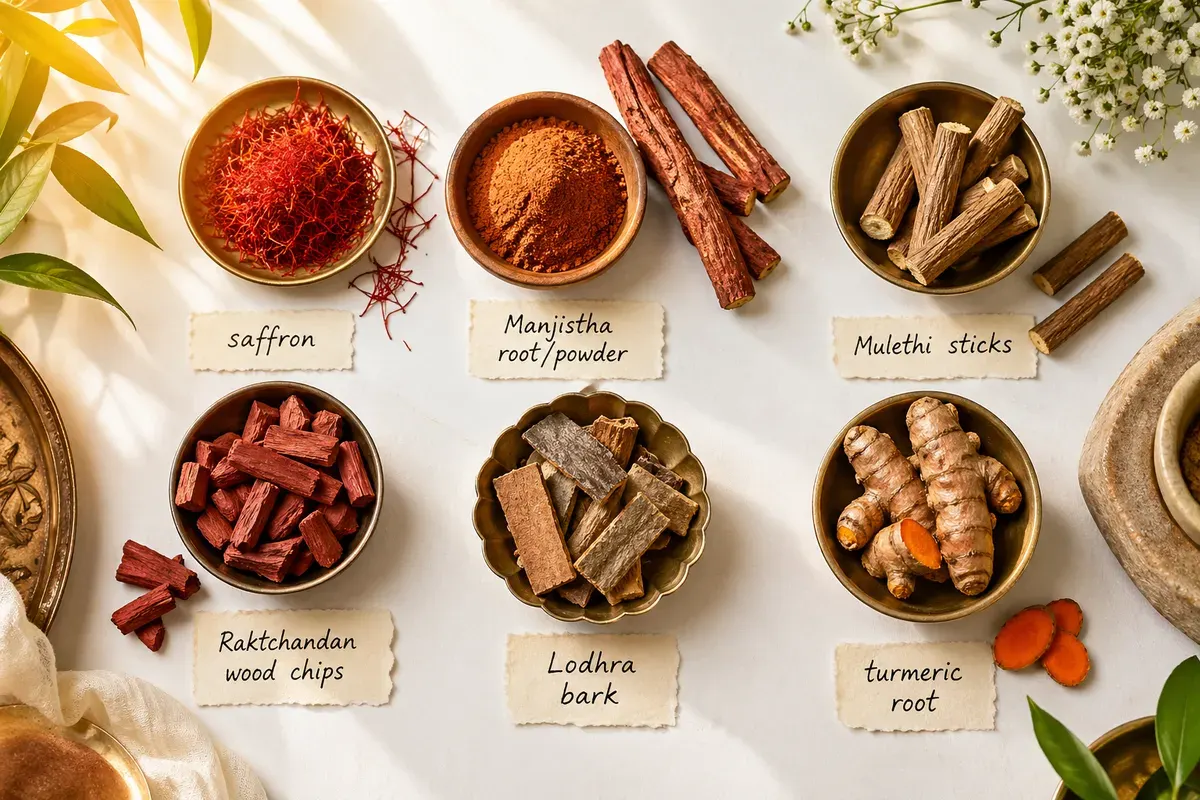
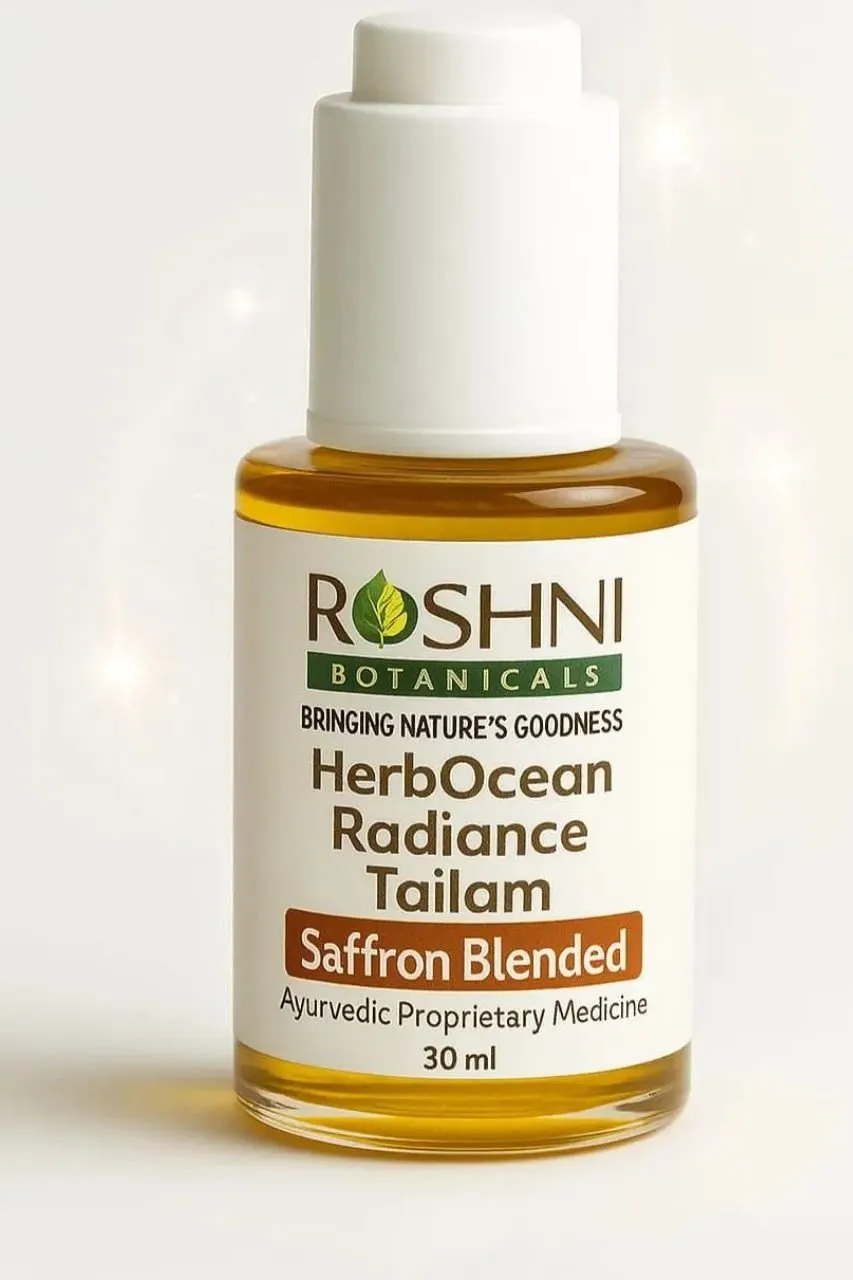
HerbOcean Radiance Tailam is a classical Taila and an AYUSH-licensed Ayurvedic medicine for external use, classically indicated for uneven pigmentation and dark spots. Saffron (Kesar), sandalwood (Chandan) and Manjistha sit in this formula alongside red sandalwood (Raktchandan), turmeric (Haldi), costus root (Kuth), lotus (Kamal), wild Himalayan cherry (Padmaakh), Himalayan lily (Kakoli), flame of the forest (Palash) and the Triphala fruits Amla, Baheda and Harad, in a sesame oil (Til tail) base finished with lavender, rose and mogra oils.
Its classical indication rests with melasma, or Vyanga. Vyanga is classically described on the face, so for the neck and chest we stay with plain uneven pigmentation and dark spots rather than borrowing a facial diagnosis for a different site. For the facial condition itself, see our guide to the Ayurvedic approach to melasma on Indian skin. And one boundary, plainly: nothing in this formula changes your skin's natural colour. Saffron, sandalwood and Manjistha have long held their place in classical pigmentation care, and the goal is calm, settled, comfortable skin.
The neck method takes two minutes. At night, after cleansing, warm three to four drops between the palms, work from the collarbone upward to the jawline and out along the sides of the neck, then give it a few minutes to absorb before you lie down or dress. In humid weather an oil that has not sunk in goes straight onto your blouse. It is for external use only. Do a 24-hour patch test on the inner forearm first, and keep it off broken or actively inflamed skin.
Radiance Tailam is a night-time medicated oil. It carries no sun protection factor of any kind and is not a substitute for sunscreen. No HerbOcean product is a sun protector. The morning job stays with your sunscreen, carried down to the collarbone. It is built on the 40-year Ayurvedic formulation legacy of Vaidya Shri Ram Prakash Ji, and it is made in-house at Bawana, Delhi under AYUSH Licence No. DL-474 A&U, on a Schedule-T GMP certified licence, by Roshni Botanicals, an ISO 9001:2015 certified company.
Judge It Over Months, Not Weeks
The neck was never its own skincare problem. It is simply the part of your skin the routine never reached. Carry the evening step past the jaw to the collarbone, keep the chain clean and the skin under it dry, and judge the results over months rather than days. Pigmentation that accumulated over years responds slowly, and saying so is worth more than any promise tied to a date in the calendar. What a consistent few weeks can give you is calmer, better-hydrated skin that sits more comfortably under a neckline and jewellery. And if the texture test pointed you towards a doctor rather than a routine, that visit is the more useful thing you can do this month.
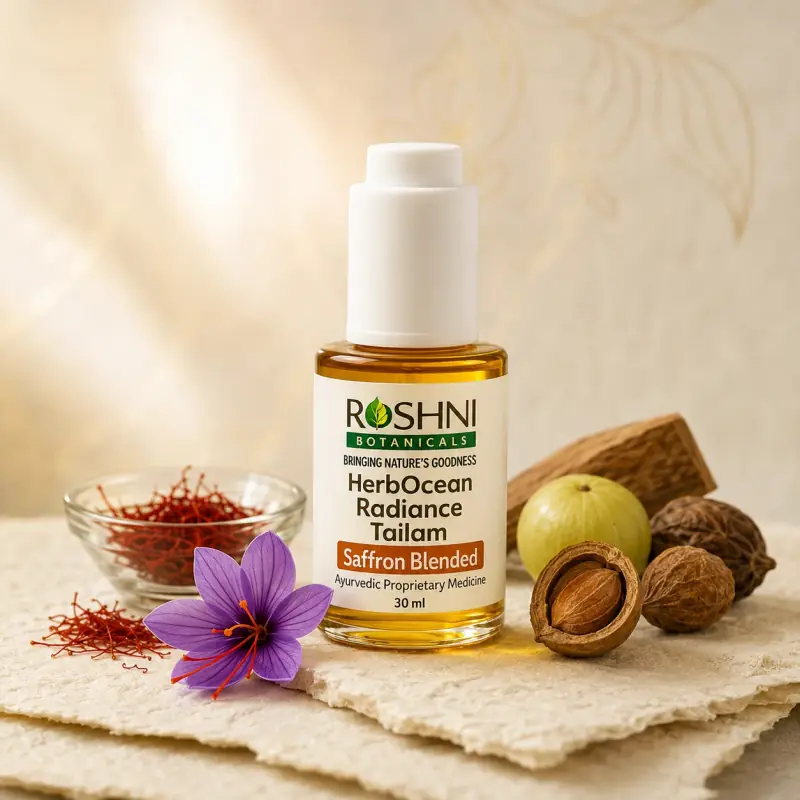
Radiance Tailam
A saffron brightening facial Taila with Manjistha and red sandalwood, traditionally used to support even tone where melasma, dark spots and PIH show.
Part of our guide: Ayurvedic treatment for melasma on Indian skin.