Dark Underarms: Causes, Everyday Triggers and Gentle Ayurvedic Care
Underarm darkening is almost never about hygiene. It is usually friction, from a razor, a deodorant, a tight synthetic sleeve. What actually helps, and the one pattern that needs a doctor rather than a cream.
You are not the only one who pauses before choosing a sleeveless blouse, or a sari blouse cut a little higher at the sleeve. Dark underarms are one of India's most quietly searched skin concerns, hardly ever brought up out loud, and they are almost never about hygiene. Most of the time the cause is ordinary, repeated friction, from a razor, a synthetic sleeve, a deodorant that does not agree with your skin. The care your skin actually needs is far gentler than the scrubbing and harsh home remedies passed around by word of mouth. This piece walks through why underarms darken, when the pattern needs a doctor rather than a cream, and how patient Ayurvedic care fits in, without ever treating your underarm's natural colour as something to fix.
Key takeaways
- Underarm darkening is usually friction-related: dry shaving, deodorant or fragrance irritation, and tight synthetic sleeves trigger post-inflammatory hyperpigmentation (PIH), melanin-rich Indian skin's ordinary response to repeated irritation. It is the same mechanism behind acne marks on the face, which is why underarms often darken gradually, well before any visible nick or rash appears.
- Velvety or thickened darkening is a different pattern altogether, especially when it also shows up at the back of the neck. It can point to acanthosis nigricans, which is linked to insulin resistance, and it needs a doctor's evaluation and a blood-sugar screening rather than a home remedy or a wait-and-watch approach.
- That screening matters whatever your build. The Indian study cited below found the link held even in participants of normal weight, and its authors recommend that children, adolescents and young adults with the pattern be screened irrespective of BMI. The same logic holds at any age.
- No cream, Ayurvedic or modern, corrects an underlying metabolic cause. Where insulin resistance is driving the pattern, the answer lives in blood work, dietary change and a doctor's guidance, not in a jar, however patiently a product is used.
- Humid months make things worse: sweat trapped under synthetic fabric multiplies friction at the underarm fold, so July onward is exactly when many people notice a flare. Loose cotton and properly dried skin folds can help more than anything on a shelf.
Why Underarms Darken: The Everyday Triggers
Underarm skin is thin, folded, and rubbed more than almost anywhere else on the body. A dry razor pulls at hair and skin together, leaving micro-nicks the eye barely registers, while waxing and plucking work the same follicles from a different direction. Deodorants and antiperspirants sit against that same skin for hours, and fragrance compounds or alcohol in the formula can irritate long before a visible rash appears. Add a tight synthetic sleeve on a humid afternoon, and the underarm fold becomes a small, constant site of friction, trapped sweat and low-grade inflammation. Hard water, common across much of North India, adds to this by leaving the skin's surface drier and more reactive than it would otherwise be.
Melanin-rich skin, the kind most Indians have, responds to that irritation by producing more pigment, not less. This is post-inflammatory hyperpigmentation (PIH), the same mechanism behind the dark marks acne leaves on the face. A razor nick, a perfume sting, a rough loofah pass: each one can leave a faint mark, and marks that repeat week after week eventually add up to a visibly darker underarm.
There is one finding here worth knowing before you buy anything at all. A 2025 systematic review of axillary hyperpigmentation treatments, by Vahabi and colleagues in the Journal of Cosmetic Dermatology, which pulled together ten studies, none of them conducted in India and most in Fitzpatrick III to V skin, reports a histopathology study that hypothesised the darkening is mild post-inflammatory hyperpigmentation, and lists its irritant causes plainly: friction, hair plucking, shaving, deodorants, and the use of lightening agents. That last one deserves reading twice. The products most heavily marketed for this exact problem in India appear in the peer-reviewed literature among the things that can cause it, because the irritation they produce is itself a pigment trigger. In one trial the review includes, most of the group using hydroquinone reported redness and irritation and about half reported itching, and since that trial sat in skin types close to most Indian readers', the caution is worth carrying here. It is the clearest possible argument for taking the friction away rather than adding something aggressive on top.
One pattern does not belong in this everyday-friction story at all. If the skin under your arms, or at the back of your neck, looks velvety rather than flat, or feels distinctly thicker than the skin around it, that is not friction-related darkening. The next section is where you need to go, not the shaving-and-deodorant fixes further down this page.
The Doctor Line: When Underarm Darkening Needs a Check-Up, Not a Cream
Acanthosis nigricans looks and feels different from ordinary darkening. The skin turns velvety, faintly raised, sometimes with fine thickened ridges you can feel more than see, and it commonly shows up at the neck as well as the underarms. Indian dermatology research has tied the pattern closely to insulin resistance. A cross-sectional study by Nithun and colleagues in the Indian Dermatology Online Journal in 2019 compared 60 people aged two to twenty-four who had acanthosis nigricans against 30 age- and sex-matched normal-weight controls, and found mean insulin-resistance scores of 2.42 in the cases against 1.32 in the controls. Overweight participants carried about two and a half times the risk of insulin resistance, and obese participants over eleven times.
Here is the part that matters most, and it is easy to miss. The association held even among the normal-weight participants, and on that basis the authors recommend that children, adolescents and young adults with acanthosis nigricans be screened for insulin resistance irrespective of BMI. The same logic holds at any age, so if you are slim and you have the velvety pattern, this still applies to you. Refined sugar, maida-heavy snacking and late, heavy dinners are the dietary patterns commonly linked to insulin resistance, and the condition is common enough among Indian adolescents and adults to be worth taking seriously rather than dismissing as a cosmetic quirk.
See a doctor if any of the following apply: the skin is velvety or noticeably thickened rather than flat; the darkening has appeared or spread rapidly; there is itching, oozing or a change in odour; or it has shown up alongside recent weight gain. Any one of these is reason enough for a proper skin check and a blood-sugar screening, not a wait-and-watch approach.
No cream, Ayurvedic or modern, corrects an underlying metabolic cause. If insulin resistance is driving the pattern, the answer lives in blood work, diet and a doctor's guidance, not in a jar. Ayurvedic care has a real, gentle role in friction-related darkening, which is most of what people are actually searching for under this topic, but it was never built to substitute for a metabolic diagnosis.
Gentle Habits That Take the Friction Out
Small changes at the razor and the wardrobe do more than most people expect. Skip dry shaving altogether, and consider trimming instead of a blade on days the skin feels sensitive. Before switching to a new deodorant or antiperspirant, patch-test it on the inner forearm for forty-eight hours; if there is no reaction, it is reasonably safe to use underarm. Choose breathable cotton over tight synthetic sleeves wherever you can, especially for daily wear, and cleanse the area gently, without scrubbing, since scrubbing is exactly the kind of irritation that leads back to PIH.
Many households already reach for lemon rubs, baking soda pastes, or a vigorous besan-and-haldi ubtan scrub on the underarms. These practices come from a genuine, long-standing tradition of home skincare that predates any bottled remedy, and the instinct behind them is sound. Underarm skin is thinner and more reactive than the arms or face that ubtan is traditionally used on, though, and undiluted lemon juice or an alkaline baking soda paste can sting or disrupt the skin barrier quite easily on this particular patch. The gentler move is to take away the trigger, the dry razor, the harsh deodorant, the tight synthetic sleeve, rather than add another abrasive step on top of it.
Monsoon and the humid months that follow deserve a specific mention, because this is when underarm darkening tends to flare hardest. Sweat trapped under a synthetic blouse or kurta multiplies friction at exactly the fold that is already prone to irritation, so July onward is precisely when the pattern worsens for a lot of people. Loose cotton, a change of clothes once you have been sweating through the day, and making sure the underarm fold is properly dried rather than left damp all do more for this than any single product. If sleeveless blouses or festive wear bring on a flicker of self-consciousness, that is an understandable, ordinary thing to feel. This was never about changing how your skin looks by nature. The goal is calm, comfortable, friction-free skin you do not have to think about twice before getting dressed.
Patient Saffron and Sandalwood Care for Friction-Darkened Skin
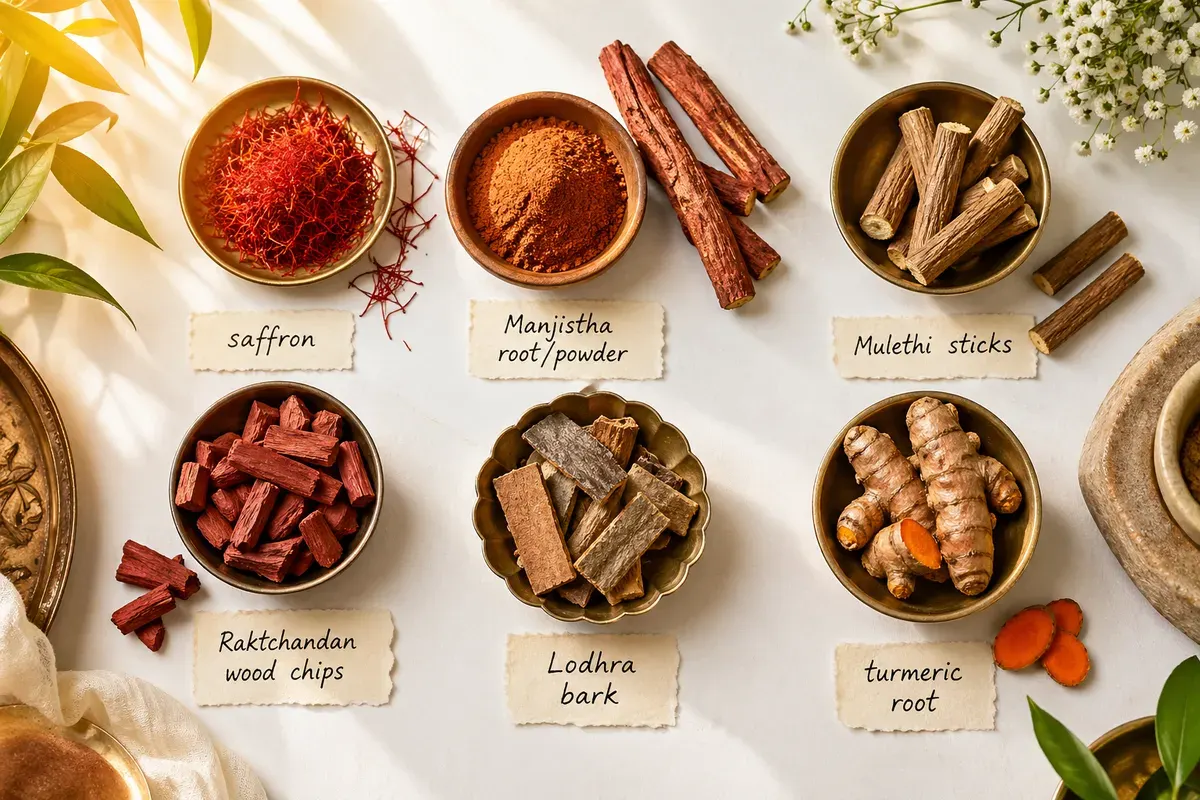
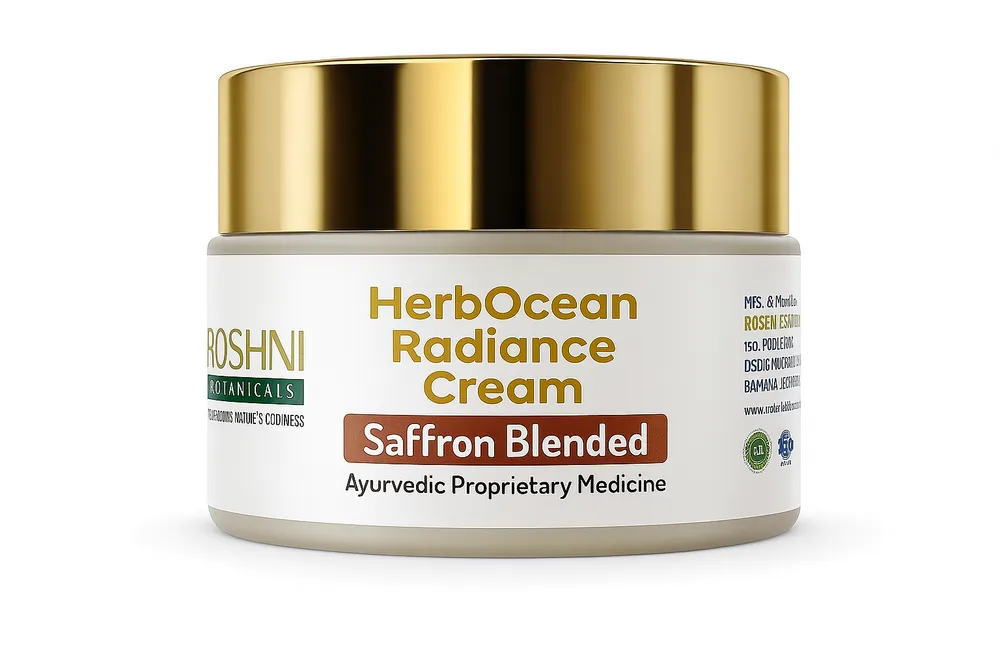
For the friction-related pigmentation that makes up most of this picture, and only once dry shaving, irritating deodorants and tight synthetic sleeves have been addressed, HerbOcean Radiance Cream is an AYUSH-licensed Ayurvedic medicine (Licence No. DL-474 A&U) for external use, traditionally used in the care of dullness and uneven tone. It leads with saffron (Kesar), sandalwood (Chandan), Manjistha, red sandalwood (Raktchandan), lotus (Kamal) and wild Himalayan cherry (Padmaakh), with Triphala, the classical three-fruit blend of Amla, Baheda and Harad, rounding out the formulation. Three of those, sandalwood, Manjistha and Padmaakh, sit inside the ten-herb complexion group the Charaka Samhita sets out in Sutrasthana 4, the Varnya Mahakashaya; the others carry their own long-standing place in classical complexion care without belonging to that particular list. It is made in-house at Roshni Botanicals' GMP-certified unit in Bawana, Delhi.
The routine is simple and deliberately unhurried. Patch-test on the inner forearm first and wait forty-eight hours. Apply a thin layer to clean, unbroken underarm skin at night, never immediately after shaving or waxing, when the skin barrier is at its most vulnerable. Expect this to be a matter of months of consistent use rather than weeks, and only alongside the friction-reducing habits above. A cream layered on top of daily dry shaving and a harsh deodorant will always be working against itself.
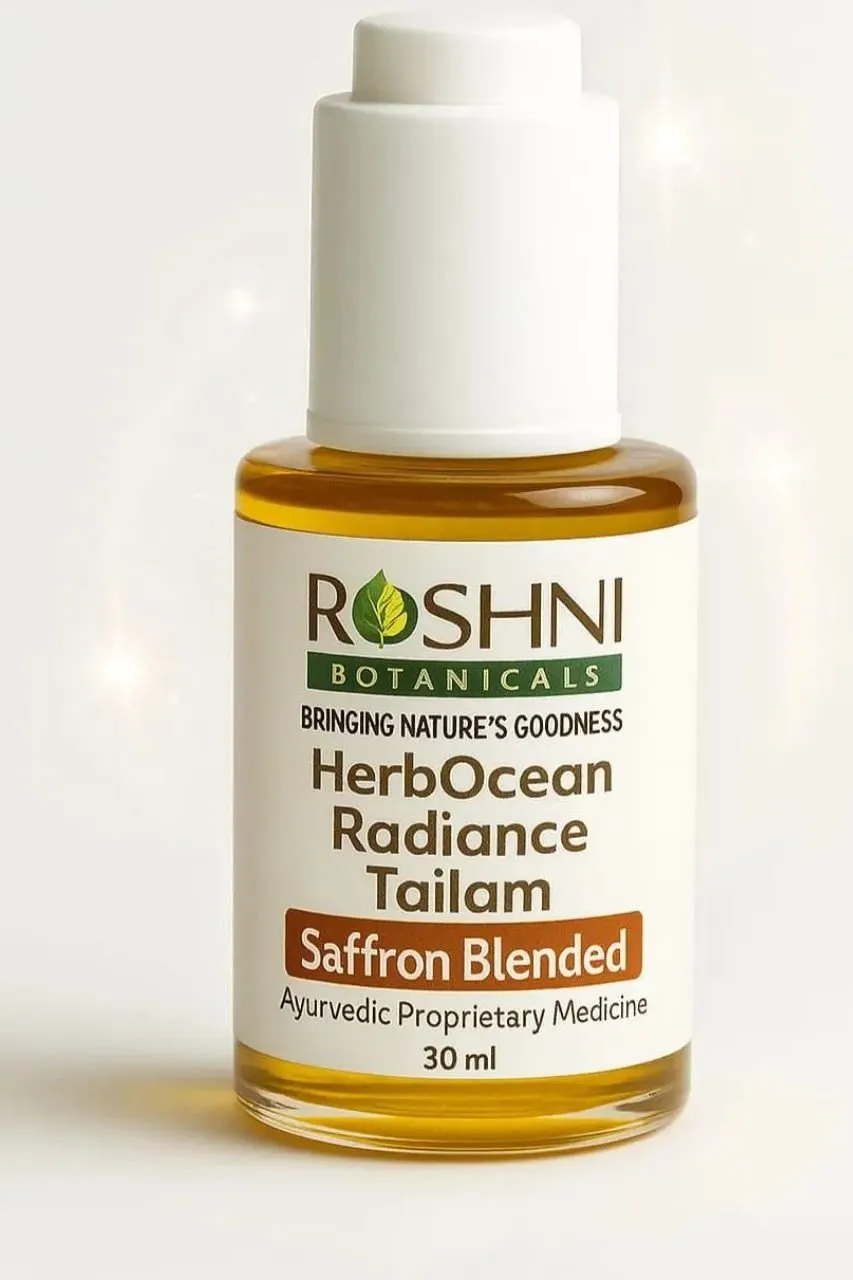
For pigmentation concerns beyond the underarm, our complete guide to the Ayurvedic treatment of melasma on Indian skin walks through the same PIH mechanism as it shows up on the face, and our guide to caring for body pigmentation beyond the face covers other commonly affected folds and joints, from elbows to knees, where HerbOcean Radiance Tailam offers the same saffron-led approach. This is patient, classically indicated care for skin that has been irritated one razor pass, one deodorant, one tight sleeve at a time.
A Patient, Honest Path Forward
If your underarm darkening is the flat, friction-related kind, and you have ruled out the velvety pattern with a doctor's help, the path forward is straightforward: take away the everyday triggers first, and give patient, gentle care the months it needs to work alongside them. There is no shortcut hiding at the bottom of a jar, Ayurvedic or otherwise, and any product promising one is worth being sceptical of, particularly given what the review above says about where some of those products sit in the causes. Calm, comfortable, friction-free skin you can stop thinking about each time you reach for a sleeveless blouse is the whole of the goal.
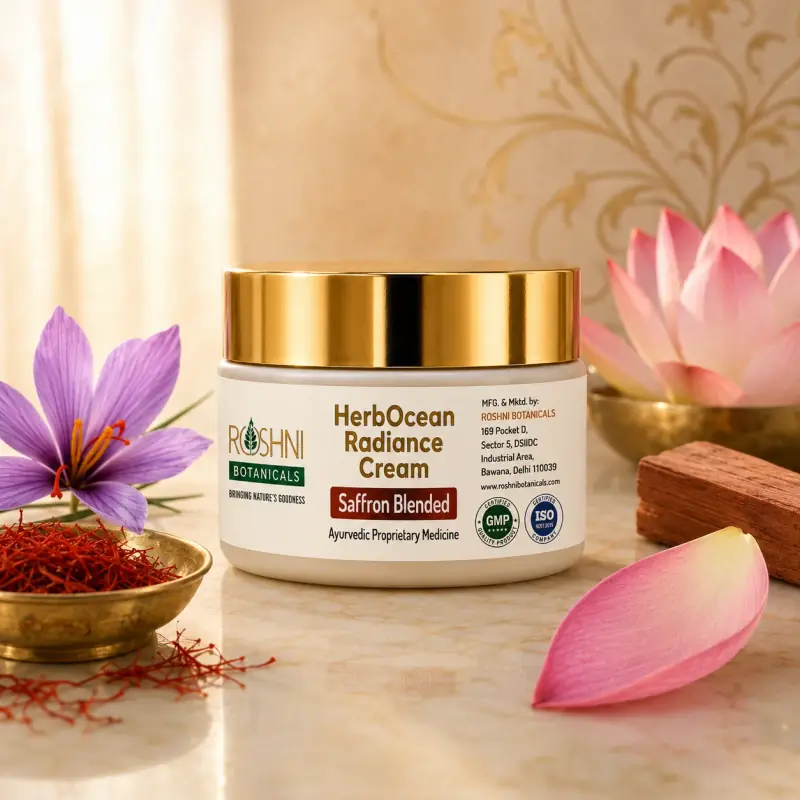
Radiance Cream
A daily saffron and sandalwood brightening cream with Manjistha, red sandalwood and lotus in a light coconut base. Supports a luminous, even-looking complexion.
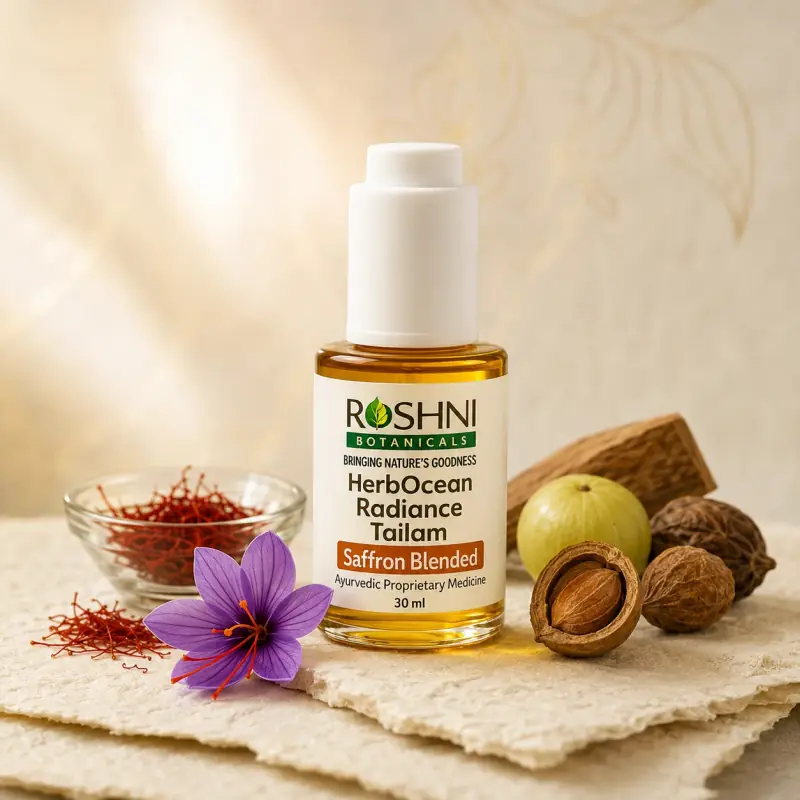
Radiance Tailam
A saffron brightening facial Taila with Manjistha and red sandalwood, traditionally used to support even tone where melasma, dark spots and PIH show.
Part of our guide: Ayurvedic treatment for melasma on Indian skin.