Glowing Skin for the Festive Season: Your Four-Week Ayurvedic Countdown to Raksha Bandhan
Raksha Bandhan falls on Friday 28 August, and the rakhi is tied in the morning. A dated four-week Ayurvedic plan, with what four weeks can and cannot do.
Rakhi has a way of arriving sooner than you planned for. This year it falls on Friday 28 August, so if you are reading this the day it goes up, you have twenty-six days: long enough for steady care to become a habit, short enough that you should not be experimenting. Here is the plan, one week at a time.
Key takeaways
- Raksha Bandhan 2026 falls on Friday 28 August. The rakhi is tied in the morning this year: Shravana Purnima ends at 9:48 AM IST that day, and there is no afternoon window to fall back on.
- Four weeks is not a guaranteed cycle of skin renewal. Published estimates of how long one full turn takes run from about four weeks to about eight, they were measured on forearm skin rather than faces, and none used an Indian cohort. What four weeks reliably gives you is time to settle into a routine you can keep.
- Start the patch test today, not in Week 2. Reactions to plant oils and natural fragrance are delayed and often invisible at twenty-four hours, so the test needs ten to fourteen days of repeated application before the oil goes anywhere near your face.
- Week 4 has one rule and it is the one most people break: nothing new. No first-time facial, no bleach or de-tan, no new product at all, and specifically no lemon juice on the skin. On melanin-rich Indian skin a reaction can leave marks that outlast the festival by months.
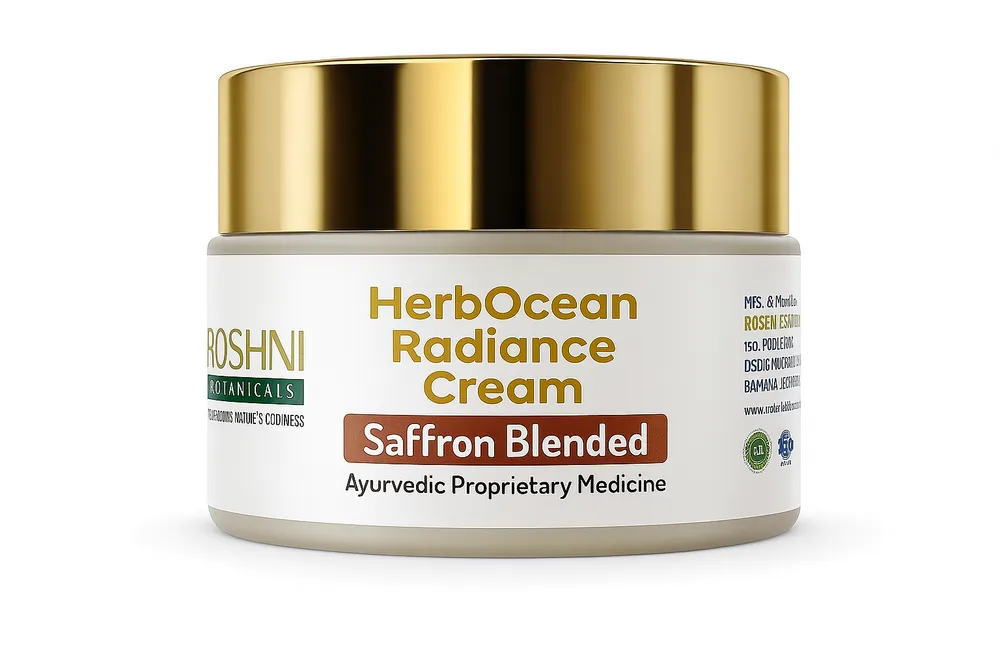
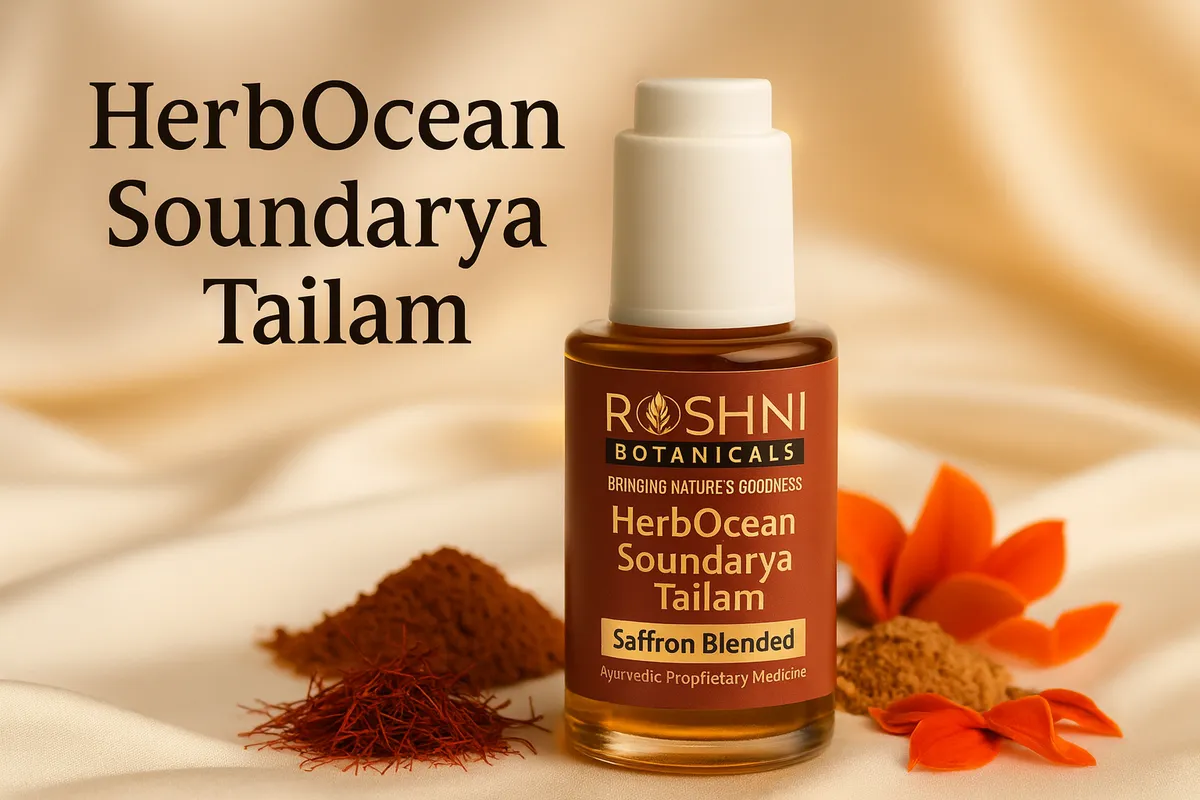
- The night ritual at the centre of it is HerbOcean Soundarya Tailam, a saffron-infused facial Taila (medicated oil) of sesame oil, goat's milk and saffron, with Soundarya Cream as its daytime partner.
What Four Weeks Can Honestly Do
Start with what this plan will not do, because that is the part most festive-season advice skips. Four weeks will not remodel your skin, undo years of sun exposure, or shift your pigmentation. Anyone promising you a different complexion by Friday is selling you something. We are not.
You will also read, in a great many places including earlier versions of advice like this, that skin renews itself every twenty-eight days and that four weeks therefore equals one full cycle. It is a tidier number than the evidence supports. There is no agreed figure: a re-examination of the published cell-labelling data put a skin cell's journey to the surface at roughly forty to fifty-six days (Halprin, British Journal of Dermatology, 1972), while newer labelling methods have produced shorter estimates of about four to five weeks. All of it was measured on forearm and body skin, in volunteers who were not Indian, and nobody has measured facial turnover in an Indian cohort at all. So twenty-eight days is not a fact about your face.
What four weeks genuinely offers is time for a ritual to become a habit, and time to test a new product properly before an occasion rather than during it. Calmer, well-hydrated skin that has not been freshly irritated is what actually reads as a glow. If marks are your real concern, be patient with the timeline: a 2024 systematic review of forty-eight studies covering 1,356 people with skin of colour looked separately at the 346 who had no treatment at all, and among the fifty-five of those for whom a time was recorded, pigment took an average of sixty-eight days, about ten weeks, to fade (Mar and colleagues, Journal of Cutaneous Medicine and Surgery, 2024). That is not a four-week job, and our guide to ayurvedic treatment for melasma on Indian skin covers the ground properly.
This is a short-runway plan. If your calendar holds a wedding months out, our pre-wedding Ayurvedic skincare plan is built for that longer stretch.
Your Four Weeks, With Dates
| Week | Dates | What you do |
|---|---|---|
| Week 1 | 2 to 8 August | Reset the basics: gentle cleansing twice daily, steady hydration, a fixed sleep window, sunscreen every morning. Begin the forearm patch test today, on two separately marked patches: one for the oil, one for Soundarya Cream. |
| Week 2 | 9 to 15 August | Keep testing. If ten clean days have passed and the skin is calm, begin the night oil on the face from the middle of this week, around 12 August. Running the full fourteen days pushes the first face application to 16 August. |
| Week 3 | 16 to 22 August | Ubtan week: one gentle besan-and-haldi ubtan, no later than 22 August. If the cream's test patch has stayed clean, begin Soundarya Cream in the mornings. Earlier dinners. |
| Week 4 | 23 to 28 August | Protect only. Nothing new of any kind. Last night application on the evening of 27 August; Rakhi is the morning of Friday 28 August. |
Shift these by a day or two if you are reading late. Two things do not move: the final week's rule, and the last night application, which belongs to the 27th for reasons the closing section explains.
Weeks 1 and 2: Reset the Basics, and Test Before You Trust
Week 1 is deliberately boring, and that is the point. Cleanse gently twice a day, choosing a texture that suits August rather than February, because monsoon humidity and hard water leave most Indian skin wanting less heaviness than in winter. Fix a sleep window and keep it. Wear a broad-spectrum sunscreen every morning from today, not from Week 4, because sun exposure is the surest way to deepen the very marks you are trying to settle. Add nothing else new: you cannot tell what is working if you change four things at once.
One thing does start on day one, and the draft plan most people follow gets this wrong. Begin testing the oil now, on your forearm, not on your face. Reactions to plant oils and natural fragrance are delayed. They rarely show at twenty-four hours, which is why a single overnight dab that seemed fine proves very little. Published guidance on the repeated open application test, the method used for leave-on products, puts a typical reaction at around the fourth day (Kaliyadan and colleagues, Postepy Dermatologii i Alergologii, 2022, a short methods paper), and a single reported case of contact dermatitis to a sesame-oil preparation did not appear until the tenth (Kubo and colleagues, Contact Dermatitis, 1986). So: about half a pea of oil on a coin-sized patch of the inner forearm, twice a day, for at least ten days and preferably fourteen. Run the cream on the second patch on the same schedule, because sharing several materials with the oil means testing one tells you nothing about the other. Look each day for redness, itching, small bumps, scaling or burning. If any of that appears, stop, wash the area, and keep the product off your face.
Start today and ten clean days land you in the middle of Week 2, exactly when face application should begin. Start the test in Week 2 instead, as most versions of this plan suggest, and you finish around 23 August, colliding with the final week's rule against anything new.
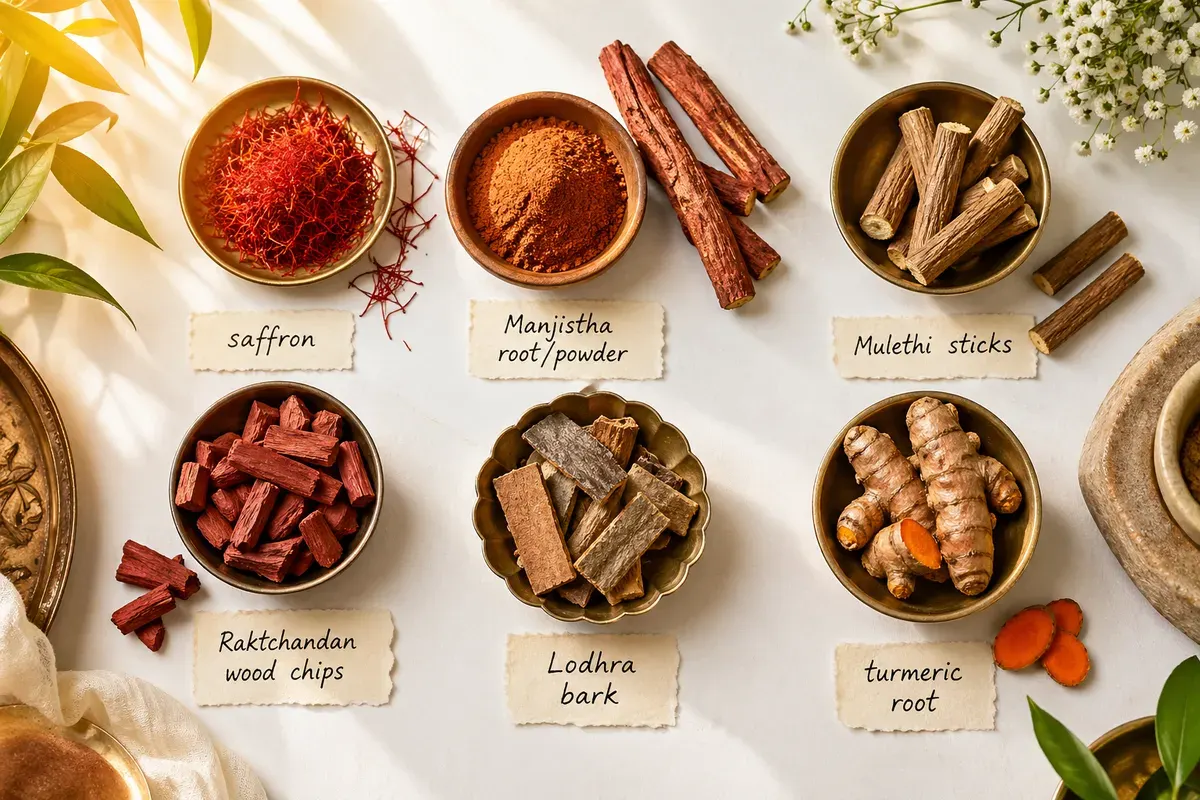
When those clean days have passed, the ritual arrives. At night, warm three to four drops of Soundarya Tailam between your palms and press it into slightly damp skin, working upward and outward with the flats of your fingers for a minute or two. This is a classical Taila built on sesame oil, goat's milk (Ajadugdh) and saffron (Kesar), with Manjistha, red sandalwood (Raktchandan) and liquorice (Mulethi). It is formulated by Vaidya Shri Ram Prakash Ji, the classical vaidya whose forty-year formulation legacy the HerbOcean line is built on, and made in-house at Roshni Botanicals' AYUSH-licensed, GMP-certified unit in Bawana, Delhi under Licence No. DL-474 A&U. Press it in rather than dragging it across the face, and do not reach for more than four drops; oil that sits unabsorbed just transfers to your pillow.
Two honest disclosures before you begin. The oil is built on sesame and carries lavender, rose and mogra oils along with Laksha, a resin of the lac insect, and each of those is a recognised cause of skin allergy in people sensitive to it. Soundarya Cream is coconut-based but carries the same three fragrance oils and Laksha, which is why it needs its own patch. That is not a reason to avoid it; it is the reason the forearm test matters. It also contains goat's milk and Laksha, so it is neither vegan nor dairy-free. It is for external use only, keep it away from the eyes, and do not apply it to broken, weeping or sunburnt skin. If you are pregnant or breastfeeding, check with your doctor before adding anything new.
Week 3: Ubtan Week, and Cleaning Up the Plate
If you grew up with besan and haldi mixed in a steel katori, this week needs no introduction. Once this week, make a soft paste, apply it with gentle pressure, and rinse it away with plenty of water rather than rubbing. Do not let it dry hard and crack, and keep it off any active or broken spots. Once is the traditional rhythm and in August humidity the sensible one too, because daily scrubbing irritates skin and irritated melanin-rich skin marks readily. It is the friction that leaves the marks, not the herbs.
Two timing points matter. Take your ubtan no later than 22 August, never in the final week or the night before an event, because haldi leaves a yellow cast a camera picks up far more readily than your mirror does. Where staining is a worry, kasturi manjal is the usual regional alternative. Test the ubtan on your forearm too: turmeric contact allergy is reported in Indian patients, and kumkum dermatitis is well documented, although the culprit there is often a dye rather than the haldi itself.
Your plate deserves a look too. Earlier dinners help more than people expect in a season when evening plans keep stretching later, and trimming refined sugar is worth trying if you notice a personal pattern. Most of the research linking diet to skin is about acne rather than general appearance, so this is suggestive rather than settled, and worth an experiment rather than a rule. It only has to be a slightly kinder month than usual. What Week 3 is not is a dedicated dark-spot routine; that belongs to our night routine for dark spots, which owns the subject properly.
Week 4: Protect, Do Not Experiment
The final week has one rule, and it is the one people break most often: try nothing new. No first-time salon facial, no peel, no bleach or de-tan, no waxing or threading you have not had before, no new sunscreen or foundation, no fresh face pack a cousin recommends, no remedy from a reel. Lemon juice deserves its own mention, because it is the most commonly suggested and among the worst ideas: on skin that then meets August sun it can cause a phototoxic reaction whose pigmentation lasts months.
Keep everything you have already built running: gentle cleansing, the night oil, sunscreen through the day, and Soundarya Cream, the daytime partner, a saffron-led Ayurvedic preparation for external use, each morning. Skip the ubtan entirely. Protect your sleep, hard as that is when mehendi evenings and market runs eat into the night; a week of four-hour nights shows on the face more reliably than any product corrects it.
Know where skincare stops. Sudden burning, spreading redness, swelling, or a pigmentation change that appears quickly all deserve a dermatologist rather than another product. If something reacts badly this final week, wash it off, keep everything simple, and see a doctor if it has not settled within a day or two.
The Morning of the 28th
Here is the detail that shapes the whole last week. This year the rakhi is tied in the morning. Shravana Purnima ends at 9:48 AM IST on Friday 28 August, and there is no afternoon window to fall back on, because the tithi is over before Aparahna begins. The 27th is ruled out too: Bhadra runs from the moment Purnima starts that morning until late that night, and the thread is not tied during Bhadra. So the window opens at your local sunrise and closes at 9:48 AM, that closing moment being the same everywhere in India. The opening is not: Delhi from about 5:57 AM, Kolkata 5:18, Chennai 5:58, Bengaluru 6:08, Mumbai 6:23. Check your own city's panchang.
Which is why a facial oil belongs to the night before. Apply Soundarya Tailam on the evening of Thursday 27 August, leave it overnight, then cleanse in the morning and follow with Soundarya Cream before you dress. An oil applied shortly before the ceremony sits on the surface and shows in photographs. Give yourself twenty unhurried minutes, and let the skin settle before anything else goes on.
One Week at a Time
A festive glow is not conjured the night before. It gets built across four fairly ordinary weeks, and the ordinariness is the method. Week 1 can start tonight with a gentle cleanse, an earlier bedtime, and a dab of oil on your forearm. Twenty-six days is plenty, as long as you begin now.
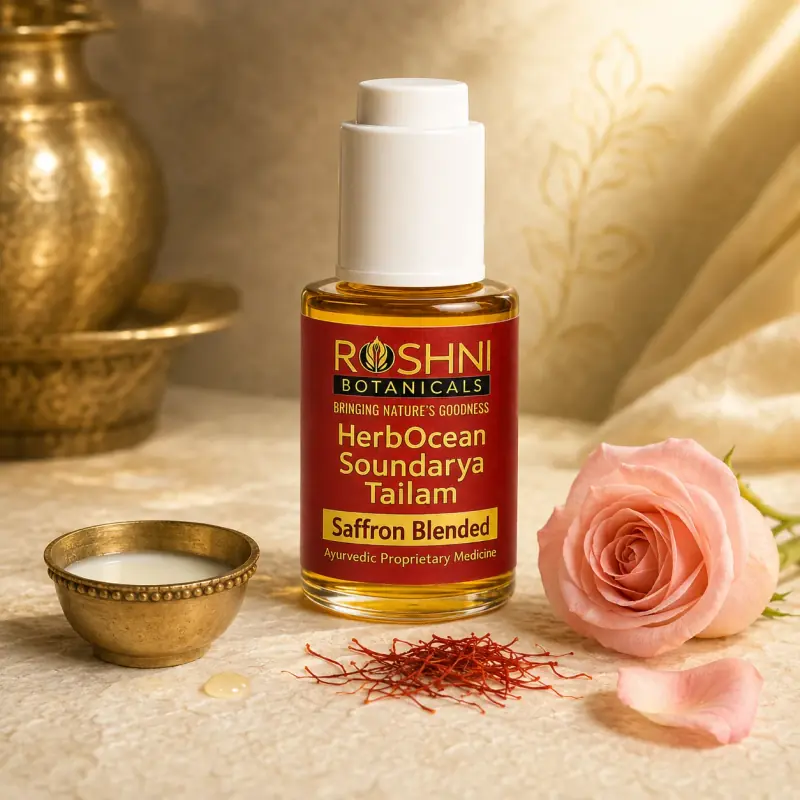
Soundarya Tailam
A saffron-infused facial Taila prepared in the goat-milk Kshira-paka tradition, with Manjistha, Mulethi and Kesar. For soft, bright, even skin.
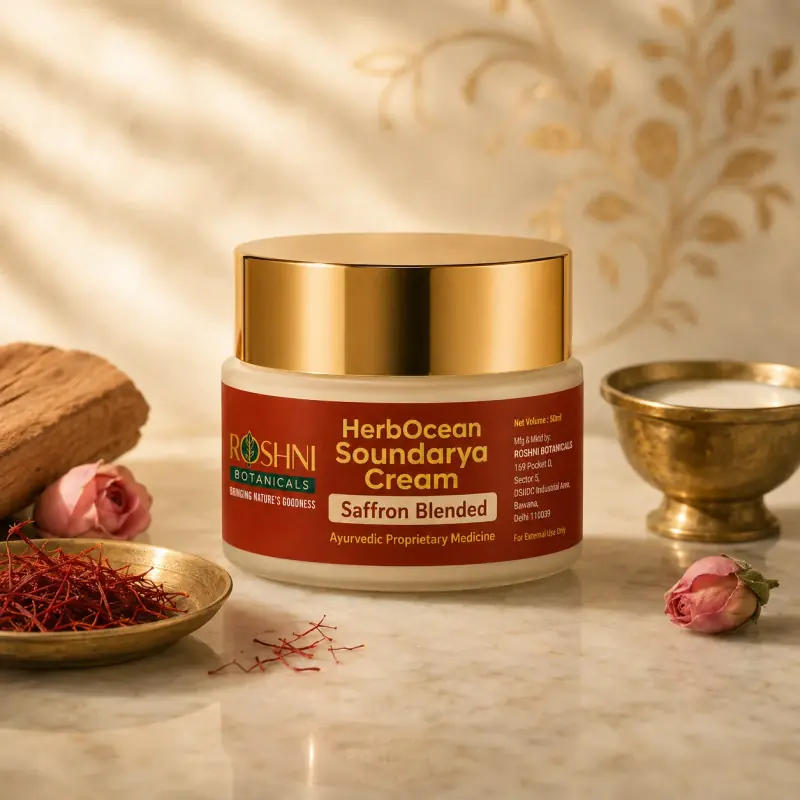
Soundarya Cream
A rich saffron brightening and repair cream with bargad (Vatt) bark on a goat-milk and coconut base, with shea and kokum butters — often reached for where post-acne marks (PIH) linger.