
Curly Hair Care in India: How Ayurveda and the Modern Curly Method Fit Together
Pre-wash oiling and the modern curly method are not rivals. A routine built for Indian hard water and humidity, with the detangling step that matters most.
Ask ten people in India with curly or wavy hair about their routine and you will hear two rulebooks arguing. One says oil every Sunday, the way it was done at home. The other, picked up from curly-hair forums abroad, says keep oil away from your curls entirely. Both are built on real experience. Just not on the same water, the same humidity, or the same hair.
Key takeaways
- Curly and wavy hair in India does better on a routine built for the two pressures you actually live with, hard water and humidity, than on rules written somewhere else.
- Curls are usually driest at the ends. That is worth planning around, whatever the reason for it, and it is where oil and conditioner belong.
- Detangle curls only when your hair is wet and the conditioner is still in it, with a wide-tooth comb, working from the ends upward. Never dry, and never inside the towel.
- The warm-oil scalp massage (champi) and the modern curly method are not rivals. One handles the pre-wash step, the other handles the wash and the dry.
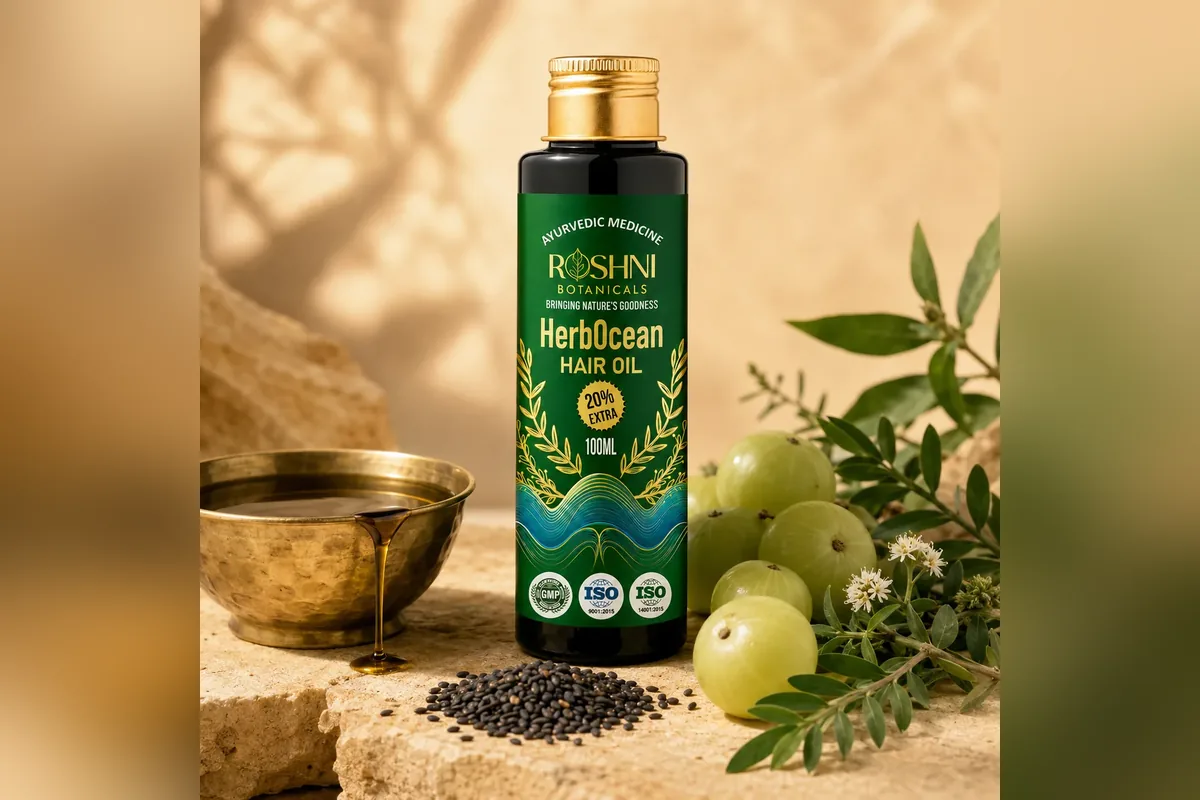
- HerbOcean Hair Oil is an AYUSH-licensed Ayurvedic medicine for external use, classically indicated for hair fall and dullness. No change to your curl pattern is claimed for it.
Two Rulebooks, and Why Both Are Partly Right
The disagreement is real, and it is not a matter of one side being ignorant. The traditional Indian routine puts oil on before washing, works it into the scalp, and relies on the wash to take it out again. The modern curly method is built around the opposite instinct: keep the hair coated, avoid stripping it, and let conditioner do the work that oil does elsewhere. Both are answers to a real problem, and they were developed on different hair, in different water, in different weather.
What gets lost in the argument is that they do not actually occupy the same slot. Pre-wash oiling happens before the wash. The curly method governs the wash itself and everything after it. You can run both in the same week without contradiction, and most people in India who have made peace with their curls have arrived at exactly that, usually without calling it anything.
One observation is worth building around, and it needs no theory attached. Curly and wavy hair is usually driest at the ends. Whether that is about the shape of the shaft, the age of the hair, or simply that ends have been through more washes and more combing, the practical consequence is the same: the ends need the most help and get the least. Plan for that and much of the rest follows.
It helps to be honest about where each rulebook came from. The curly method was worked out largely in places with soft water, cooler air and easy access to a shelf of specific products. The Indian oiling routine was worked out over a much longer period, in this water and this weather, with whatever was in the kitchen. Neither is a superior system. They are answers to different questions, and the mistake is importing one wholesale and then wondering why it behaves differently here.
The Two Pressures That Actually Shape an Indian Routine
Hard water comes first. Delhi's groundwater is the case that has actually been measured, and mineral-heavy water is commonly reported to leave hair feeling rough after washing and harder to detangle. Our piece on hard water and hair goes into that properly. The practical answers are unglamorous: a longer and more patient final rinse, and a shower filter if you can fit one. A filter reduces the mineral load, though it will not soften the water completely, and nothing reverses deposit already built up.
Humidity is the second, and here we would rather describe than explain. In humid weather curls swell, clumps separate and the surface roughens. That is what people notice, reliably and everywhere. We are not going to attach a confident mechanism to it, because the explanations in circulation are more assured than the evidence behind them, and a routine built on a wrong mechanism tends to fail in interesting ways. What helps is straightforward: handle the hair less once it is dry, keep the ends conditioned, and accept that some days the clumps will not hold.
There is a third pressure worth naming, and it is not environmental. Curly hair in India is still routinely treated as a problem to be solved rather than a texture to be looked after. That shows up as years of straightening, tight tying, and aggressive brushing, and the damage from all three is cumulative and far harder to undo than a bad wash day. Plenty of people carry dry, split ends that are the record of a decade of that, not of anything they did last week.
A Wash-Day Routine for Curls: Oil, Wash, Detangle, Dry
Start wash day with oil. We will keep this curl-specific and short, because the full method belongs to our step-by-step Ayurvedic hair oiling routine. Warm the oil slightly. Part your hair into four to six sections, work it into the scalp with the pads of your fingers for five to ten minutes, then draw whatever is left down the mid-lengths and ends, where curls are driest. In humid weather, one to two hours before you wash is the practical window. Overnight is optional, and honestly uncomfortable in warm weather.
Detangling is where most curl damage happens, so this part is worth getting exactly right. Detangle curls only when your hair is wet and the conditioner is still in it. Never dry, and never inside the towel. Use a wide-tooth comb or your fingers, work from the ends upward in small sections, and rinse with lukewarm water. The order matters, because a dry curl under tension snaps at the tangle instead of sliding free, and since nothing fuses a split end back together, gentle handling is most of your protection.
Some practical detail, since this is the step that repays it. Work in sections small enough that you can see what you are doing, which for most people is smaller than feels efficient. Start at the very ends and move up in short passes rather than dragging from the root. If you meet a knot that will not give, stop pulling and separate it with your fingers; a comb forced through a tangle takes hair with it. Keep more conditioner in the hair than seems necessary while you work, and rinse only when the whole length runs clear. None of this is quick, and doing it slowly once a week costs less hair than doing it briskly three times.
On washing itself, the useful principle is gentleness rather than any particular product rule. Work the shampoo into the scalp, where the oil and the sweat actually are, and let the rinse carry it down the lengths rather than scrubbing the ends directly. Condition from the mid-lengths down, generously, and leave it in while you detangle. If your hair feels squeaky after a wash, that is usually a sign the wash was harsher than it needed to be rather than a sign of cleanliness.
Then drying and sleeping. Blot with a cotton T-shirt or a microfibre cloth instead of scrunching with a terry towel. Let your hair air-dry as far as the weather allows, and keep hot styling tools for occasions rather than habit. At night, sleep on a satin or silk pillowcase if you have one, and gather your hair loosely at the crown instead of tying it tight at the nape. The pillowcase is comfort and convention rather than a proven intervention, and it costs little to try.
How often is a question with no clean answer, and anyone giving you a confident number is guessing. Once a week suits most people who oil before washing; twice suits some; less often is fine if your scalp runs oily anyway. The signal worth watching is your scalp rather than the calendar. If it feels congested, itchy or heavy by the second day after a wash, the routine is too rich or too frequent for you, and the fix is less oil rather than more washing.
Where a Medicated Oil Fits, and What It Will Not Do
HerbOcean Hair Oil is an AYUSH-licensed Ayurvedic medicine for external use, classically indicated for hair fall and dullness, made under Licence No. DL-474 A&U. It carries sixteen botanicals: twelve herbs at equal measured weights, being Bhringraj, Jatamansi, Brahmi, Shikakai, Amla, Nagarmotha, Chharila, Sugandhbala, hibiscus (Gudal), Tulsi, rose (Gulab) and Neem, in a sesame oil (Til tail) base. No single herb leads the formula. Lavender, curry leaf and rosemary oils finish it.
It is made in-house at Bawana, Delhi on a Schedule-T GMP certified licence, by Roshni Botanicals, an ISO 9001:2015 certified company, and the formulation rests on the 40-year Ayurvedic formulation legacy of Vaidya Shri Ram Prakash Ji. In a curl routine it belongs in the pre-wash slot and nowhere else: worked into the scalp and drawn down the lengths before a wash, not left in as a styling product.
Now the boundary, stated plainly. No change to your curl pattern is claimed for this oil or for any preparation we make. The things that genuinely do change curl pattern, chemical relaxers and thermal straightening, work by breaking bonds inside the shaft. That is a different bargain altogether, and this oil makes no such promise. What a pre-wash oil offers is a gentler wash day and better-conditioned ends, which is a smaller claim and one that survives contact with a mirror.
Use it on the scalp and lengths before washing, patch-test on the inner forearm first, and keep it to external use. If your scalp is already flaking, itching or sore, settle that before adding oil rather than after.
When It Is Not a Routine Problem
Some things do not answer to any wash-day method. See a dermatologist if you notice a coin-sized smooth bald patch, if your parting is visibly widening, if the scalp is painful, oozing or thickly scaly, or if hair is snapping off at the hairline where it is pulled back tightly. On shedding after an illness, the timing matters and our post on hair fall after fever or illness covers it: it usually does not begin until two to three months afterwards, so the three-month mark is the expected peak rather than a warning sign. Get it looked at if heavy shedding is still going six months on.
If hair fall rather than curl care is the real concern, our complete guide to Ayurvedic hair oils for hair fall is the fuller treatment of it, and it is a different question from the one this post answers.
One Routine, Two Traditions
The two rulebooks were never really in conflict. Oil before the wash, treat the wash gently, detangle only when wet and conditioned, and leave the ends alone as much as you can. That is most of it, and it costs almost nothing beyond patience. The rest is weather, water, and finding out what your own hair will tolerate.
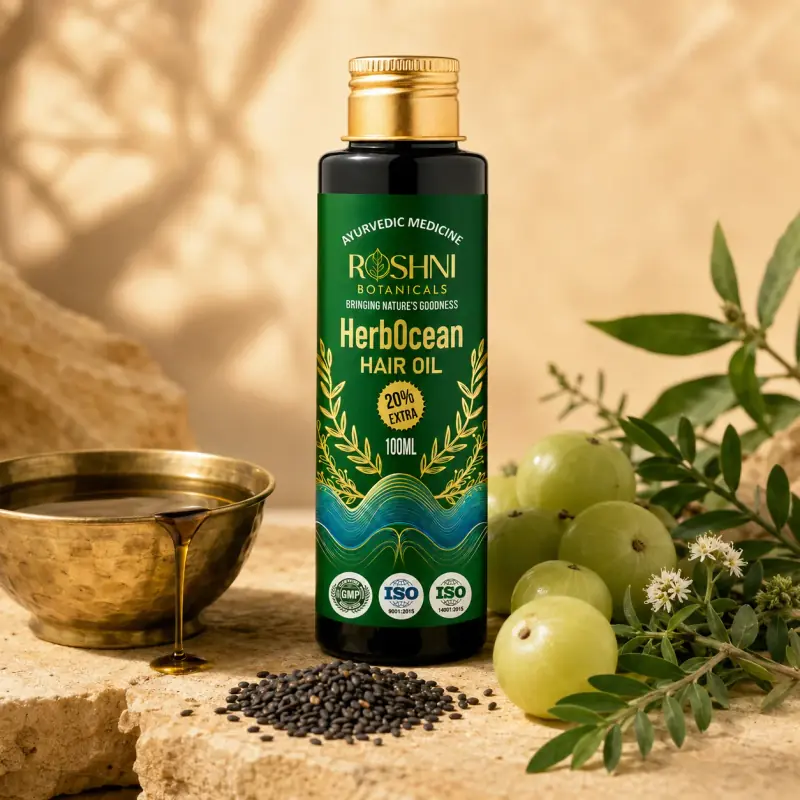
HerbOcean Hair Oil
A classical Taila for hair fall, dullness and a flaky scalp, with sixteen botanicals like Brahmi, Jatamansi, Amla and Neem in a slow sesame base.
Part of our guide: The definitive guide to Ayurvedic hair oils for hair fall.