The Thinking Behind Soundarya Tailam: Goat Milk, Manjistha and Saffron
A saffron facial Taila made the slow, classical Kshira-paka way. What goat milk, Manjistha and saffron are traditionally for, and why the method is the point.
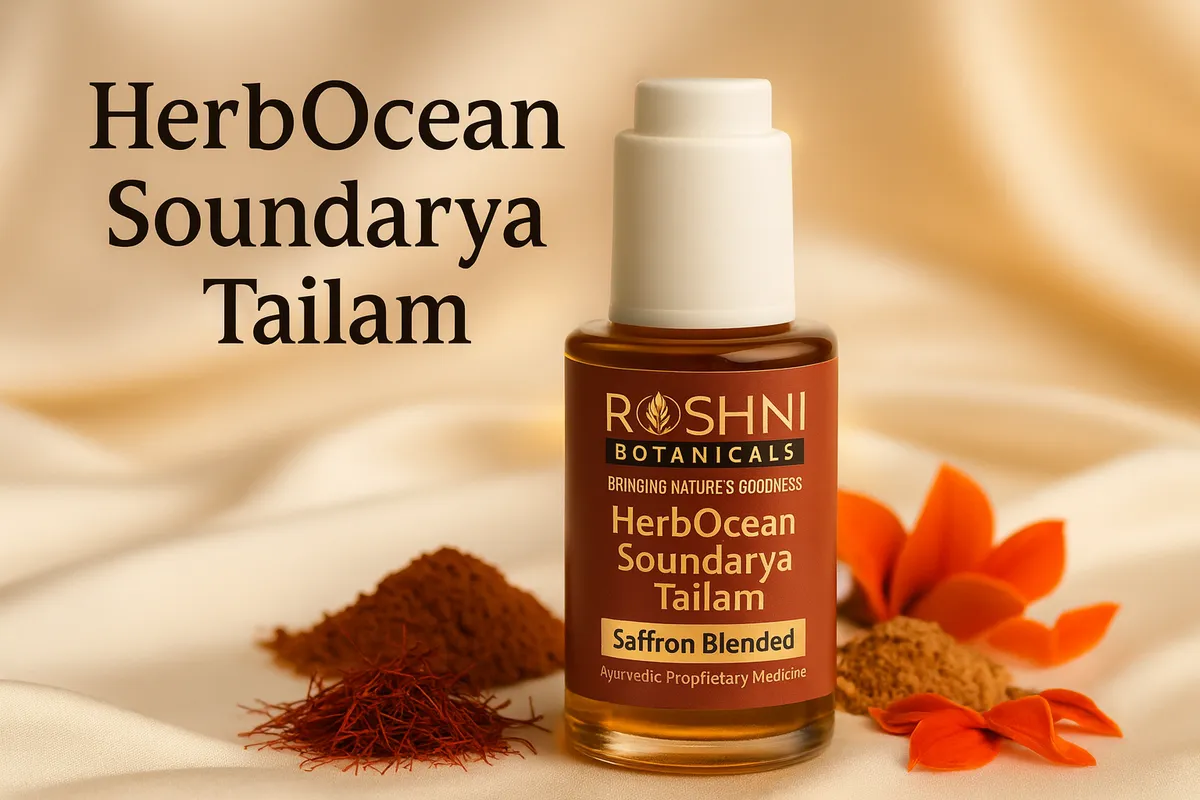
Most facial oils are made the fast way. Soundarya Tailam is not. It is a classical Ayurvedic facial medicine prepared in the goat-milk Kshira-paka tradition, which takes longer, costs more and asks for patience. The reason is worth explaining, because the method is doing as much as the herbs.
Goat milk, the classical carrier
Ajadugdh, goat milk, is the medium at the heart of a Kshira-paka, and the largest single ingredient in this formula. In classical practice the herbs are simmered with the milk in the oil until the water has evaporated and only the medicated oil remains, a gentle way to carry botanicals into a soft, skin-friendly base. It suits dry and mature Twak (skin), which is the kind of complexion this oil was built for.
Manjistha and Mulethi
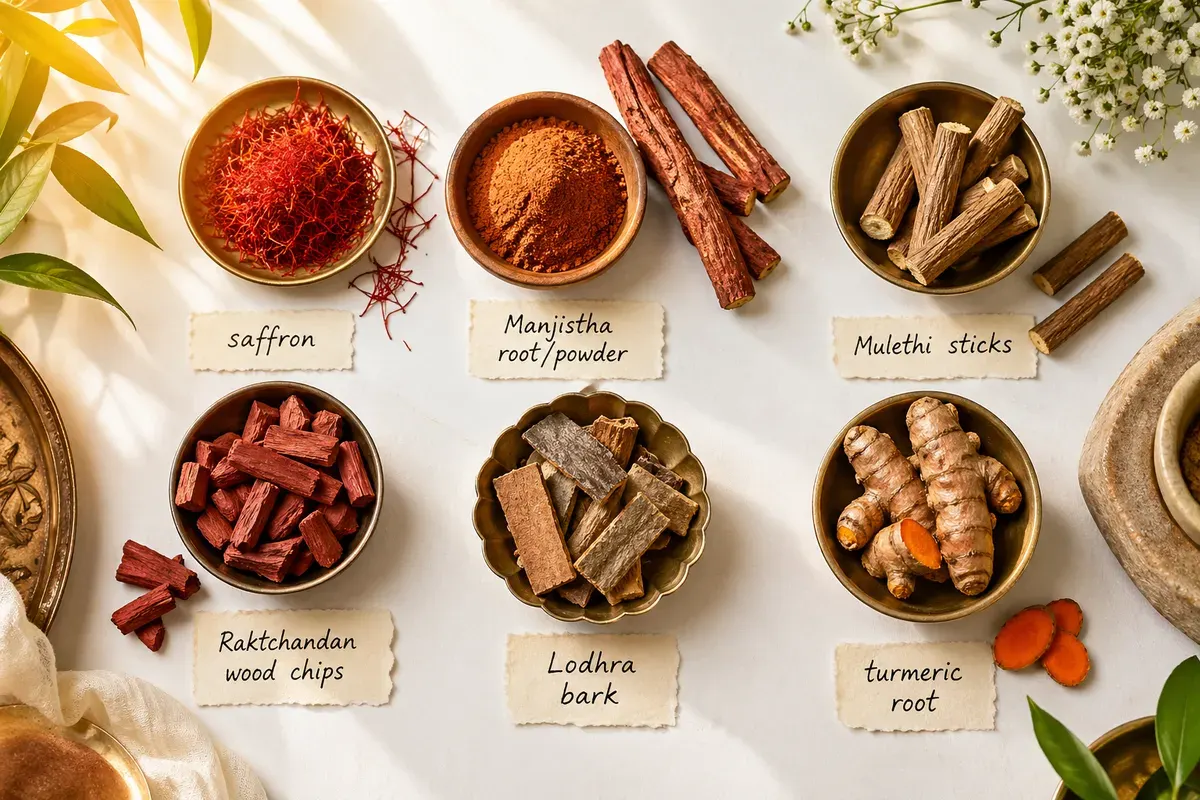
Manjith (Manjistha, Rubia cordifolia) is a cornerstone of classical rakta shodhana (blood-purification) skin traditions, used for generations where the complexion needs settling. Mulethi (liquorice) is the classical brightening herb, long associated with a more even tone. Together they are the reason this is a complexion oil and not just a moisturiser.
Saffron, and why we never cook it
Saffron, Kesar, has earned its place in Indian beauty over centuries, and it is the signature note here. There is one catch the fast methods ignore: saffron’s prized compounds are heat-sensitive. Cook them hard and you lose a good part of what makes saffron worth using. That is why our saffron is cold-macerated rather than boiled. It is a quieter, slower ingredient, and on delicate skin that slowness is a feature.
Why milk, and why slow
The Kshira-paka method is one of the older preparations in the classical repertoire, and it exists because milk is a forgiving carrier. Simmered gently with the herbs in the oil until the water has gone, it draws out and holds compounds that a harsher process would waste, and it lends the finished oil a softness that suits thin, dry or mature skin. Goat milk in particular has a long place in Indian skin lore. None of this is fast, and that is the point: the slowness is what protects the delicate parts of the formula, saffron most of all.
Made for the realities of Indian skin
Dry North Indian winters, hard water and air-conditioned offices all pull moisture out of the skin, and a richer night oil is one of the gentler ways to put it back. This sits in the same lineage as the ubtan and the nightly face oiling that Indian households have practised for generations, the unhurried, leave-it-on approach rather than the quick rinse. For melanin-rich skin, which marks easily and forgives slowly, that gentleness is not a luxury. It is the sensible way to avoid making things worse.
How to use it, and who it suits
At night, on clean and slightly damp skin, press three or four drops between the palms and pat them over the face and neck. A little goes far. It suits dry and mature skin best; very oily or actively breaking-out skin may prefer something lighter. As with any oil, patch-test on the inner forearm first, and keep the routine simple rather than layering ten things at once.
What it is, and is not
This is an Ayurvedic medicine for external use, traditionally used to support soft, even, well-fed skin as a night ritual. It is not a quick fix and it makes no overnight promises. Even tone and comfort build over weeks of consistent use, and daytime sun protection does more for the look of your skin than any oil. If you are pregnant or breastfeeding, check with your doctor before starting anything new. For the pigmentation side of the story, our melasma handbook for Indian skin goes deeper.
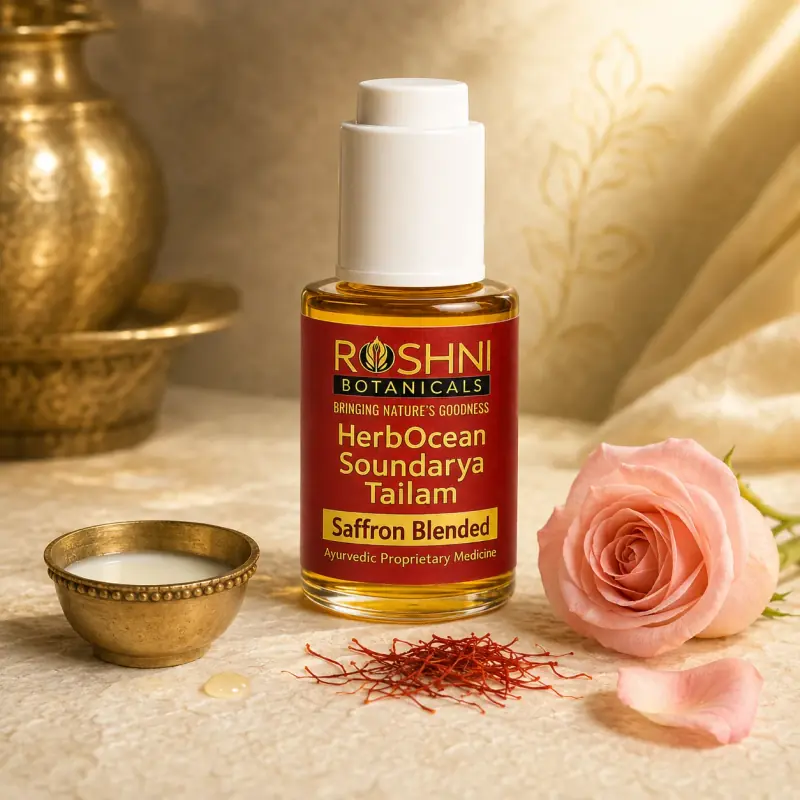
Soundarya Tailam
A saffron-infused facial Taila prepared in the goat-milk Kshira-paka tradition, with Manjistha, Mulethi and Kesar. For soft, bright, even skin.
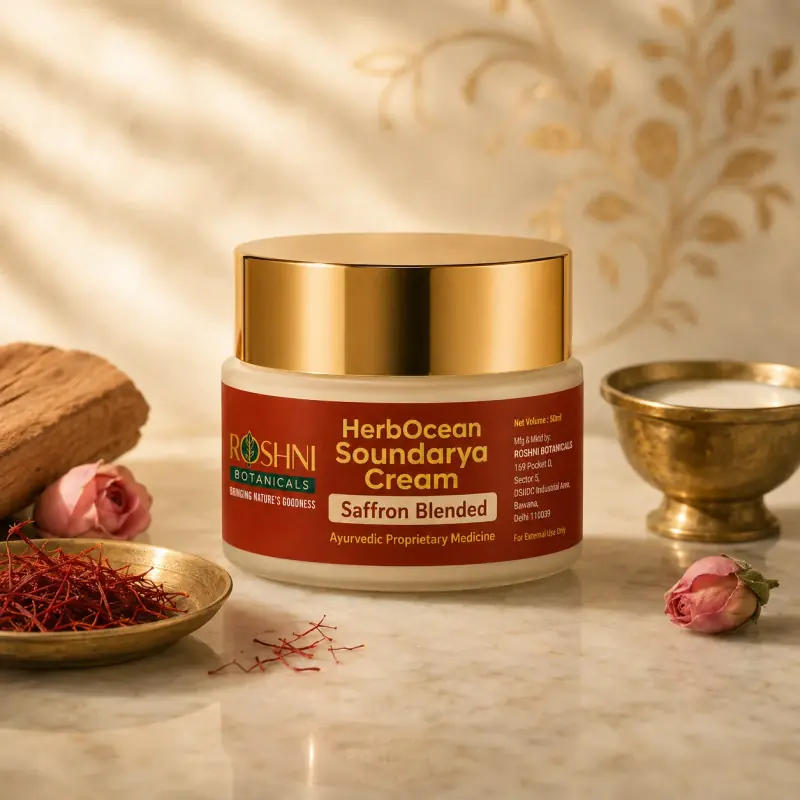
Soundarya Cream
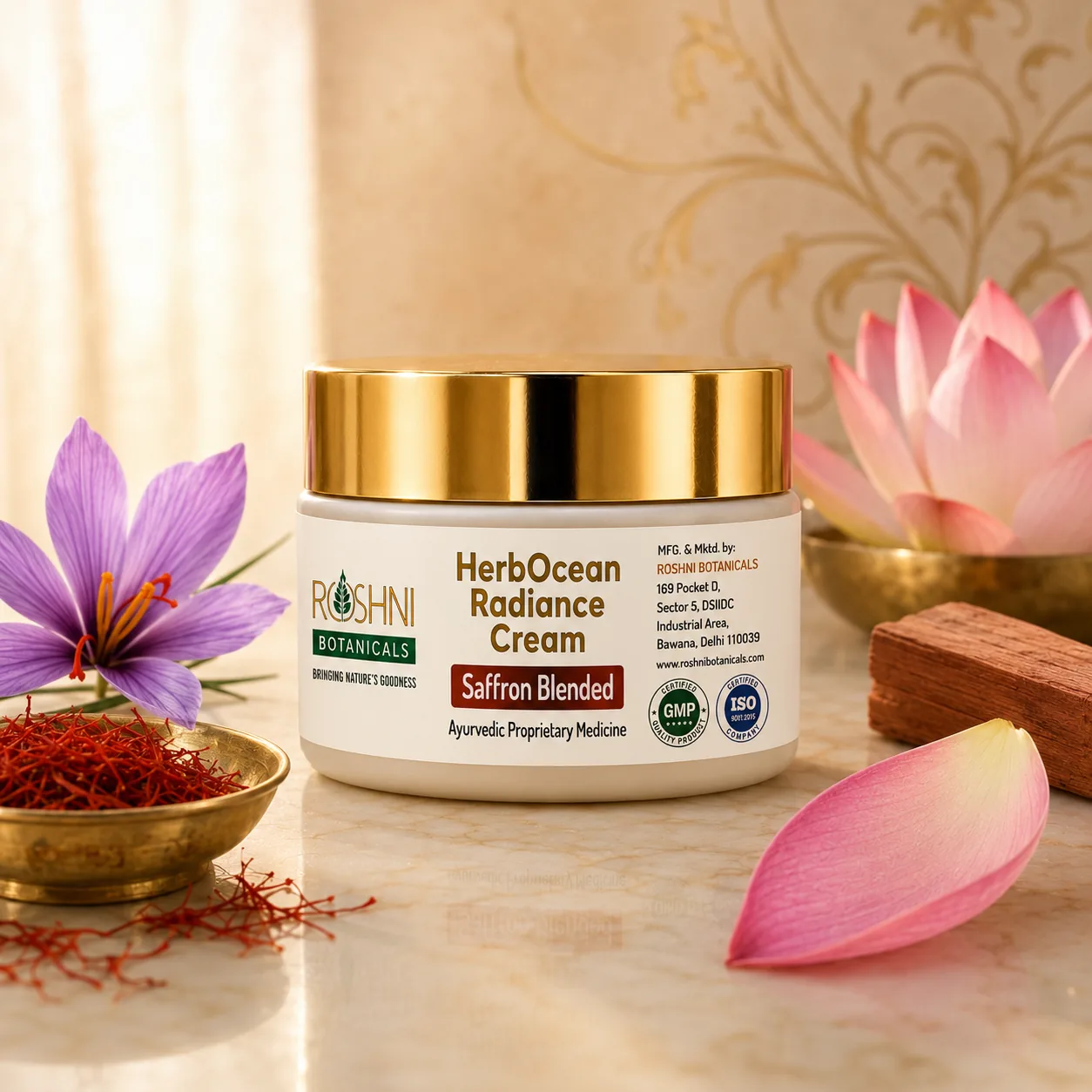
A rich saffron brightening and repair cream with bargad (Vatt) bark on a goat-milk and coconut base, with shea and kokum butters, traditionally used in the care of skin where post-acne marks (PIH) linger.