Rice Water for Skin: What a Kitchen Rinse Really Does
A starch rinse, not a routine. What rice water is, what the evidence supports, why home fermentation is risky, and where a night oil sits beside it.
Rice water for skin arrives on your feed as a discovery: someone tips cloudy water off a steel bowl of rice and promises a different face by the weekend. Rice water is not new. It has sat in Indian kitchens, and on Indian faces, for generations. What is new is the packaging around it, and the quiet gap between what the trend sells and what anyone has actually measured.
So here is the gap, walked end to end: what rice water is, what the research does and does not support, what a jar of it does on a warm, humid counter, and where a preparation made to a fixed method sits beside it.
Key takeaways
- Rice water is the starchy liquid left after rinsing or soaking uncooked rice. Published analyses report rice starch, trace minerals, small amounts of protein and fat, and traces of riboflavin and vitamin E.
- Concentration is uncontrolled at home. Rice variety, wash count, soak time and even how hard your tap water is will change what ends up in the bowl, so no two batches match.
- Most published work sits in the laboratory rather than on human volunteers. Rice water is best treated as a mild, optional rinse, and not as care for any condition.
- Home fermentation is the risky part of the trend, and a sour smell is not proof of a good batch. In warm, humid weather a jar left uncovered has a short life, and cloudiness, floating specks or an off smell means the batch goes down the sink.
- Rice paste has a long domestic life in Indian ubtan practice, always made fresh and used at once. Storing a fermented liquid for days is the imported part, not the Indian part.
What Rice Water Actually Is, and What the Evidence Does and Does Not Show
Start with what is in the bowl, not with what it is said to do. Rinse uncooked rice and the cloudy liquid you pour off is rice water. Soak the rice instead and you get something slightly thicker. Suspended rice starch gives it that milky look. Alongside the starch sit trace minerals and small quantities of vitamins. A systematic review of rice-washed water in the Journal of Food Science and Technology in 2024 sets out what has actually been measured: starch and sugars, small amounts of protein and fat, minerals including iron, zinc, magnesium and potassium, and traces of riboflavin and vitamin E. Washing also carries part of the grain surface thiamine into the water. Ferulic acid and inositol, the two compounds the trend likes to name, belong to the literature on rice bran and rice bran oil. Nobody has measured them in the water you pour off your rice. Every time dal and chawal are washed before cooking, that same material goes down your sink.
Trace is the important word there. Nobody standardises a kitchen rinse. When researchers made rice water three ways from one sack of rice, they got three different liquids, and the acidity moved with the method, from about 5.4 to about 6.8. None of those three is a quick rinse over a sink, which is the point: the liquid is whatever the method makes it. The mineral load of your tap water rides along with it. Delhi groundwater is the case that has actually been measured for hardness, and where the supply is hard that is its own variable if your skin already feels tight after a wash. Two people following the same reel will not make the same liquid.
Most of the work behind the popular claims is in vitro, meaning tests run on cultured cells or in glassware rather than trials on people. The one human study anyone can point to is small. Marto and colleagues in Lisbon, publishing in 2018, boiled paddy rice to make the water, built it into a gel, and had twelve volunteers aged 21 to 46 apply it to one forearm for twenty-eight days while a plain gel went on the other, measuring skin moisture with an instrument. A forearm hydration study on twelve people. Not a face, not marks, and not a rinse made over a sink.
Rice starch has been studied for barrier repair, though in a form nothing like a kitchen rinse. De Paepe and colleagues, working in Brussels and publishing in Acta Dermato-Venereologica in 2002, added pure rice starch to arm baths and measured water loss through the skin. Twelve healthy women aged 40 to 47, whose forearm skin had been deliberately irritated with sodium lauryl sulphate, bathed the arm for fifteen minutes twice a day, and water loss through that skin measured lower than on the plain-water control arm. Thirteen patients with atopic dermatitis were measured the same way. Purified starch, in a bath, on forearms, in a small Belgian group. That is a long way from cloudy water poured off a bowl on to a face.
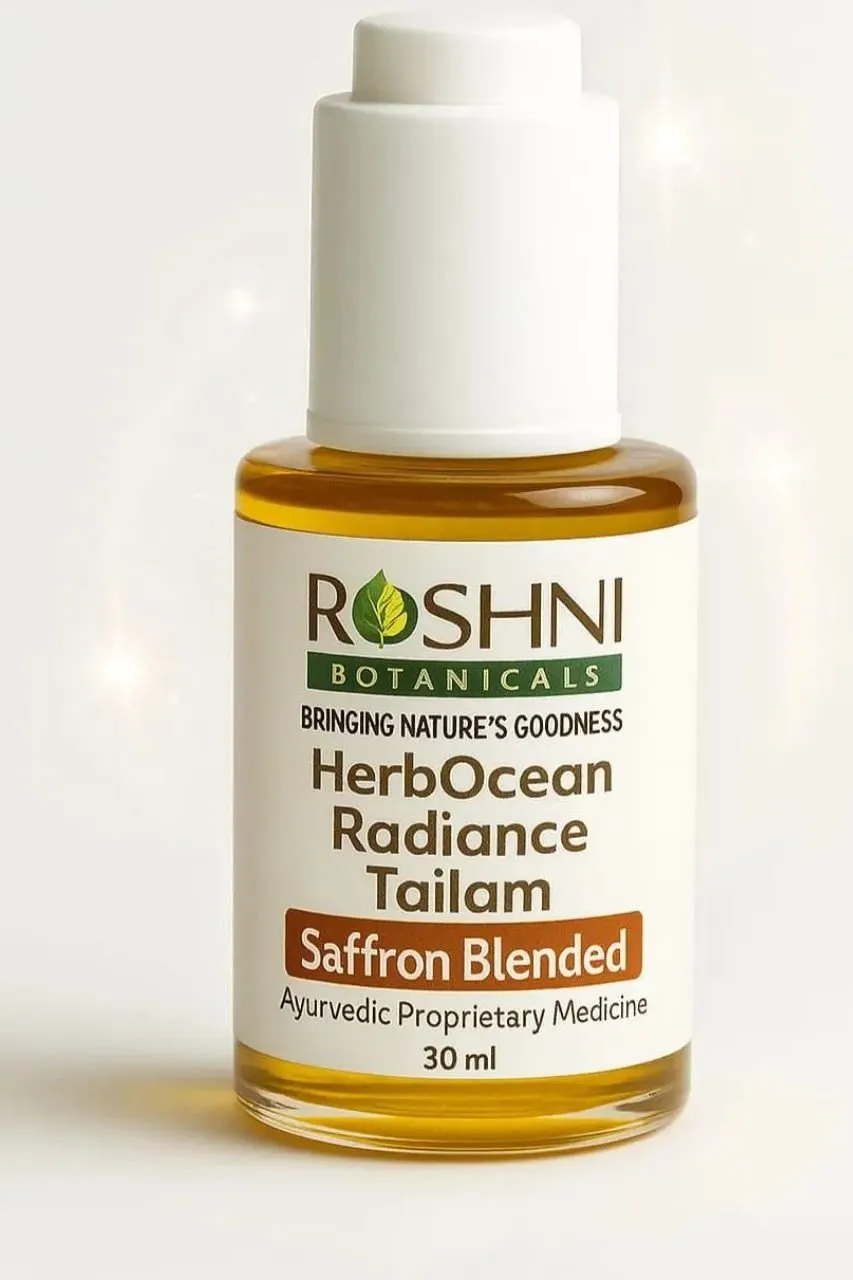
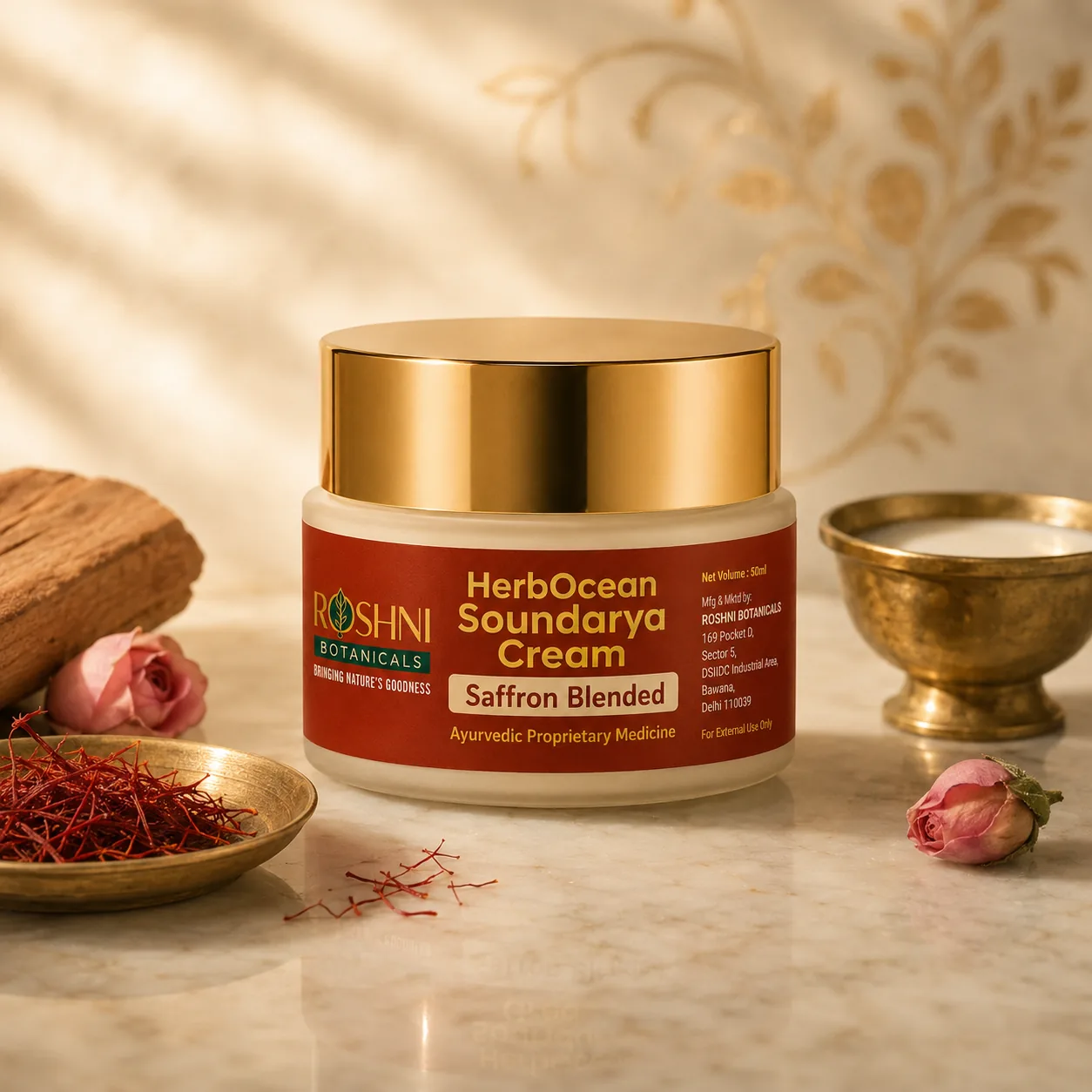
So what can a rinse reasonably be? A mild, pleasant, optional step. Some people like how it feels after a hot day, and that is reason enough to use it. The companion piece on what rose water really does for the face runs the same test on gulab jal. It carries no sun protection. HerbOcean does not manufacture a sunscreen, and nothing in the range replaces one.
Nothing applied from outside changes the colour of skin.
Fermented Rice Water: The Problem Nobody Puts in the Reel
Fermented rice water is the version most reels push, and the version that deserves a plain warning. Fermentation in a laboratory means a chosen culture, a controlled temperature and a known endpoint. Fermentation on a kitchen counter means whatever the grain, the bowl, your hands and the air bring with them, growing in starch and water. The same 2024 review looked at what fermented rice-washed water actually contains and reported a mixed bacterial population, most of it Proteobacteria, with Pseudomonas, Serratia, Enterobacter and Clostridium among the genera identified. Starch plus warmth plus moisture is a growth medium. That is simply what the setup is.
Indian kitchens sit warm and damp as the monsoon pulls back, and an uncovered jar in that air has a short life. The folk cue in almost every reel, that a sour smell means the batch has worked, is the part worth correcting. Sourness can equally mean the batch has spoiled, and a batch that smells fine is not thereby proved safe. Visible fuzz, dark specks or a foul smell mean the same thing, and the answer to all of them is the drain.
If you still want to try it, handle it the way you would handle food. Make a small batch. Keep it refrigerated rather than on the counter. Throw it out the same day rather than nursing a week-old jar. Do not decant it into a reused bottle that once held something else. Stay away from the eye area, and stop at the first sting, itch or flush rather than deciding your skin is adjusting.
This is the practical difference between a home batch and a licensed preparation, and it has nothing to do with which one is closer to nature. HerbOcean preparations are made in-house at our GMP-certified unit in Bawana, Delhi, under AYUSH Licence No. DL-474 A&U, which means a fixed process, a declared ingredient list and a stated shelf life. A jar on your counter has none of the three. Acidity shifts with the method, as those measurements show, and acidity is exactly the sort of variable sensitive skin notices first.
Rice in the Indian Tradition, Taken Seriously
Trend coverage tends to present rice water as an East Asian import that landed in India a few years ago. Rice has been on Indian faces far longer than that. The rinse water has a classical name of its own, tandulodaka, literally rice water. The 2024 review records its classical use as internal: a cold-steeped liquid taken as the vehicle with a medicine, or anupana, rather than a preparation stored for days and patted on a face. The name is older than the trend. The habit the trend teaches is not.
Rice flour and rice paste sit inside domestic ubtan practice across several regions, used as a soft cleanser and a soothing cover in hot weather, often alongside besan, haldi and curd. Nobody in that tradition called it a routine. It was simply what you used.
Classical Ayurveda formalises the applied-paste format as Lepa (a medicated paste applied externally), a dosage form rather than a product, in the same way an ointment is a dosage form in modern pharmacy. Sharngadhara Samhita gives it a chapter of its own, Uttara Khanda 11.
Household rice practice was made fresh, used at once, thrown away. The imported version asks you to store a fermented liquid for days and keep applying it. Storage is where the two habits part company, and it is the step the Indian tradition never asked of anyone.
People type chawal ka pani chehre ke liye. Marks are what the question is usually about, not rinses. That question is answered properly in our handbook on Ayurvedic care for melasma on Indian skin, because a rinse is not where the conversation belongs. Marks in melanin-rich skin, particularly post-inflammatory hyperpigmentation (PIH), the kind left after a spot settles, are slow to settle in any system.
Where a Rinse Ends and a Formulated Night Preparation Begins
Set the two side by side, without pretending one is a version of the other. A rinse is water-thin, made in five minutes, standardised by nobody and finished by tomorrow. A formulated preparation has a defined herb set, a defined base, a defined process, a shelf life and a licence sitting behind it. Neither is a statement about results. Both describe method, and method is the honest place to compare.
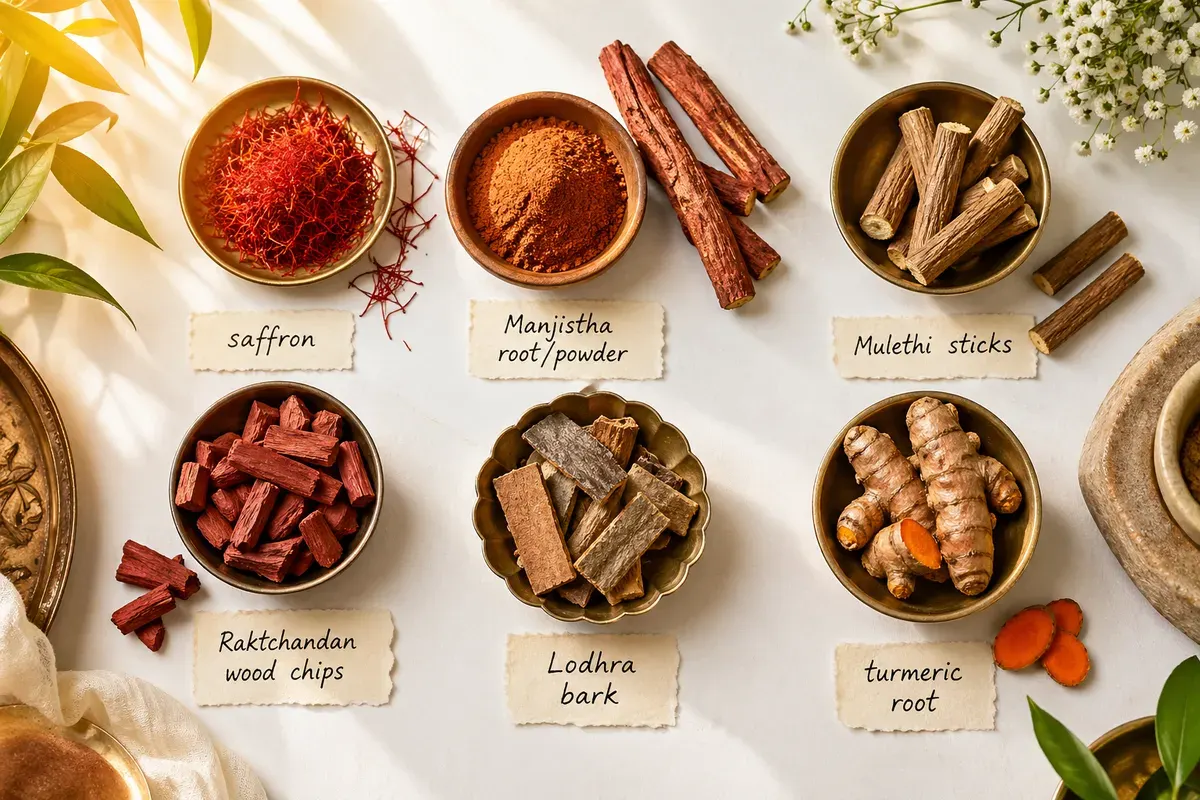
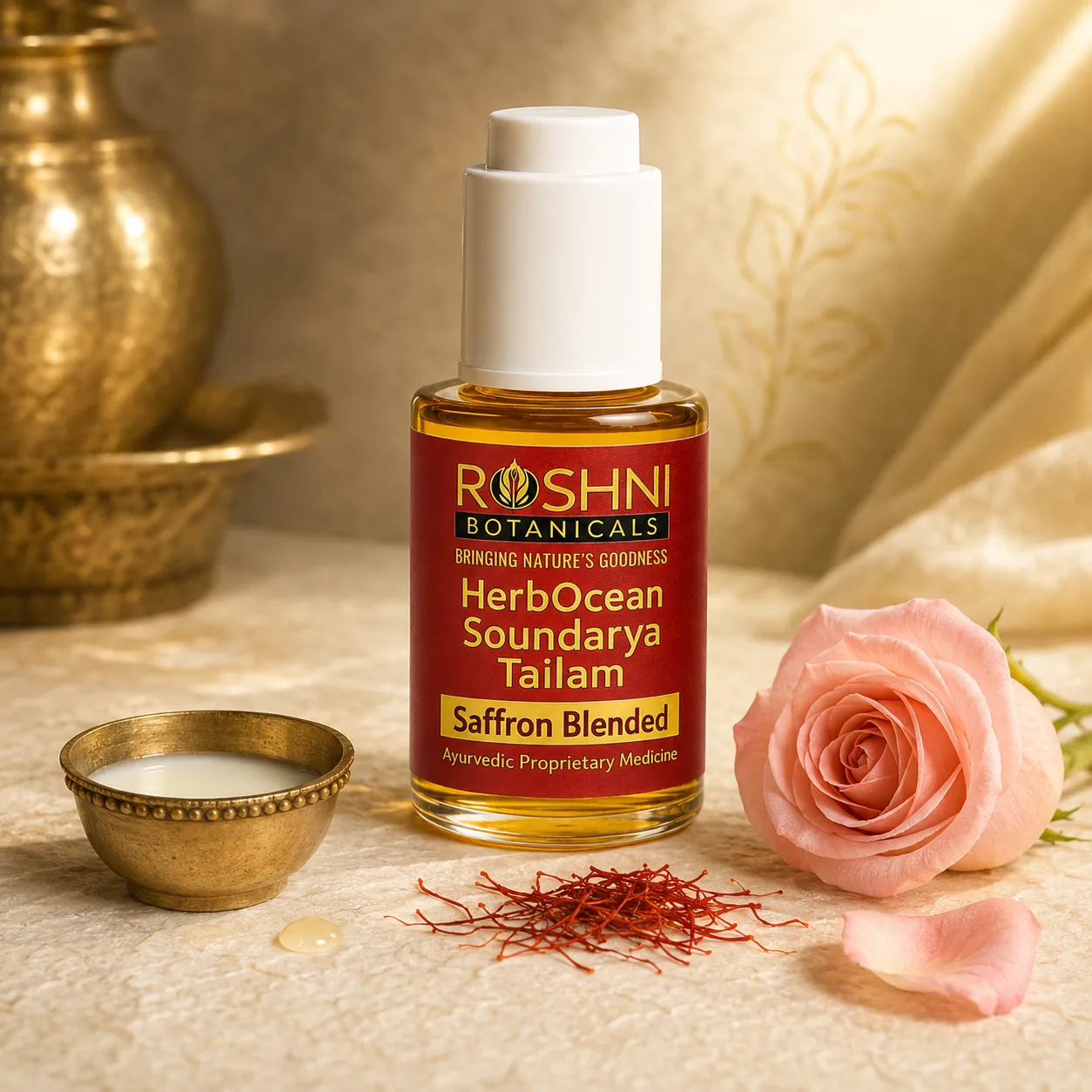
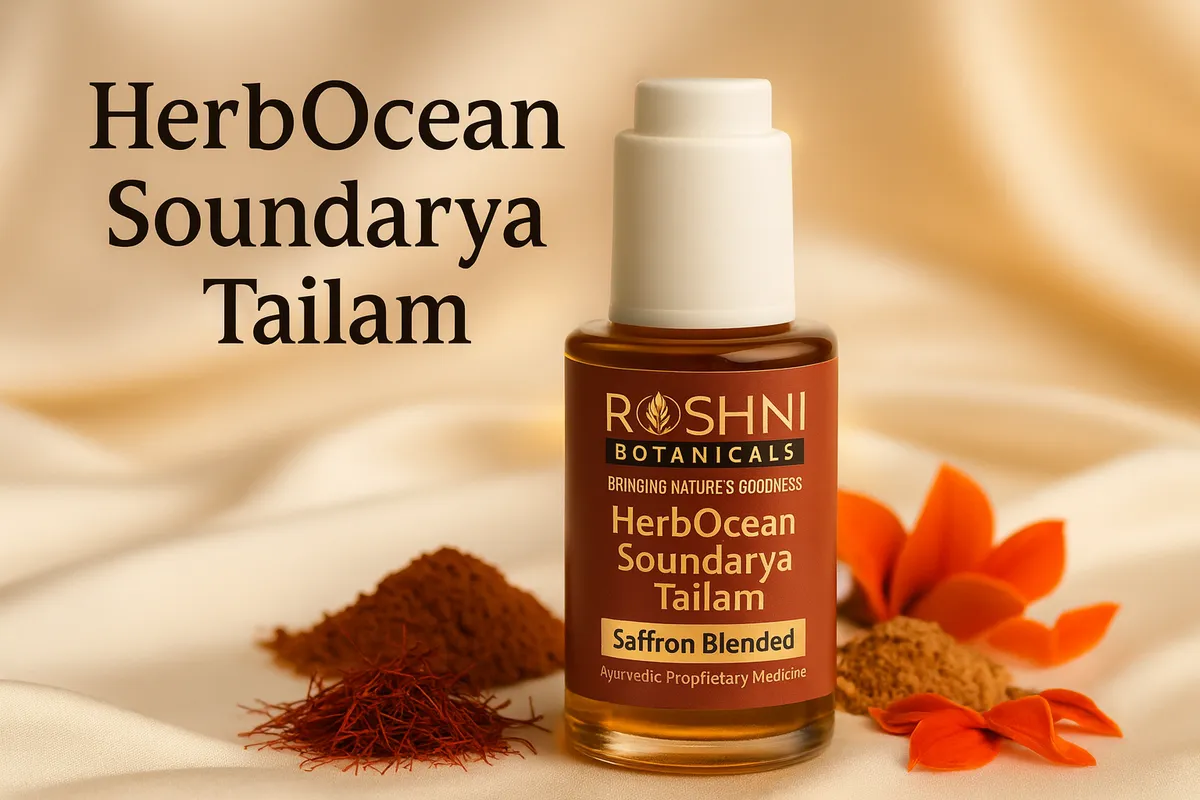
HerbOcean Soundarya Tailam is an AYUSH-licensed Ayurvedic medicine for external use: a saffron-infused facial Taila (medicated oil) prepared in the goat-milk Kshira-paka tradition, with Manjistha, Mulethi and Kesar, and traditionally used in the care of dry, dull skin. Its herbs are simmered with goat milk (Ajadugdh) in the oil until the water has evaporated and only the medicated oil remains. The output is an oil, start to finish. Dry and mature skin gets the most from it, and very oily or actively breaking-out skin may prefer a lighter option. The process itself is set out in our note on how a classical goat-milk face oil is actually made.
For external use only, and patch-test on the inner forearm 24 hours before anything new goes across the whole face, whether it came from a bottle or a bowl. At night, press three to four drops into clean, slightly damp skin. If you are pregnant or breastfeeding, check with your doctor before adding new products. If your skin reacts easily, introduce one new step at a time, and give it several weeks rather than days, because skin turns over slowly.
See a dermatologist rather than adding another home step if a patch of pigmentation appears suddenly, if a mark is changing in shape or colour, if acne (Yuvanpidika) is deep, painful and scarring, if a rash is spreading or weeping, or if something mild has been getting steadily worse across a couple of months.
The formulations are built on the 40-year Ayurvedic formulation legacy of Vaidya Shri Ram Prakash Ji.
Want to see how the oil fits into an evening? We have written that up as a night skincare routine with Soundarya Tailam. On the look the trend usually chases, glass skin, the Ayurvedic way covers that ground.
What to Keep, and What to Leave in the Bowl
Two lines to take away. Rice water is a mild rinse with thin evidence behind it. No study has tested it as anything more than that, so treating it as a pleasant optional step is the only reading the evidence leaves room for. Home fermentation is the part to be careful with in warm, humid weather, and a sour smell settles nothing either way.
For readers who want a night step made to a fixed method instead of one improvised over the sink, HerbOcean Soundarya Tailam is prepared in the goat-milk Kshira-paka tradition, is for external use only, and should be patch-tested first.
References: De Paepe K, Hachem JP, Vanpee E, Roseeuw D, Rogiers V. Effect of rice starch as a bath additive on the barrier function of healthy but SLS-damaged skin and skin of atopic patients. Acta Dermato-Venereologica, 2002;82(3):184-186 (Brussels; 12 healthy women aged 40 to 47 and 13 patients with atopic dermatitis). Marto J, Neves A, Goncalves LM, Pinto P, Almeida C, Simoes S. Rice water: a traditional ingredient with anti-aging efficacy. Cosmetics, 2018;5(2):26 (Lisbon; 12 volunteers aged 21 to 46, forearm application for 28 days; laboratory assays in cultured human keratinocytes). Hu S, Wolfe S, Laughter MR, Sadeghpour M. The use of botanical extracts in East Asia for treatment of hyperpigmentation: an evidence-based review. Journal of Drugs in Dermatology, 2020;19(7):758-763. Chithambharan A, Pottail L, Sharma SC, Mirle RM, Rajalakshmi R, Ponnusamy A. Conventional and scientific uses of rice-washed water: a systematic review. Journal of Food Science and Technology, 2024;61(3):414-428. Dhote M, Rathi B, Rajput DS, Dongre R. A review on Lepa Kalpana: an inherent topical formulation described in Sharangadhar Samhita. Journal of Indian System of Medicine, 2019;7(2):75-82.
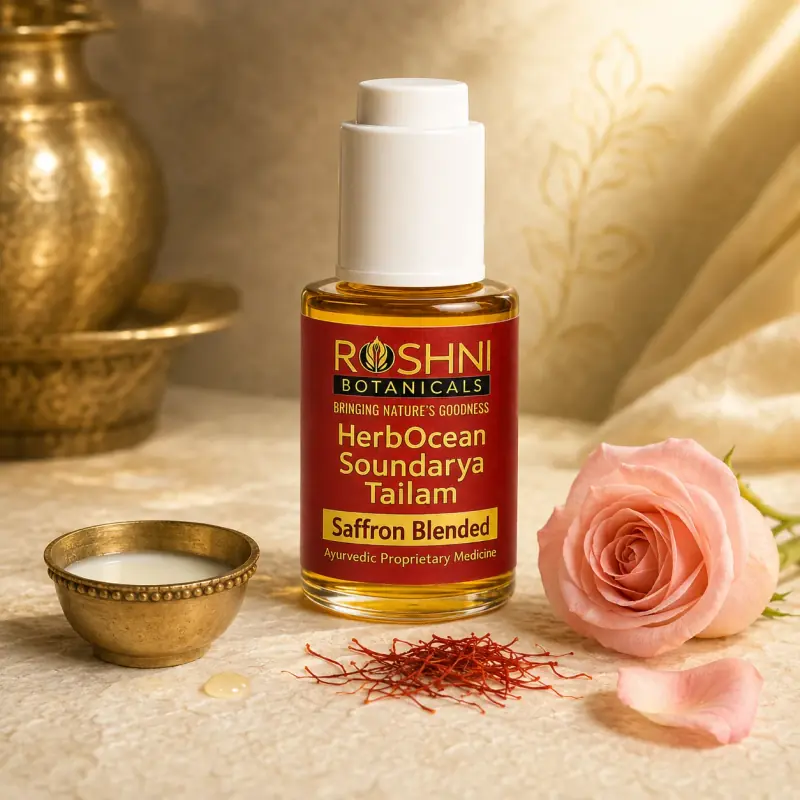
Soundarya Tailam
A saffron-infused facial Taila prepared in the goat-milk Kshira-paka tradition, with Manjistha, Mulethi and Kesar. For soft, bright, even skin.