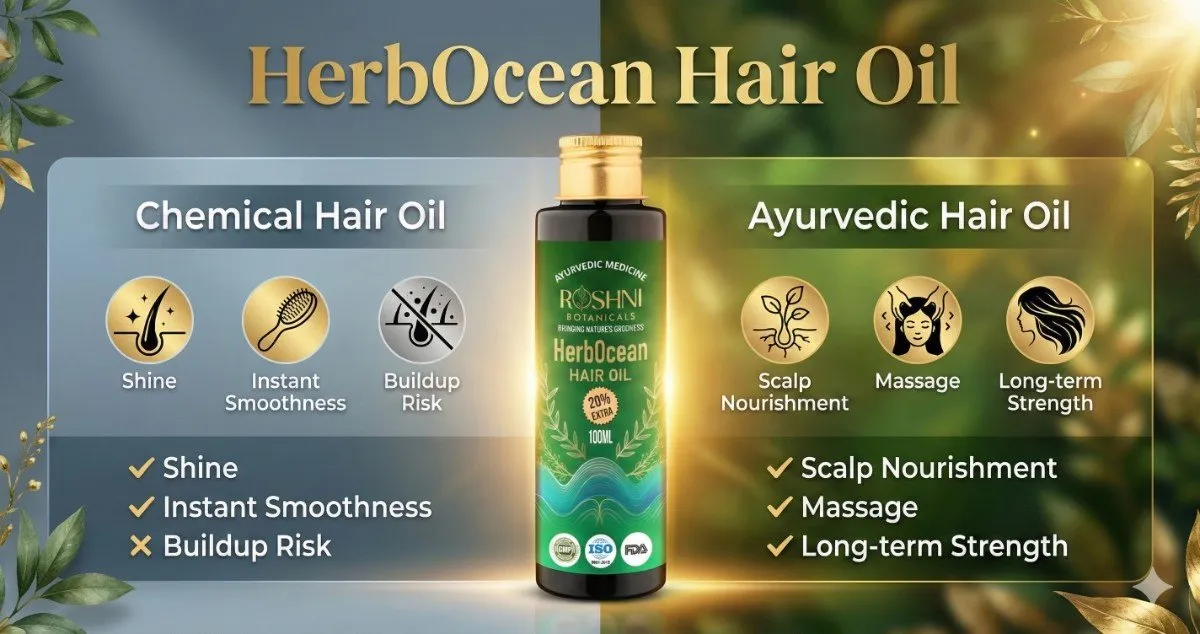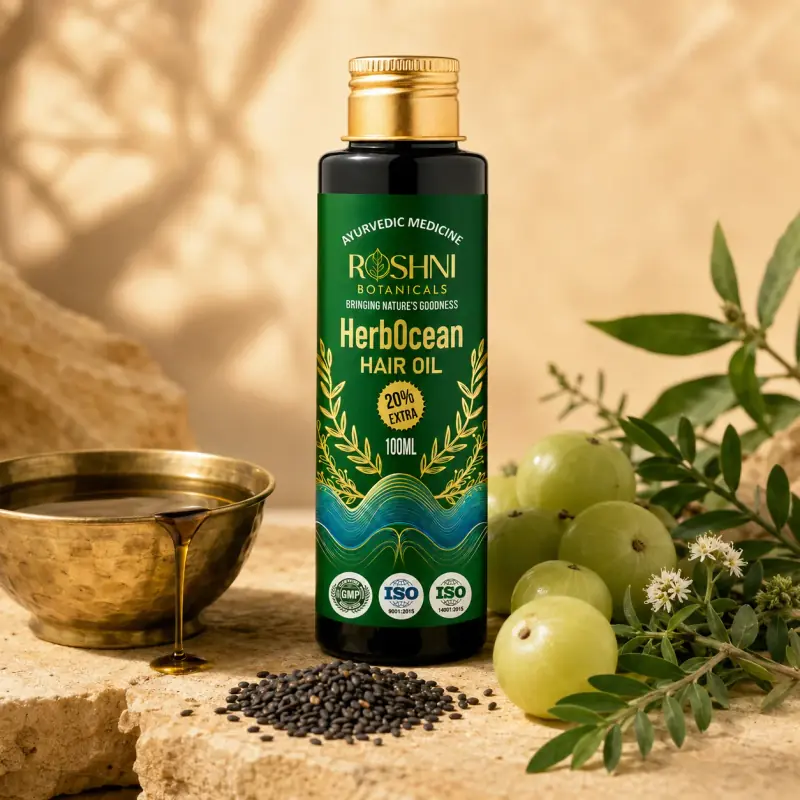
Hair fall is more than just a cosmetic issue—it often signals underlying scalp health problems. Scalp health is integral to hair strength, density, and longevity. While numerous products claim to offer solutions, Ayurvedic herbal oils remain unparalleled due to their holistic approach. HerbOcean Hair Oil by Roshni Botanicals, formulated with Neem, Tulsi, and Rosemary, addresses scalp health comprehensively, targeting the root causes of hair fall. This article explores how these scientifically-backed ingredients work synergistically, enabling effective hair fall control at home, grounded in authentic Ayurvedic traditions and modern medical research.
Understanding Scalp Health and Its Connection to Hair Fall
A healthy scalp environment is essential for robust hair growth. Conditions such as inflammation, microbial infections, dandruff, poor circulation, and oxidative stress are primary contributors to hair loss and thinning (Trüeb, 2005). Addressing these root causes holistically is crucial for effective hair fall control. Ayurveda, the ancient Indian healing system, emphasizes scalp health through herbal oils (Tailas) applied via therapeutic scalp massages (Shiro Abhyanga). HerbOcean Hair Oil embodies these principles, providing an easy-to-use solution for hair fall control at home.
1. Neem (Azadirachta indica): Ayurveda's Potent Scalp Purifier
Ayurvedic Historical Context
Neem, often called the "Village Pharmacy" in ancient Ayurvedic texts, has been documented extensively in classical Ayurvedic literature such as Charaka Samhita and Bhavaprakasha Nighantu. Ayurveda traditionally credits Neem with powerful antibacterial, antifungal, anti-inflammatory, and detoxifying properties, making it ideal for maintaining scalp hygiene and health (Chunekar & Pandey, 1998).
Modern Medical Research on Neem and Scalp Health
Neem's therapeutic properties are validated by modern scientific research. Studies confirm Neem extract effectively combats microbial scalp infections, reduces dandruff, and alleviates scalp inflammation, common causes of hair fall (Alzohairy, 2016). Neem's active compounds, such as azadirachtin and nimbidin, possess strong antimicrobial and anti-inflammatory effects, creating a healthy scalp environment crucial for hair growth (Alzohairy, 2016).
Neem's Role in HerbOcean Hair Oil
HerbOcean incorporates Neem oil precisely for these scientifically proven benefits. Regularly massaging HerbOcean Hair Oil into your scalp reduces microbial infections, prevents dandruff, and calms inflammation, effectively controlling hair fall at home using authentic Ayurvedic herbal oil practices.
2. Tulsi (Ocimum sanctum): Enhancing Scalp Circulation and Hair Follicle Health
Ayurvedic Historical Context
Tulsi, revered as the "Holy Basil," occupies a sacred place in Ayurveda. Ancient Ayurvedic texts like Charaka Samhita and Bhavaprakasha Nighantu highlight Tulsi's adaptogenic, rejuvenating, and circulation-enhancing properties (Chunekar & Pandey, 1998). Ayurveda traditionally recommends Tulsi oil scalp massages to invigorate hair roots and promote healthy, strong hair growth.
Modern Medical Research on Tulsi and Scalp Health
Modern research supports Tulsi's traditional Ayurvedic uses, emphasizing its antioxidant, anti-inflammatory, and circulation-enhancing properties (Cohen, 2014). Tulsi contains bioactive compounds such as eugenol and ursolic acid, proven to stimulate scalp circulation and reduce oxidative stress, directly benefiting hair follicle health and vitality (Cohen, 2014).
Tulsi's Role in HerbOcean Hair Oil
By integrating Tulsi into HerbOcean Hair Oil, Roshni Botanicals ensures enhanced scalp circulation and reduced oxidative stress. Regular scalp massages with HerbOcean Hair Oil containing Tulsi provide effective hair fall control at home, addressing underlying scalp health issues holistically.
3. Rosemary (Rosmarinus officinalis): Stimulating Follicles for Thicker Hair Growth
Ayurvedic Historical Context
Though originating from Mediterranean regions, Rosemary has been embraced in Ayurvedic herbal oil traditions for its remarkable hair-growth-enhancing properties. Rosemary's warming and stimulating qualities align with Ayurvedic principles of balancing and revitalizing scalp tissues and hair follicles.
Modern Medical Research on Rosemary and Scalp Health
Rosemary essential oil has robust scientific backing as a hair growth stimulant. Clinical studies demonstrate Rosemary oil's ability to stimulate blood circulation, promote hair follicle regeneration, reduce scalp inflammation, and even rival conventional treatments like minoxidil for hair growth efficacy (Panahi et al., 2015). Rosemary contains active compounds like rosmarinic acid and carnosic acid, powerful antioxidants that protect scalp tissues from oxidative stress, inflammation, and environmental damage (Labib et al., 2020).
Rosemary's Role in HerbOcean Hair Oil
HerbOcean Hair Oil utilizes Rosemary oil precisely for these scientifically validated benefits. Regular application of HerbOcean Hair Oil containing Rosemary effectively stimulates follicle regeneration, enhances thickness, and reduces hair fall, bringing professional-grade hair fall control right into your home through Ayurvedic herbal oil practices.
How HerbOcean Hair Oil Synergistically Addresses Root Causes of Hair Fall
The power of HerbOcean Hair Oil lies in the synergistic combination of Neem, Tulsi, and Rosemary. Each ingredient targets specific scalp health concerns comprehensively:
- Neem: Eliminates microbial infections, reduces dandruff, and calms inflammation.
- Tulsi: Enhances scalp circulation, reduces oxidative stress, and nourishes hair follicles.
- Rosemary: Stimulates follicle regeneration, promotes thicker hair growth, and reduces inflammation.
Together, these ingredients address the root causes of hair fall holistically, creating an optimal scalp environment for healthy, thick hair growth.
Upholding Expertise, Authoritativeness, and Trustworthiness (E-A-T)
Roshni Botanicals demonstrates impeccable E-A-T standards through HerbOcean Hair Oil by:
- Expertise: Formulated by Ayurvedic experts, herbalists, and researchers with extensive knowledge of botanical medicine and scalp health.
- Authoritativeness: Ingredients are carefully chosen based on rigorous scientific evidence and traditional Ayurvedic texts, ensuring authenticity and efficacy.
- Trustworthiness: Transparent sourcing, ethical production, and rigorous quality standards ensure consumers receive genuine, potent Ayurvedic herbal oil formulations.
How to Use HerbOcean Hair Oil for Hair Fall Control at Home
For optimal results in controlling hair fall at home, follow these traditional Ayurvedic practices:
- Warm the Oil: Gently warm HerbOcean Hair Oil to enhance absorption.
- Apply and Massage: Apply liberally onto scalp and massage gently for 5–10 minutes, enhancing circulation and ingredient absorption.
- Leave Overnight: Allow overnight absorption whenever possible, or at least 2–3 hours before shampooing.
- Regular Use: Use consistently, at least twice weekly, for sustained scalp health benefits and effective hair fall control.
Conclusion: Ayurvedic Herbal Oil for Effective Hair Fall Control at Home
HerbOcean Hair Oil by Roshni Botanicals combines Neem, Tulsi, and Rosemary—ingredients backed by ancient Ayurvedic wisdom and modern medical science—to effectively address scalp health and control hair fall at home. Its holistic formulation targets scalp conditions comprehensively, ensuring long-term hair health, thickness, and vitality, making it an ideal Ayurvedic herbal oil for modern hair care needs.
References:
- Alzohairy, M. A. (2016). "Therapeutics Role of Azadirachta indica (Neem)." Evidence-Based Complementary and Alternative Medicine, 2016.
- Chunekar, K. C., & Pandey, G. S. (1998). Bhavaprakasha Nighantu.
- Cohen, M. M. (2014). "Tulsi - Ocimum sanctum: A Herb for All Reasons." Journal of Ayurveda and Integrative Medicine, 5(4), 251–259.
- Labib, R., et al. (2020). "Protective Effects of Rosmarinus officinalis Essential Oil." Journal of Photochemistry and Photobiology B, 204.
- Panahi, Y., et al. (2015). "Rosemary Oil vs Minoxidil for Hair Growth." SkinMed, 13(1), 15–21.
- Trüeb, R. M. (2005). "The impact of oxidative stress on hair." International Journal of Cosmetic Science, 27(4), 199–209.