Ayurvedic Roll-On for Acne: Practical Spot Care for Breakout-Prone Skin
How classical Ayurveda views acne-prone skin — and where an ayurvedic roll-on fits a real, everyday routine.
Most acne advice in India still circles back to the kitchen — haldi and besan, a dab of neem, multani mitti on a Sunday. There's nothing wrong with any of that. But when one angry spot shows up on a humid Tuesday morning, an hour before you have to leave, a paste you have to mix, smear and rinse off isn't really the answer.
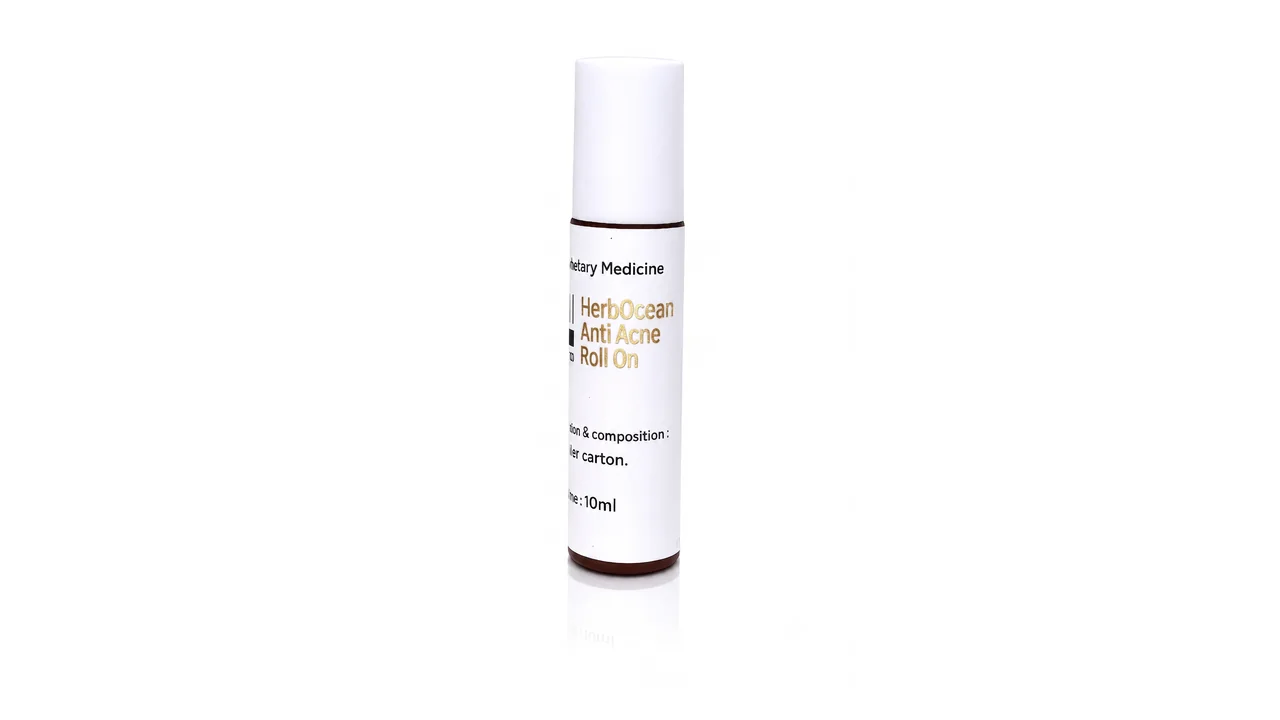
Classical Ayurveda has always treated acne — Yuvanpidika — as a precise, localised concern. A roll-on is simply that same logic made convenient for a real routine, which is exactly the idea behind the HerbOcean Anti-Acne Roll-On.
How classical Ayurveda reads a breakout
In classical Ayurveda, acne is Yuvanpidika — literally "youthful eruption," sometimes called Mukhadushika, "that which spoils the face." The Sushruta Samhita places it among the Kshudra Rogas (minor conditions) and attributes it to Kapha and Vata acting together with vitiated Rakta (the blood tissue, or dhatu). The red, tender, inflammatory kind of breakout is often read through a Pitta–Rakta lens — heat and impurity surfacing through the skin. For the full dosha-and-diet method, see our ayurvedic treatment for acne guide.
Which is why classical acne care leans on rakta shodhana — not just drying a spot on the surface, but cooling and clarifying the Rakta and calming aggravated Pitta. Manjistha found its place in classical formulations precisely because it is associated with this action. A formula built on classical logic is not a random collection of botanical names; each herb was chosen for a reason, and that lineage is what separates a thoughtful Ayurvedic preparation from marketing dressed up in Sanskrit.
Acne on Indian skin is a different conversation
Generic acne advice rarely admits it wasn't written for Indian skin or the Indian climate. If the same routine doesn't work here the way it works in a video filmed in California, there are specific reasons.
The mark outlasts the pimple. Indian skin sits in the Fitzpatrick IV–VI range, which means it marks more easily. One squeezed or inflamed spot can leave a brown or greyish shadow — post-inflammatory hyperpigmentation (PIH) — that takes months to fade. For most Indians, preventing that mark is the harder job.
Humidity changes the rules. Through the monsoon months, sweat and sebum don't dry off — they sit on the skin and mix with grime. Humid days are when acne-prone skin tends to flare most, which is why light, precise care works better here than heavy layers.
Hard water is doing quiet damage. Most of urban India runs on hard water. The mineral load leaves skin tight and barrier-disrupted after every wash — and a disrupted barrier is a reactive one. Over-scrubbing acne usually makes things worse.
What you eat quietly matters. Heavy dairy, refined sugar and very late dinners track with flare-ups for many people. Ayurveda reads this as disturbing Agni (digestive fire) and accumulating Ama. Lighter, earlier meals won't transform skin overnight, but they shift things consistently.
So what is an ayurvedic roll-on for acne?
It's an external preparation that delivers herbs classically indicated for Yuvanpidika straight to the spot — through a rollerball tip, not your fingertips or a spoon. That format is the point. A haldi-besan paste oxidises, stains and drags across the skin around the spot, and rinsing it off disrupts everything else on your face. A roll-on places a precise amount exactly where the breakout is, and nowhere else.
In practice it fits a simple Dinacharya (daily routine) without fuss: cleanse with lukewarm water, pat dry, roll a thin layer directly onto active spots morning and night, and let it settle. Because the formula is light and water-based rather than heavy and occlusive, it genuinely suits humid, hard-water India, where a thick layer would only sit and congest. Keep it to the spots, stay consistent, and let the routine carry the work.
What's inside the HerbOcean Anti-Acne Roll-On
The HerbOcean Anti-Acne Roll-On is an AYUSH-licensed Ayurvedic medicine for external use (Licence DL-474 A&U), formulated by Vaidya Shri Ram Prakash Ji — the master vaidya whose 40-year formulation legacy runs through the entire HerbOcean line. The herbs were chosen for classical indication, not trending ingredient lists:
- Manjistha (Rubia cordifolia) — the lead herb, classically associated with rakta shodhana and the care of inflamed, breakout-prone skin.
- Lodhra (Symplocos racemosa) — a classical kashaya (astringent) herb, traditionally used in the care of congested, blemish-prone skin.
- Daruhaldi (Berberis aristata) — valued in classical preparations for clarifying breakout-prone Twak (skin).
- Raktchandan (red sandalwood, Pterocarpus santalinus) — prized for its cooling, sheeta quality, fitting the Pitta–Rakta picture.
- Kuth (Saussurea lappa) — a classical skin-care botanical used alongside the others.
- Jaiphal (Myristica fragrans) — traditionally used in the care of blemishes and the look of marks.
All of this sits in a lightweight glycerine and DM-water base, kept stable with gentle pharmacopoeial preservation (gluconolactone and sodium benzoate) and finished with a little lavender oil. We won't call it "100% natural" — a stable, skin-kind formula needs its water base and preservation, and we'd rather be straight with you than slogan-led. What it is: precise, classically grounded spot care made for consistent use over time. Not an overnight cure, not a guaranteed result.
On the mark a pimple leaves behind
For many Indians the pimple is the short problem; the mark that follows is the longer one. Because melanin-rich skin holds PIH longer, the kindest thing you can do is let a spot settle calmly — don't squeeze it, don't aggressively dry it out. The calmer it stays, the lighter the shadow it tends to leave.
Where marks do linger after a breakout clears, give them separate, patient attention. The HerbOcean Soundarya Cream is traditionally used in the care of uneven tone and post-acne marks, and it pairs naturally into a daily spot-care routine. If you're weighing herbal care against conventional actives, our guide to how Ayurvedic herbs and chemical actives compare lays out the honest trade-offs.
Set your expectations the way a careful vaidya would. Classical herbs work gradually, across weeks of consistent use. Pair the roll-on with the fundamentals that quietly decide most outcomes on Indian skin — gentle cleansing, daily sun protection, not picking and steadier meals — and give the routine a full season before you judge it.
When to stop doing it yourself
Good home care has real limits, and some patterns deserve a doctor's eye. See a dermatologist if you notice:
- Deep, painful cystic or nodular acne — this kind can scar if left unmanaged.
- Sudden adult-onset acne, especially along the jawline or chin, with irregular cycles — a possible hormonal or PCOS-linked pattern a doctor should assess.
- Acne that is rapidly spreading, severe, or simply not settling with consistent, gentle care over a reasonable period.
- Any reaction, broken skin or persistent irritation — always patch-test first, keep the roll-on to intact skin only, and stop if something feels off.
None of this means abandoning a calm daily routine. It means letting medical care and classical self-care work alongside each other — which is how it was always meant to work.
A calmer way to meet a breakout
Acne-prone skin rarely needs more products. It needs the right ones, used consistently. Classical Ayurveda has always seen Yuvanpidika as a targeted concern, and a roll-on is just that idea made practical: rakta-shodhana herbs, placed precisely, kept up daily. Quiet work, over time.
If you'd like to begin, explore the HerbOcean Anti-Acne Roll-On. And if you want the full picture, read the complete ayurvedic treatment for acne guide. Be patient with your skin, protect it from the sun, and let a steady ritual do what dramatic fixes usually don't.