
Ayurvedic Herbs vs Salicylic Acid for Acne: How Each Approach Actually Works
Salicylic acid works on the pore; classical herbs work on the Rakta. An even-handed, India-aware look at how each approach to acne actually works, and how to choose for your skin.
Stand in a chemist's aisle long enough, a salicylic acid serum in one hand and your grandmother's haldi-and-besan instinct nagging at you, and you already know the real question. Not who wins. How each one actually works on your skin, and which one your skin actually needs. Below is a straight, side-by-side answer, including the safety question about Ayurveda that most articles either dodge or oversimplify.
Key takeaways
- Salicylic acid is a chemical exfoliant that works directly on the pore. Classical Ayurveda approaches the same problem, called Yuvanpidika (the classical Ayurvedic term for acne, literally "youthful eruption"), through herbs traditionally understood to support rakta shodhana (blood purification) and calm Pitta (one of the three doshas). Two genuinely different mechanisms, which is exactly why this comparison is worth doing properly.
- Salicylic acid has real evidence behind it. It is well studied, including in deeper, melanin-rich (Fitzpatrick IV-VI) skin, where it is generally considered well tolerated when used carefully, though it can dry the skin out and makes daily sunscreen non-negotiable.
- On melanin-rich Indian skin, the inflammation of a breakout itself, along with picking or too much sun, is what usually leaves a mark, and over-stripping the skin can make it worse. That makes sensitivity and PIH risk worth weighing seriously, whichever side you lean toward.
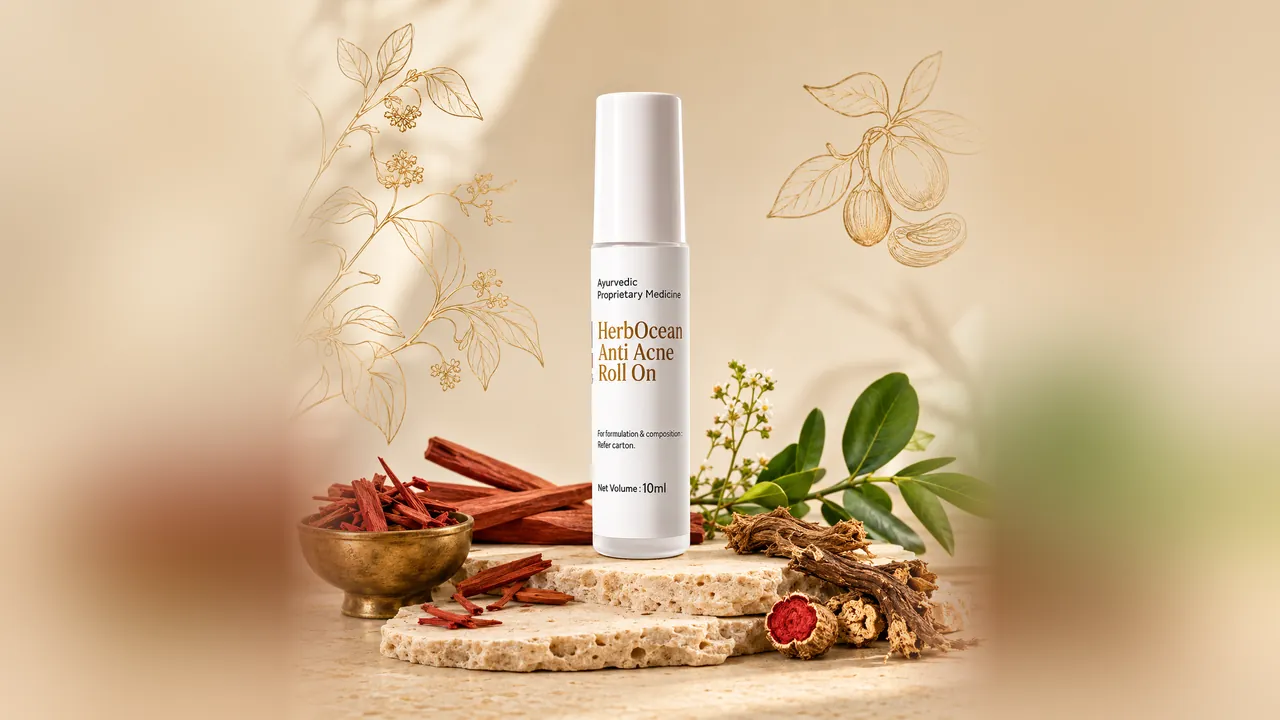
- Not every product calling itself "Ayurvedic" deserves the label equally; look for AYUSH licensing, transparent formulation, and external-use preparations specifically. The HerbOcean Anti-Acne Roll-On is one such AYUSH-licensed Ayurvedic medicine (Licence DL-474 A&U), formulated by Vaidya Shri Ram Prakash Ji with a fully disclosed herbal formula.
The Classical Ayurvedic Lens on Acne
Classical Ayurveda has its own name for acne: Yuvanpidika, literally "youthful eruption." The texts trace it to aggravated Pitta acting together with vitiated Rakta (the blood tissue, or dhatu). In everyday practice, that translates to reading red, tender, inflammatory breakouts through a Pitta-Rakta lens rather than treating them as a surface problem alone. The classical aim reaches past the surface of a spot, toward cooling and clarifying the Rakta itself, the logic behind rakta shodhana, or blood purification.
That distinction is really why the two routes feel so different. A chemical exfoliant works at the pore, from the outside in. A classical herb like Manjistha is chosen instead for its traditional rakta-shodhana association, a slower, gentler idea built around calming breakout-prone skin rather than resurfacing it. Once you know the classical reasoning, you can read your own skin instead of just following whatever a label promises.
Why Indian Skin Needs an India-Aware Approach
The right choice is not the same for every face, and Indian skin and climate tilt the decision in specific ways:
- PIH on melanin-rich skin. Skin in the Fitzpatrick IV-VI range marks easily. An over-irritated or picked breakout often leaves post-inflammatory hyperpigmentation that outlasts the actual pimple by months, which is why gentleness matters more than speed here.
- Monsoon humidity. Through the monsoon, sweat and sebum linger and congest pores. Skin can end up oilier and more reactive at the same time, so any new active is worth introducing slowly rather than all at once.
- Hard water and the barrier. Many Indian cities have hard water that already stresses the skin barrier on its own. Stack a few strong actives on top of that, and reactive skin tips fast into irritation and rebound marks.
Ayurvedic Herbs vs Salicylic Acid: How Each Actually Works
How Chemical Actives Work on Acne
Salicylic acid is a beta-hydroxy acid, oil-soluble enough to get into the pore itself, where it loosens the "glue" holding dead skin cells together and eases congestion at the source. It carries a mild anti-inflammatory action too. Benzoyl peroxide takes a different route, releasing oxygen that cuts down acne-causing bacteria on the surface. Both have solid clinical backing, and both share the same drawback: they can dry the skin out. On melanin-rich skin specifically, that dryness or irritation can itself trigger PIH, so dermatologists typically pair these acids with restraint and non-negotiable daily SPF.
How Classical Ayurvedic Herbs Are Traditionally Understood to Work
This is where classical Ayurveda works on a completely different logic from exfoliation. Manjistha (Rubia cordifolia) carries the lead role here, traditionally tied to rakta shodhana and to calming inflamed, breakout-prone skin. Lodhra (Symplocos racemosa) brings an astringent (kashaya) quality that classical texts reach for on blemish-prone, sensitive skin. Daruhaldi (Berberis aristata) sits alongside it, valued traditionally for clarifying skin in this same condition. And then there is Raktchandan (red sandalwood, Pterocarpus santalinus), prized above all for its cooling (sheeta) quality, which fits the Pitta-Rakta picture almost by design. None of this resurfaces the skin chemically; it is applied externally, in a light preparation, working through classical indication rather than acid action. If that lead herb interests you, here is more on Manjistha for acne-prone skin.
Two Routes, One Decision: Choosing for Your Skin
The smarter move is matching the approach to your own skin, not to whatever is trending. If your breakouts are oily and congestion-led, a carefully used exfoliating active may genuinely serve you well. If your skin runs sensitive, reactive, or leans heavily toward pigmentation, a gentler classical preparation that will not over-strip it often works better. Plenty of people use both, thoughtfully, just never several new actives layered on at once. Introduce one thing at a time, and keep in mind that neither route is a cure on its own. What actually decides the outcome, more than any single product, is consistency, sun protection, and a gentle hand.
Where the HerbOcean Anti-Acne Roll-On Fits, and the Safety Question
The HerbOcean Anti-Acne Roll-On sits squarely in this classical tradition. It is an AYUSH-licensed Ayurvedic medicine for external use, classically indicated for acne-prone skin and active breakouts (Yuvanpidika), formulated by Vaidya Shri Ram Prakash Ji. Manjistha leads the formula, with Lodhra, Daruhaldi, Raktchandan, Kuth and Jaiphal brought together in a light glycerine-and-DM-water base, finished with lavender oil. Because it is a roll-on, you can place a precise amount directly on one spot, which suits both the slow, gentle classical approach and the very Indian instinct against over-treating the skin around a breakout.
"But aren't Ayurvedic products unregulated?"
It is a fair question, and it deserves a straight answer. The concern you may have read about, heavy metals and a lack of oversight, is real, but it is real for a specific category: certain unregulated, unlicensed products, particularly some ingestible metal-based preparations sold without proper labelling. That does not mean writing off Ayurveda altogether; it means choosing carefully, looking for an AYUSH licence, a named formulator, in-house manufacturing, and a fully disclosed ingredient list. The Anti-Acne Roll-On checks those boxes: AYUSH-licensed (Licence DL-474 A&U), made in-house in Delhi, an external topical with every herb declared, not something you ingest. We also will not call it "100% natural," because honestly, it carries a glycerine-and-water base with gentle, pharmacopoeial preservation. Transparency is the actual point.
When to See a Dermatologist
Whichever route you lean toward, certain patterns genuinely call for a professional. See a dermatologist if:
- Deep, painful cystic or nodular acne that could scar if it is left unmanaged.
- Sudden adult-onset acne, or jawline-and-chin breakouts on an irregular cycle, which can point to a hormonal or PCOS-linked pattern worth assessing.
- Acne that keeps spreading, runs severe, or simply is not settling despite consistent, gentle care.
- Irritation or rebound marks showing up after you start an active. That is your cue to scale back, patch-test, and get advice tailored to your skin.
Any acid or new preparation deserves a patch test first and should stay external-use only.
Choosing Well, Not Choosing Sides
Honestly, this was never a contest with a single winner. It is about the approach that suits your skin, your sensitivity, and the season you are in right now. A well-used chemical active and a well-made classical preparation are simply two different routes toward calmer, clearer-looking skin, and either one works best paired with patience, sun care, and a gentle hand. If the classical route appeals to you, start with precise, transparent, AYUSH-licensed spot care: explore the HerbOcean Anti-Acne Roll-On, or read our complete ayurvedic treatment for acne guide for the full dosha-and-diet picture.
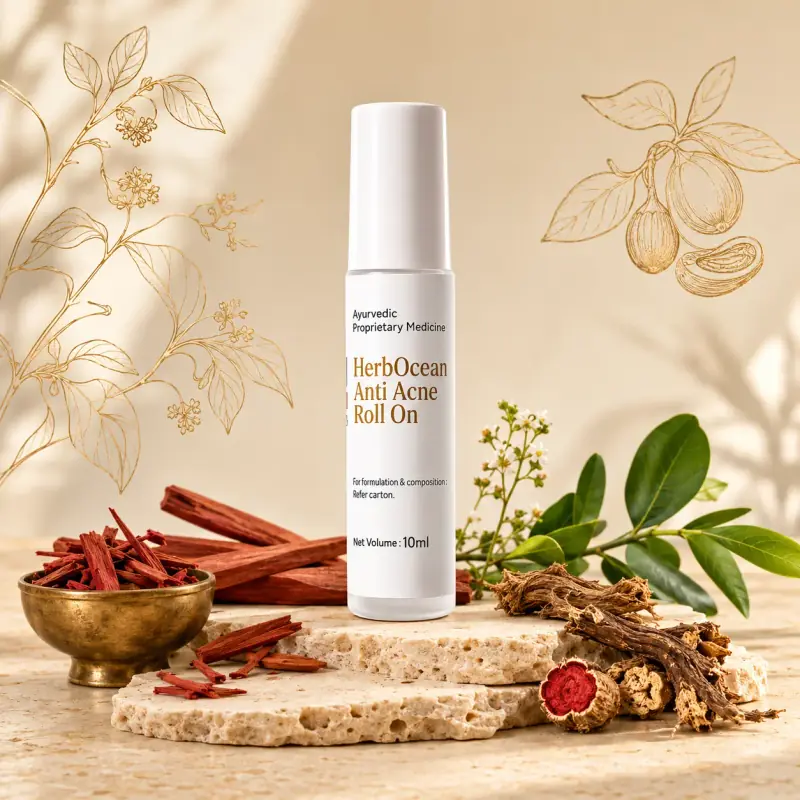
Anti-Acne Roll-On
Ayurvedic spot care for active pimples and post-acne marks (PIH) — a herbal roll-on classically indicated for acne (Yuvanpidika). Made in-house in Delhi.
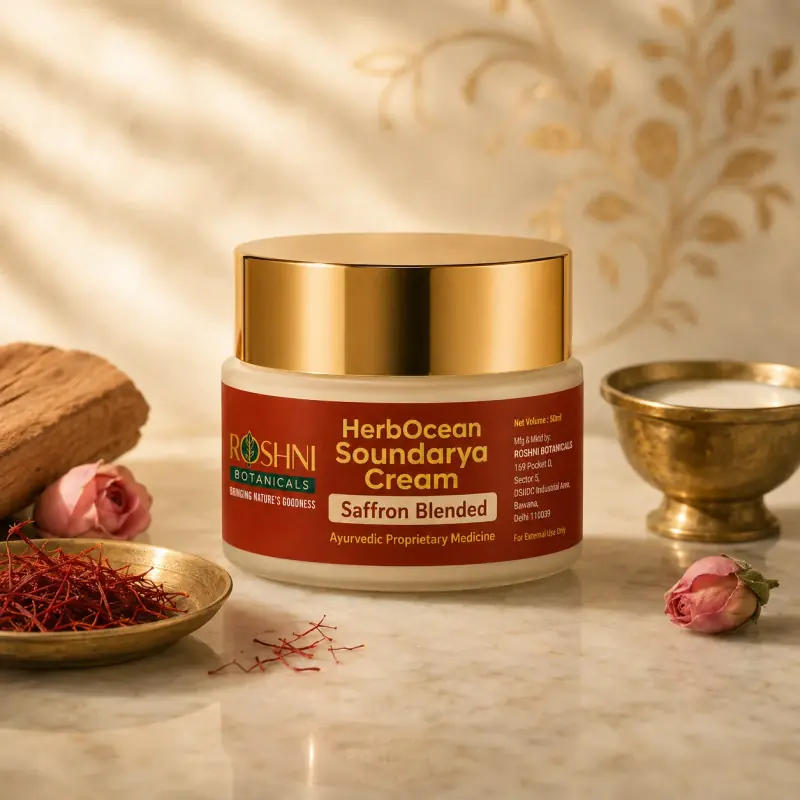
Soundarya Cream
A rich saffron brightening and repair cream with bargad (Vatt) bark on a goat-milk and coconut base, with shea and kokum butters — often reached for where post-acne marks (PIH) linger.
Part of our guide: Ayurvedic treatment for acne: the complete guide.