Turmeric for Skin: The Right Way to a Brighter Complexion
Every Indian kitchen has turmeric, and every grandmother has an opinion. How to actually use Haldi for tone, without the yellow stains.
There is no more familiar skincare ingredient in India than turmeric. Haldi is in the ubtan before a wedding, in the paste a grandmother mixes for a blemish, in the kitchen within arm's reach. It has earned its place over centuries. The catch is that the way most people use it at home is not the way to get the best from it, and a little understanding goes a long way.
Why turmeric earned its reputation
Turmeric is rich in curcuminoids, the compounds behind its antioxidant and soothing character. In classical skin care it is a brightening, calming herb, traditionally reached for to support an even, radiant complexion and to settle the inflammation that so often precedes a dark mark. That long traditional use is the honest basis for its reputation, kitchen wisdom that happens to have real substance behind it.
The problem with raw turmeric on the face
Raw, kitchen turmeric on the face is where good intentions go wrong. It stains skin and clothes a stubborn yellow, the dose is impossible to judge, and on sensitive skin it can irritate rather than soothe. The benefits people are chasing are real, but raw application is an unreliable and messy way to get them, which is exactly why classical formulators infused turmeric into oils and creams rather than slapping the powder on.
Turmeric, formulated, in HerbOcean Radiance
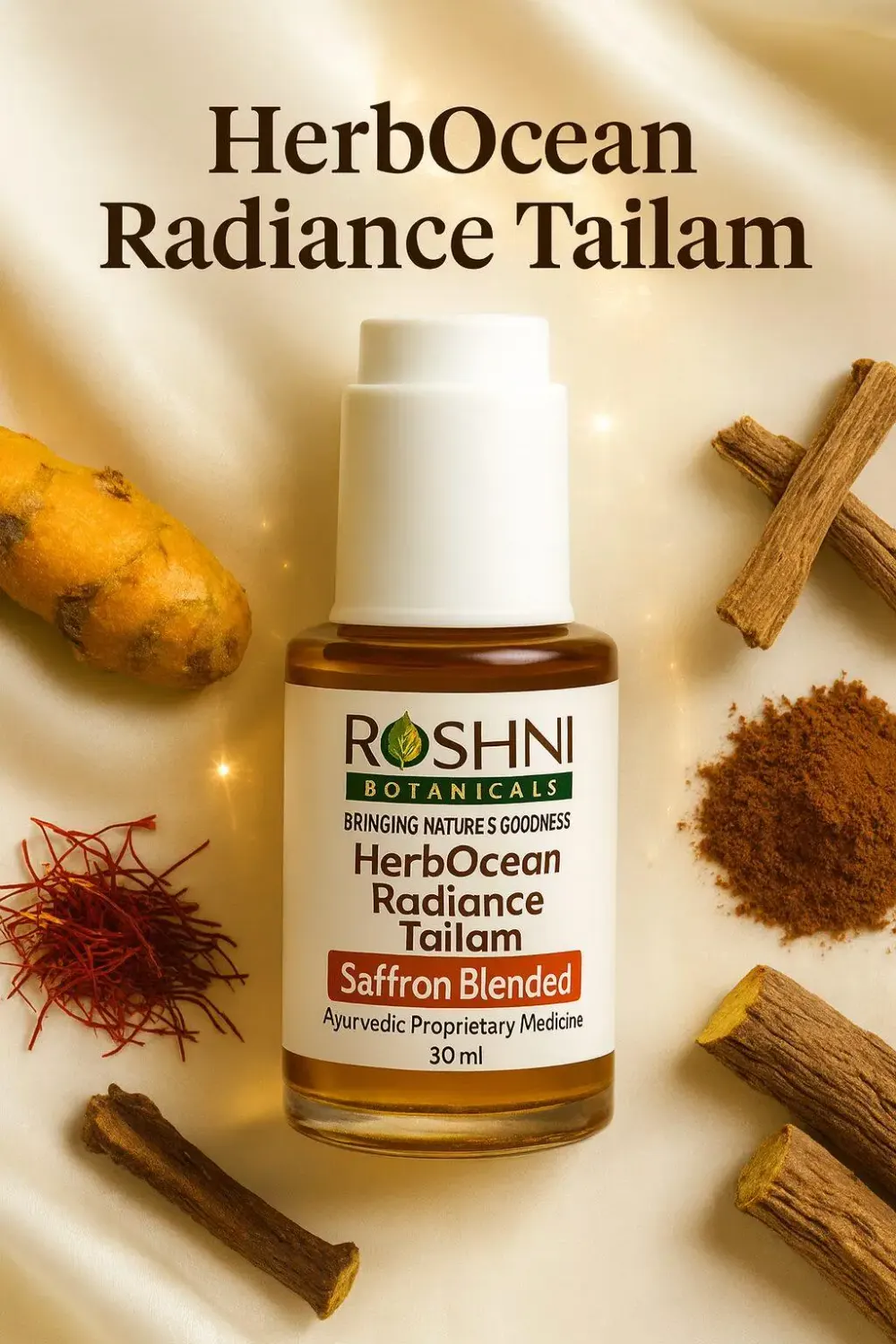
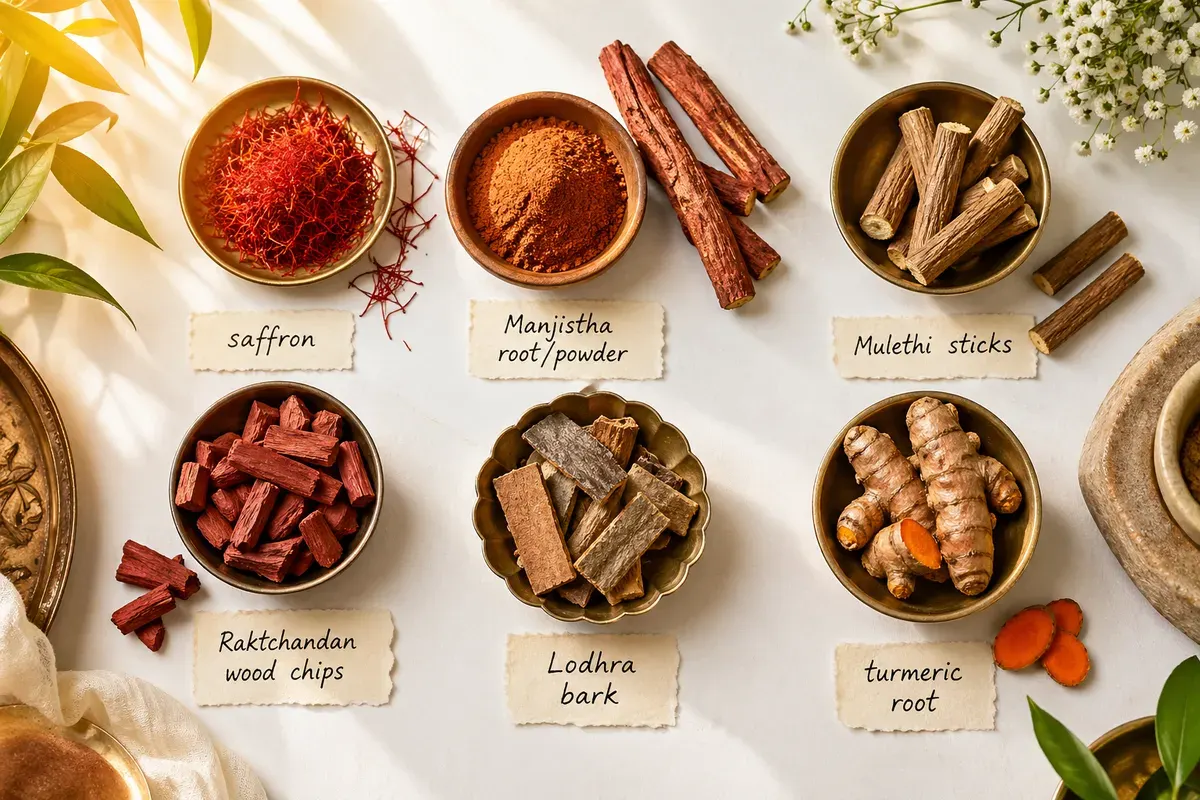
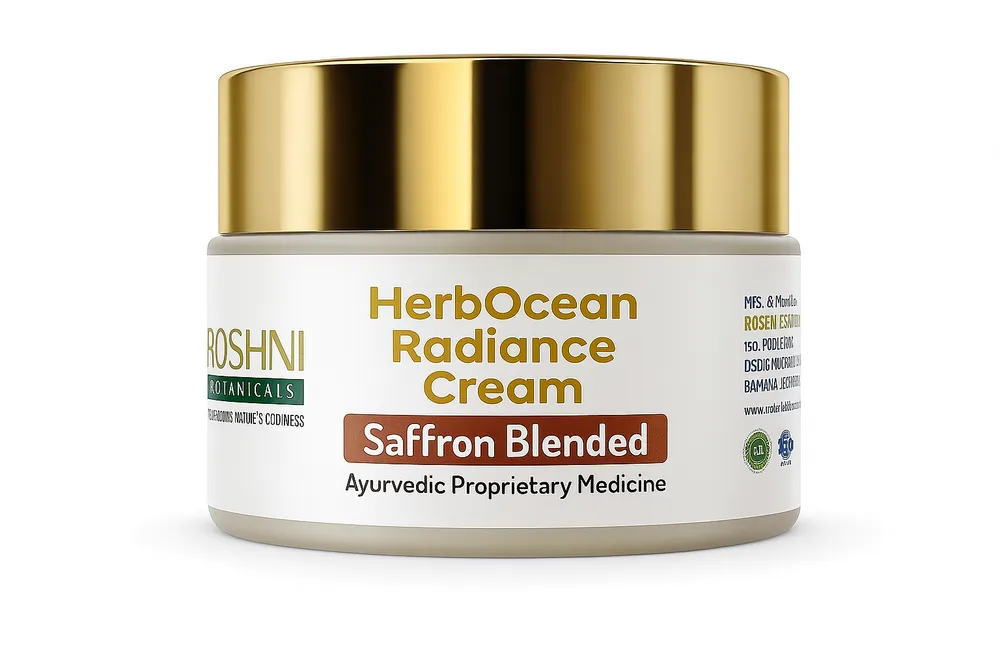
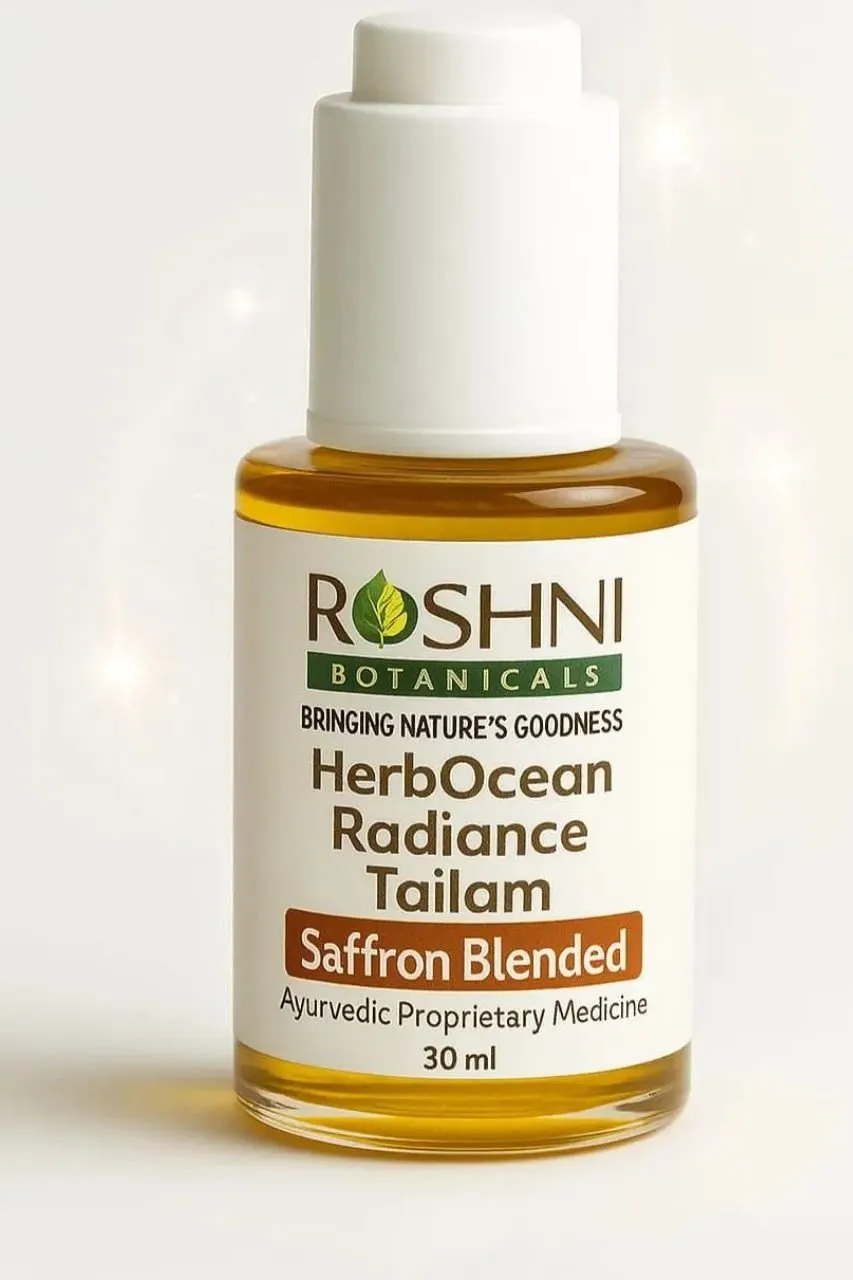
This is the case for a proper formula. HerbOcean Radiance Tailam carries turmeric alongside Manjistha, saffron, sandalwood and the Triphala trio in a sesame Taila, a controlled, non-staining, skin-friendly way to use the herb, classically indicated for the care of dark spots and uneven tone. The lighter Radiance Cream works the same turmeric into a daily, non-greasy base for all skin types.
How to use it well
A few drops of the oil at night, the cream by day under sunscreen, and consistency over several weeks. If you do love a traditional ubtan, keep it as an occasional weekly ritual rather than a daily habit, and never expect the powder alone to do what a balanced formula does. For the companion herb, see manjistha and turmeric together, or the wider Ayurvedic skincare range.
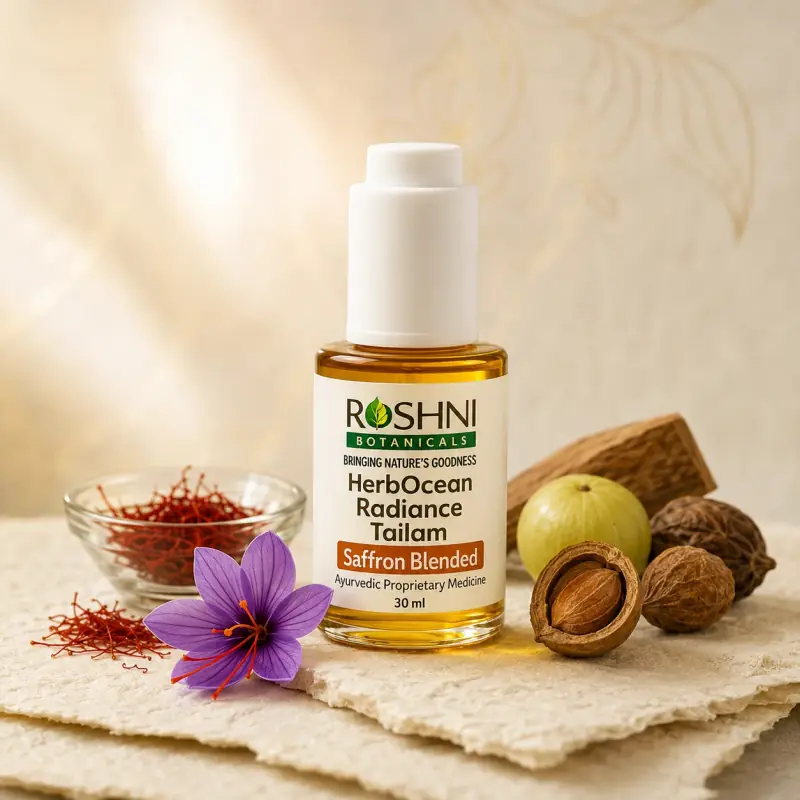
Radiance Tailam
A saffron and sandalwood facial Taila with Manjistha and red sandalwood, traditionally used to support even tone where melasma, dark spots and PIH show.
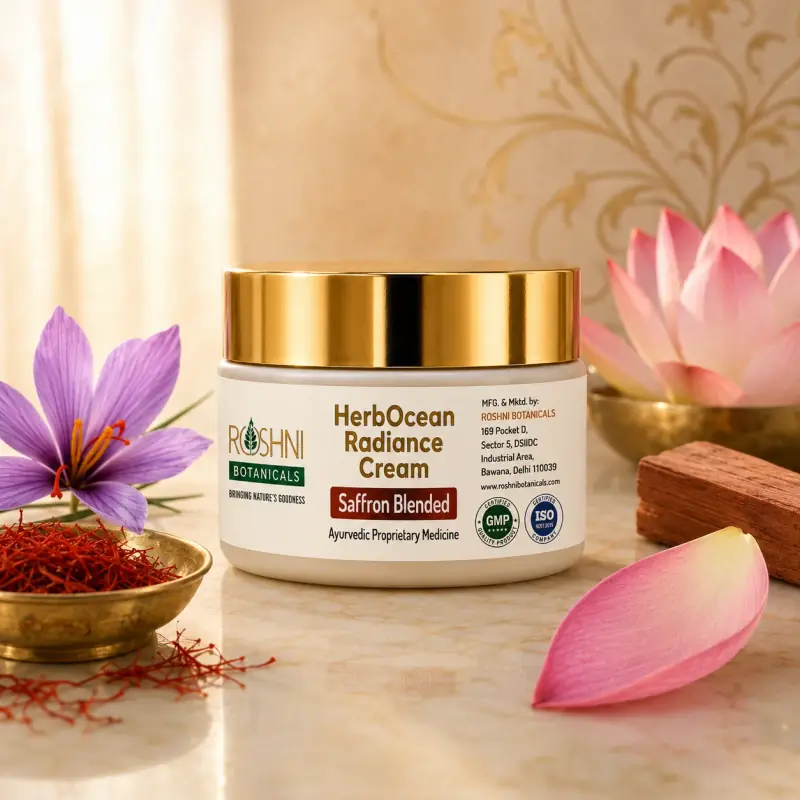
Radiance Cream
A daily saffron and sandalwood cream with Manjistha, red sandalwood and lotus in a light coconut base. Supports a luminous, even-looking complexion.