Ayurvedic Care for Melasma and Pigmentation on Indian Skin
Melasma is the hardest pigmentation to shift. How Ayurveda approaches Vyanga on Indian skin, gently and over time, with the Radiance line.

Of all the pigmentation people bring to us, melasma is the one that tests patience the most. It shows up as symmetrical brown or greyish patches, usually across the cheeks, forehead and upper lip, and it has a habit of fading and returning with the seasons and with hormones. Ayurveda has a name for it: Vyanga, the classical term for these facial patches.
Why melasma is different
Unlike a single dark spot, melasma is driven by a mix of sun, heat and hormonal shifts, and the pigment often sits deep. That is why strong actives and harsh peels can backfire on Indian skin, adding inflammation that deepens the patches. Classical Ayurveda reads melasma as an aggravated bhrajaka pitta (the sub-dosha governing skin colour) and reaches for cooling, calming herbs rather than aggressive ones. Our melasma handbook for Indian skin covers the full classical reasoning.
The Ayurvedic approach
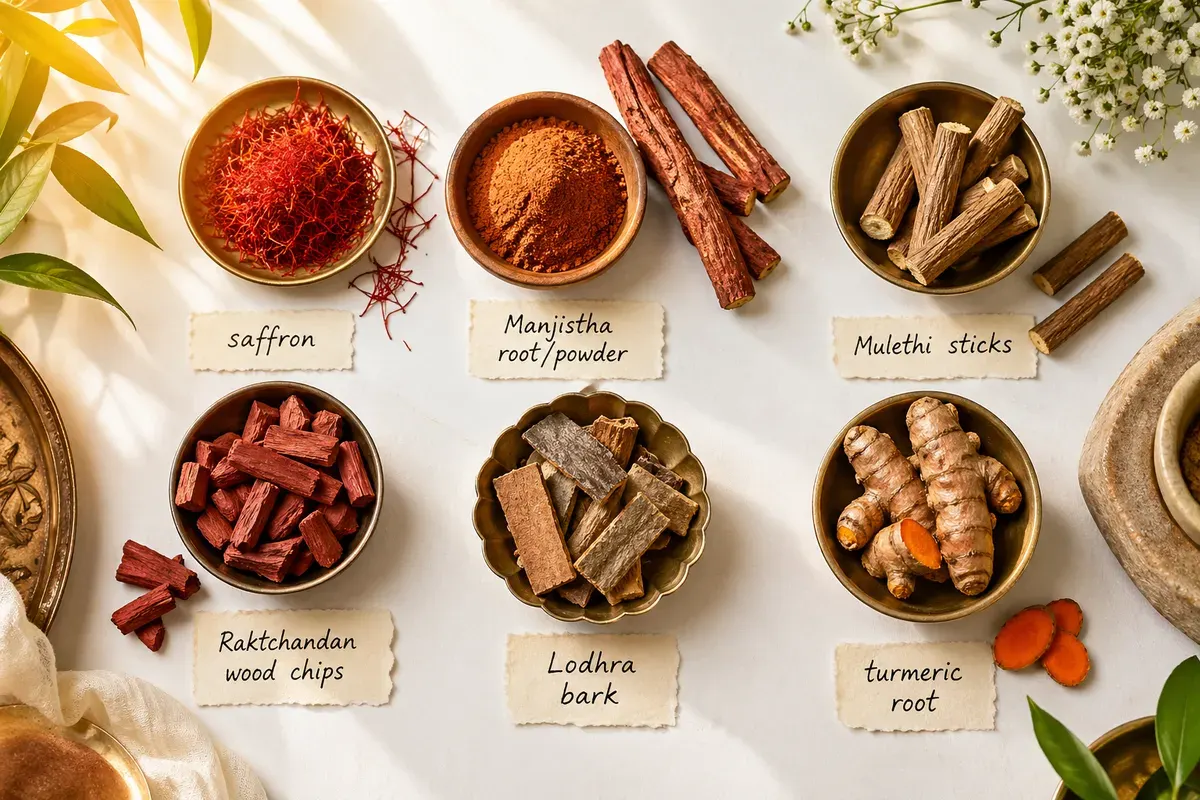
The strategy is calm and consistent. Radiance Cream brings Triphala, white and red sandalwood, turmeric, Manjistha and lotus to support an even tone day to day. The Radiance Tailam adds saffron in a richer night oil. Both are Ayurvedic medicines classically indicated for the care of pigmentation and melasma; neither is a way to erase it, and honest care does not pretend a patch will vanish on schedule.
What actually moves the needle
For melasma more than any other pigmentation, sun protection is the real workhorse. Daily broad-spectrum sunscreen, a wide hat outdoors, and shade where you can. Without that, no herb and no active will hold its ground. Manage heat exposure too, since even kitchen and sun heat can aggravate Vyanga.
Patch-test external-use medicines first, and measure progress in months. Melasma very often needs a dermatologist alongside topical care, especially if it is spreading or hormone-linked, so regard professional guidance as part of the plan rather than a last resort.