Ayurvedic Hair Oils or Chemical Hair Oils: Which Is Better in the Long Run?
Hair oiling is one of India’s oldest rituals — but the shelf is crowded and confusing. How to tell a classical Taila from a fragranced mineral oil, and what each is really for.
Oiling your hair is one of the oldest forms of self-care in India. Most of us learned it from a parent or a grandparent, long before we read a single ingredient list. The trouble is the modern shelf. A “hair oil” that is mostly mineral oil and fragrance sits right next to a slow-cooked classical Taila, the bottles look similar, and the labels rarely make the difference plain. So let us read them properly. Not to crown a winner, because that is the wrong question, but to work out which one is right for what you actually want.
What people mean by a “chemical” hair oil
Usually a mineral or petroleum-based oil, with silicones, synthetic fragrance and stabilisers. It is worth being fair about these, because they are popular for real reasons. They give instant shine, slip and easy detangling, and they tame frizz on the spot. If your goal is how your hair looks and feels the moment after you apply it, they do that job well. The trade-offs show up over time rather than today: water-insoluble silicones can build up on the strand, synthetic fragrance is a common trigger for sensitive scalps, and the action sits mostly on the surface of the shaft rather than at the scalp where hair is actually fed.
What an Ayurvedic Taila is trying to do
A classical Taila (medicated oil) starts from a different goal. Two ideas sit at its centre: get nourishment to the scalp and the root, and treat the massage itself as half the remedy. In the traditional taila-paka method the herbs are slow-cooked into the oil so their compounds come along for the ride. The pay-off is root-focused care and a calmer scalp over weeks. The catch, in fairness, is that it asks more of you: it wants time, a proper massage and a thorough wash, and undiluted essential oils can irritate if you overdo them.
The honest side-by-side
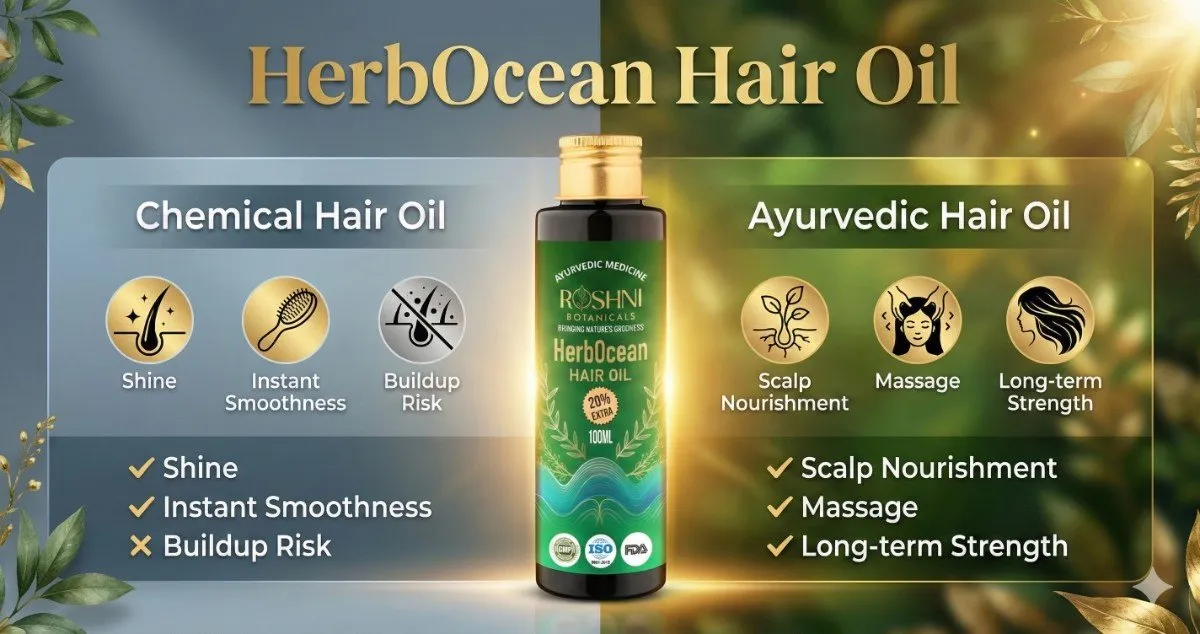
- The goal: surface smoothing and instant shine, versus scalp and root nourishment over time.
- The base: mineral oil and silicone, versus a cold-pressed sesame or coconut Taila.
- The pay-off: a result you see today, versus a slower, cumulative kind of scalp health.
- The watch-outs: buildup and fragrance sensitivity on one side; patience and sensible dilution on the other.
So which is better in the long run?
Here is the honest answer, and it is not a dodge: they are answering different questions, so “better” depends on yours. If what you want is shine, slip and quick frizz control for styling, a silicone-based oil does that, and a slow herbal Taila will frankly disappoint you on the day. If what you want is to look after the scalp and roots over months, a classical oil with regular massage is built for exactly that, and a silicone shine product was never trying to do it. We will describe how each one works and let you decide which fits your hair and your routine. We are not going to tell you one simply wins, because that would not be true.
How to tell them apart on the label
You do not need a chemistry degree, just a habit of turning the bottle over. Look for the base oil named first: cold-pressed sesame or coconut is a good sign, “mineral oil” or “liquid paraffin” high on the list tells you what you are really buying. Look for actual named herbs rather than a vague “herbal blend” and a long fragrance. And be wary of a bottle that will not tell you how it was made at all. A transparent, fully named formula tells you more than any claim on the front.
Can you use both?
Plenty of people do, and there is no rule against it. A classical Taila before wash day for the scalp, and a tiny amount of a silicone serum on damp lengths afterwards for shine and detangling, are doing two different jobs and need not fight. The only things to watch are buildup, so wash thoroughly, and your scalp’s tolerance for fragrance.
A fair word on the research
If you have seen the headline, a six-month randomised trial did report rosemary oil performing comparably to 2% minoxidil for one pattern of hair loss. It is a point about rosemary as a single ingredient, studied on its own, and not a claim about any finished bottle. We mention it because it is genuinely interesting and because we would rather you knew what the evidence does and does not say. Patch-test essential oils, and see a dermatologist for eczema, psoriasis or any active scalp infection rather than oiling over it.
Does mineral oil really “suffocate” the scalp?
It is worth clearing up a myth, because being fair cuts both ways. Mineral oil does not smother the follicle or stop hair growing, and the idea that it is somehow toxic is overstated. Cosmetic-grade mineral oil is well tolerated by most people and is genuinely good at one thing: sitting on the strand and reducing water loss, which is why it makes hair feel smooth. The honest limitation is narrower than the scare stories suggest. It conditions the surface but does not feed the scalp, and on some people it and the silicones alongside it build up over time and need a clarifying wash. That is a reason to match it to the right job, not a reason to fear it.
The Indian water-and-weather factor
Where you live changes this calculation more than the marketing admits. Hard water, which is the reality across much of India, already leaves mineral deposits on the hair, so piling silicone and mineral oil on top can mean buildup that dulls the very shine you were chasing. Humid coastal summers do the same. A lighter hand and a proper clarifying wash help if you lean towards the silicone side. A slow herbal Taila washed out thoroughly tends to leave less residue, which is part of why the classical wash-day routine has survived in Indian homes for so long. Neither approach is exempt from a good wash.
What is in our Hair Oil, and how to use it
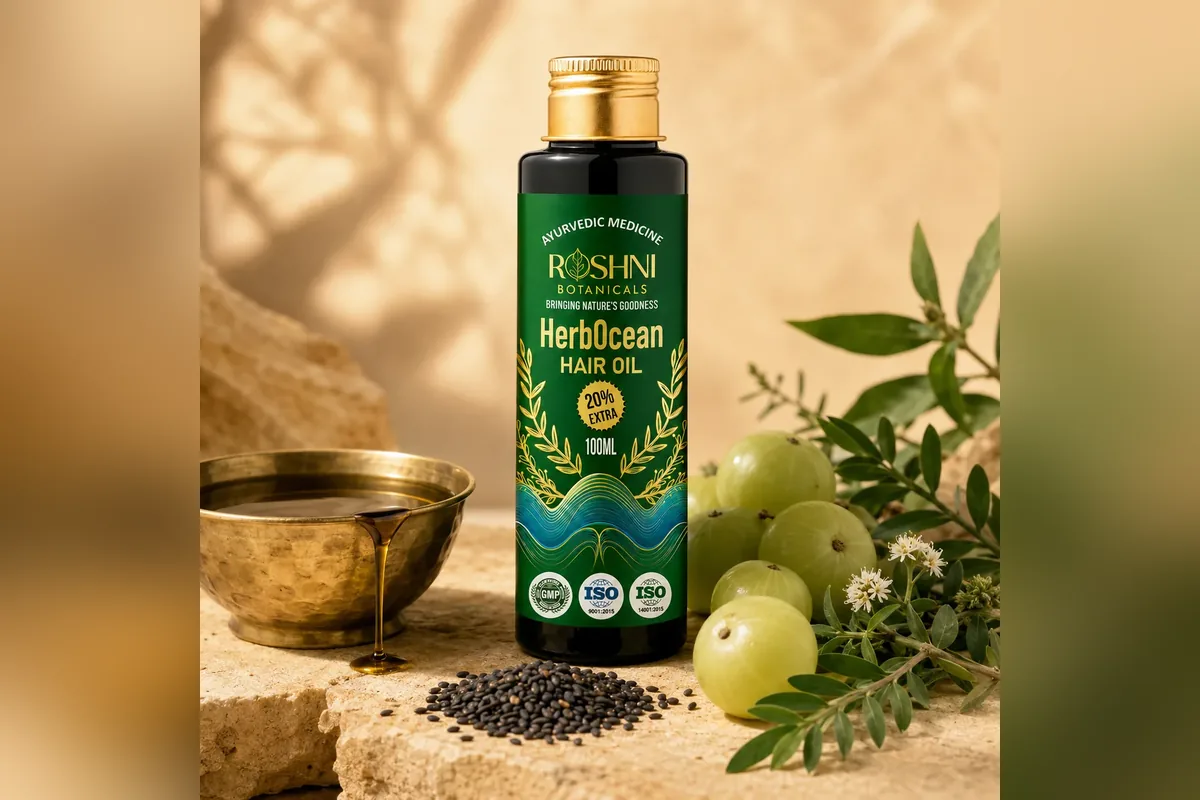
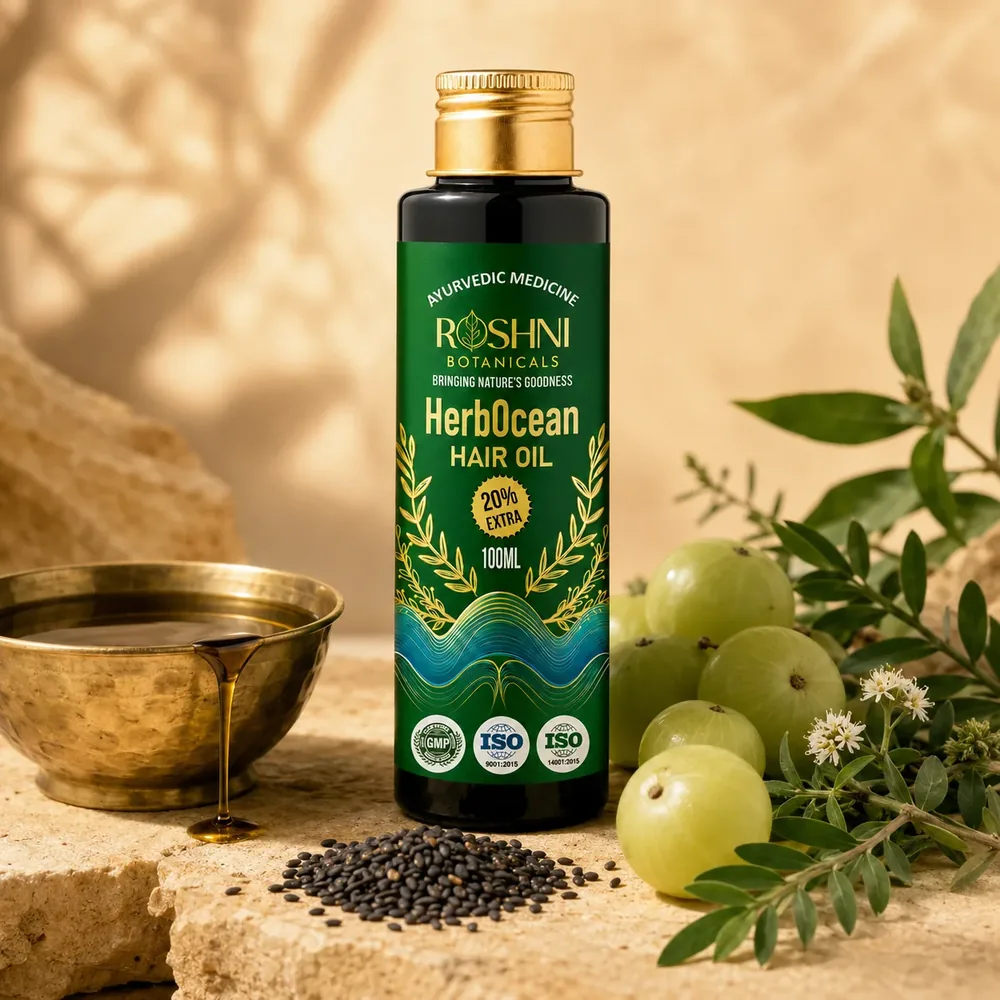
Our HerbOcean Hair Oil sits squarely on the classical side: Bhringraj and Amla for the roots, Neem and Tulsi to keep the scalp clean, Shikakai for gentle cleansing, rosemary and curry-leaf oils, all in a sesame base. It is a Taila, not a styling product, and it asks to be used like one. Comb first, then massage one to two teaspoons into the scalp in slow circles for eight to ten minutes, carry what is left down the lengths, and wash out after 45 to 90 minutes (or overnight with less on the scalp). Twice a week for active care, once to maintain. For the herb at the heart of it, see our piece on Bhringraj, and for the full routine, the definitive guide to hair oils for hair fall.
The short version
A silicone oil is a styling product that shines the strand today. A classical Taila is scalp care that works slowly at the root. Read the base oil on the label, match the bottle to what you actually want, and do not expect either one to be the other. Browse the Ayurvedic hair care range when you want the classical kind.
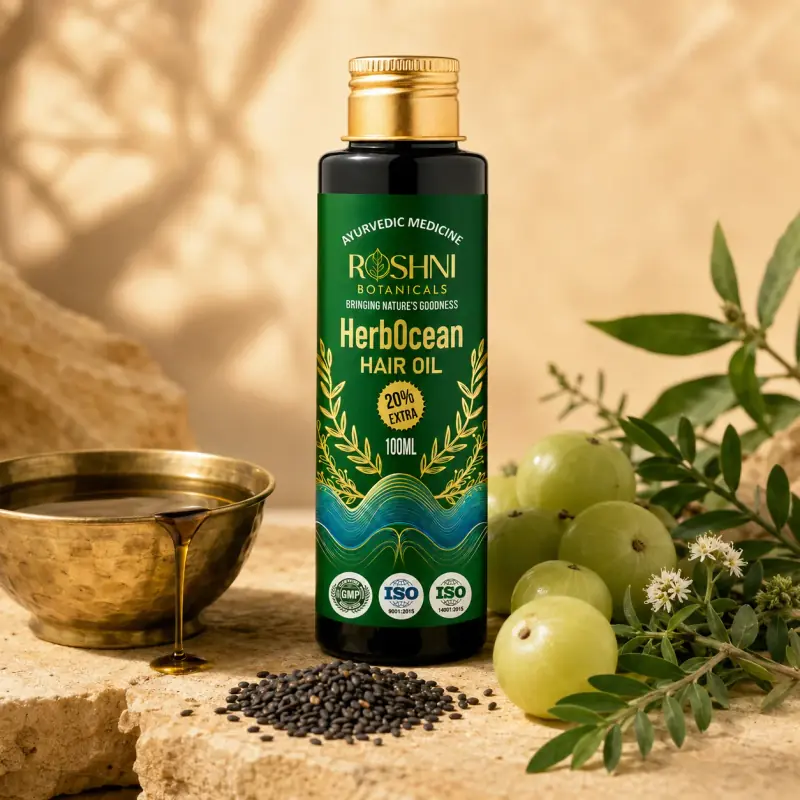
HerbOcean Hair Oil
A classical Taila for hair fall, dullness and a flaky scalp, with sixteen botanicals like Brahmi, Jatamansi, Amla and Neem in a slow sesame base.
Part of our guide: The definitive guide to Ayurvedic hair oils for hair fall.