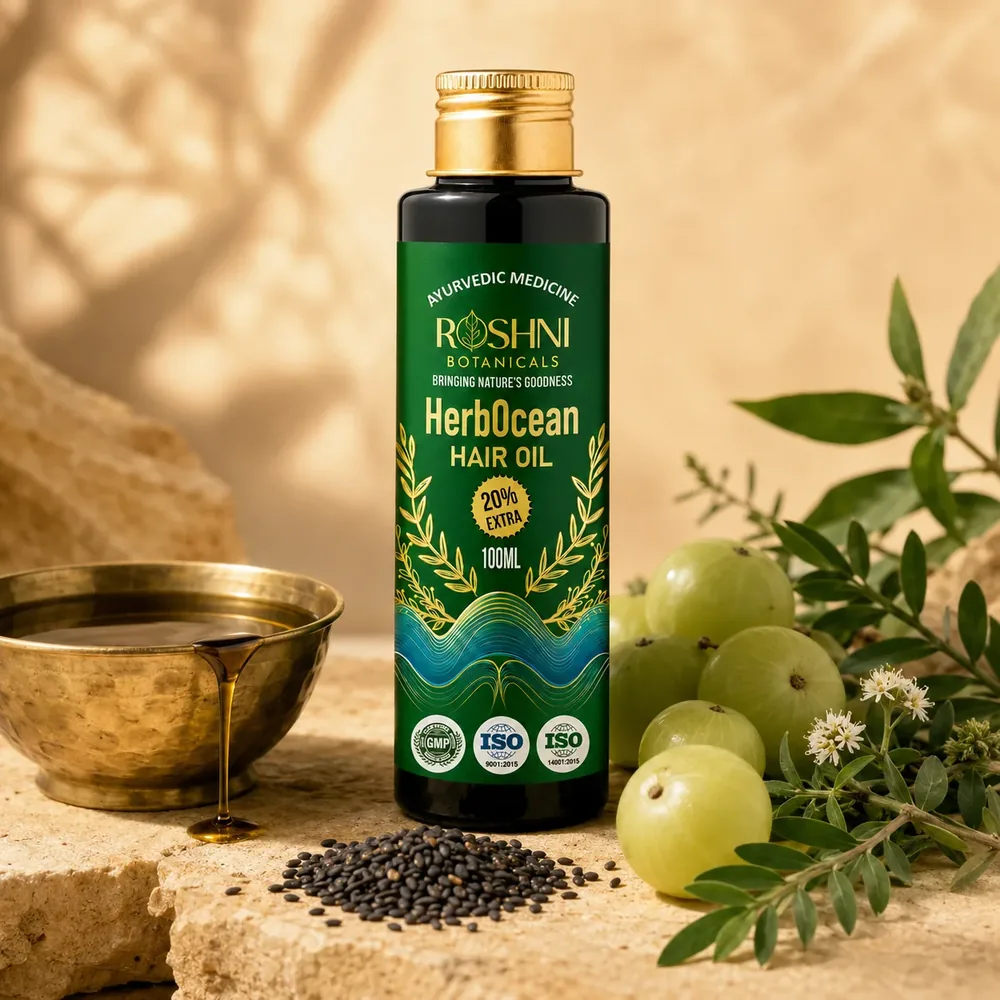
Ancient Wisdom, Modern Science: What Sits Behind HerbOcean Hair Oil
Classical Ayurvedic hair care and what current research keeps noticing about the same herbs, read side by side, through the lens of HerbOcean Hair Oil.
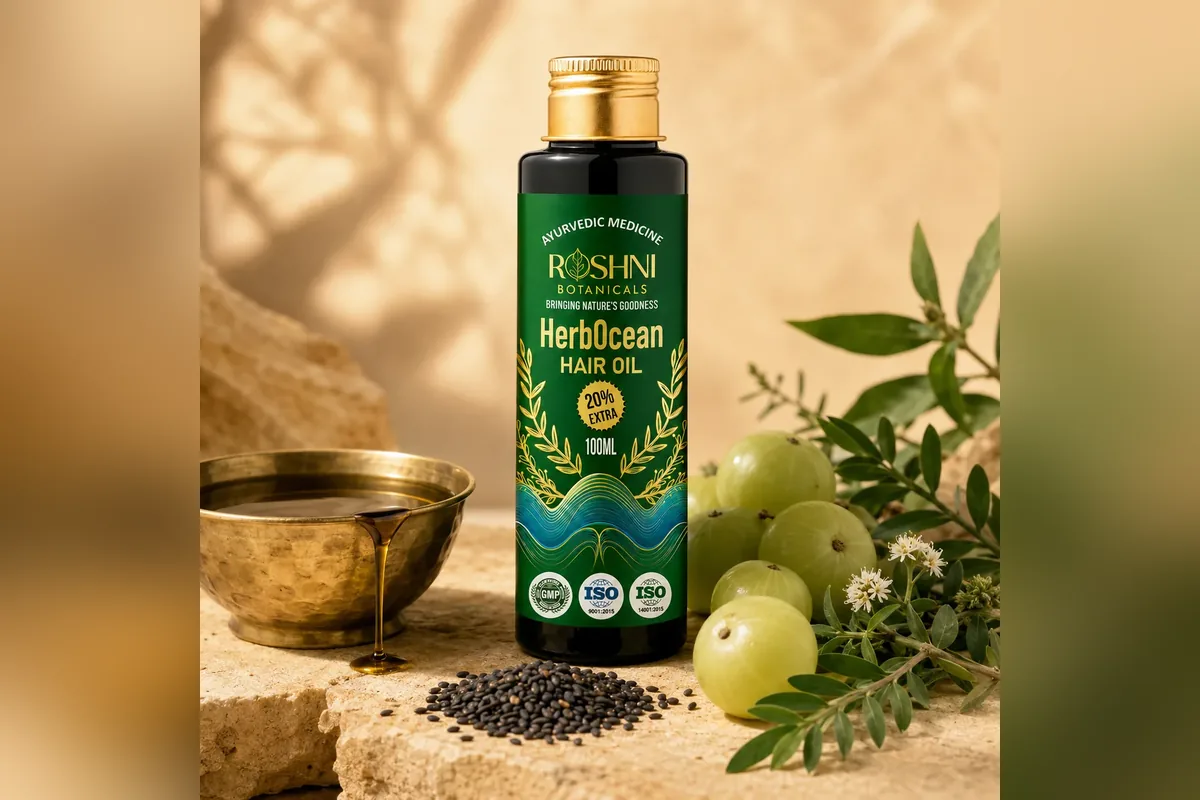
Oiling your hair is one of those Indian habits that survived every trend that came for it. Grandmothers did it on Sunday afternoons, mothers did it before a wash, and somewhere along the way a generation was told it was old-fashioned. It is quietly back, and not only out of nostalgia. When you put the classical reasoning next to what modern labs find interesting, the two keep landing in the same place.
This is the calm version of how that fits together in our HerbOcean Hair Oil, a classical Taila (medicated oil) of sixteen botanicals in a slow sesame base, made in-house in Delhi under AYUSH Licence DL-474 A&U.
How Ayurveda reads hair
In classical thought, Kesha (hair) is tied to asthi dhatu (the bone tissue), and the health of the hair is read from the scalp and the roots rather than the lengths. Dryness, flaking and seasonal shedding are usually traced to an aggravated Vata–Pitta (two of the three doshas, the biological energies in Ayurveda) state, which is exactly the kind of thing North India’s hot, dry winters and hard water tend to provoke. The classical answer was never a five-minute product. It was abhyanga (oil massage): warm oil, worked into the scalp, given time.
The same herbs, two vocabularies
What is striking is how often the traditional indication and the modern curiosity describe the same plant in different words.
- Bhringraj. The classical “king of herbs” for hair, used for centuries as a rasayana (rejuvenative) for the roots. Modern interest centres on its traditional role in scalp nourishment.
- Amla (Indian gooseberry). Vitamin-C-rich and tridoshic in the classical reading; long associated with hair and valued today for its antioxidant content.
- Brahmi and Neem. Brahmi is the calming herb of classical hair Tailas; Neem is the cleansing, balancing one, traditionally reached for when the scalp turns flaky or irritated.
- Rosemary and Gudal (hibiscus). Aromatic, conditioning botanicals that round out the blend and give it its feel on the strand.
None of this is a promise. It is a record of long use, and of researchers finding the old choices worth a second look.
Why the method matters as much as the herbs
A classical Taila is not herbs stirred into oil. The botanicals are processed into a sesame base so the oil itself carries them, and sesame is chosen because it is stable and traditionally valued as a nourishing, Vata-pacifying carrier for a dry scalp. Cook the delicate aromatics too hard and you lose the better part of them, which is why a careful, unhurried process is the whole point.
Why this matters more in India
The case for oiling gets stronger, not weaker, in Indian conditions. Hard water, which most of the country lives with, leaves mineral deposits that roughen the cuticle and leave hair brittle and dull; pre-wash oiling is one of the oldest defences against exactly that, putting a protective layer on the strand before it meets the tap. Add the humidity of a coastal summer or a monsoon month, when scalps turn oily and flaky at once, and the cleansing herbs in a classical blend look less like tradition and more like common sense. Then come the North Indian winters, dry enough to leave the scalp tight and the lengths frayed, the season when Vata runs highest and a warm oil massage is most welcome.
How to actually oil your hair
The ritual is simple, and doing it properly is most of the benefit. Warm a little oil between your palms, or stand the bottle in hot water for a minute. Part the hair and work the oil into the scalp with your fingertips, not the lengths, in slow circles for a few minutes. That massage is not incidental; it is the part classical practice values most, and it is where abhyanga earns its name. Leave it on for at least an hour, or overnight on a towel-covered pillow if you can. When you wash, apply shampoo to dry, oiled hair first and then wet it, which lifts the oil without the squeaky stripping that sends some people back to square one. Two or three sessions a week suit most people; once weekly keeps things ticking over.
What is fair to expect
Ayurvedic hair care is gradual and rewards consistency. Treat the oil as a steady ritual over weeks and months, two or three sessions a week, and let it work at the pace hair actually grows. It is an Ayurvedic medicine for everyday scalp and hair care, not a remedy for sudden, rapid or patchy hair loss. If your shedding is sudden, you have bald patches, or the scalp is painful or scarring, see a dermatologist, because a simple blood test often finds something straightforward like low iron or a thyroid issue. For the deeper routine, our guide to Ayurvedic hair oils for hair fall goes step by step.
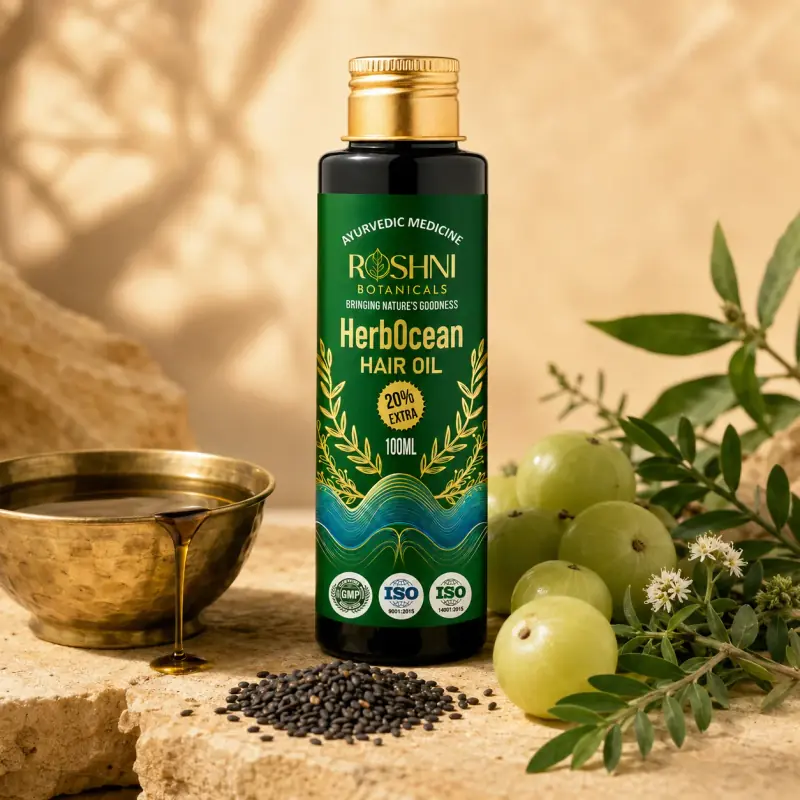
HerbOcean Hair Oil
A classical Taila for hair fall, dullness and a flaky scalp, with sixteen botanicals like Brahmi, Jatamansi, Amla and Neem in a slow sesame base.
Part of our guide: The definitive guide to Ayurvedic hair oils for hair fall.