
The Hair Growth Cycle, and Where a Classical Taila Fits In
Hair grows in phases, and shedding is part of the rhythm. A calm look at the growth cycle, and how regular oiling supports the scalp through it.
Before you panic about the hair on the pillow, it helps to know that hair is supposed to fall. It grows in a cycle, and shedding is simply one stage of that cycle. Losing fifty to a hundred strands a day is normal. Understanding the rhythm takes a lot of the fear out of the bathroom drain, and it makes clear what a hair oil can and cannot do.
The four phases, plainly
Most of your hair, at any moment, is in anagen, the growth phase, which lasts years. A small fraction slips into catagen, a brief transition of a couple of weeks. Then comes telogen, a resting phase of a few months, after which the old hair sheds in exogen and a new one begins. It is a slow, overlapping cycle, which is exactly why hair care rewards patience rather than urgency.
When normal shedding turns into something else
Trouble shows up when too many hairs are pushed into the resting phase at once. A high fever, a major stress, childbirth, crash dieting or a thyroid wobble can do this, and the heavy shedding that follows a few months later has a name: telogen effluvium. The good news is that it is usually temporary. The important part is that it is a medical matter, not a styling one. No oil corrects an iron deficiency or a thyroid issue, so if your shedding is sudden or heavy, the sensible first step is a doctor and a blood test.
So where does oiling fit?
Honestly, an oil does not override the cycle, and it does not add follicles you were not born with. What regular oiling is traditionally used for is humbler and real: keeping the scalp calm, clean and comfortable so the natural cycle is not disrupted by dryness, flaking or neglect. The classical hair herbs sit inside that logic. Bhringraj, the old “king of herbs” for hair, and Amla, a vitamin-C-rich rasayana (rejuvenative), are traditionally valued for the roots; Brahmi is the calming herb reached for when stress is in the picture.
The things the cycle is sensitive to
In India, the usual suspects are worth naming: low iron, very common especially in women; not enough protein; relentless stress and poor sleep; and the harshness of hard water and heat styling. A good Taila supports the scalp through all of this, but it works alongside diet, rest and, where needed, a doctor, not instead of them.
How to read your own shedding
A little self-awareness beats a lot of worry. Some hair coming away when you wash or comb is normal, and it looks more dramatic on wash day simply because several days of loose strands arrive at once. What is worth noticing is a clear change from your own baseline: visibly more than usual, a widening parting, or thinning you can see at the crown. None of this is a diagnosis, but a sustained change from what is normal for you is the moment to see a doctor rather than to switch shampoos.
Using it well
Warm a little oil, massage it into the scalp for a few minutes, leave it for an hour or more, and wash with a mild shampoo. Two or three times a week is plenty. Then give it months, not days, because that is the pace the cycle actually moves at.
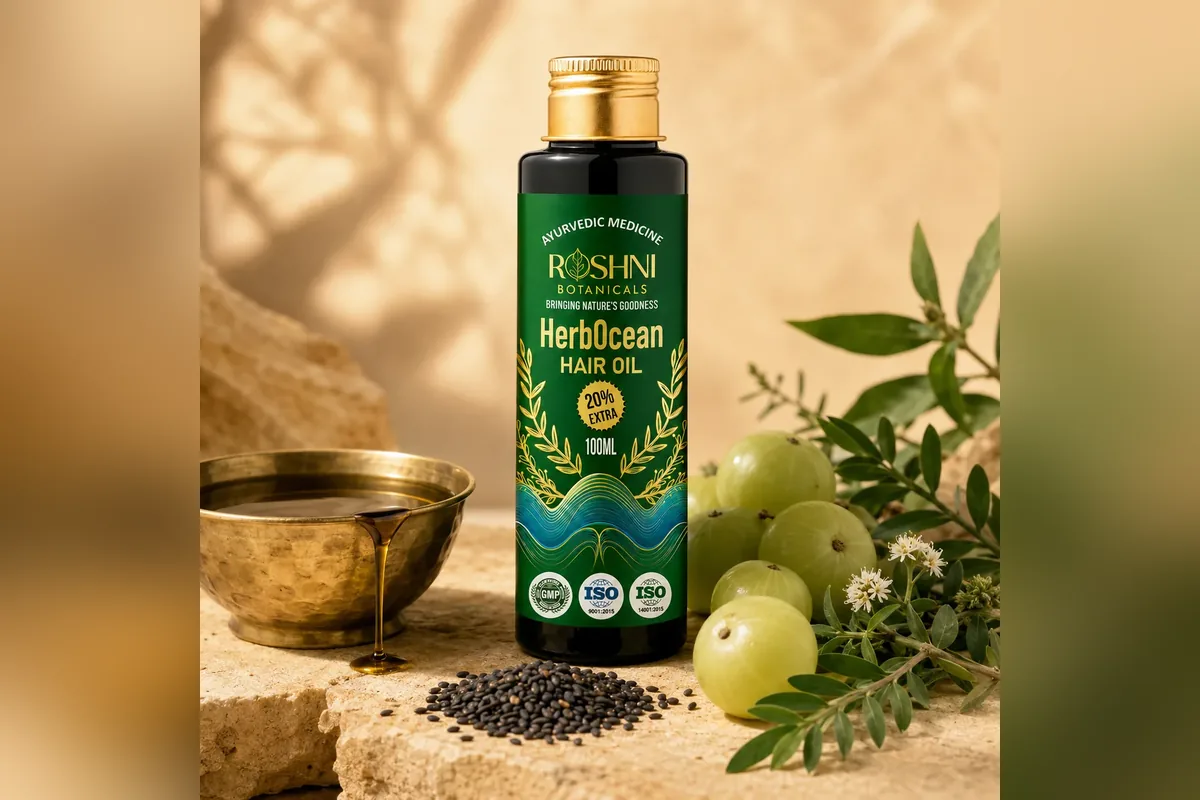
If you want a classical Taila to work with, our HerbOcean Hair Oil layers sixteen botanicals (Bhringraj, Brahmi and Amla among them) in a slow sesame base for everyday scalp care.
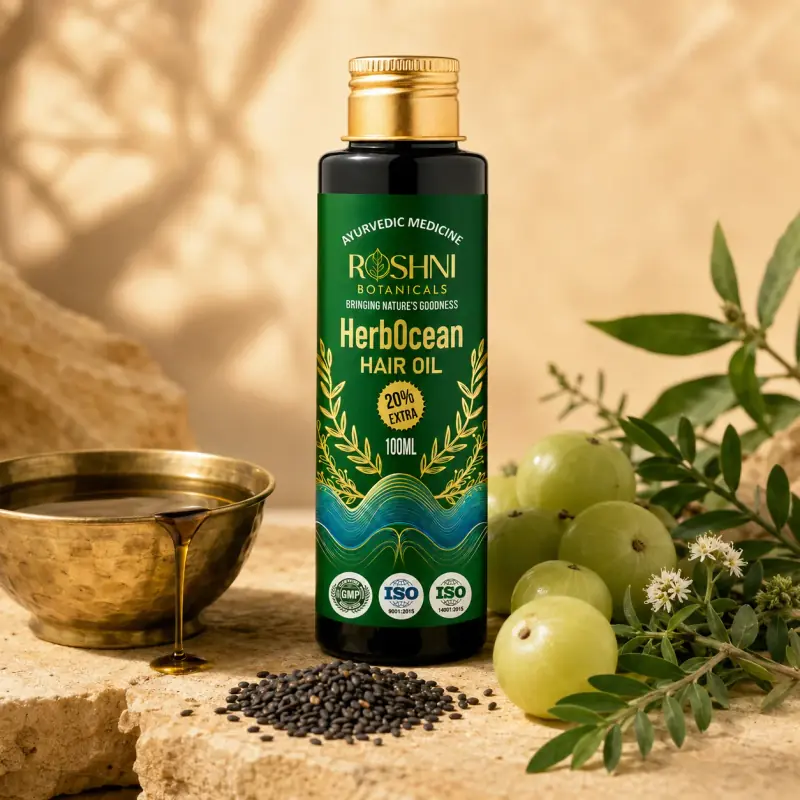
HerbOcean Hair Oil
A classical Taila for hair fall, dullness and a flaky scalp, with sixteen botanicals like Brahmi, Jatamansi, Amla and Neem in a slow sesame base.
Part of our guide: The definitive guide to Ayurvedic hair oils for hair fall.