Raktchandan vs Chandan: Which Helps Pigmentation?
Two sandalwoods, two different jobs. A quick, practical guide to red versus white sandalwood for uneven tone.
Indian skincare has two sandalwoods, and people often use the names interchangeably when they are really quite different ingredients. For anyone working on pigmentation, the difference is worth knowing, because white sandalwood and red sandalwood lean towards different jobs, and the best pigmentation formulas use both.
White sandalwood (Chandan)
Chandan, the fragrant white sandalwood, is the cooling, calming one. It is traditionally reached for to soothe inflammation, settle heat and redness, and comfort reactive skin. On pigmentation-prone skin its value is preventive and supportive: calmer skin pigments less, since inflammation is so often what leaves a mark behind.
Red sandalwood (Raktchandan)
Raktchandan, the non-aromatic red sandalwood, is the one tradition leans on more directly for tone. It is classically valued for fading tan and dark patches and for supporting an even complexion, particularly after sun exposure. Where white sandalwood calms, red sandalwood is the pigment-focused partner.
Why you want both
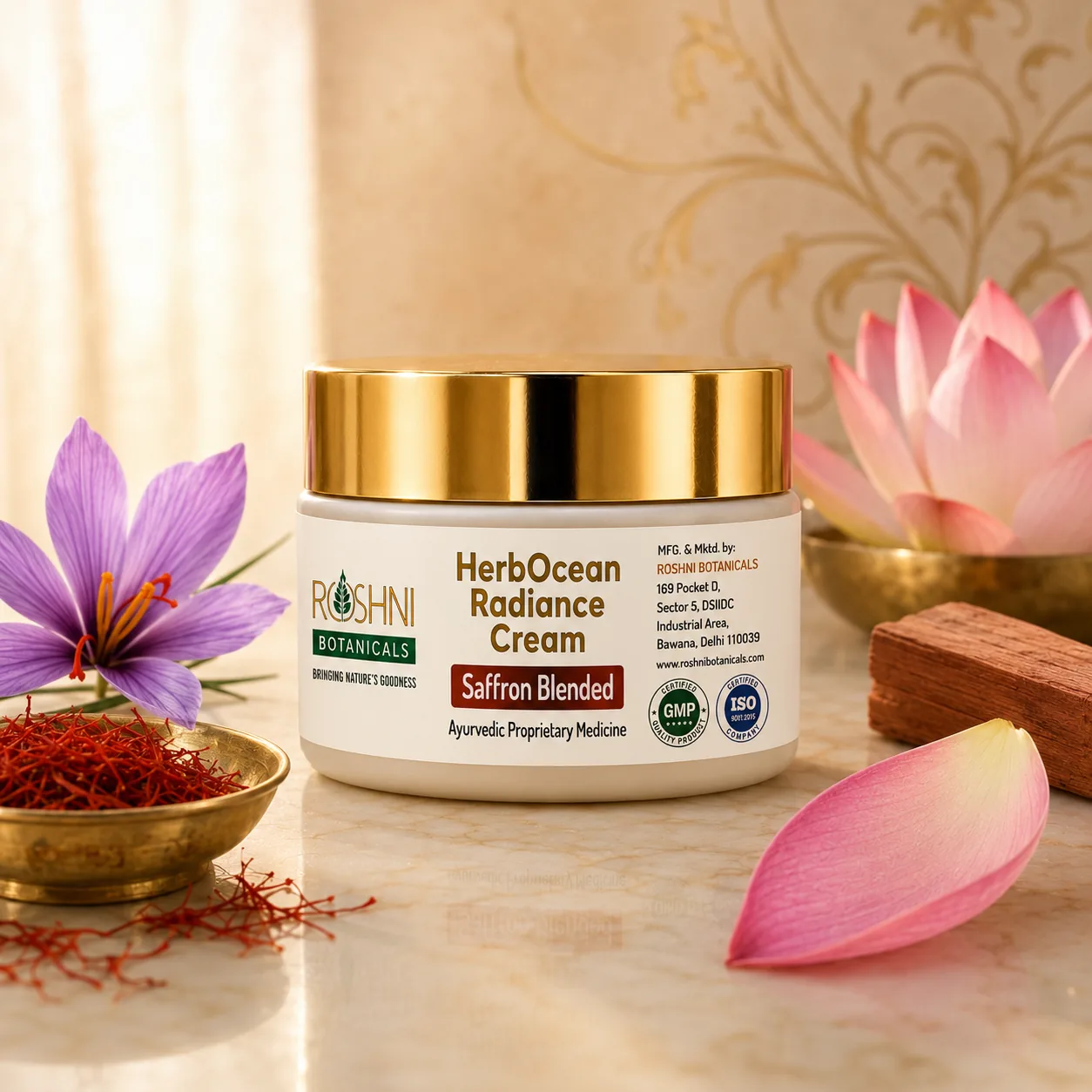
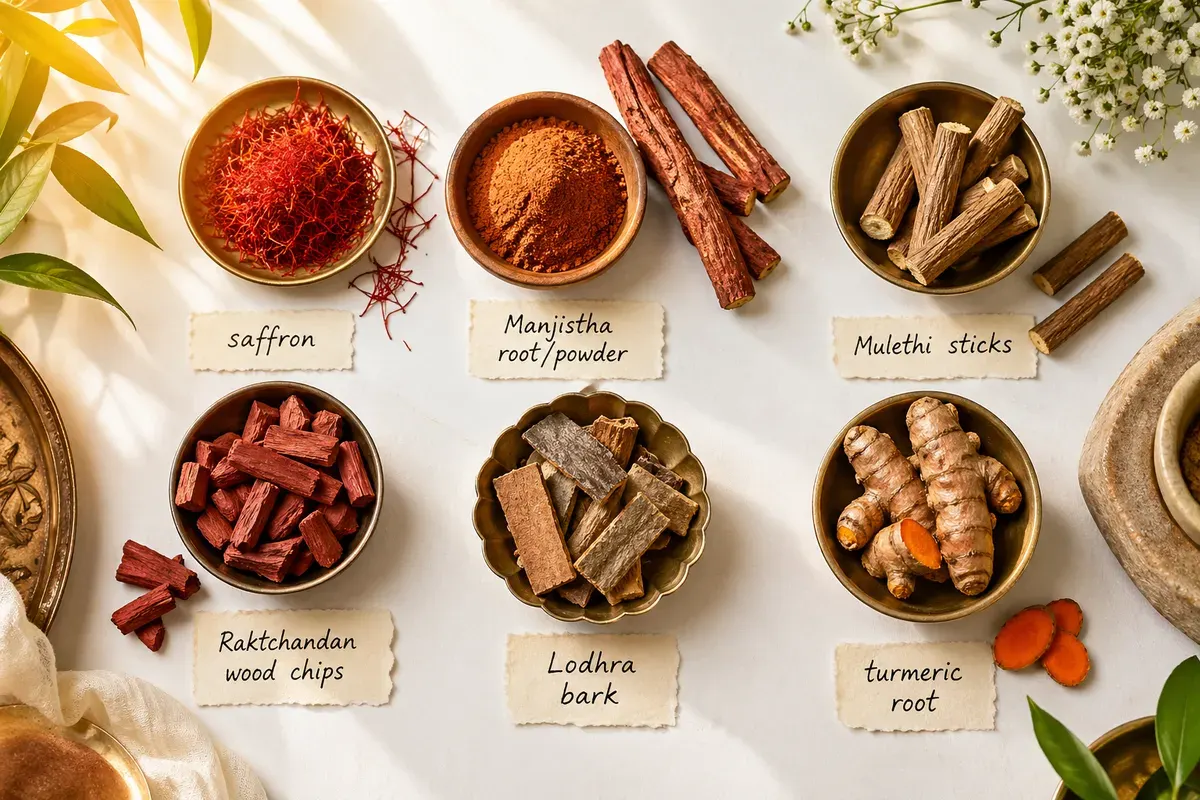
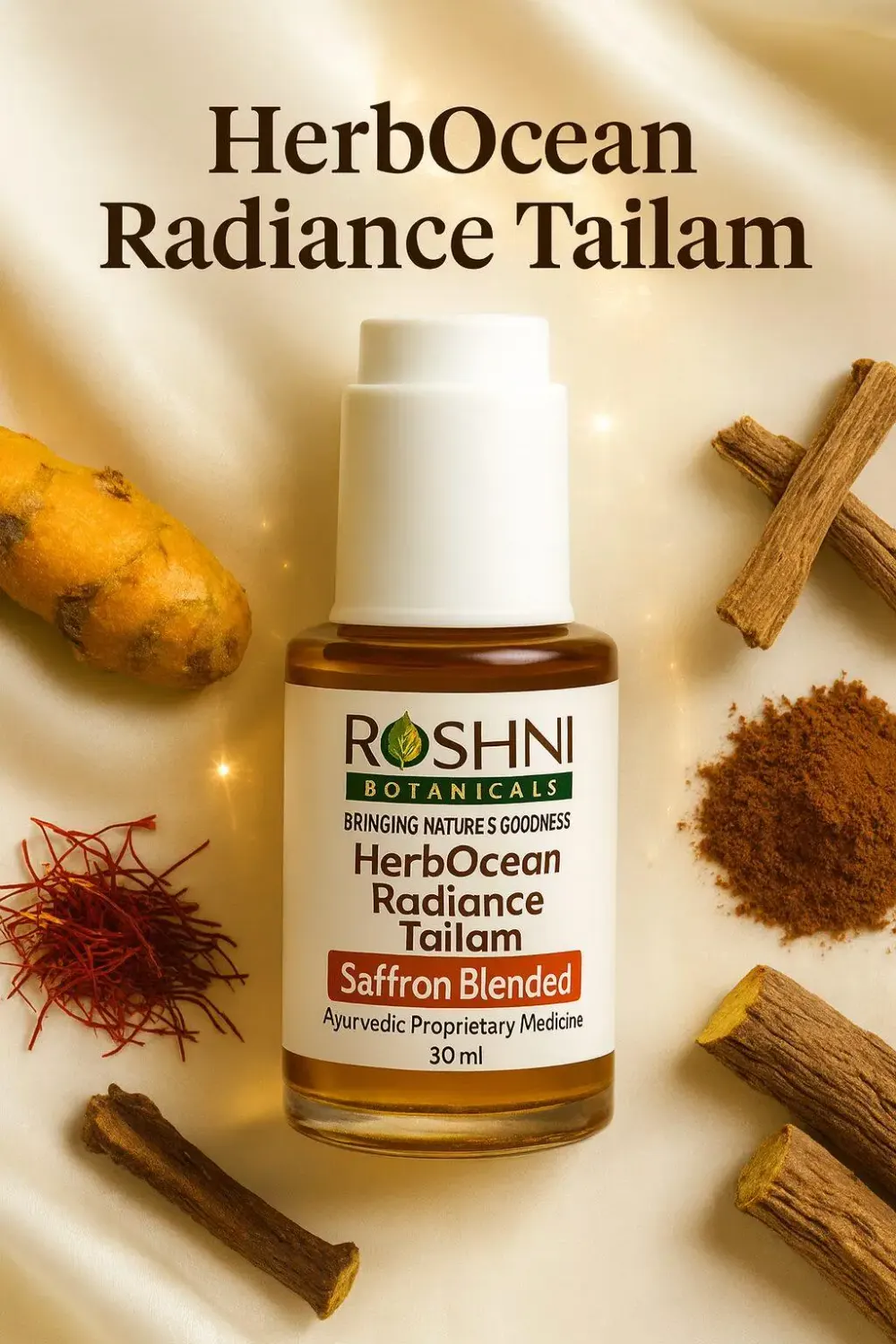
Pigmentation is rarely just one problem; it is uneven tone plus the inflammation that keeps feeding it. That is why HerbOcean Radiance Tailam carries both Chandan and Raktchandan, alongside Manjistha, turmeric and the classical Triphala trio in a sesame Taila. The white sandalwood calms while the red supports tone, which is more useful together than either alone. The daytime Radiance Cream carries the same cooling family in a light coconut base.
How to use it, honestly
Three or four drops of the oil at night, massaged in, plus the cream and sunscreen by day. Neither sandalwood bleaches skin or works overnight; they support a more even version of your natural tone over several weeks, and sun protection is what holds the gains. For the broader comparison and the rest of the skin range, see our companion piece, chandan or raktchandan for skin.
Radiance Tailam
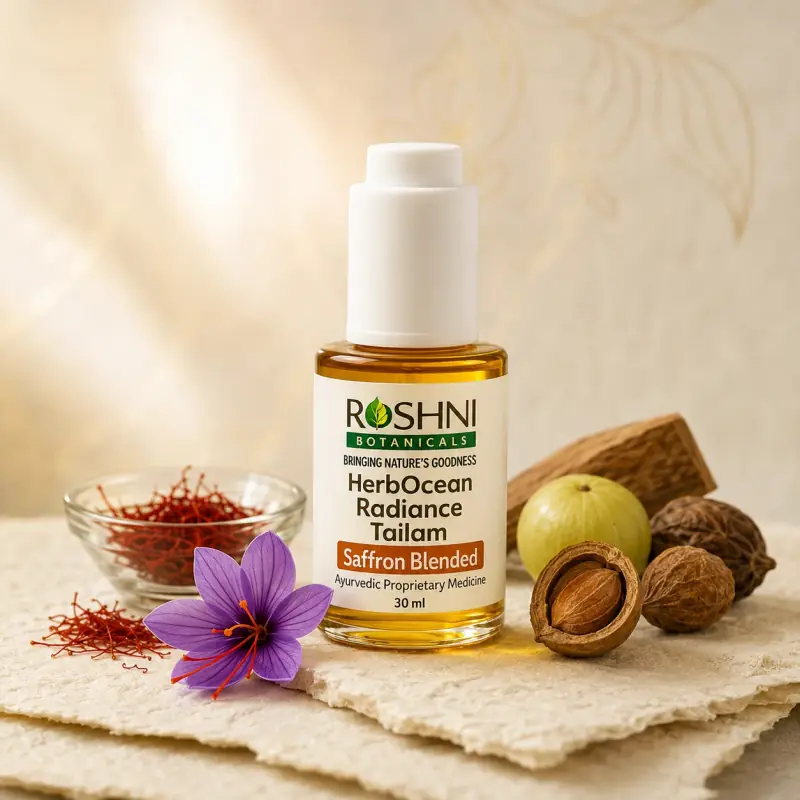
A saffron brightening facial Taila with Manjistha and red sandalwood, traditionally used to support even tone where melasma, dark spots and PIH show.
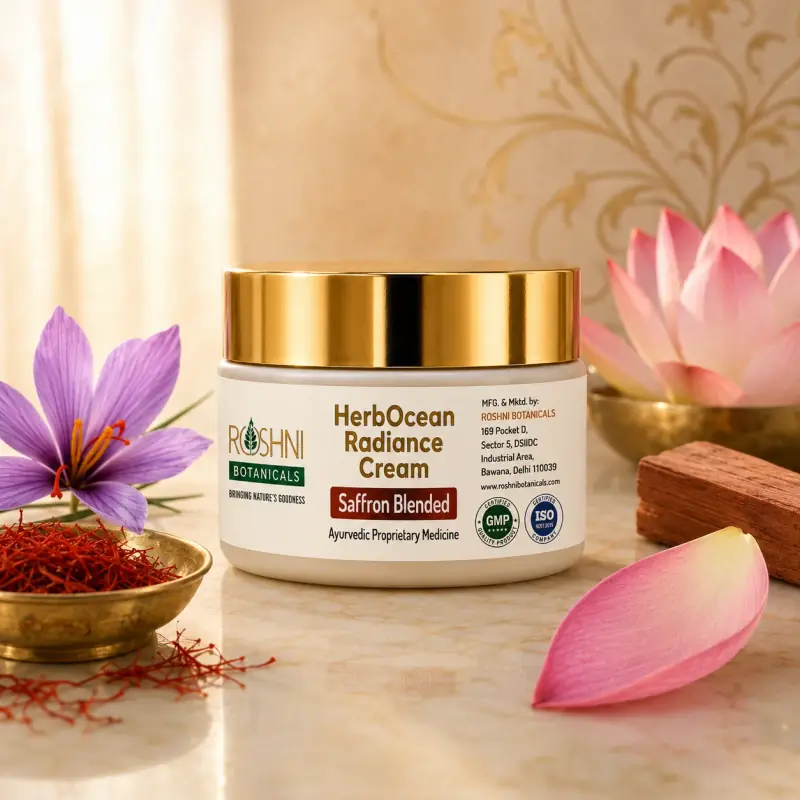
Radiance Cream
A daily saffron and sandalwood brightening cream with Manjistha, red sandalwood and lotus in a light coconut base. Supports a luminous, even-looking skin tone.
Part of our guide: Ayurvedic treatment for melasma on Indian skin.