Ingredient Spotlight: Raktchandan (Red Sandalwood) for Pigmentation
Red sandalwood is not the fragrant white chandan. Raktchandan is a pigmentation herb in its own right. Here is what it does for Indian skin.
People often assume red sandalwood is just a coloured version of the fragrant chandan in their puja room. It is not. Raktchandan (red sandalwood, Pterocarpus santalinus) is a different tree with a different job, and in Ayurvedic skincare it is one of the quiet workhorses for tone and marks.
Two sandalwoods, two roles
White sandalwood (Chandan, Santalum album) is the aromatic one, prized for its cooling, calming scent. Raktchandan has little fragrance but a deep red heartwood, and Ayurveda values it for rakta prasadana, the cleansing and settling of the blood that classical texts connect to clearer skin. It is associated with calming heat and supporting an even complexion, which makes it a natural fit for pigmentation work. We compare the two in detail in sandalwood versus red sandalwood for skin.
Why it suits melanin-rich skin
Pigmentation on Indian skin is often driven by heat and inflammation, whether from sun, breakouts or irritation. Raktchandan is a cooling herb in the classical sense, traditionally used to calm an aggravated Pitta (the fire dosha). By supporting a calmer skin surface, it helps the conditions in which post-inflammatory hyperpigmentation (PIH) is less likely to deepen. It does not bleach the skin and it will not change your natural tone; it supports evenness.
Where Raktchandan appears in HerbOcean
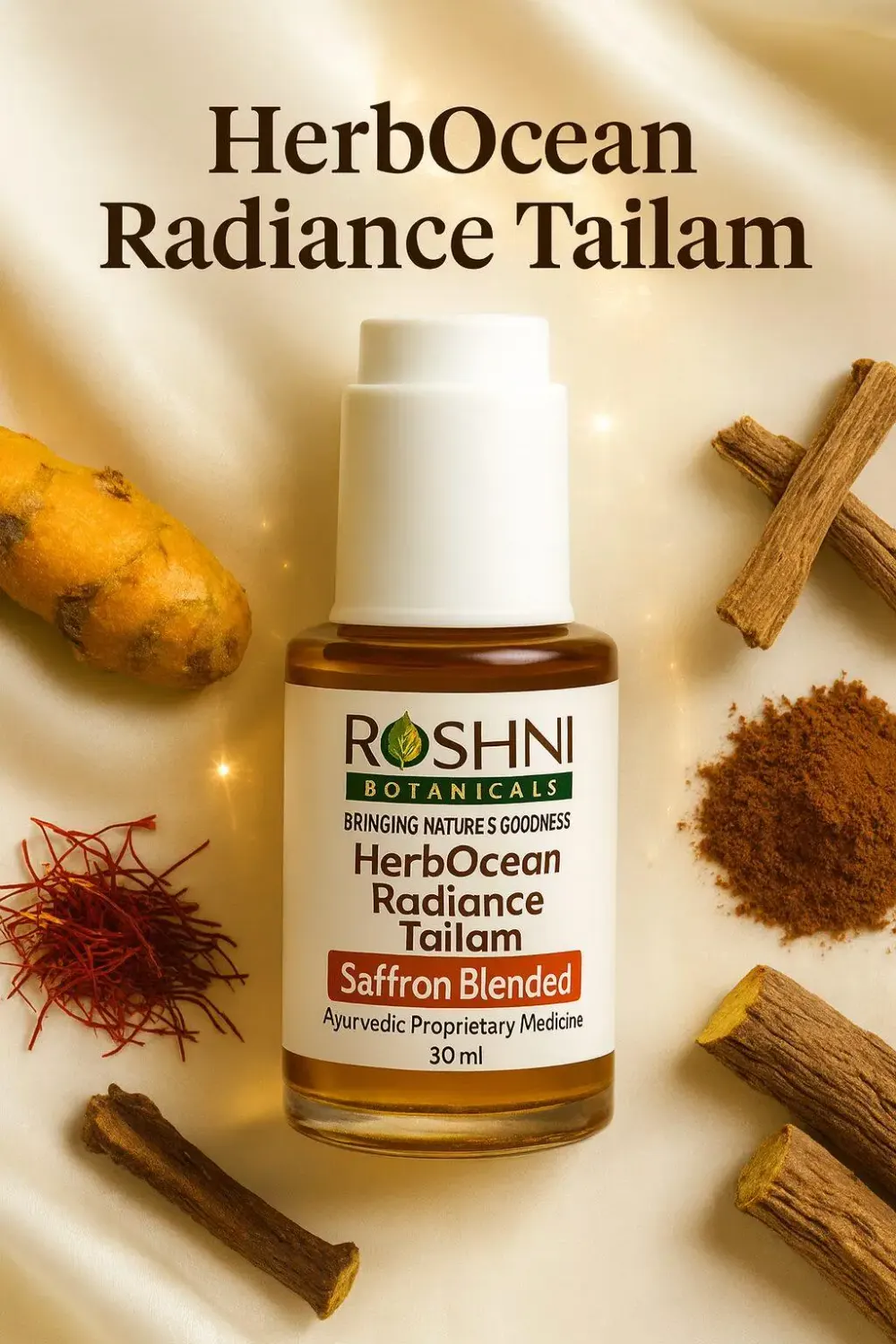
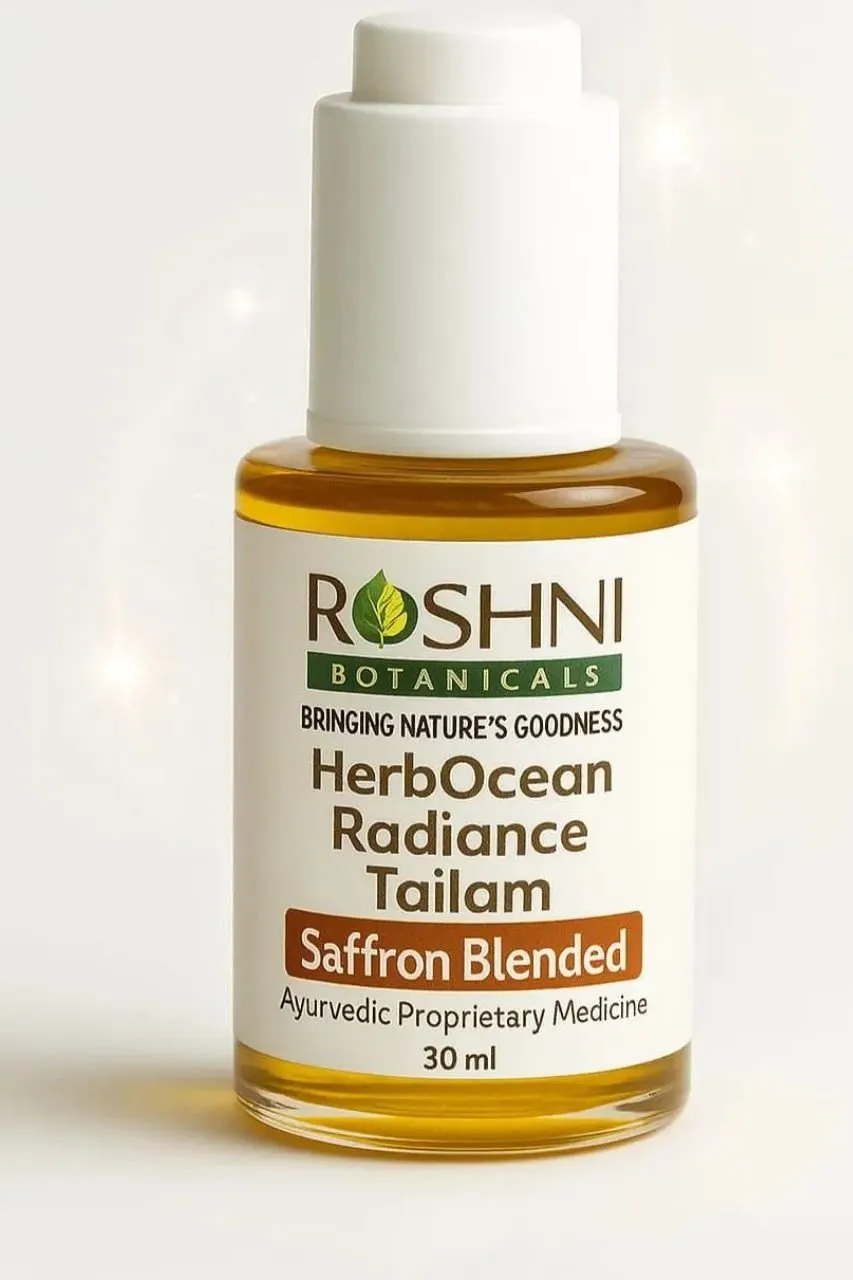
Red sandalwood runs through the pigmentation range. It is in the Radiance Tailam and the Radiance Cream alongside Triphala, turmeric, manjistha and lotus, and it anchors the Radiance Lepa. It also features in the Soundarya line and the Anti-Acne Roll-On, which tells you how versatile the classical texts consider it. For the marks themselves, pair this with our look at manjistha for dark spots.
Using it
You will almost always meet raktchandan inside a formulation rather than on its own, which is the sensible way to use it. A red-sandalwood oil or cream goes on at night, with sunscreen by day. As with all external-use Ayurvedic medicines, patch-test first. If marks are spreading or a patch looks unusual, a dermatologist is the right next step rather than more home remedies.