Ayurvedic Care for Sun-Exposed Skin in India
What ultraviolet does to melanin-rich Indian skin, the scope of an evening Ayurvedic preparation, and why sunscreen is a separate step.
Most of us in India do not get sunburnt on an ordinary Tuesday. Something slower happens instead. Your forearms sit a shade deeper than your upper arm, the bridge of your nose holds colour, and an old acne mark that had almost settled looks darker again after a fortnight of school runs and scooter commutes.
On skin carrying plenty of melanin, that is what sun exposure looks like. So this page sets out what ultraviolet actually does to Indian skin, what an evening Ayurvedic preparation can support, what it cannot do, and where sunscreen sits in all of it.
Key takeaways
- On the deeper Fitzpatrick skin types common in India (Fitzpatrick is the scale dermatologists use for how skin responds to sun), ultraviolet usually shows up as tanning, patchiness and dark spots. Skin with less melanin tends to flush pink instead.
- A tan is a stress response in the skin, not a sign that the skin has toughened up.
- Soundarya Cream carries no sun protection factor, so a broad-spectrum sunscreen every morning stays a separate purchase and a separate step.
- Structural change in the deeper skin, meaning the coarser texture and slackness that follow years of accumulated exposure, sits beyond the reach of a classical external preparation.
- A mole or patch changing shape, colour, size or border, a spot that bleeds, crusts or itches persistently, or a rough scaly patch on exposed skin that keeps returning: all belong with a dermatologist.
What Sun Exposure Actually Does to Melanin-Rich Indian Skin
Two bands of ultraviolet matter here. Ultraviolet B is the shorter, burning wavelength, strongest in the middle of the day and largely stopped by window glass. Longer and deeper, ultraviolet A runs across the whole of daylight, and passes through the side window of a bus or an office. That second one does the quiet work. A face picks up colour on a day nobody would call sunny; a regular driver’s right arm tells a different story from the left.
In the deeper Fitzpatrick skin types common in India, pigment cells can respond quickly and generously to that signal. The darkening is the skin responding to the exposure, not being spared it. What you see, though, is rarely redness. You see tanning, patchiness across the cheeks and forehead, colour settling in patches. Skin with less melanin flags the same exposure with a flush that arrives and goes within days. Ours records it in pigment, and pigment is slow to settle.
Three things follow from that. A tan is the skin’s stress response to ultraviolet, worth remembering the next time somebody tells you a base tan is protective. Then there is post-inflammatory hyperpigmentation (PIH), the brown shadow left behind by acne, insect bites, waxing or a razor nick, which can deepen under fresh ultraviolet and takes far longer to settle.
And the patchy pigmentation of melasma (Vyanga, the Ayurvedic term for it), the patches Hindi homes call jhaiyan, sits on the same exposure-sensitive pathway, which is why it often looks worse in the weeks after a holiday. It is common in the months after a pregnancy or after starting the pill, and it often settles on its own. Our fuller account of Ayurvedic care for melasma on Indian skin works through that pattern.
Ayurveda reads the colour and lustre of skin under bhrajaka pitta (the part of pitta, one of the three doshas or biological energies of Ayurveda, that is seated in the skin itself). Sushruta calls it the agni (digestive fire) of the skin at Sutra Sthana 21, the pitta that processes whatever is applied to the skin from outside, and repeated heat is traditionally described as aggravating it. The link to sunlight specifically is a modern dermatological finding, not something the classical verse says. The framing is still useful, because it groups sun exposure with kitchen heat, long commutes and hot water. If heat matters more than daylight in your week, we have a separate piece on heat-triggered pigmentation and how it builds.
Two local details finish the picture. Humid weeks are an awkward window in North India. The cloud thins, and people who covered up through the wettest weeks start walking about as though the sun left with the rain. A face that spent those weeks under an umbrella meets a full afternoon of ultraviolet with no habit of protection in place, and the colour arrives before the habit does.
Hard water across much of Delhi is the other one. Skin feels tight after a wash, so you wash more often and hotter, and each hot wash takes a little more from the barrier that keeps the skin comfortable. That is a barrier and comfort question rather than a question of how much oil your skin makes. It matters on a sun-exposed face because a barrier already thinned by hard water and hot rinses has less in reserve when the afternoon adds ultraviolet on top, and a face that feels tight gets rubbed, scrubbed and touched, which on our skin is one more route to a mark. Lukewarm water, a mild cleanser and a moisturiser soon after washing do most of the work; the point is to stop asking the skin to recover from the tap before it has recovered from the sun.
What Evening Care Supports, and What It Does Not
Used consistently at night, a classical external preparation can support comfort and softness on skin that has been outdoors all day. A hot, tight face at nine at night feels calmer for it. Small benefits, real ones, and for most people the ones that matter day to day, because skin that feels comfortable tends to get left alone.
Almost no page in this category puts the next part in writing. Structural change in the deeper skin sits beyond the reach of a classical external preparation. Years of accumulated ultraviolet coarsen the texture, slacken the elastic scaffolding, and set patchiness down at a depth no cream of ours reaches. Any page suggesting otherwise is selling you something. Medicines that act on the deeper skin are a different category, prescribed and reviewed by a doctor rather than chosen off a shelf, and this page is about everything else.
Some of this belongs with a doctor. See a dermatologist if a mole or patch changes shape, colour, size or border; if a spot bleeds, crusts or itches persistently, or fails to settle over several weeks; if a rough or scaly patch on regularly exposed skin keeps coming back; if a patch appeared suddenly and is spreading; or if pigmentation arrives with itching, burning or scaling. If pigmentation started soon after a new medicine, mention it at your next appointment. One more is worth naming even though the sun is not behind it: a new dark streak in a nail, or a spot that is changing on a palm or a sole, should be looked at by a doctor. Those need an examination. Raise them early.
How long, then? Longer than most pages admit, and it depends far more on how much fresh ultraviolet the skin is still taking than on what goes on at night. Marks kept dark by daily exposure will not settle while that exposure continues, so daily sun protection is the part that decides the pace. Judge an evening step over six to eight weeks rather than a few days, and only with that protection actually in place.
The Sunscreen Boundary, Said Plainly
HerbOcean does not manufacture a sunscreen, and nothing in the range replaces one. Sunscreen is a separate purchase and a separate step, and we say so plainly. Several pages in this category present a herb list as the alternative to sunscreen. That is not a substitution the evidence supports, and on skin that pigments as readily as ours the cost of getting it wrong is real.
Caring for dark spots every evening while letting fresh ultraviolet in every afternoon makes little sense. The marks that bother most readers, the post-acne shadows and the patches along the cheekbones, are exactly the ones daytime exposure keeps feeding. Evening care and morning sunscreen do different jobs: one protects, the other comforts.
In practice that means a broad-spectrum product every morning regardless of what the sky is doing, reapplied through the day, indoors near windows too. Visible light matters here too, not only ultraviolet, which is one reason a tinted sunscreen often suits deeper skin tones. And a thin, overcast sky over Delhi still carries plenty of ultraviolet; grey weather does not take it away. Our piece on why cloud cover is not sun protection carries that argument in full, and it is the one to read if you have ever skipped sunscreen because the morning looked grey.
Shade, a cotton dupatta over the forearms, full sleeves on a long ride, and outdoor work shifted away from the middle of the day all do more than any product on any shelf, ours included. Indian households worked this out long before SPF numbers existed: the dupatta pulled over the head and forearms on a scooter, the umbrella carried against sun rather than rain, the gamchha across the back of the neck in a field, the half-sleeve kurta whose tan line at the elbow is the most honest record of a summer. None of that is old-fashioned. It is the physical half of sun protection, and it costs nothing.
The Night Step in This Routine: HerbOcean Soundarya Cream
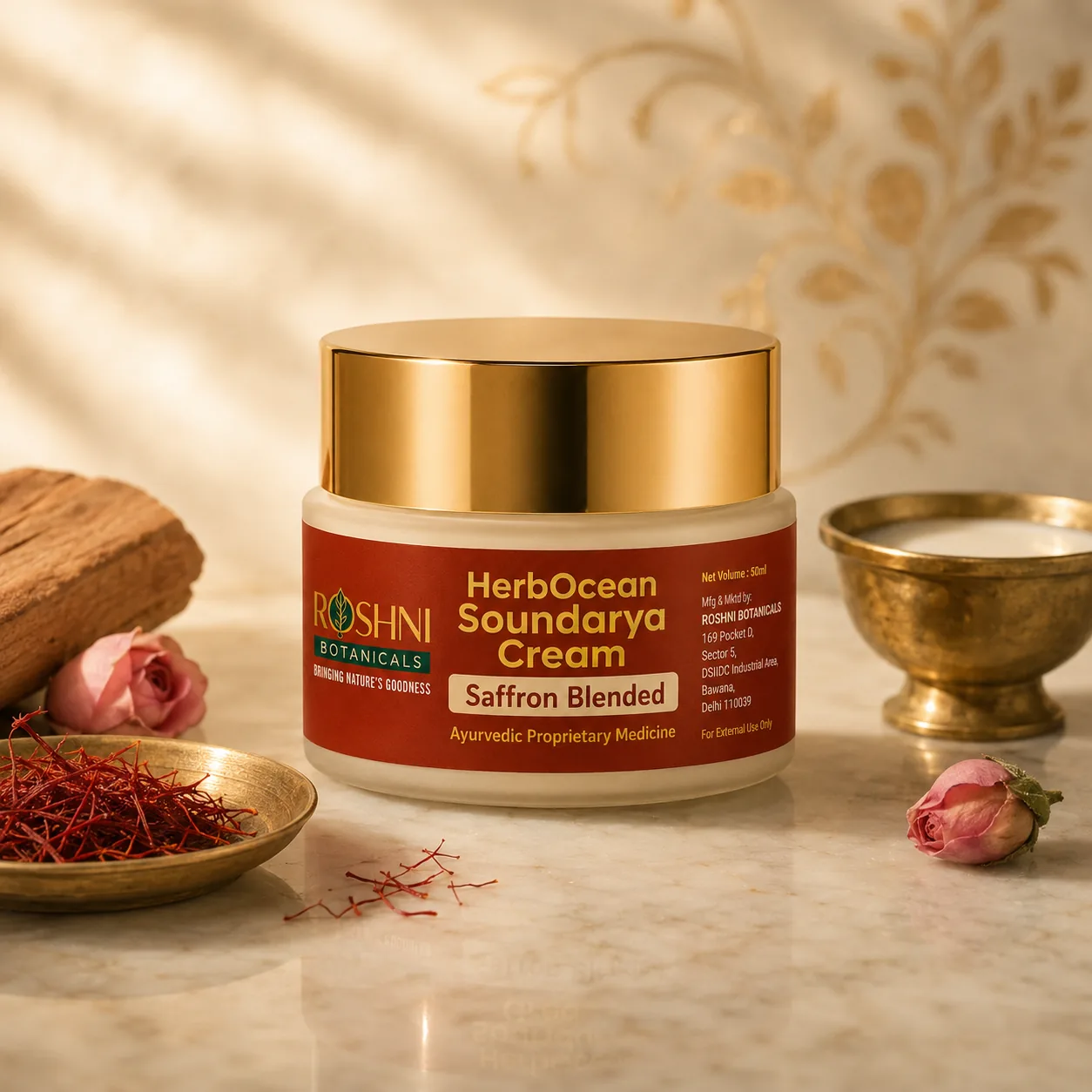
HerbOcean Soundarya Cream is an Ayurvedic medicine for external use, traditionally used in the care of post-acne marks (PIH) and dark spots, once active spots have settled and only on settled skin. It is best paired with daily sun protection. It is a rich saffron repair cream with bargad (Vatt) bark on a goat-milk and coconut base, with shea and kokum butters.
Very oily or acne-prone skin may find it rich, which is worth saying plainly on a page about post-acne marks: this cream is for the marks left behind once the spots have settled, not for skin that is still breaking out. If breakouts are still active, that is a different preparation and a different page.
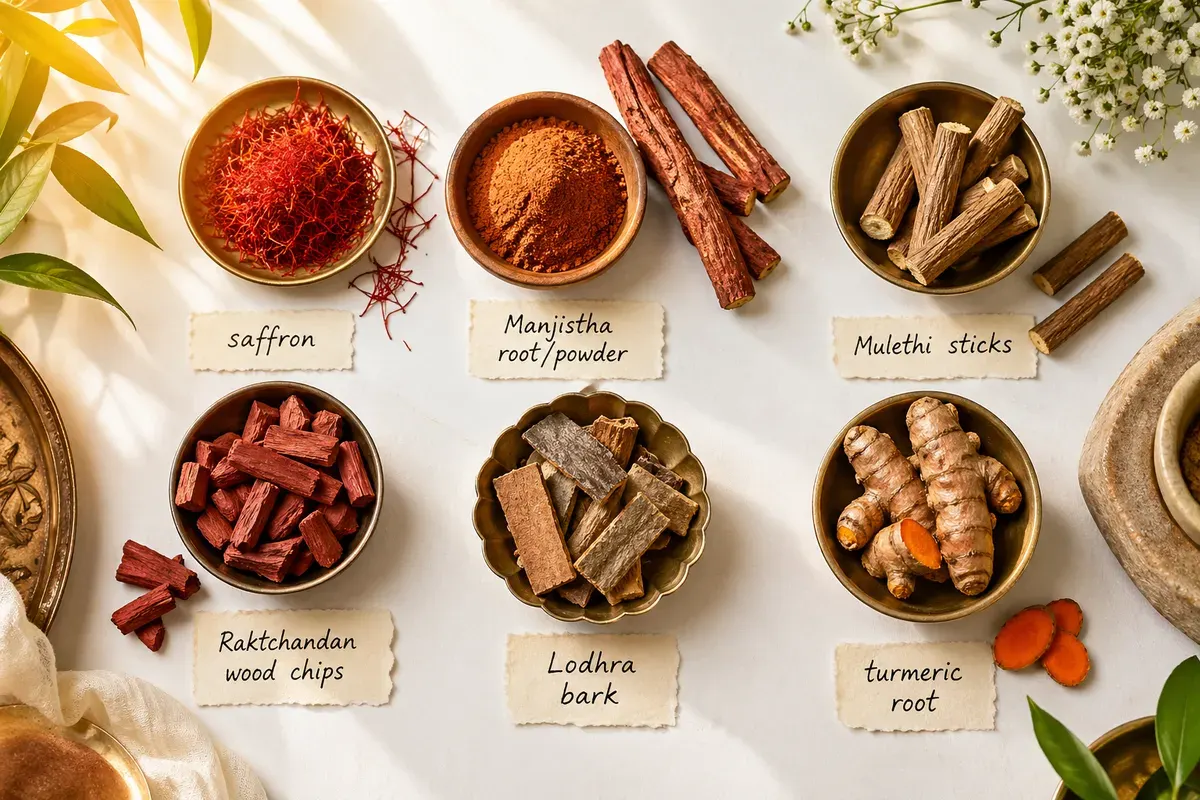
The herb register runs Manjistha, Mulethi (liquorice), Raktchandan (red sandalwood), Palash, bargad bark (Vatt), Priyangu (beautyberry), Laksha (lac resin), Daruhaldi, Nagkesar and Kesar (saffron), with goat milk (Ajadugdh) the largest single ingredient in the cream itself. The full declaration sits on the product page. This cream makes no claim about skin tone or shade. What this page is describing is calm, settled, comfortable skin.
Usage is simple. For external use only. Cleanse, pat dry, and in the routine on this page apply a small quantity at night, on clean, unbroken skin. Used by day instead, it goes under sun protection. If the skin is burnt, stinging or peeling, leave it alone until it has settled: a rich cream on inflamed skin is not soothing it, and a patch test on sun-reddened skin will not tell you anything either. Patch-test on the inner forearm before a first full application, and leave it 24 hours. Avoid the eye area, and discontinue if irritation occurs. If you are pregnant or nursing, check with your doctor before use. Judge it over six to eight weeks rather than a few days, and keep the morning sunscreen going throughout.
The cream is made in-house at our GMP-certified unit in Bawana, Delhi, under AYUSH Licence No. DL-474 A&U, and it is built on the 40-year Ayurvedic formulation legacy of Vaidya Shri Ram Prakash Ji.
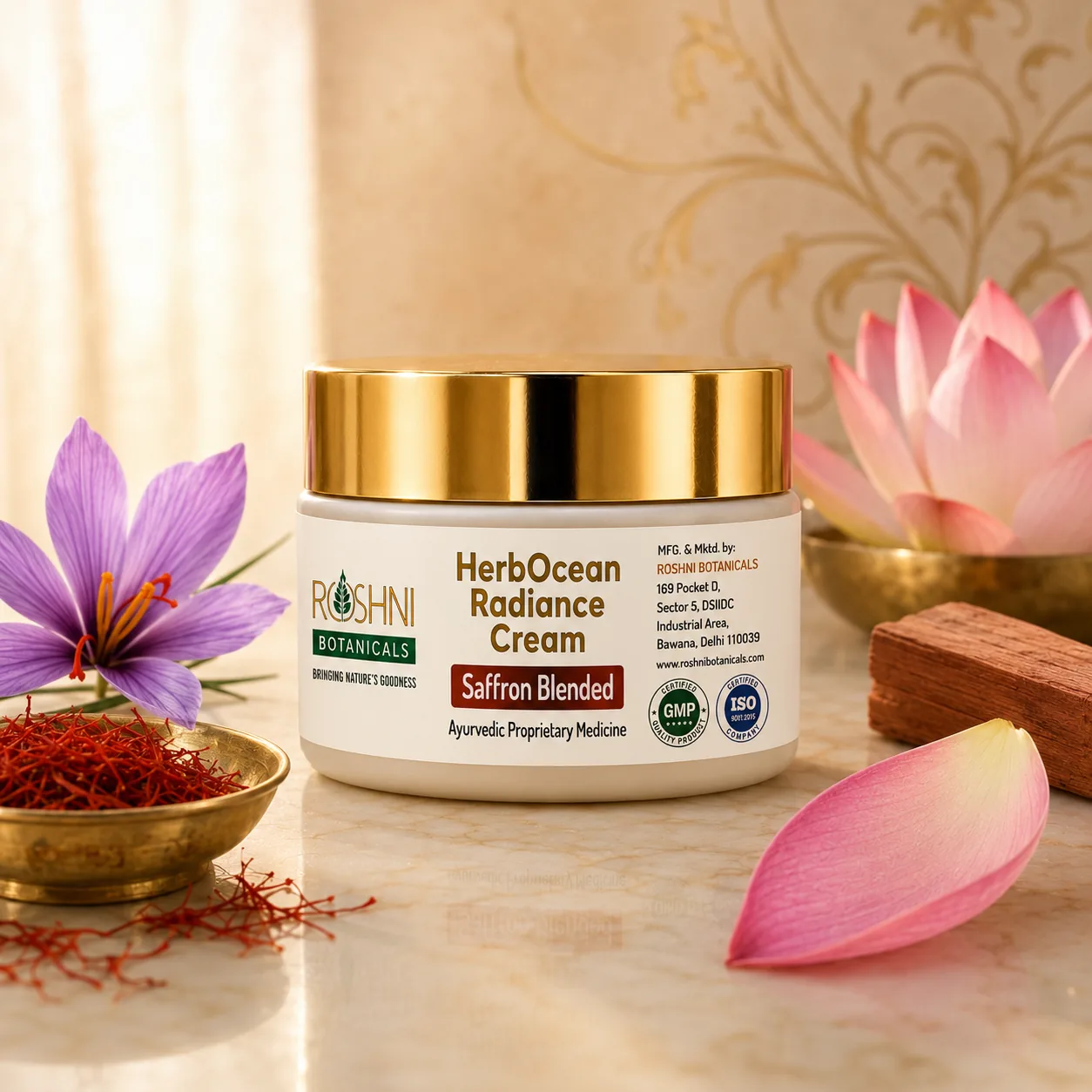
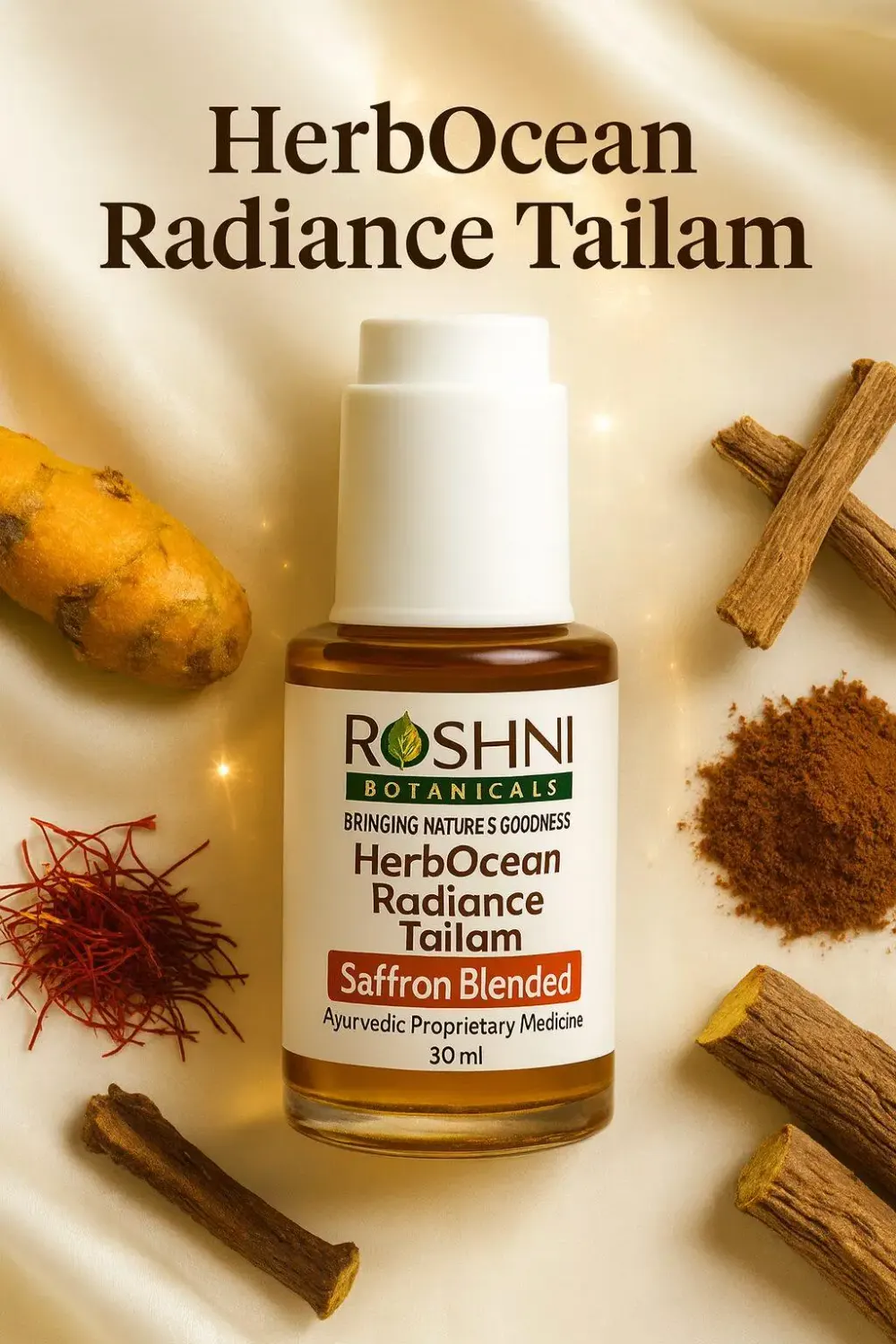
If set dark spots are your main concern, more than the general dullness that follows a sun-heavy month, look at HerbOcean Radiance Tailam, a saffron brightening facial Taila (medicated oil) with Manjistha and red sandalwood, classically indicated in the care of melasma (Vyanga) and traditionally used where dark spots and post-inflammatory hyperpigmentation show; or HerbOcean Radiance Cream, a daily saffron and sandalwood brightening cream with Manjistha, red sandalwood and lotus in a light coconut base. We have a standalone explainer on Manjistha for skin if you want the single-herb account.
Where to Put Your Effort
Order matters more than shopping. Sunscreen every morning without exception, reapplied through the day. Then one calm step at night, which is where HerbOcean Soundarya Cream sits in this routine, patch-tested first and judged over six to eight weeks. The question we are asked most, in the words people actually use, is dhoop mein poora din nikalne ke baad shaam ko kya lagayein, and the whole answer fits in a line: sunscreen in the morning, one calm step at night. Still weighing which concern you actually have? Our explainer on the difference between dark spots and pigmentation sorts it out. And anything on your skin that is changing, bleeding, crusting or spreading goes to a dermatologist this week.
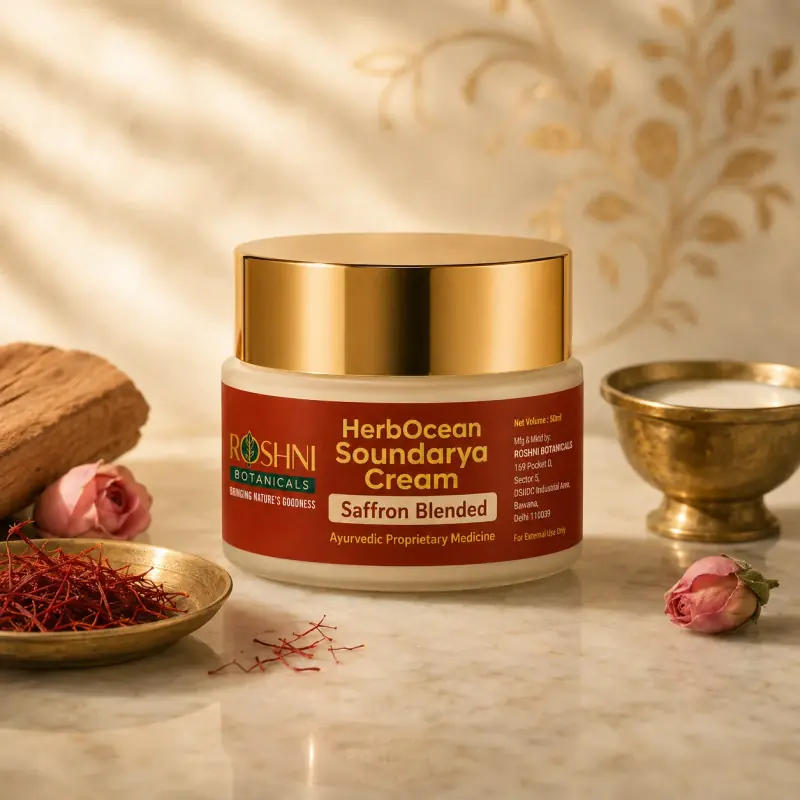
Soundarya Cream
A rich saffron brightening and repair cream with bargad (Vatt) bark on a goat-milk and coconut base, with shea and kokum butters, traditionally used in the care of skin where post-acne marks (PIH) linger.
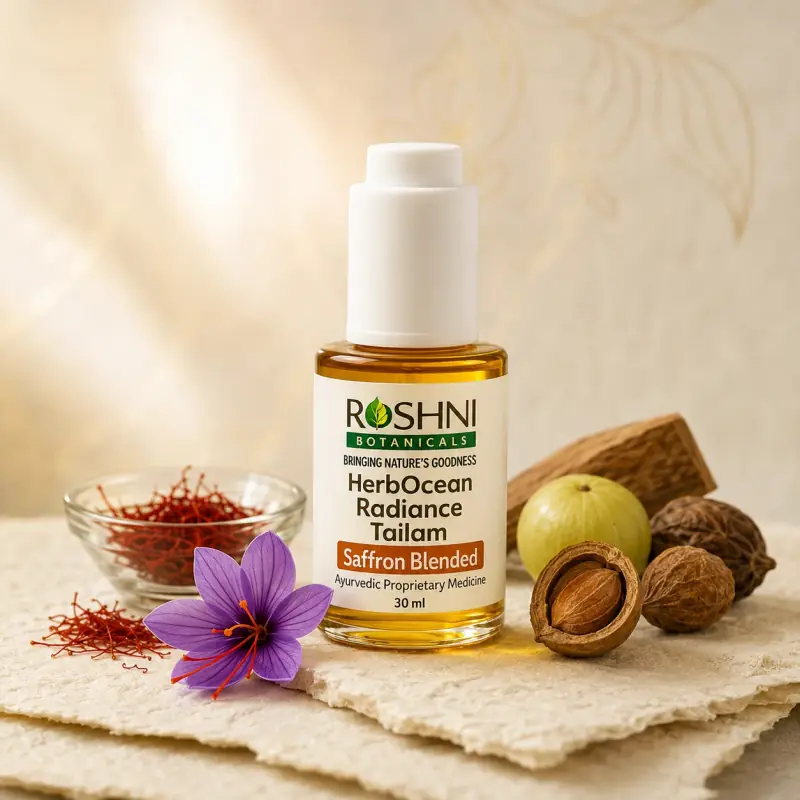
Radiance Tailam
A saffron brightening facial Taila with Manjistha and red sandalwood, traditionally used to support even tone where melasma, dark spots and PIH show.
Part of our guide: Ayurvedic treatment for melasma on Indian skin.